

Having spent the last few weeks living with the ASUS ROG Pelta, and I have come to a complicated conclusion. In a vacuum, this is one of the most comfortable and immersive headsets I have ever worn. But we do not live in a vacuum. We live in a market where pricing dictates value, and that is where the Pelta’s story gets interesting.
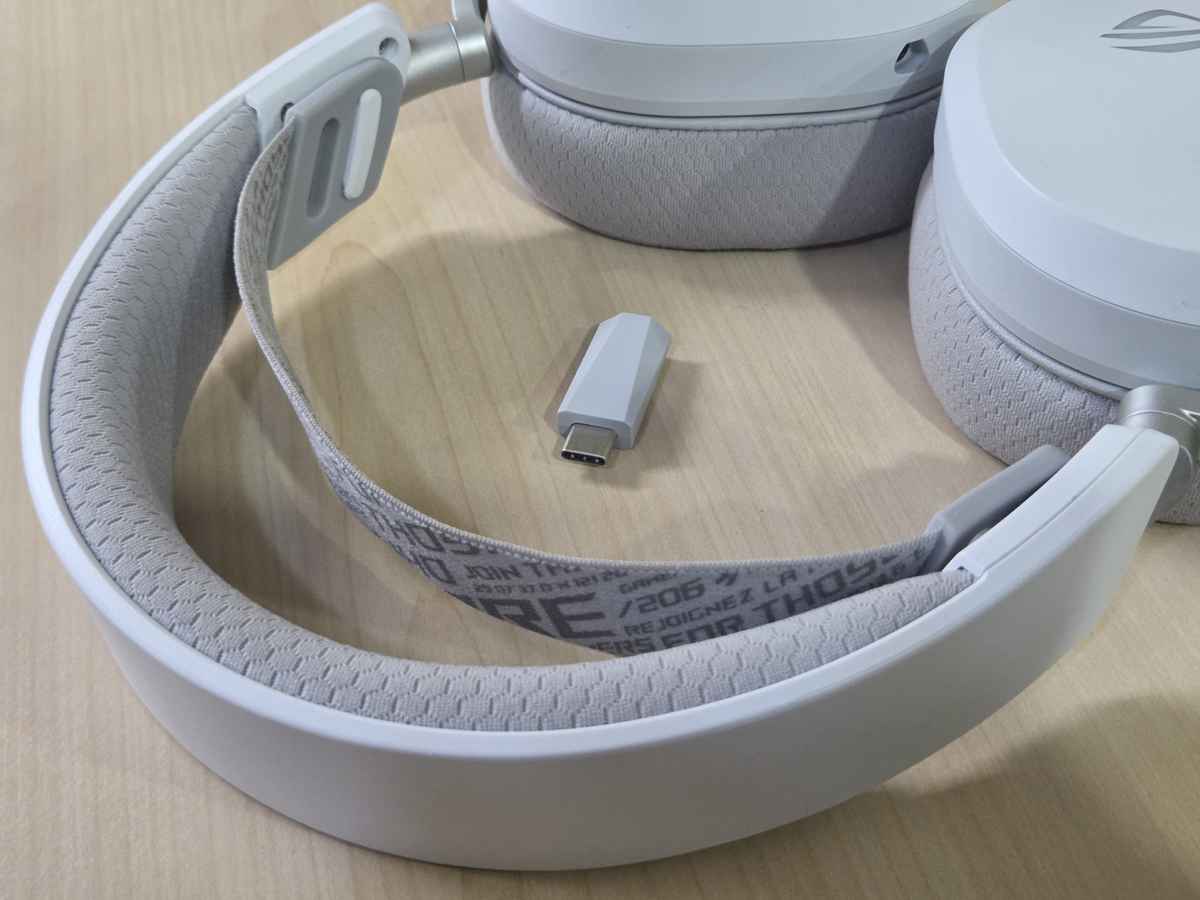
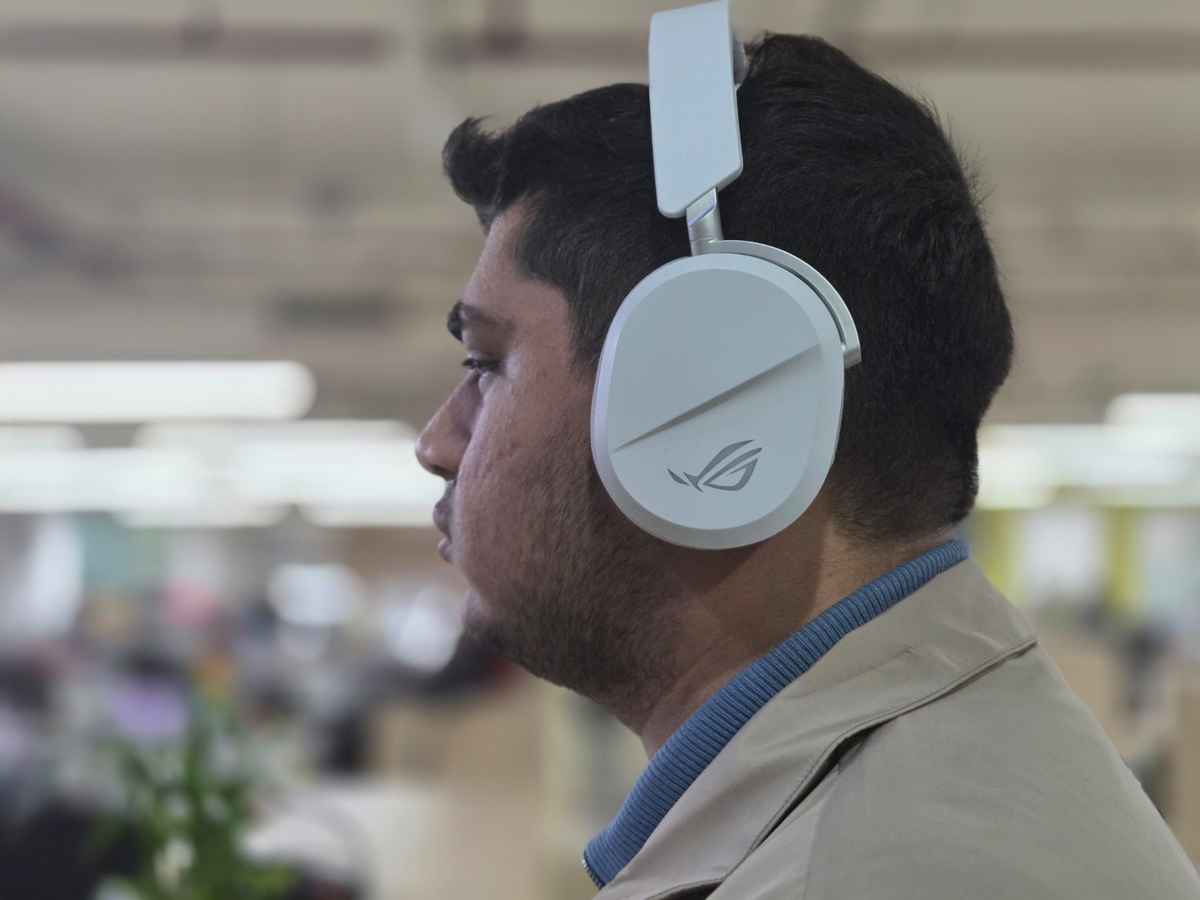
When I first pulled the Pelta out of the box, the inspiration was unmistakable. The tall oval earcups, the half-arc yokes, and that signature elastic suspension headband all scream SteelSeries Arctis Nova. I am not complaining because that is a great design philosophy. Weighing in at 309g, it is technically mid-weight, but once I adjusted that elastic band, it felt like it disappeared. It floats on the head rather than sitting on it.
However, that comfort comes with a trade-off I discovered the hard way. The clamping force is incredibly light. While this is a blessing for marathon sessions where I usually get headaches, it means the headset lacks grip. During a particularly intense moment when I failed to clutch for the 100th time in Valorant, I snapped my head back in frustration and felt the Pelta slide to the back. If you are an expressive gamer who moves a lot, this thing will slip off.
Also read: Skullcandy Uproar TWS review: A bit too simple for its own good
Features and specs
Before we get into how this headset actually feels to use, let’s look at what ASUS has packed under the hood. The ROG Pelta is positioning itself as a versatile powerhouse, and the spec sheet certainly reflects that ambition. Here is a quick breakdown of the key numbers you need to know:
| Feature | Specification |
| Model | ASUS ROG Pelta |
| Weight | 309g |
| Drivers | 50mm Titanium-plated Diaphragm |
| Frequency Response | 20 Hz – 20 kHz |
| Impedance | 32 Ohm |
| Microphone Type | 10mm Super-Wideband Boom (Unidirectional, Detachable) |
| Microphone Response | 100 Hz – 10 kHz |
| Connectivity | 2.4GHz SpeedNova (USB-C Dongle), Bluetooth, USB-C Wired |
| Battery Life | Up to 70 hours (2.4GHz, RGB off) / Up to 90 hours (Bluetooth, RGB off) |
| Fast Charging | 15 mins charge for approx. 3 hours use |
| Compatibility | PC, Mac, PS4, PS5, Nintendo Switch, Mobile (No Xbox support) |
| Software | Armoury Crate |
| RGB Lighting | Yes (Customizable via Aura Sync) |
On paper, that is a formidable lineup of features. It promises high-fidelity audio, marathon battery life, and the kind of connectivity flexibility that modern gaming demands. But as we know, numbers on a box don’t always translate to performance in the server. Here is the deep dive into my actual experience with the ROG Pelta.
The daily drive: Buttons and quirks
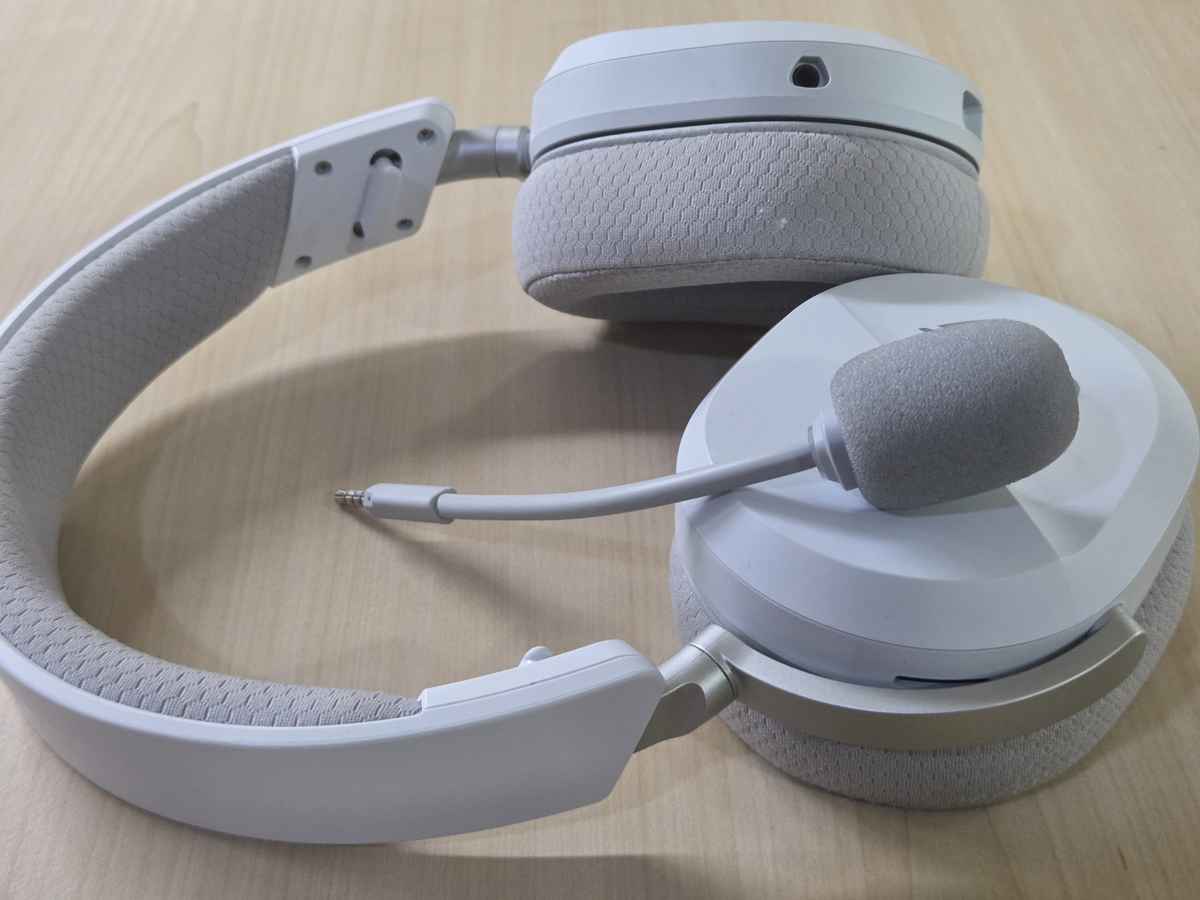
ASUS has put all the controls on the left earcup, which I appreciate for muscle memory. I found the slider for switching between Bluetooth, 2.4 GHz, and wired mode intuitive, though the wired situation is a bit odd. It comes with a USB-A to USB-C cable for charging and wired audio. If you were hoping to use a standard 3.5 mm aux cable, you are out of luck because you don’t get an 3.5 mm to USB-C converter either. The 3.5 mm port exists, but it is exclusively for the detachable boom mic.
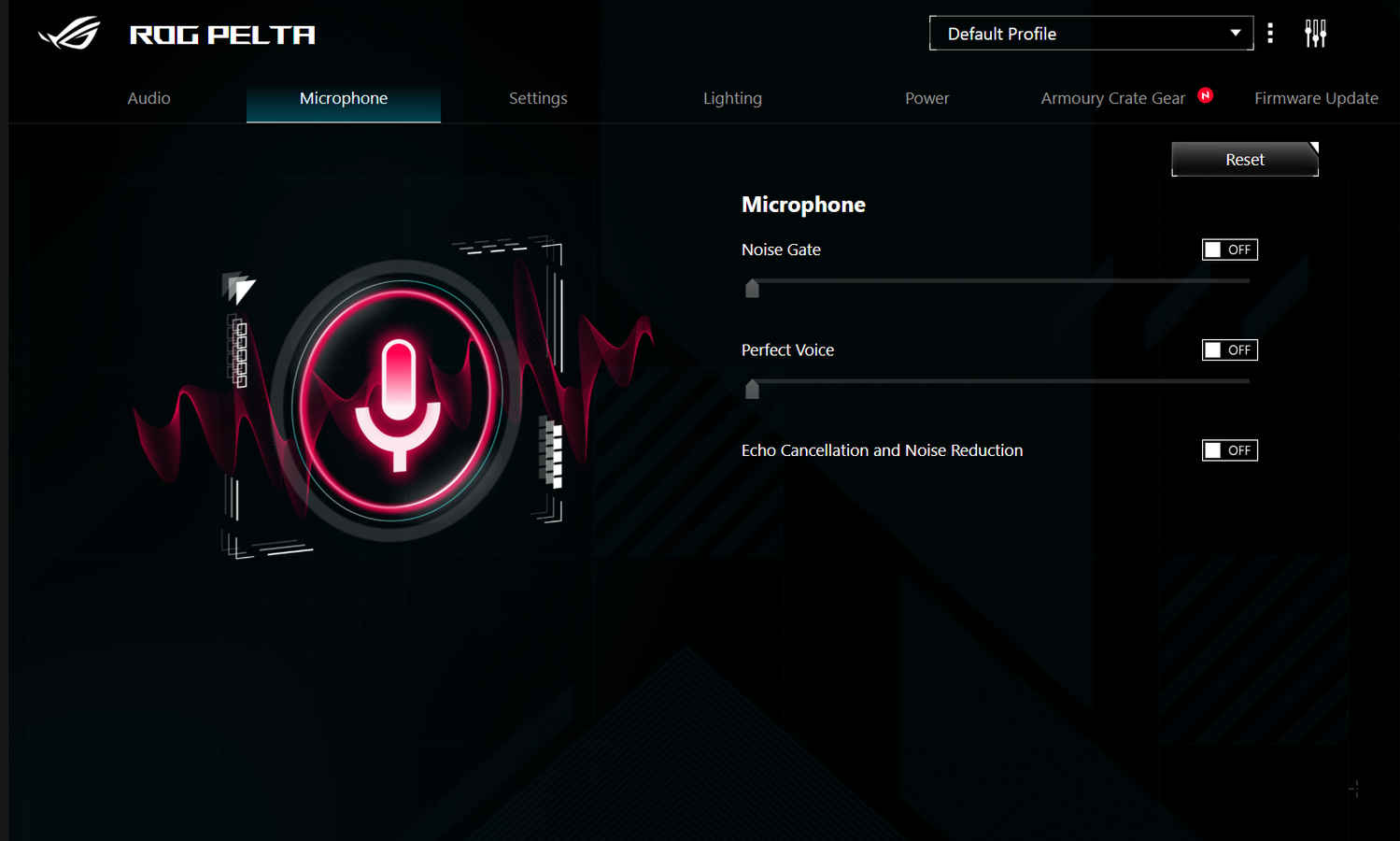
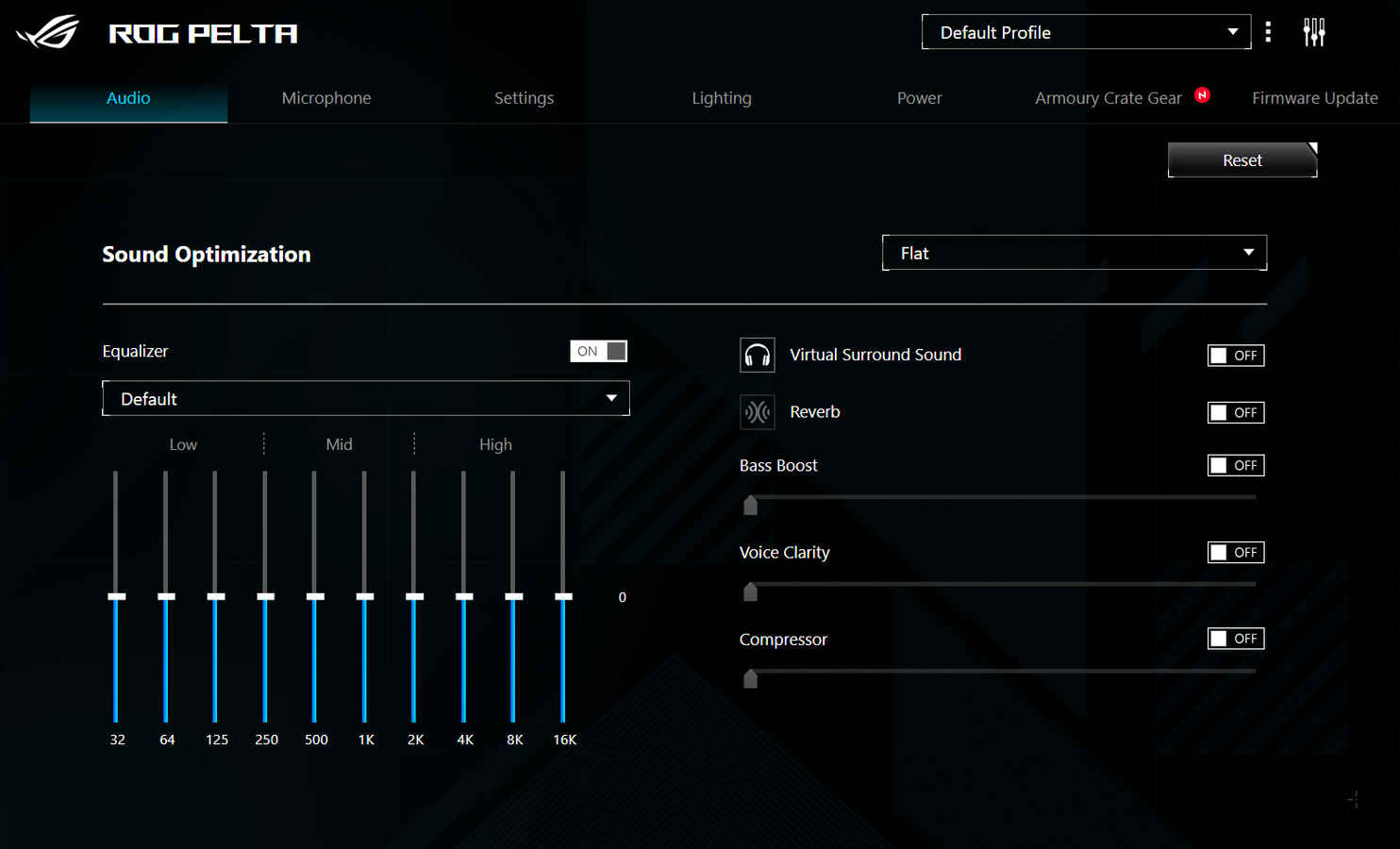
Speaking of the mic, I was genuinely impressed. Out of the box, the background static is barely noticeable, which is a win for wireless headsets. However, I still dove into ASUS’s rather Bloat-heavy Armoury Crate software to see if I could fine-tune it, a ritual every ASUS user knows too well. I tried the “Perfect Voice” feature, but it strangely boosted the high frequencies and whatever minimal static existed. The Echo Cancellation just added digital artifacts that made me sound robotic. Eventually, I found that applying a small noise gate was the secret sauce. Once dialed in, my voice was clear, full, and easily competing with my wired headsets.
Immersion and the latency test
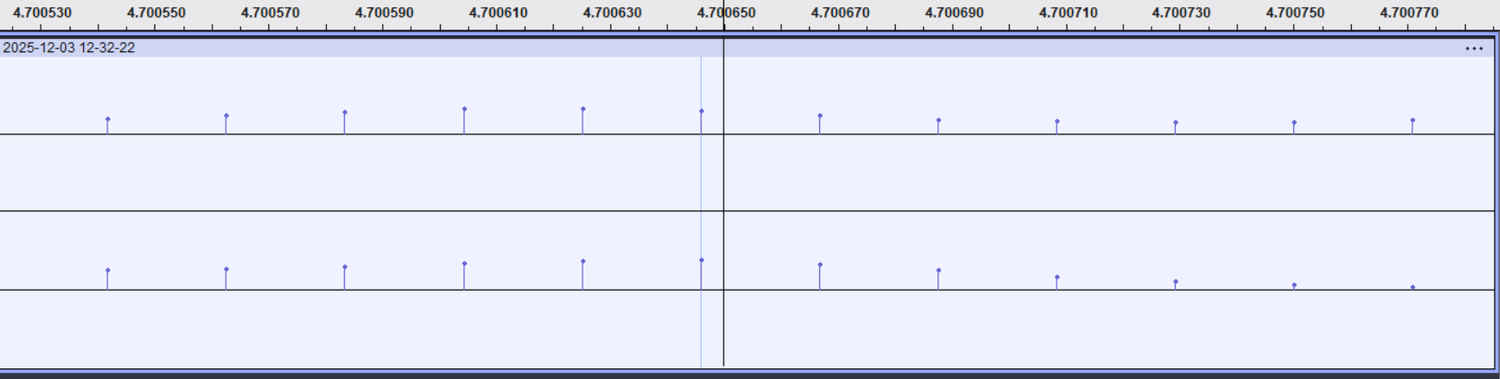
The audio performance is where I stopped worrying about the buttons and started getting lost in the game. The 50 mm titanium-plated drivers deliver a soundstage that feels expansive. To test just how fast this wireless connection really is, I set up a latency test with two outputs from the same input. I compared the Pelta against a wired audio interface reference point. The result was a delay of just 20 ms. That is practically instantaneous.
Also read: Oppo Find X9 Pro Review: A Flagship That Finally Feels Complete
I put that speed and soundstage to the test in Resident Evil 4 Remake. I have played this game to death, but the Pelta managed to make the Ganados scary again. Creeping through the village paths felt genuinely nerve-wracking. It wasn’t just hearing Leon’s footsteps. I could hear a rake scraping on my right, faint but distinct. On my left, the low growl of an enemy shuffled through the earcup so clearly I almost flinched. When a frantic gasp whipped across the stereo field, my pulse spiked. The directional clarity allowed me to react instantly, swinging around to line up a shotgun blast. That is the kind of performance that justifies a premium tag.
When you step away from gaming to watch movies or listen to music, the experience shifts slightly. For movies, the wide soundstage works wonders, giving action sequences plenty of breathing room and keeping dialogue crisp and centered even during chaotic scenes. Music, however, is a mixed bag. The mids and highs are tuned beautifully, making vocals and acoustic instruments sound sharp and detailed. But if you are a bass-head, you might be disappointed. Even with the bass pumped up in the EQ, the headset lacks that physical rumble or the “bass-y” feel you get from more music-focused audio options like a JBL Tour One M3. It is adequate for casual listening, but it clearly prioritizes competitive clarity over cinematic thump.
The reality check
While the in-game audio is stellar, the passive isolation left me wanting more. I took the Pelta on a coffee run, and I could hear way too much of the outside world. The sounds were muffled but still loud enough to be distracting, forcing me to crank the volume up to uncomfortable levels. It lacks Active Noise Cancellation, which is a tough pill to swallow when you look at the price tag.
Battery life, however, is a triumph. I managed to squeeze nearly 70 hours out of it in 2.4 GHz mode with the RGB lights off. I practically only charged it when the thought randomly occurred to me. I also tested the fast charging claim. After exactly 15 minutes on the charger, I got 4 hours and 37 minutes of playback. For someone who constantly forgets to plug things in, this is a lifesaver.
Verdict
This brings me to the difficult part. If I view this through the lens of an Indian gamer, the math is tricky. At ₹21,000, the ROG Pelta would be an absolute steal. But at its current street price of around ₹29,000, it is fighting in a different weight class.
The strengths are undeniable for our specific conditions. The 70+ hour battery life crushes the Razer BlackShark V2 Pro and the Logitech G Pro X 2. In a country where power cuts are real, and we might need one headset for a PC, PS5, and a BGMI session on mobile during a commute, that versatility is gold. Plus, the breathable earcups are far better suited for the humidity here than the leatherette ovens found on some competitors.
But here is the rub. You can get the Razer BlackShark V2 Pro for around ₹19,000. It offers similar low-latency performance and great spatial audio. If you do not mind the extra weight or the Razer software, it is the better budget pick. Alternatively, the Logitech G Pro X 2 is often available for around ₹21,000 and offers features like swappable earpads.

Also read: ASUS TUF Gaming F16 (2025) review: The beautiful, confused beast
If you are living in a noisy apartment in Mumbai or Delhi, the lack of ANC on the Pelta might be a dealbreaker at ₹29,000.
I really like the ROG Pelta. It is sleek, it sounds incredible, the microphone is surprisingly clear, and it lasts forever on a single charge. If you prioritize feather-light comfort and seamless cross-device compatibility, it is a fantastic piece of kit. ASUS also generally offers better warranty support here than Razer, which counts for something.
My advice? If you have the budget, go for it. You will not be disappointed by the performance. But if you are value-hunting, wait for it go on sale. If you can snag this for under ₹25,000, it changes from a “maybe” to a “must-buy.”
 Follow Us
Vyom Ramani
A journalist with a soft spot for tech, games, and things that go beep. While waiting for a delayed metro or rebooting his brain, you’ll find him solving Rubik’s Cubes, bingeing F1, or hunting for the next great snack. View Full Profile


