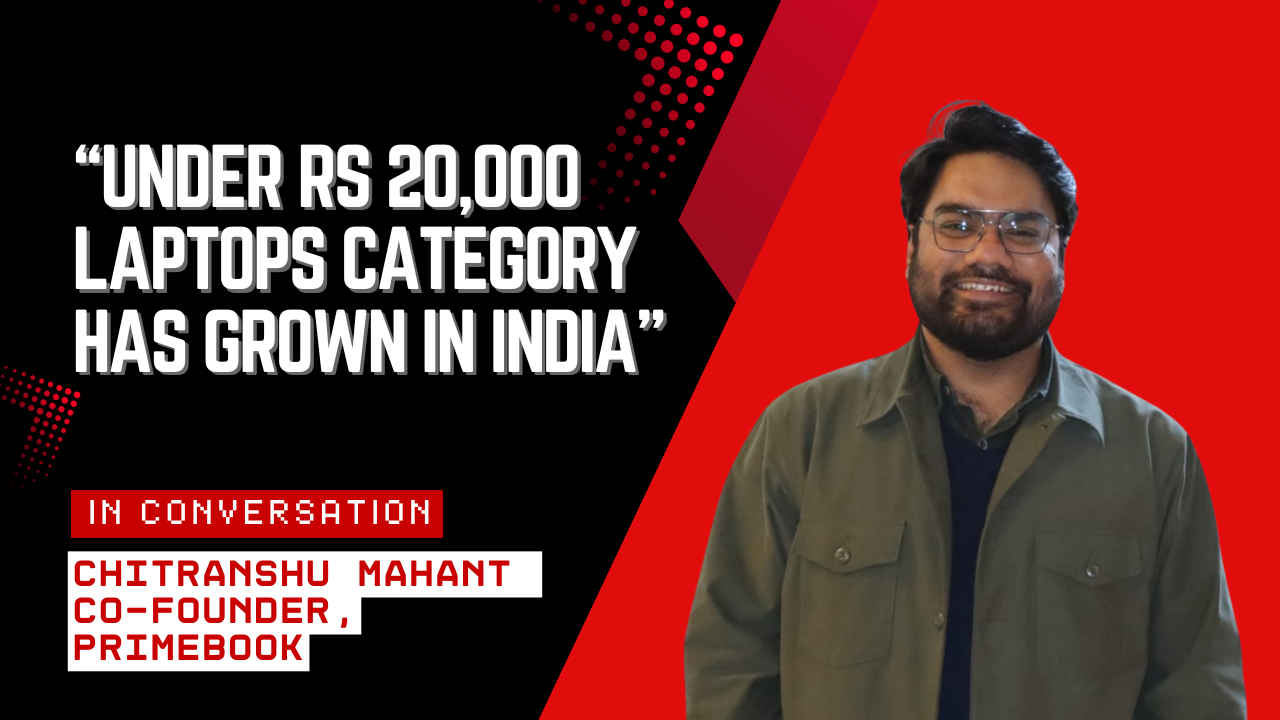
In India, laptops under Rs 20,000 have always been a rare find. Students, freelancers, and casual users often had to stretch budgets just to get a machine that could handle everyday tasks. But technology is evolving, and so are the expectations of users. And according to Chitranshu Mahant, co-founder of homegrown laptop brand Primebook, a future where laptops could be more voice-driven than screen-driven is on the horizon.
 Survey
“We really can’t say for sure as the whole form factor could be replaced and things could become like the movie Her,” Mahant said in an exclusive conversation with Digit. He also shared how Primebook’s second-generation devices are doubling down on performance, integrating Cloud PC, and adding AI features – all while staying in the under Rs 20,000 price range. Read on to know more.


The under Rs 20,000 laptop market
When Primebook first entered the Indian laptop market, the vision was simple: make high-performing laptops accessible under Rs 20,000. “Back then, if someone wanted a value-for-money laptop, they had to spend Rs 35,000 to Rs 40,000,” Mahant said. He further said that the first generation of laptops was a learning curve – not just about performance, but also about supply chains.
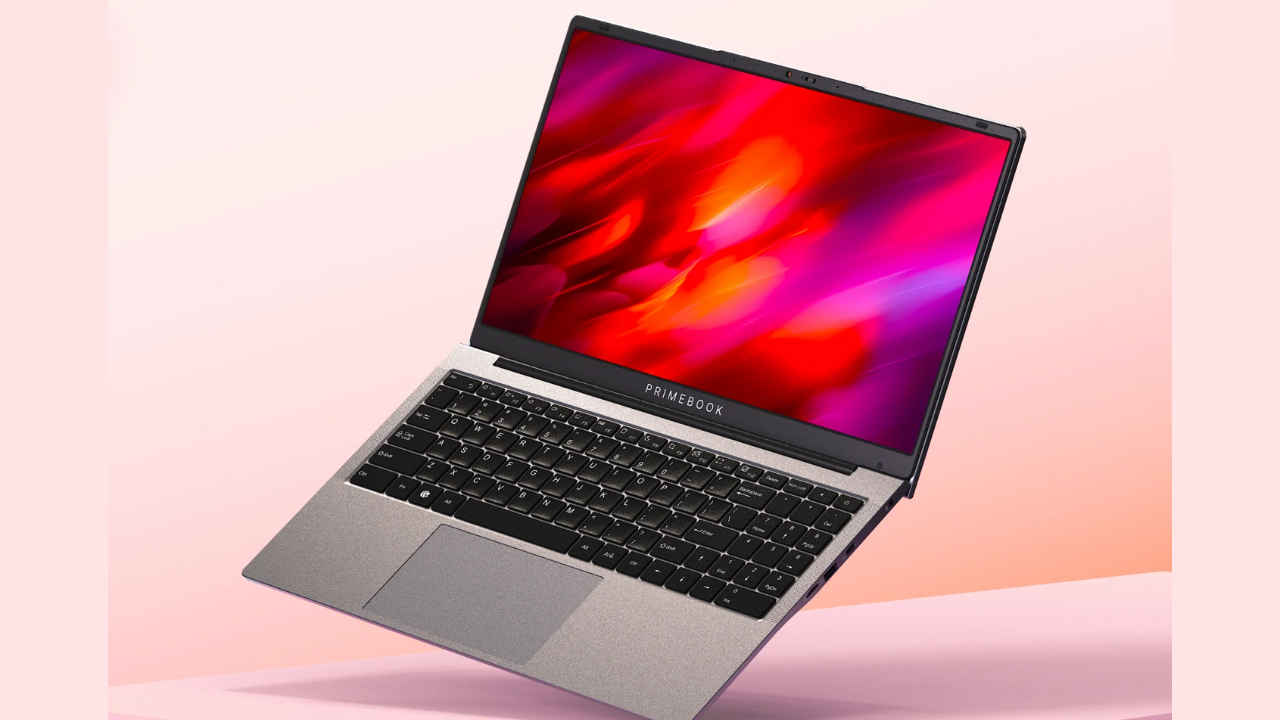
“With Gen 1, we realised we weren’t as powerful as we wanted to be. It was also a big learning experience about supply chains. With Gen 2, we’ve doubled the performance at a similar price point. The top Gen 1 model was Rs 15,000 to Rs 16,000, and Gen 2 now offers double the power at Rs 16,000.
We also worked heavily on battery optimisation. One of our Gen 2 models now delivers 14+ hours of video playback at 90% brightness, which is competitive with some premium devices. We also optimised the OS, increased battery size, and improved hardware design to make it more stylish.
“Moreover, we upgraded RAM and storage. Earlier we used eMMC; now we’ve moved to UFS, which is closer to tablet storage standards. On the software side, we made a leap from Android 11 in Gen 1 to Android 15 in Gen 2.”
Cloud PCs and the future of laptops
Two big upgrades define Primebook’s latest generation of laptops – Cloud PC and AI. “With Cloud PC, users can now access Windows or Linux virtually, scaling up to GPU or i9-level performance by subscribing,” Mahant said and added, “On the AI side, we’ve introduced Gemini-powered features like Companion Mode, where AI shares your screen and understands full context. Next, we’re building Operator Mode, where AI can perform tasks like creating documents or editing Excel sheets on your behalf.”
But are Indian consumers ready for Cloud PCs? The intent is definitely there, Mahant feels.
“As a brand, our primary fear was that Indian consumers do not want to pay for subscriptions. However, this is now an old notion and things have changed. On Primebook, Cloud PC has no free trial. You have to pay a certain amount even if you want to use it for a day. And over 40% of our users have paid at least once, proving willingness and the intent to pay if the experience delivered is right.”
Talking about the challenge, he said, “The bigger challenge is user experience. Compatibility with ports, latency, and seamlessness need refinement. We’re working on this, and hopefully in the next six months, we might be able to say that Cloud PC feels almost native.”
But where are laptops, as a category, headed to in future? The Primebook co-founder says there is potential for growth – especially in the under Rs 20,000 category.
“The less-than-20,000 category for laptops has grown a lot in India. Earlier, there were no players. Since we launched and showcased the product, Chromebooks appeared, followed by some Indian brands. Flipkart is now crowded with sub-20,000 laptops. I feel this category can grow further if there’s a good-quality product.”
PrimeOS and its benefits
PrimeOS is the backbone of Primebook. When asked about PrimeOS and how it is beneficial for users, Mahant said, “One of the core things we’ve built into PrimeOS is multitasking for Android apps, something tablets and phones don’t handle well. In a phone, for instance, you have one application to use, then you have to press the home button to open up the second application.”
When we talk about the laptops segment, there are bound to be comparisons with Windows and traditional laptops. Talking specifically about Windows first, Mahant said that PrimeOS has a clear edge in terms of price.
He said, “Compared to Windows, our value proposition is clear: better price efficiency. Many people buy Rs 1 lakh laptops only to spend 90% of their time browsing or watching YouTube. Only 10% of the time they need to do some excessive work. Now, you don’t really need to pay over a lakh for just that 10%. Primebook can handle those everyday needs while offering Cloud PC for the occasional heavy work. This hybrid model is the future, though it will take time for people to fully adopt cloud-based computing.”
Talking about how users interact with AI differently on a Primebook when compared to traditional laptops, Mahant said, “The major difference is live mode. On traditional laptops, AI interaction usually means typing into a chat box. On Primebook, AI has full context of what’s on your screen. This eliminates the need to feed it constant context manually.”
Primebook laptop’s competition, user benefits
Every market is full of competition. And a brand’s ability to set themselves apart from their competitors can be a game-changer. According to Mahant, the primary competitors for Primebook laptops are Chromebooks.
He explained, “When we entered, a lot of focus came on Chromebooks from these HP, Dell, and Lenovo guys. So, Chromebooks are our major competitors. Then Android tablets, you can say. In my opinion traditional laptops at less than Rs 20,000 price point haven’t gained much traction, though some local brands attempt it.”
And how exactly does Primebook have an edge over its competition? The answer lies in technicalities.
Mahant said, “From a technical perspective if you see, Chromebook is a product designed for the US market, which is a browser first market. Whatever features you get will be browser first. India, on the other hand, is an app-first market. And Primebook is an app-first laptop.”
PrimeOS as a substitute for emulators
PrimeOS has seen downloads in 140+ countries. When asked about the cultural or regional usage patterns that have surprised the team most, Mahant mentioned, “In the early days, most downloads were from people with old machines. PrimeOS gave them a lightweight OS that made decade-old laptops feel new again.”
Another surprising use case for the team was gaming. The Primebook co-founder explained, “PrimeOS became a substitute for emulators. Now emulators require a very good local machine. People who didn’t have access to such machines opted for PrimeOS. And at that point of time, in 2018, PUBG had picked. So PUBG became the reason people downloaded PrimeOS as they wanted to experience the first-person shooter game with keyboard and mouse.
Partnerships powering Primebook’s future
When they appeared on Shark Tank India, Primebook revealed its partnerships with several educational institutions in a mission to bring affordable machines for students. Since then, the company has come a long way and has broadened its vision.
Mahant explained, “When we started, it was mostly about students as we wanted to build a niche for the brand. With so many large brands already in the market, if we had become generic, people wouldn’t have recall value. Now, as our products have matured, we believe we are breaking that student positioning, and our vision has become next-gen personal computing.”
He added, “4-5 years down the line, we assume cloud PCs are common, with fast internet and evolved technology. Hence, why would someone purchase a 1-lakh-rupee machine? They would buy a lightweight machine for daily tasks and use a cloud PC for advanced computing. That’s the vision we have.”
Talking about partnerships, he revealed that the company has started entering enterprise businesses. He said, “In schools, we’ve partnered with large government organizations – more than 700 schools. We’ve also partnered with coaching institutes and NGOs. Now we are positioning into enterprises who require good computing and more security; the data center comes with its own security features.”
R&D breakthroughs, future challenges
Talking about their R&D cycle, Mahant explained that Primebook’s R&D cycle relies on a robust feedback loop, including user input, calls, and automated bug reports. Fortnightly sprints prioritise stability and high-impact fixes. He also explained that the The Gen 2 laptops’ 14-hour battery life is the result of deep OS optimisation, controlling brightness defaults, sleep cycles, and display efficiency. Quality control has also been automated, with camera-based dead-pixel detection and benchmarking, with patents in progress.
Coming to challenges, he said Indian VCs are still skeptical before investing in deep-tech hardware. And these challenges are overcome only by hustling.
“Talent is not an issue; India has great engineers. The challenge is funding. Indian VCs are still hesitant about deep-tech hardware. Competing with global giants is risky, which makes investors cautious. We’ve managed it all through hustle. There’s no shortcut,” he said.
Primebook’s vision also extends beyond laptops. Mahant talked about PrimeOS evolving into a next-gen productivity platform, inspired by devices like e-paper tablets that combine digital and paper-like experiences.
Also read: Primebook 2 Pro and Primebook 2 Max available in India, price starts from Rs 17,990
 Follow Us
Divyanshi Sharma
Divyanshi Sharma is a media and communications professional with over 8 years of experience in the industry. With a strong background in tech journalism, she has covered everything from the latest gadgets to gaming trends and brings a sharp editorial lens to every story. She holds a master’s diploma in mass communication and a bachelor’s degree in English literature. Her love for writing and gaming began early—often skipping classes to try out the latest titles—which naturally evolved into a career at the intersection of technology and storytelling. When she’s not working, you’ll likely find her exploring virtual worlds on her console or PC, or testing out a new laptop she managed to get her hands on. View Full Profile


