
Haier P7 Pro 75-inch TV review: Big screen, big sound, but is it right for Rs 90900?
 Follow Us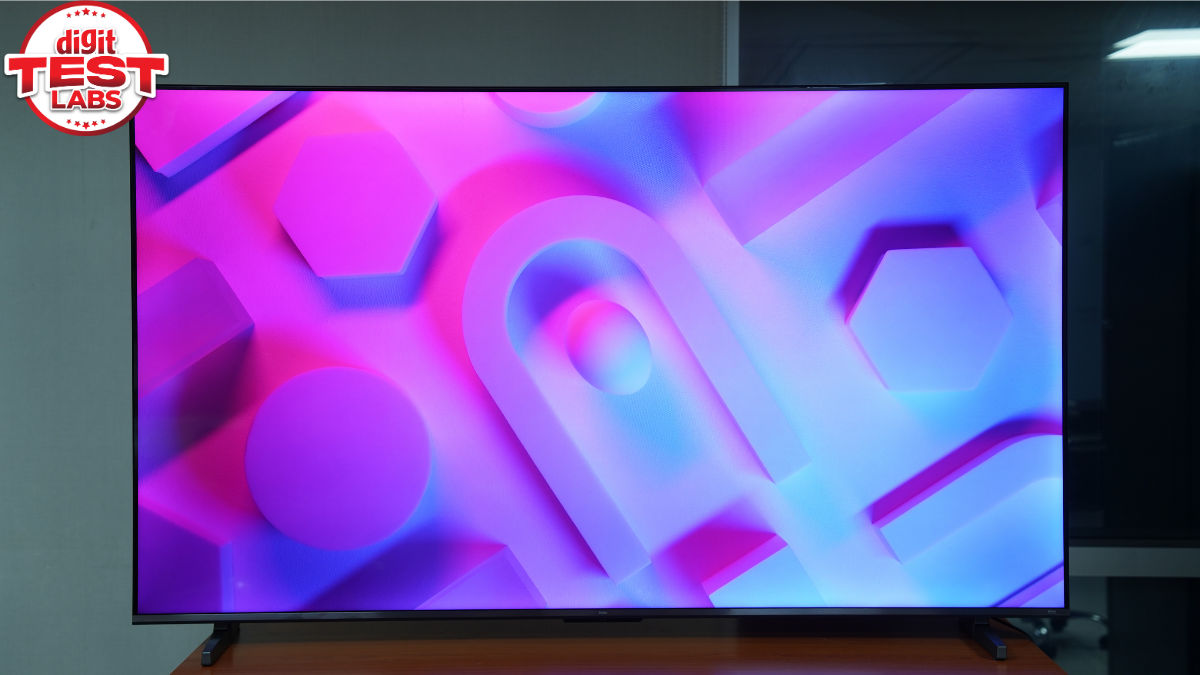

Many of us want large-screen TVs for more immersive visuals. And when you look at what is available around the Rs 1 lakh mark, 75-inch TVs are becoming increasingly interesting. The Haier P7 Pro is one such example. At Rs 90,900, it gives you a 75-inch 4K QLED display, Dolby Vision and HDR10+, a 50W 2.1-channel audio system, Google TV with Gemini, four HDMI ports, VRR and a 120Hz gaming mode. On paper, that is a lot of TV for the money. But the P7 Pro also makes some compromises to get there. The panel has a native 60Hz refresh rate; its 400-nit peak brightness is modest by premium-TV standards, and there is no local dimming.
So, while the specification sheet is clearly designed to grab your attention, the more important question is whether its combination of size, features, and price makes it a sensible alternative to spending more on a better-equipped Mini LED TV. Here’s my review of the Haier P7 Pro.
Haier P7 Pro: Display and picture quality
The Haier P7 Pro uses a 75-inch 4K QLED panel with a resolution of 3840 x 2160 pixels. Haier claims up to 93% coverage of the DCI-P3 colour gamut, and we got the same on the Calman Colour Gamut check. The colours look fine for the most part, except for some changes in skin tones and blues.
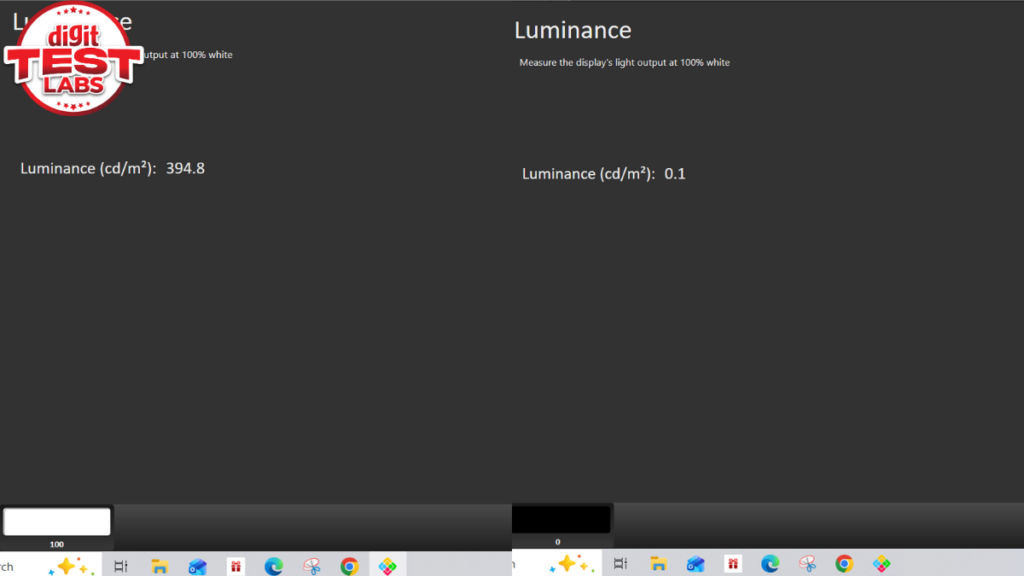
Similarly, in the Calman luminance test, the peak brightness reached 390 nits, close to the 400-nit claim. I didn’t find any problem watching it in a bright room. But when you compare it against a FALD Mini LED TV, watching HDR content in the same bright room, the highlights don’t appear strong enough.
Well, HDR scenes don’t carry depth either because of a lack of detail in shadows. While watching Thanos’s last fight scene in Avengers: Endgame, the visuals felt flat without the required depth. And in the new Avengers: Doomsday trailer, there was a lack of details in some portions. Banding, wavy like, instead of smooth gradients.
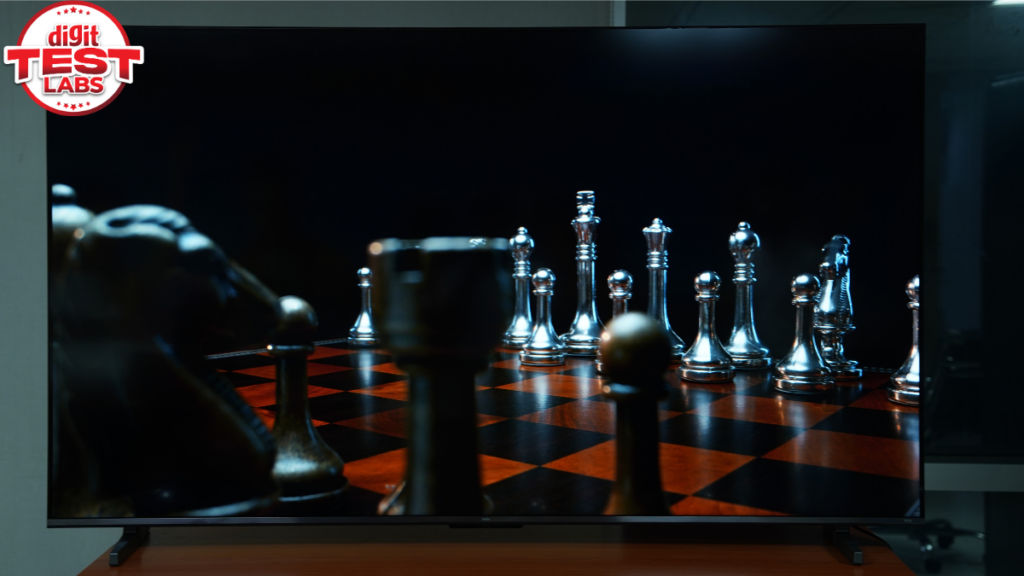
Meanwhile, in the Revenant night scene, wherein Leonardo DiCaprio’s character is coming out of darkness, the jungle felt darker than it should, and the black levels were crushing. In its defense, let me tell you it managed to present the dark submarine scene in Mission Impossible: Final Reckoning better than a Mini LED TV I tested recently. Also, the close-up shots of characters carry sharp details, giving you a good 4K feel.
For regular streaming, television and sports, the large 75-inch panel still remains a big attraction. Sit at the right distance and the screen gives films and games a much more immersive feel than a 55-inch or 65-inch television. This is where the P7 Pro makes a lot of sense. You are spending the money on screen size first.
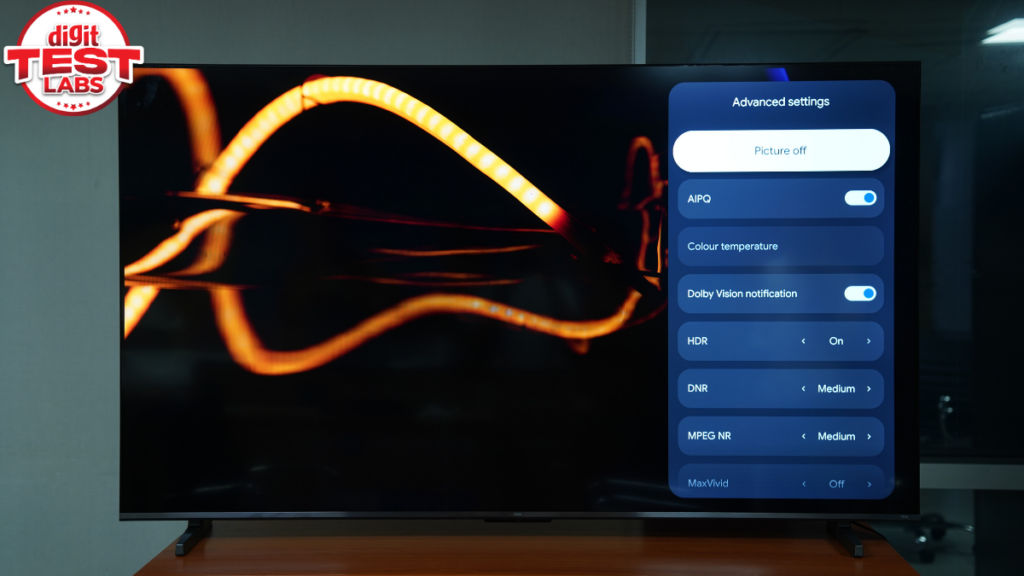
The Haier P7 Pro TV also supports Dolby Vision and HDR10+ as well as AIPQ and MEMC. I choose to keep the latter turned off because I don’t prefer the over-smoothed look. Similarly, although the panel’s native refresh rate is 60Hz, Haier uses DLG technology to offer a 120Hz gaming mode. This offers smoother visuals at the cost of resolution. The TV also supports VRR and ALLM and provides easy access to game-related settings through a Gaming Bar.
Also Read: Lumio Vision 9 (2026) Mini LED TV review: Gets a lot right but still needs tuning
Connectivity and software
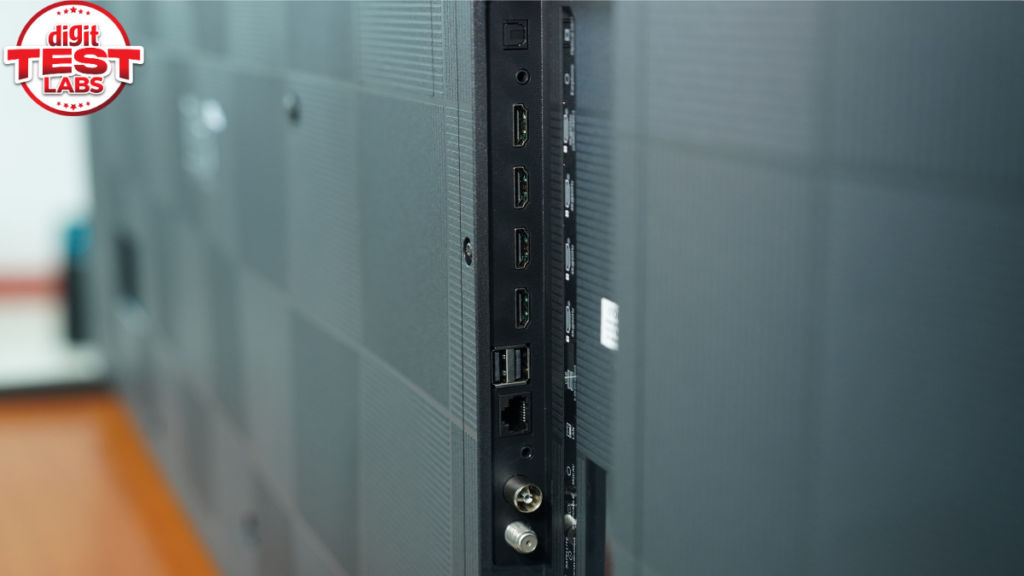
You get four HDMI ports and two USB ports, along with eARC, Ethernet, Wi-Fi and Bluetooth on this TV. Four HDMI inputs are particularly useful on a 75-inch TV because you can connect a console, streaming device, soundbar and another source without constantly swapping cables. But note that they all support 4K60 only, and the HDMI 1 port supports ARC/eARC as well.
The software is based on Google TV, which makes the P7 Pro familiar to anyone who already uses Google TV devices. Even for someone new, this is fairly easy to start and straightforward to use. You get access to the major streaming apps, content recommendations and Google’s wider smart-TV ecosystem.
Haier ships the TV with Android 14 and our review unit was running on the April 1 2026 security update. It is great to see the latest Android version and what’s more special is the presence of Gemini voice assistant. You can trigger it hands-free by just saying ‘Hey Google.’ Please ensure you verify the responses, as it is not always accurate.
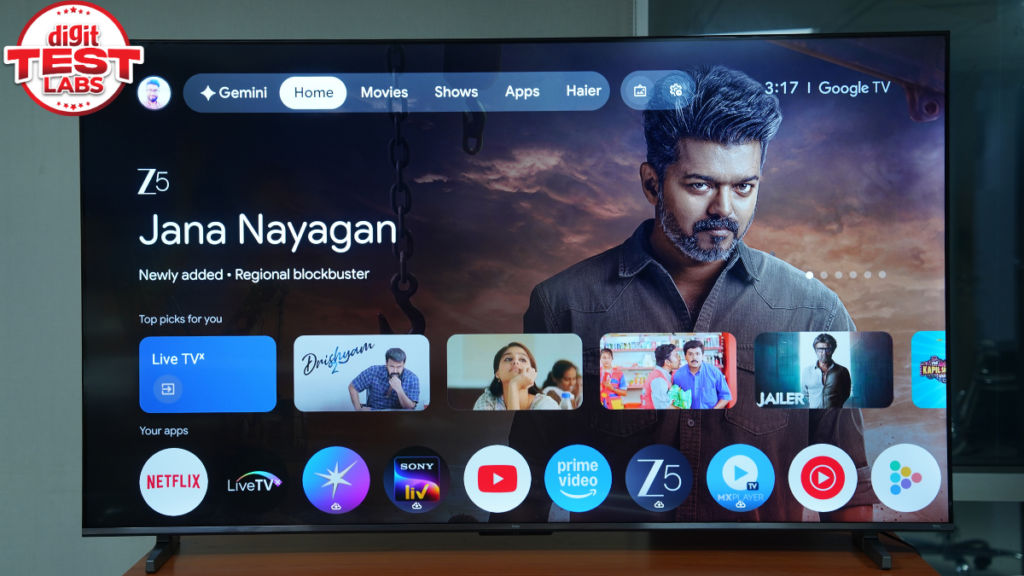
And for most users, aspects like UI smoothness and software support will matter more anyway. The 2GB RAM feels a bit limiting in navigation between apps, but the 32GB storage seems fine.
Design, audio, and remote
A 75-inch TV is going to dominate a room regardless of how thin its bezels are. My colleague and I were joking that many of us don’t have a big enough hall in our Delhi NCR flats. The fascia looks clean with slim bezels on all three sides. The chin has a lustrous sheen meant to attract.
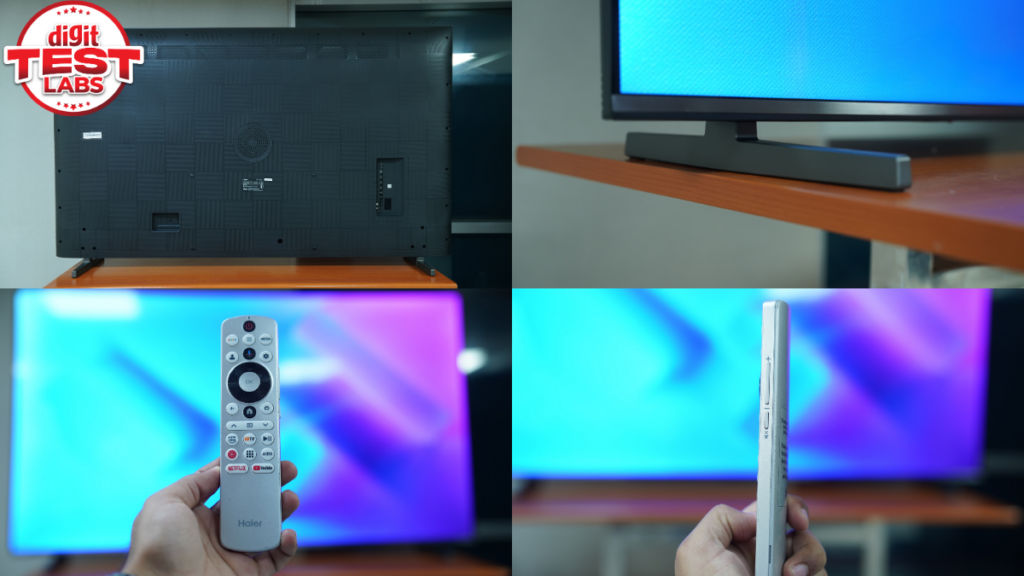
A TV this big is better wall-mounted, as the corner stands mean you need a table or shelf that big. Also, the P7 Pro does wobble despite the stand being properly screwed in by the Haier personnel.
The bigness of the screen is well complemented by a big 50W 2.1-channel system with an integrated subwoofer. The output has ample weight and presence. The TV also supports Dolby Atmos and a Bluetooth Speaker Mode. This latter feature lets you keep the display off and use the TV audio as a Bluetooth speaker. Haier has clearly thought about the audio system on the TV.
Should you buy the Haier P7 Pro?
At Rs 90,900, the Haier P7 Pro’s biggest selling pitch is its 75-inch QLED screen. If you want a screen this big, know that the rest of the package is decent to give you a fine immersive experience.
The 390-nit peak brightness I measured is enough for comfortable everyday viewing, and 93% DCI-P3 coverage means most content looks rightly coloured. But HDR content lacks the punch you get from a good Mini LED TV. There is also no local dimming, and I noticed crushed blacks and a lack of depth in some of the darker scenes I watched. So, if your priority is movies and HDR picture quality above everything else, I would spend more on a better display.
In case of gaming, features like DLG 120Hz, VRR and ALLM are useful additions, but the native panel is 60Hz only. The four HDMI ports also support up to 4K at 60Hz. So, the P7 Pro is not a TV I would recommend to someone looking to get the full benefit of a high-end gaming PC or the highest refresh rates from a current-generation console.
The P7 Pro also faces competition from Xiaomi’s QLED TV X Pro, which is a cheaper 75-inch QLED TV. It offers the same basic 75-inch 4K QLED proposition, a 60Hz native panel with DLG 120Hz, Dolby Vision, HDR10+ and Google TV, but costs considerably less. Xiaomi also gives you Filmmaker Mode and features such as AirPlay 2.
For the higher price, the Haier P7 Pro gets you four HDMI ports instead of three on the Xiaomi, a strong 50W 2.1-channel audio system with an integrated subwoofer, easy-to-use Android 14-based Google TV, hands-free Gemini voice control, and a three-year warranty. So, I would look at the P7 Pro as a large-screen all-rounder rather than a picture-quality champion.
However, if picture quality is your main concern, Haier itself has a 75-inch Mini LED M70 at Rs 1,02,990, which is only Rs 12,000 more than the P7 Pro. That could be a much more interesting upgrade if you care about HDR brightness, contrast, and dark-scene performance.
Keep reading Digit.in for similar TV reviews.
Also Read: Xiaomi S Mini LED 75 2026 review: Big-screen cinematic TV under Rs 1 lakh but with some compromises


