

Is your smartphone safe? Face ID on these Android devices can be tricked with images
 Follow Us
Many Android phones can be unlocked using just a photo, raising security concerns.
Basic 2D face unlock is less secure, while advanced 3D systems are much safer.
Experts recommend using fingerprint locks and PINs for stronger security.
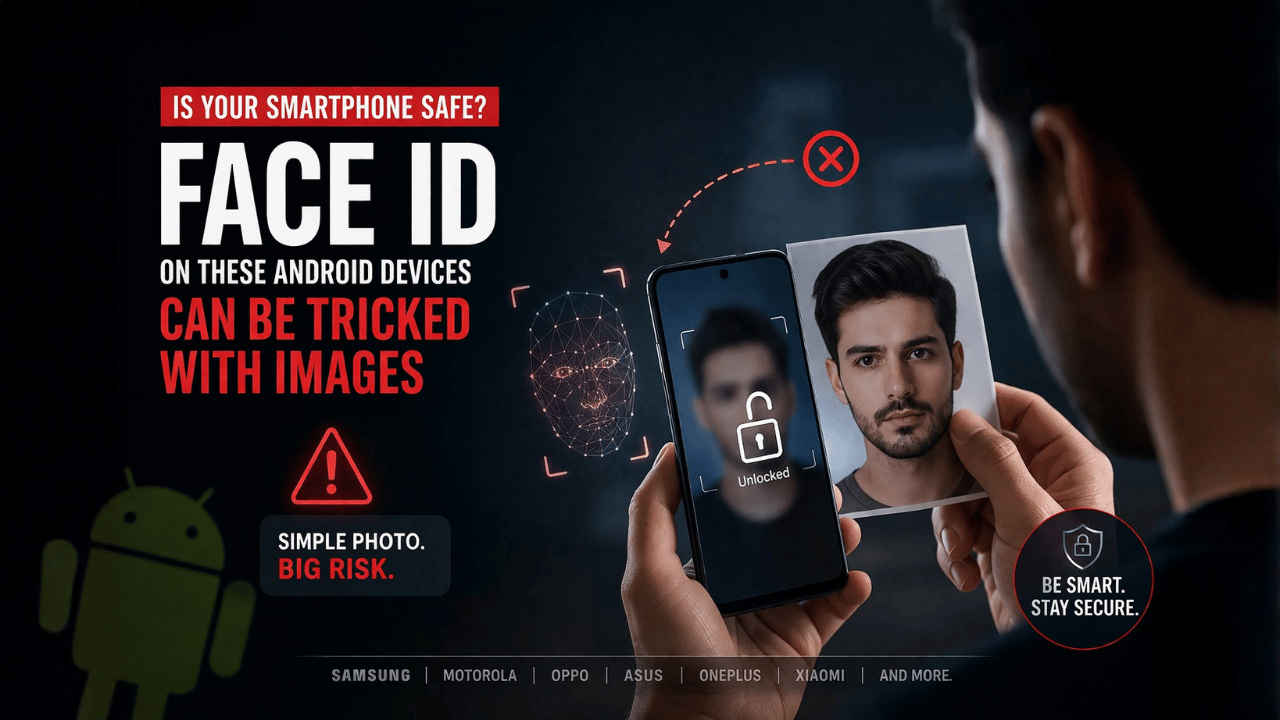

A smartphone in today’s world is something that contains most of our secrets, and smartphone manufacturers are responsible for ensuring that our data stays safe. While companies continue to introduce new features to protect user information, one such development was Face ID. However, recent reports suggest that smartphones still have a surprisingly weak spot. If a simple photograph can unlock a premium device, it feels less like a technical flaw and more like a lapse in priorities. Facial recognition is often marketed as seamless and safe, yet this evidence shows not all versions deserve that trust, raising a basic question. Are we choosing ease over protection without fully understanding the trade-off involved?
 Survey
According to a report by The Times, the Face ID protection of 133 devices, including flagship models from Samsung, Motorola and Oppo, can be easily bypassed by a mere photograph. The devices that were vulnerable to these issues include the premium devices Samsung Galaxy S25, Oppo Find X9 Pro and Motorola Razr 50 Ultra. These were just a few models which were taken to the test and failed it miserably.
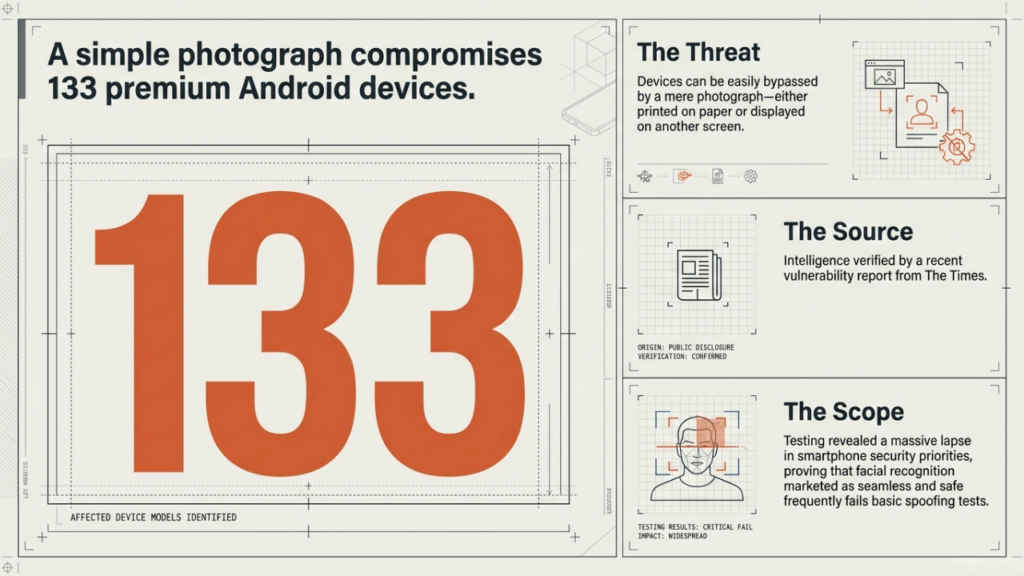
Aside from that, many flagship devices from Asus, Fairphone, Honor, HMD, Nokia, Nothing, OnePlus, Realme, Vivo, and Xiaomi also failed the test. However, one important point to note is that all the devices that failed the Face ID test were Android devices.
Also read: Google may launch Gucci smart glasses, Pixel laptop and new Pixel Glow feature with Pixel 11 series
The issue lies in the type of facial recognition used in these devices. Research found that many of these devices rely on basic 2D systems, which simply compare an image captured by the front camera with the one stored during setup. Furthermore, if the match is close enough, then the phone will get unlocked. This means someone could unlock the phone using just a photo, either printed or on a screen.
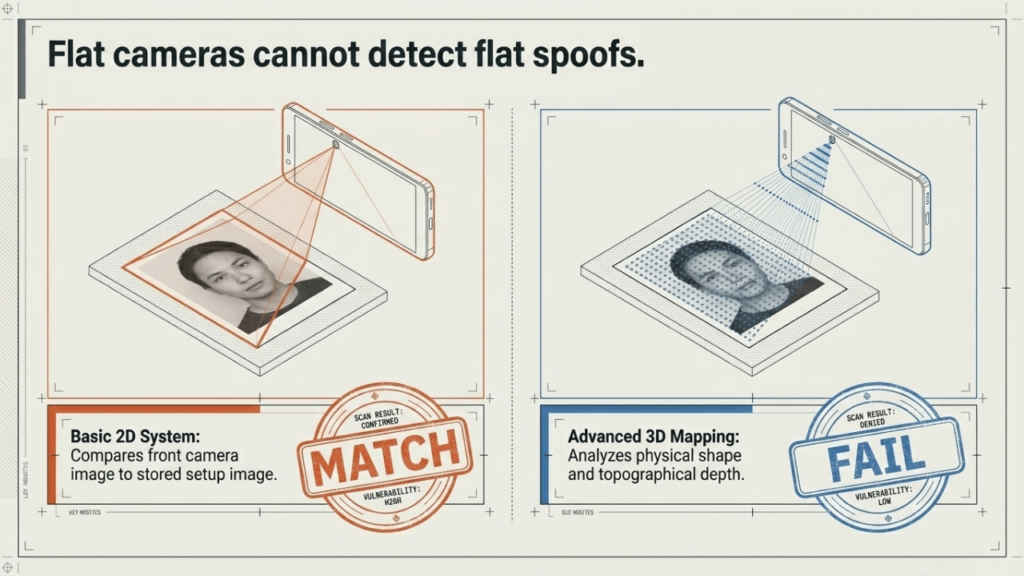
However, an advanced system is already available in the market that scans the face in 3D, and many companies are also using it. They project invisible dots onto the face to analyse the shape and depth of the face, making them extremely difficult to deceive. Furthermore, the smartphones that run on 3D mapping are prone to the Face ID bypass using images.
Also read: Apple iPhone 18 Pro Max tipped: Specs, price and all the key details leaked so far
Apple’s devices were some of the few devices that remained secure against these Face ID tests. Along with that, the latest flagship models, the Samsung Galaxy S26 series and the latest Google Pixel models, were also not spoofed by the photographs.
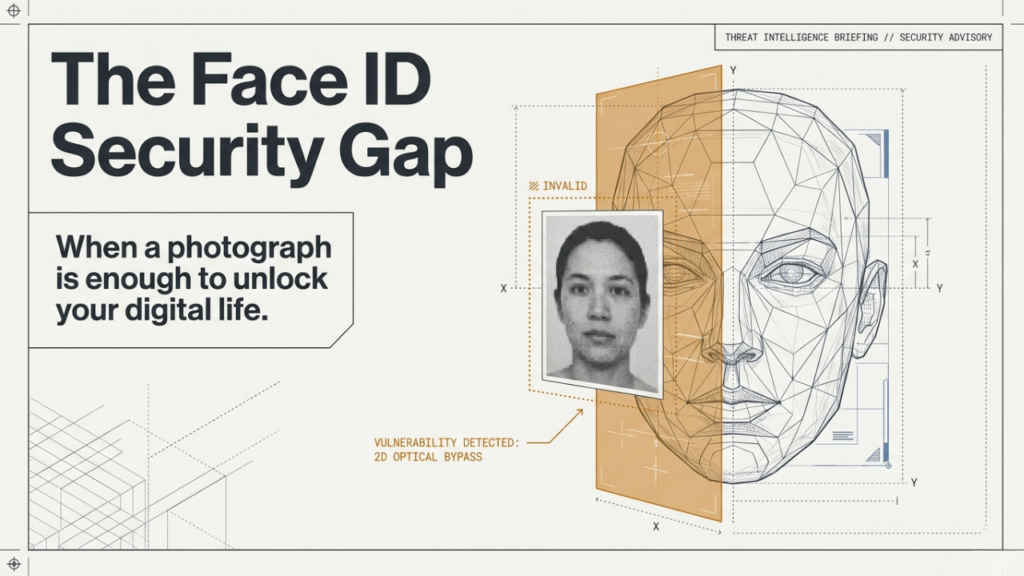
The research also pointed out that some brands do not clearly warn users about the limits of 2D face unlock. In several cases, these warnings are hidden in settings or terms rather than shown clearly during setup.
Experts advise that consumers opt for better security measures such as a fingerprint lock and the use of a six-digit PIN code. There is also the need to ensure that consumers set a SIM PIN and lock essential applications such as banking and emails. The need for such recommendations arises from increased incidences of theft and cybercrime.


