
Sam Altman reveals how OpenAI’s bold AGI bet attracted top AI researchers
 Follow Us
OpenAI CEO Sam Altman has shared how the company’s early belief in AGI helped it attract top AI researchers..
He said OpenAI managed to attract almost all of the highly capable AI researchers who believed that achieving AGI was possible.
He also said that the possibility of building superintelligence was difficult for many people to accept.


OpenAI CEO Sam Altman has shared how the company’s early belief in AGI helped it attract top AI researchers. Speaking with Cory Levy at Internapalooza, an event linked to Z Fellows, Altman said around 50 researchers were both highly skilled and convinced that AGI could eventually be built. According to him, nearly 45 of them joined OpenAI. Altman said the company stood out because it was willing to seriously pursue an idea that many people at the time considered unrealistic. He suggested that this shared belief helped OpenAI bring together researchers who were willing to work on the long-term goal of building AGI.
 Survey
Altman said that the idea of AGI was not widely accepted in the early days. “No one wanted to contend with, like, maybe we can scale this up a billion X, and if it costs a trillion dollars, that’s fine,” Altman said.
Also read: ChatGPT gets Google Drive support, reservation search and other new features: Here is what is new
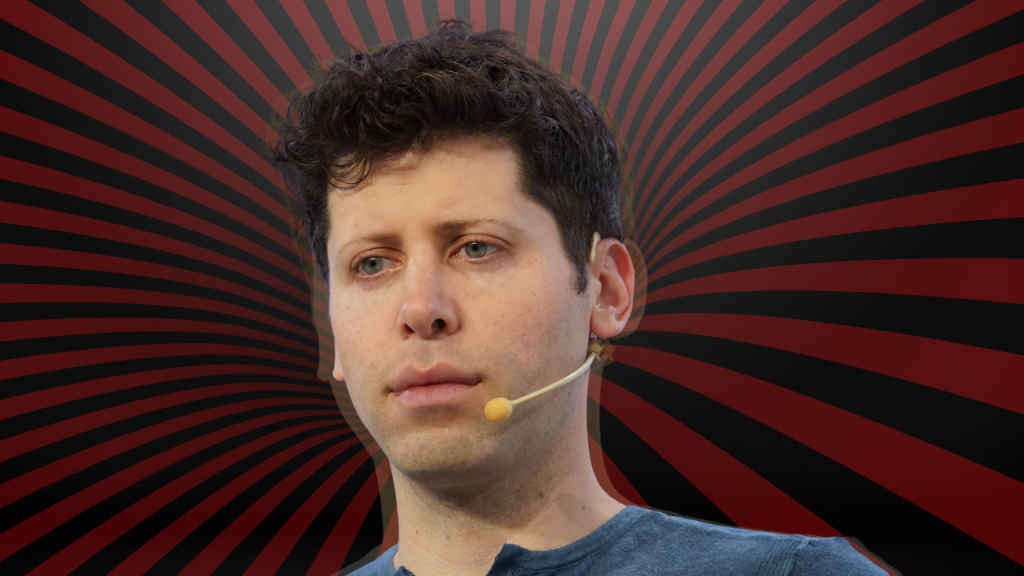
He also said that the possibility of building superintelligence was difficult for many people to accept. “And maybe we really can make superintelligence, and that’d be weird, but, you know, maybe it’s possible,” he said.
Altman added that researchers also had to think about solving the alignment problem, even when there was no clear solution. “And maybe we can solve the alignment problem even though we don’t know how.”
He recalled that the reaction from many people was much less optimistic. Some saw AGI as impossible, while others considered the idea irresponsible.
Also read: OpenAI loses second CXO-level exec this week: Here is who will replace her
Altman’s comments show how different the views on AGI were when OpenAI was starting out. While some researchers believed advanced AI could eventually become far more capable, others questioned whether the technology, cost and safety challenges could be overcome.
Today, AGI remains a major goal for AI companies. They are spending heavily on more powerful models and computing infrastructure. However, there is still no single definition of AGI or clear agreement on when it could be achieved.


