
 E-Magazine
Samsung vs Apple smart glasses: Launch timeline, features, specs, price and everything else you can expect
Samsung's Intelligent Eyewear will launch in the US and South Korea on December 10, starting at $395 (around Rs 37,000).
Apple's smart glasses could debut at WWDC 2027, with reported features including cameras, audio and Siri-powered Visual Intelligence.
Neither company's first-generation glasses is expected to feature an AR display, with both focusing on AI assistants, photography and hands-free interactions.
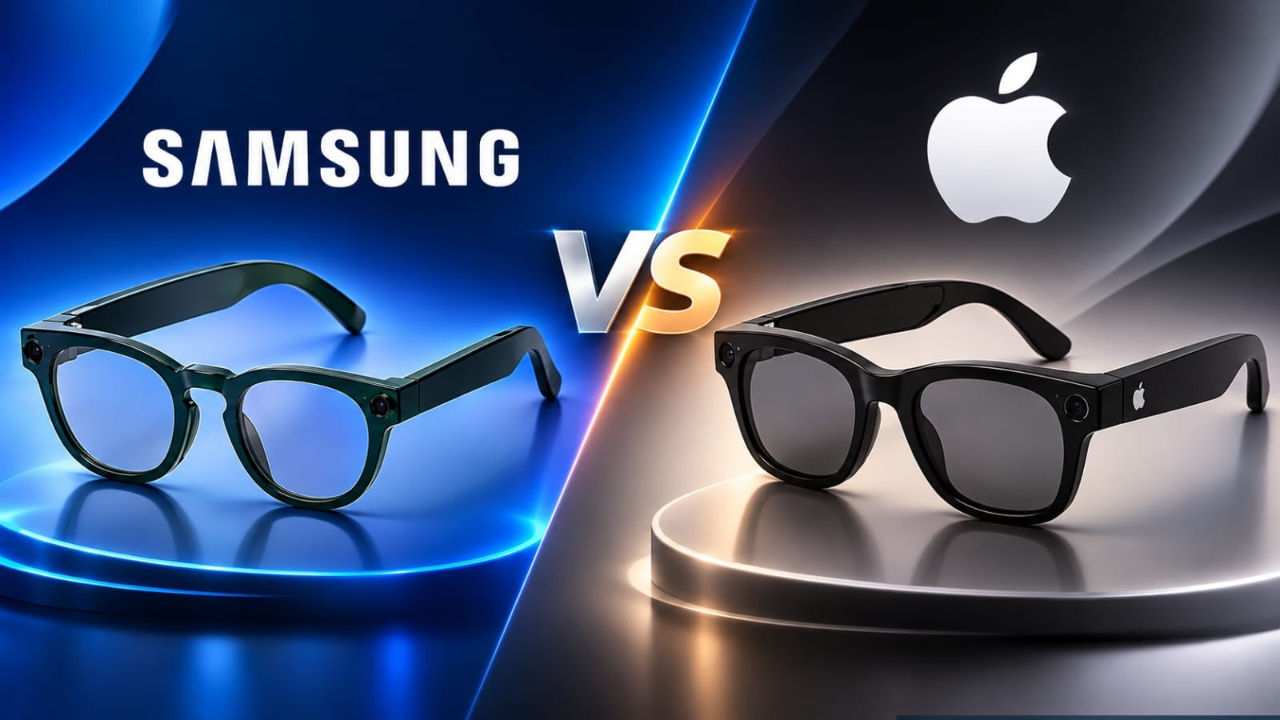
The smart glasses market is now going to see good competition, with Samsung and Apple preparing to take on Meta. Samsung has already announced its first Intelligent Eyewear range with Google Gemini support; Apple is reportedly working on a competing product that could arrive next year. However, neither company is expected to introduce a full-fledged augmented reality experience with its first-generation glasses. Instead, both appear to be focusing on lightweight frames without displays, allowing users to interact with AI assistants, capture photos and videos, listen to audio, and access certain smartphone features without reaching for their phones. But what will these two products offer? Here is what I think.
Samsung vs Apple smart glasses: Launch timeline and expected price
Samsung has confirmed that its Intelligent Eyewear will go on sale in the US and South Korea on December 10, 2026. Pre-orders opened on November 12, with two eyewear partners involved in the launch: Warby Parker and Gentle Monster. The company has not announced an India launch date or India price yet.
The Warby Parker collection starts at $395, which is approximately Rs 37,000. The Gentle Monster variants are more expensive, with prices ranging between $449 and $489, or roughly Rs 42,000 to Rs 46,000.
On the other hand, Apple is yet to acknowledge the existence of its smart glasses. According to Bloomberg’s report, the company is targeting a June 2027 announcement, possibly during its Worldwide Developers Conference (WWDC). However, the commercial availability might be stretched to the end of next year. There are also possibilities that Apple may change the plan. The price is also not confirmed. The reports suggest that it can be priced under $500.
Design and hardware: What will the glasses look like?
Both companies appear to be taking a fashion-first approach rather than building bulky headsets. Samsung has worked with Warby Parker and Gentle Monster to introduce 30 frame and colour combinations. The glasses weigh around 41 grams, although the exact weight varies depending on the model.
Apple is reportedly testing several frame designs, including rectangular and rounder options. The glasses are expected to have a relatively slim profile, with cameras integrated into the frame. Some reports suggest the design can be thinner than Meta's second-generation Ray-Ban smart glasses.
On the hardware front, Samsung's Intelligent Eyewear uses Qualcomm's Snapdragon AR1 Gen 1 processor. It also includes 2GB of RAM, 64GB of internal storage, Wi-Fi 6E and Bluetooth 5.4. The glasses carry an IPX4 rating for splash resistance.
Apple's reported hardware details are less certain. The company is said to be developing a custom low-power processor, potentially based on its Apple Watch chip architecture, alongside dedicated components for wireless connectivity and image processing. These details have not been confirmed by Apple.
Cameras, audio and battery life
Samsung's glasses feature a 12-megapixel camera that can capture photographs and record video at up to 3K resolution at 30 frames per second. It also offers four microphones and two open-ear speakers through which users can take calls, listen to music and interact with an AI assistant.
The Apple smart glasses are also said to include a camera. The reports suggest that two sensors integrated into openings on the frame will help users click photos, take videos and perform visual recognition via Apple's AI Siri. The glasses are also expected to offer speakers and microphones for voice-based interactions.
In terms of battery, Samsung claims up to nine hours of use on a single charge. The accompanying charging case can provide more than seven additional charges, taking total usage time to as much as 72 hours away from a power outlet. On the other hand, Apple battery specs remain unknown. Reports have pointed to a small, magnetic three-pin charging connector on the left temple arm, but there is no confirmed information about battery capacity or endurance.
AI features: Gemini vs Siri
Samsung's glasses run on Android XR and integrate Google's Gemini assistant. Since the eyewear has cameras, Gemini can use visual information to respond to questions about objects or surroundings. Users are expected to be able to ask for information about landmarks, get spoken translations and access hands-free navigation through Google Maps.
The glasses will also work with other devices and services in the Android ecosystem. Users can control media through compatible Galaxy Watch and Galaxy Buds devices, while supported third-party integrations could enable additional hands-free actions.
Apple is reportedly building its glasses around a revamped Siri and Visual Intelligence. The assistant could help identify objects, answer questions about what the wearer is seeing, handle calls, play music and provide walking directions.
Rather than running a separate app ecosystem on the glasses, Apple is expected to rely heavily on a connected iPhone. The eyewear can act as an additional interface for existing iOS apps, with the phone handling many of the tasks in the background. Reports also suggest the glasses may connect to home or office Wi-Fi when the iPhone is not nearby.
Will Samsung or Apple launch AR display glasses?
Samsung's current Intelligent Eyewear does not have a display, and Apple's first-generation glasses are also expected to skip one. Both products are instead focused on cameras, audio and AI features, which should help keep the frames lighter and more suitable for everyday use.
That does not mean either company has abandoned display-equipped eyewear. Samsung and Google are reportedly exploring future Android XR glasses with visual displays, while Apple is said to be working on a second-generation model that can bring a heads-up display into the lenses. Apple's more ambitious augmented reality glasses are not expected to arrive until later in the decade.

Ashish Singh is the Chief Copy Editor at Digit. He's been wrangling tech jargon since 2020 (Times Internet, Jagran English '22). When not policing commas, he's likely fueling his gadget habit with coffee, strategising his next virtual race, or plotting a road trip to test the latest in-car tech. He speaks fluent Geek.
View full profile