
 E-Magazine
Deepinder Goyal backs Temple's science, but doctors aren't convinced: What is behind the controversy?
Goyal says Temple's development has cost $30 million, including $20 million from his personal funds, and points to its 14-day return policy.
He has promised scientific preprints and independent validation, citing WHOOP's delayed publication of validation studies as an example.
Dr Cyriac Abby Philips, popularly known as The Liver Doc, maintains that Temple's sensors measure facial blood flow rather than cerebral blood flow.
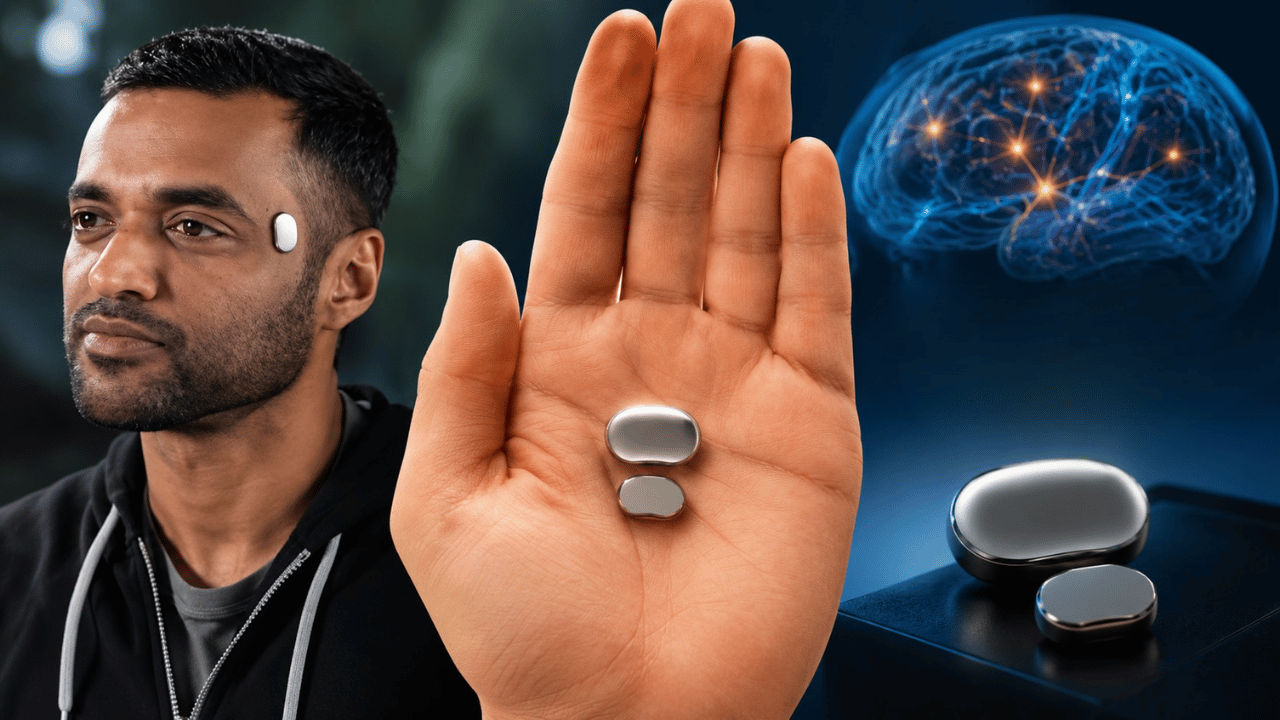
Zomato founder Deepinder Goyal and his Temple wearable found itself at the centre of growing debate over how much consumers can trust the health tracking technology that is yet to establish its scientific claims. The criticism has been particularly vocal from hepatologist Dr Cyriac Abby Philips, popularly known as The Liver Doc, who has described Temple as a major health scam and wellness fraud.
Now, Gotal has responded to the claims, defending the company's research, revealing how much he has invested in the project and arguing that the product should be judged on its performance once it reaches users.
Deepinder Goyal says Temple is not a money-making exercise
In a lengthy post on X addressed to “concerned Indian doctors”, Goyal revealed that developing Temple has cost around $30 million, of which $20 million came from his personal funds. He also pointed to the device's 14-day, no-questions-asked return policy, arguing that customers would not be left paying for a product that fails to deliver.
“We have 14-day, no-questions-asked returns (which even Apple doesn't offer in India). If the product doesn't work, it fails out of the gate and the company dies before recovering a tenth of its R&D,” Goyal wrote.
He also addressed his decision to step down as CEO of Eternal, the parent company of Zomato and Blinkit, saying that he wanted to focus on what he considers a larger purpose with Temple. According to Goyal, the move was not motivated by financial gains.
“I left the Eternal CEO role to chase purpose with Temple. This is not about money. I have enough of it to last for generations,” he said.
Goyal further claimed that employees had participated in an earlier funding round, while customers accounted for most of the investment in the latest round.
What is Temple, and what does it claim to measure?
Temple is a small, pill-shaped wearable designed to be attached to the side of the head, near the temple, using adhesive patches. Unlike conventional smartwatches and fitness bands, which primarily track metrics such as heart rate, sleep and physical activity, Temple's central pitch revolves around monitoring changes associated with cerebral blood flow.
The device also tracks a metric called Entropy. According to the company's explanation, it represents how hard the body is working to shed heat. Goyal has linked the technology to his Gravity Ageing Hypothesis, which proposes that gravity's long-term effects on blood circulation could play a role in the ageing process, particularly in the brain.
These are ambitious claims, and they are also the reason Temple has attracted scrutiny from medical professionals. The main question is whether a sensor worn against the skin near the temple can reliably measure changes in blood flow within the brain, and whether the resulting readings can offer useful information about a person's health.
The difference matters because detecting changes in blood flow near the surface of the skin is not necessarily the same as measuring cerebral blood flow. Many critics have stated that the company will have to establish this connection with independent and verifiable evidence before consumers can rely on its claim.
Goyal defends Temple's science and points to WHOOP
Replying to the questions about the research behind Temple, Goyal stated that wearable companies have often introduced products before publishing the formal scientific validation. He also talked about Whoop, claiming that the company began shipping its fitness band in 2015, while its first published validation studies appeared several years later.
Goyal said Temple was working towards a higher standard of scientific scrutiny and that preprints would be published ahead of peer-reviewed research.
“We hold ourselves to a higher standard; pre-prints are a step prior to peer reviewed publications, and they are coming up,” he wrote.
He also stated that the company's research methods and claims can be examined by independent researchers and institutions. Goyal also expects more independent studies to emerge once Temple becomes available to users.
“At some point you have to stick your neck out and say: we believe in our science, and the product is now valuable enough for people to pay for and use. We believe we are there. More validation continues in public,” he added.
However, the comparison with other wearable brands does not, by itself, establish that Temple's claims are accurate. The central issue remains whether the device can demonstrate that it measures what the company says it measures. Preprints can make research available for examination, but they are not a substitute for independent validation or peer review.
Goyal also hinted that Temple has features that have not yet been revealed publicly, adding that some of its most significant capabilities have little to do with doctors.
Why The Liver Doc is questioning Temple
Dr Cyriac Abby Philips has been among the most prominent critics of Temple. The hepatologist has questioned the device's central claim of measuring blood flow to the brain and argued that its sensors may instead be detecting blood flow and flushing closer to the surface of the face.
In an earlier post, Philips described the wearable as “the biggest health scam and wellness fraud in India”. He also questioned the decision to take pre-orders while, according to him, the company had not provided convincing clinical evidence to support its claims.
Goyal's latest response has not changed the doctor's position. Reacting to the post on X, Philips again argued that Temple's current capabilities do not match the way the product is being presented to potential buyers.
“Temple is overdoing it and defrauding its potential customers. The device can only measure blood flow and flushing to the face in humans and has absolutely NOTHING to do with the brain as they claim,” Philips wrote.
He also questioned whether Temple should be considered a worthwhile purchase at its price if it cannot demonstrate its primary advertised function. For the doctor, the possibility of additional features or future research does not address the concerns surrounding what the device can do today.