

Best large-screen TVs in India in 2026: 75-inch to 115-inch models
 Follow Us
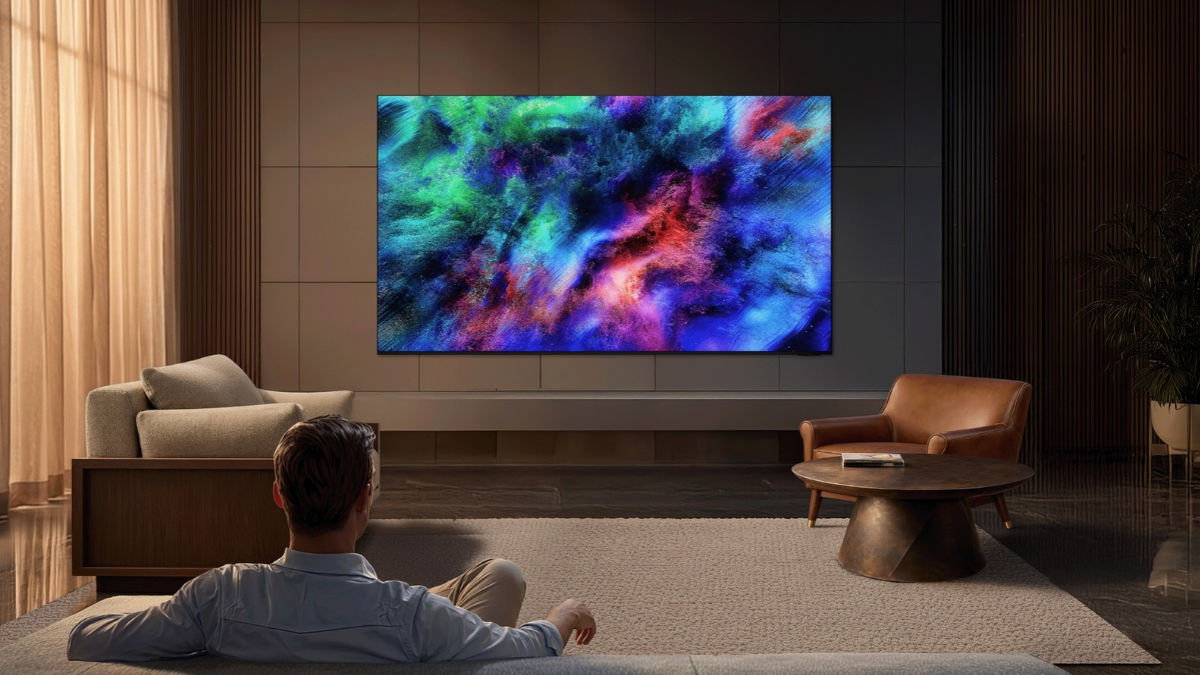

In India, having the biggest possible TV in the living room is often seen as a status symbol. And with rising disposable incomes and the democratisation of technology, large-screen TVs are becoming a more practical option for Indian homes. In independent surveys, the preference for 75-inch and above screen TVs have shown growing interest. These are suitable for large living rooms and home theatre setups. And leading brands like Samsung are offering bigger displays across different budgets and display technologies. For instance, Samsung’s 2026 TV lineup spans Crystal UHD, Mini LED, Neo QLED, OLED and Micro RGB, giving buyers options ranging from large family TVs to premium home-theatre setups.
 Survey
But buying a bigger TV is not just about screen size. You should also consider picture quality, viewing distance, room lighting, gaming features and installation costs. In this guide, we compare our picks across major price brackets alongside alternatives from other brands, without getting into every specification or feature. Keep in mind that TVs with more advanced picture technologies generally command a premium.
Best 75-inch TVs in India
While it matters on the size of your room, of course, a 75-inch screen is where a TV appears really big and more immersive than the more mainstream 55-inch and 65-inch counterparts.
If you are in the market for one, you can start by looking at Samsung’s M70H Mini LED. It offers a good balance between size and value.
But if you want a better TV for sports and gaming, the Samsung M80H is worth considering as it features Motion Xcelerator 144Hz refresh rate, AI Football mode, and more. Its 75-inch version is currently available at around Rs 1,47,990 on Samsung.com.
And those of you seeking a more premium picture can consider the R85H Micro RGB, priced at around Rs 3,29,990 for the 75-inch version.
Best 85-inch TVs in India
An 85-inch model is worth considering when you have more wall space and want a more immersive experience for films, sports and gaming.
Samsung offers the M70H Mini LED at around Rs 2,24,990, the QN70H Neo QLED at around Rs 2,74,990 and the R85H Micro RGB at around Rs 3,94,990. The company’s S90H and S95H OLED models are alternatives for buyers who prioritise contrast and deep blacks. Their 83-inch versions were listed at approximately Rs 4,69,990 and Rs 5,24,990, respectively. Both also feature Glare-Free technology, which helps reduce reflections in bright rooms.
Best 98-inch and 100-inch TVs in India
Now this is getting into extremely big territory. In case you are building a dedicated entertainment room, close-to-100-inch and larger televisions offer an experience closer to a cinema screen. Samsung’s range includes three distinct approaches.
Samsung offers three distinct choices in this size. The U9000H Crystal UHD 98-inch is priced at Rs 4,24,990. The M90H Mini LED 100-inch costs around Rs 4,74,990, while the QN80H Neo QLED 100-inch is priced at Rs 5,39,990. And if you want a premium Micro RGB display, you can move to the R85H 100-inch, priced at Rs 5,99,900.
The differences matter. The U9000H prioritises a very large 4K screen with Samsung’s Vision AI features. The M90H moves to Mini LED backlighting, while the QN80H adds Neo QLED technology and Motion Xcelerator 144Hz support. The R85H is for buyers seeking Samsung’s more advanced RGB backlight technology.
Samsung’s advantage in this range is the breadth of its product ladder. You can choose between a large conventional LCD, Mini LED, Neo QLED and Micro RGB without leaving the brand’s smart TV platform.
Which TV display technology should you choose?
Let us help you understand this with Samsung’s different TV categories. Each of them serves distinct needs, so a higher-priced model is not automatically the right choice for every room.
- Micro RGB: The R85H and R95H use individually controlled red, green and blue micro LED backlights. This technology targets buyers who want premium colour reproduction and precise light control. The R95H adds features such as Glare-Free technology.
- OLED: The S90H and S95H can produce deep blacks and strong contrast, making them attractive for films, high-quality streaming and gaming. Their 77-inch and 83-inch options provide a large-screen alternative without moving to a 100-inch television.
- Mini LED: The M90H, M80H and M70H use Mini LED backlighting to improve light control and contrast. The M80H is particularly relevant to buyers who watch sports or play games, thanks to its advertised 144Hz motion technology.
- Neo QLED: The QN80H and QN70H combine Quantum Dot colour technology with Mini LED backlighting. They are worth considering for bright rooms and buyers who want abalance of brightness, contrast and gaming features.
- Crystal UHD: The U9000H provides a 98-inch 4K option for those who prioritise screen size and smart features. You should compare its picture performance with that of similarly sized QLED and Mini LED models before deciding.
Picture and smart TV features to look for
Picture quality is not determined by the display label alone. On a large 4K TV, check HDR support, brightness, contrast, local dimming and reflection handling. Good upscaling also helps HD TV channels look cleaner on a 4K screen. The right balance depends on room lighting, content quality and viewing habits. For smart features, check that the TV has the streaming apps you use, an easy-to-navigate interface, useful voice search or casting options, reliable connectivity and a clear software-update policy. Selected Samsung 2026 models add Vision AI tools such as AI upscaling and AI Soccer Mode, although features vary by model.

How to choose the right large-screen TV
Let’s understand this aspect by aspect:
4K home-theatre viewing
4K (3,840 x 2,160 pixels) has four times the pixels of Full HD, helping preserve detail on large screens. For many living rooms, 75 inches can be a home-theatre sweet spot, delivering an immersive image without the space and cost of a 98-inch TV. Viewing distance, HDR, contrast and sound still matter. A soundbar can add a more cinematic audio experience.
Coming to viewing comfort, start with your seating distance and room layout. As a general guide, here’s the distance you should maintain:
- A 65-inch 4K TV can work well at around 6 to 9 feet,
- A 75-inch model suits many viewing setups at roughly 7.5 to 10 feet.
- An 85-inch TV benefits from a more spacious room, while a 98-inch or larger display is better suited to a dedicated, well-planned viewing area.
Your viewing habits also matter. If you often watch football, cricket or play games, a larger screen can make the action easier to follow, while a high refresh rate can help deliver smoother motion in compatible content. For films and HDR shows, contrast, black levels and colourreproduction may matter more than screen size alone. If your room gets plenty of daylight, look for a bright TV with good reflection handling. For a family that mainly watches TV channels and streaming content, a suitable screen size, good upscaling and an easy-to-use smart platform may be more useful than paying extra for premium display technology.
Gaming and HDMI 2.1 features
Gamers should look beyond screen size and claimed motion-processing numbers. If you use a gaming console or a gaming PC, you should check:
- The panel’s native refresh rate and higher it is, the smoother fast-moving scenes would look, particularly in sports and compatible games
- HDMI 2.1 support, which brings features such as 4K gaming at up to 120Hz, Variable Refresh Rate (VRR) and Auto Low Latency Mode (ALLM), provided the TV, console or PC and the HDMI connection support them.
- Variable refresh rate (VRR), which helps in reducing screen tearing
- Auto Low Latency Mode (ALLM) which lets the TV switch to a low-latency mode to make controls feel more responsive.
Also, check the television’s HDR formats, glare handling, and smart platform. A bright room with daylight may favour a display with strong brightness and reflection control, while a darker room can make OLED’s contrast particularly appealing.
Large-screen TV choices by budget in India
- Around Rs 1 lakh: Neo QLED-QN80H & QN70H, Frame TV-55LS03H, Mini LED- 65M70H.
- Around Rs 1.5 lakh: Samsung M80H in 75-inch versions, listed at approximately Rs 1,47,990. TCL C7L is also available in this price bracket.
- Around Rs 2.25 lakh to Rs 3 lakh: Samsung M70H or QN70H in 85-inch versions, listed at approximately Rs 2,24,990 and Rs 2,74,990.
- Around Rs 4 lakh to Rs 6 lakh: You can consider options like the Samsung U9000H 98-inch Crystal UHD, M90H 100-inch Mini LED, QN80H 100-inch Neo QLED and R85H 100-inch Micro RGB. So, the massive screen TVs would come in this range.
- If you want even bigger screen TV, you can consider the 115-inch R95H which would cost you Rs 21,99,900.
Before placing an order of any of these TVs, we suggest you measure the wall, doorways, staircases and lift. Of course, the size of the package should be considered for moving the TV to your room. The installation requirements also must be considered.
Disclaimer: For the final price, you should check the applicable bank cashback and exchange bonuses. If you buy accessories, then that can also lower the effective price. Also, confirmwhether the warranty covers the entire TV or only the panel, and read the replacement policy for damage during delivery.
FAQs
Is a 75-inch TV enough for a home theatre?
For many homes, yes. A 75-inch 4K TV can offer an immersive viewing experience without demanding as much wall space as an 85-inch or larger model. The best size depends on seating distance and personal preference.
Should you buy a 98-inch TV or a 100-inch TV?
The difference in screen size is small. Compare price, picture technology, refresh rate, connectivity, warranty and delivery requirements instead of treating the two sizes as separate performance categories.
What should you check before buying a 98-inch or larger TV?
Confirm that the TV can reach the installation room, check the wall-mounting requirements and measure the viewing distance. Also verify local delivery, installation, replacement and warranty terms before paying


