
32-inch smart TV vs 43-inch smart TV: Which size should you buy in 2026?
 Follow Us

When buying a smart TV, one of the first things to consider is its size. The right screen should fit your room, viewing distance and how you plan to use it. In India, for many buyers, the choice often comes down to a 32-inch or 43-inch TV, particularly when space is limited.
 Survey
Beyond the obvious difference in screen size and price, moving from 32 inches to 43 inches can also bring improvements in audiovisual quality, processing, smart features and connectivity. But that does not automatically make the larger TV the better choice for everyone. It depends on where you plan to use it, what you watch and how much you are willing to spend.
So, to help you decide, let’s take a closer look at how 32-inch and 43-inch smart TVs differ and which one makes more sense for your needs.
32-inch vs 43-inch smart TV: key differences you should know
The most obvious difference is screen size, but there is more to consider. A typical 32-inch TV is around 28.5 inches wide, while a 43-inch model is roughly 38 inches wide. That difference can be important if you have limited wall or cabinet space.
The two sizes also tend to target different types of buyers in the market. Most 32-inch TVs focus on affordability and compact spaces. They mostly come in HD+ resolution, and some exceptions have Full HD panels.
Meanwhile, at 43 inches, 4K resolution is much more common. A 4K panel has a resolution of 3840 x 2160 pixels, giving you four times the pixel count of Full HD. On a larger screen, that extra resolution can make fine details, text and edges look sharper.
The difference is particularly useful when watching high-quality OTT content, films and sports. A 43-inch screen also provides a more immersive experience when several people are watching together.
| Feature | 32-inch smart TV | 43-inch smart TV |
| Typical resolution | HD+, some Full HD | 4K UHD |
| Best suited for | Small bedrooms, guest rooms, compact spaces | Living rooms, larger bedrooms |
| Picture detail | Good for everyday viewing | Better suited to detailed content |
| OTT viewing | Suitable for casual viewing | Better for immersive viewing |
| Gaming | Suitable for casual gaming | Better for console gaming |
| Physical footprint | Smaller | Larger |
| Price | More affordable | Higher |
| Long-term use | Good for secondary TV use | Better suited to primary TV use |
There is also a broader market shift towards larger screens. As per Counterpoint, the 43-inch to 54-inch segment saw a 3% year-on-year shipment growth from 2024 to 2025. In the same span, the 32-inch model’s shipment share dropped by 15%. The research firm’s prinicipal analyst, Anshika Jain, noted, ‘A sharper shift toward larger screen sizes became evident during the year, with 43-inch accounting for the highest shipment share as it became the default consumer choice.’
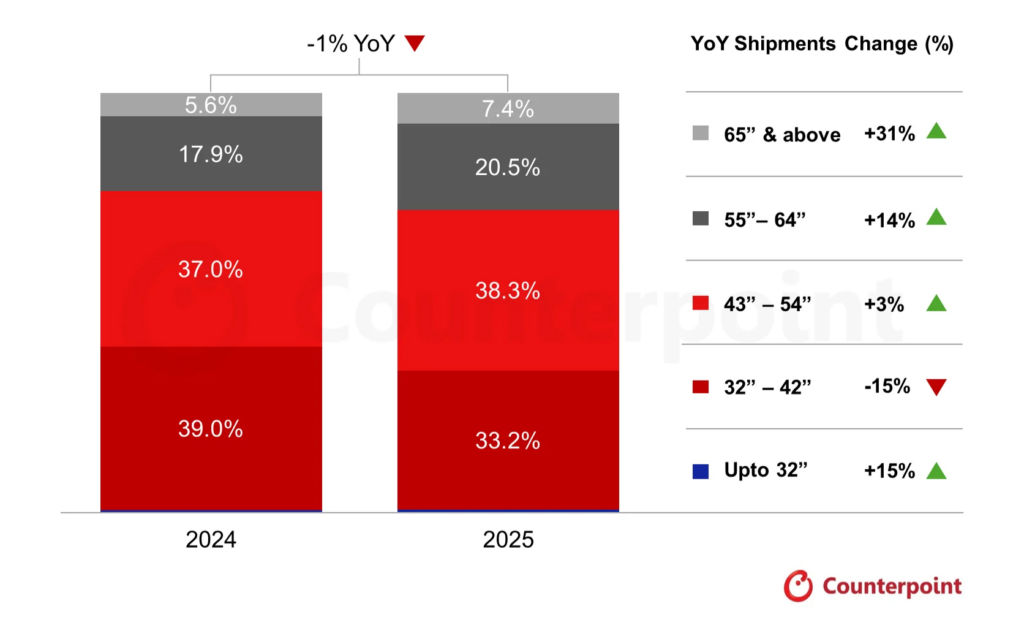
However, that isn’t to say 32-inch TVs have no demand. As the 43-inch category is becoming more relevant for primary TVs, 32 inches still makes sense for specific use cases.
What should you look for in a 32-inch smart TV?
If you are buying a 32-inch smart TV, do not focus only on screen resolution. At this size, the overall viewing experience also depends on picture processing, brightness, colour reproduction and the smart TV platform.
HD resolution can be serviceable if you mainly watch DTH channels, news, YouTube or casual OTT content. If you sit closer to the TV, however, a Full HD model can provide sharper or clearer content.
The smart TV experience is equally important. Check whether the TV operating system supports the streaming services you use and whether the TV has enough HDMI ports for devices such as a set-top box, soundbar or gaming console. Wi-Fi and Bluetooth support are also worth checking.
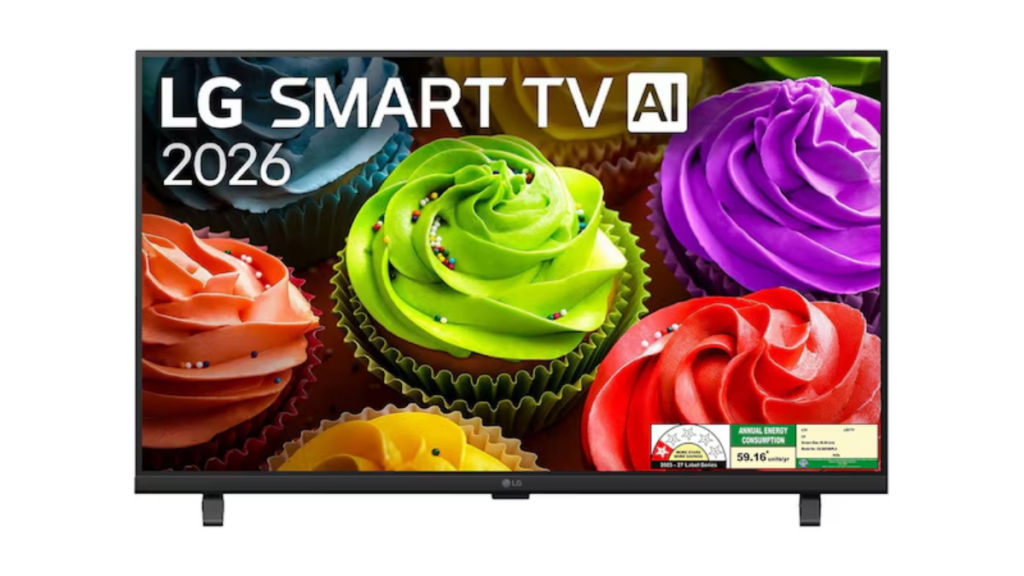
A model such as the LG 32LB650BPLA shows what you can get in this category. It has a 32-inch HD panel, α5 Gen9 AI Processor, Resolution Upscaler, HDR10 support, HGIG, Game Optimizer dashboard, AI Sound Pro, and webOS 26. The processor and software features are aimed at improving the experience beyond what the basic HD+ resolution suggests.
So, the main takeaway is simple: a 32-inch TV make sense if the quality of the overall package is good and you are not paying simply for a longer specifications list.
What should you look for in a 43-inch smart TV?
With a 43-inch TV, the larger screen makes display quality more noticeable, so 4K resolution should be the starting point for most buyers.
After that, look at HDR support, brightness, picture processing and upscaling. This is important because not everything you watch will be in native 4K. A good processor can help improve lower-resolution content before displaying it on a 4K panel.
If you watch films, features such as Filmmaker Mode can also be useful. For gaming, look for features such as Auto Low Latency Mode (ALLM), HGiG and a dedicated game mode.
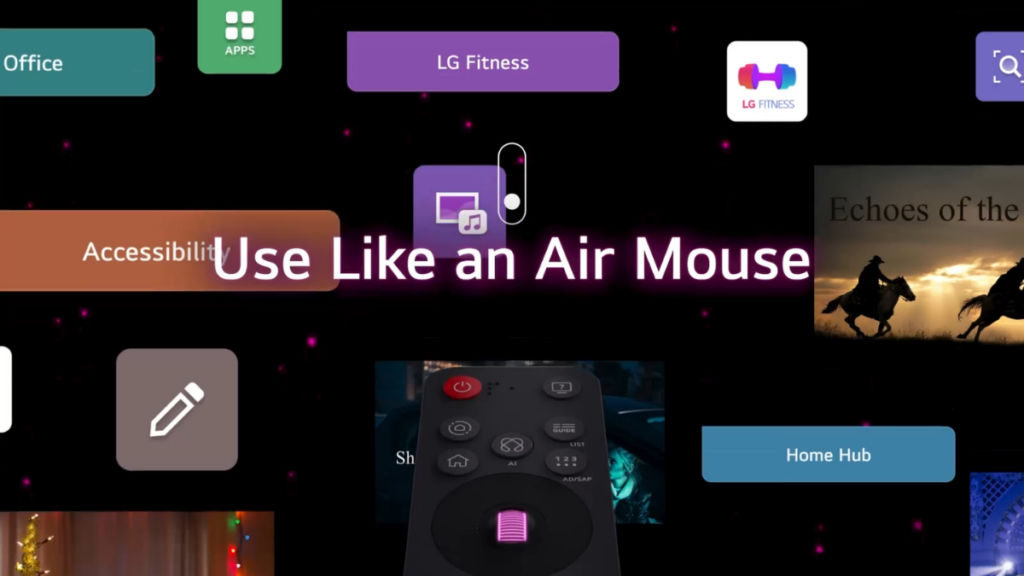
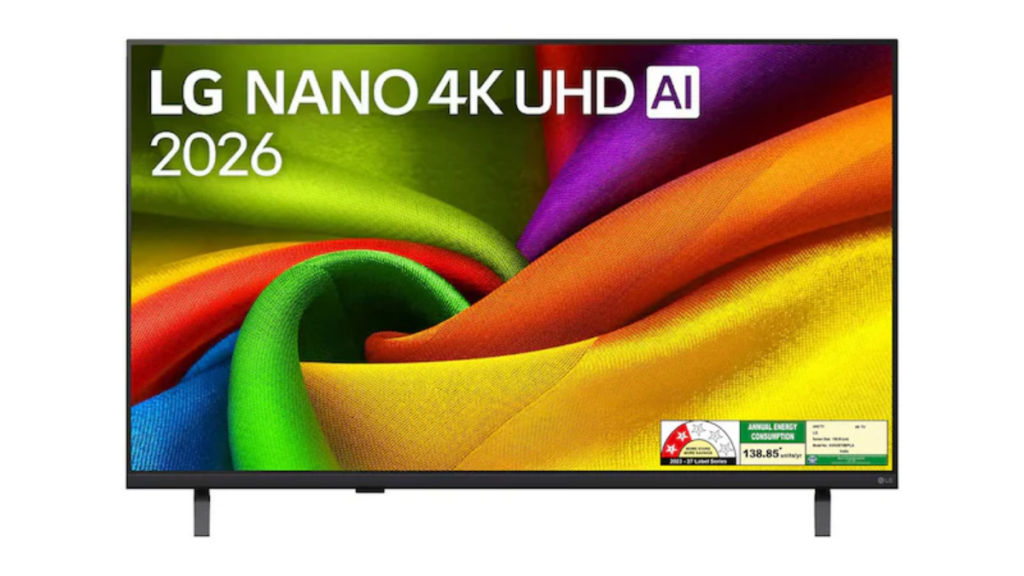
The LG 43NU870BPLA is one example of a 43-inch TV that combines several of these features. It has a 4K UHD panel, α7 AI Processor 4K Gen9, 4K upscaling, HDR10 and HLG support, Filmmaker Mode, ALLM, HGiG, Game Optimizer dashboard, AI Search powered by Microsoft Copilot, and LG’s AI Magic Remote for point-and-click navigation.
At higher price points, buyers can also consider technologies such as QNED and Mini LED. However, it is worth looking beyond the name of the display technology. Consider whether the improvement in brightness, contrast or colour will actually matter in the room where you plan to use the TV.
Connectivity is another consideration. Think about how many HDMI devices you expect to connect and whether you plan to add a soundbar, console or streaming device later.
When should you buy a 32-inch smart TV?
As already discussed, a 32-inch smart TV is the practical choice when space or budget is your main concern. It works well in a small bedroom, guest room, student accommodation or compact apartment.
It can also make sense as a secondary TV when you already have a larger screen in the living room.
The viewing distance matters too. A 32-inch TV is generally better suited to shorter viewing distances, around 4 to 6 feet according to the supplied research.
Also read: LG OLED G6 review: One of the most complete TVs I have tested this year
If you sit relatively close to the TV and mainly watch news, DTH, YouTube or occasional OTT content, a 32-inch screen may be all you need.
Budget is another clear advantage. The research places typical 32-inch TV pricing around Rs 10,000 to Rs 18,000, although actual prices vary by brand, model and offers. From top brands like LG, the price of its 32LB650BPLA model starts at Rs 16,990.
When should you buy a 43-inch smart TV?
A 43-inch smart TV makes more sense when it is going to be your primary television, and you have enough space for it.
The larger screen works particularly well for family viewing, films, sports and gaming. It also gives you access to a wider range of 4K content and more advanced picture-processing features.
For a primary TV, 43 inches can therefore offer a better balance between screen size and practicality than moving straight to a 55-inch model.
It can also be a sensible long-term purchase. If you expect to keep the TV for several years, 4K gives you more scope to take advantage of higher-resolution content as it becomes more common.
The additional cost is worth considering carefully, though. Besides screen size, also look at the actual panel quality, processing, brightness, software and connectivity before deciding.
Take, for example, the LG 43NU870BPLA, which combines 4K resolution with α7 AI Processor 4K Gen9, HDR10 support, Filmmaker Mode and gaming features at a starting price of Rs 31,990. Such a TV is better suited for entertainment than casual viewing.
32-inch or 43-inch smart TV: Which one should you buy?
So, the choice largely comes down to how you intend to use the TV.
Choose a 32-inch smart TV if you have limited space, a strict budget or need a secondary TV for a bedroom, guest room or similar space. You can still get a modern smart TV experience, good connectivity and useful picture and audio processing without paying for a larger panel.
Choose a 43-inch smart TV if it will be your primary television and you regularly watch films, sports, OTT content or play games. The larger screen and widespread availability of 4K make it the more versatile option for many living rooms and larger bedrooms.
The key is not to choose based on screen size alone. Measure the available space, consider your viewing distance, the advanced display technologies the TV offers, and think about the content you watch most often.
For a compact room and straightforward viewing, 32 inches remains a sensible choice. For a primary TV where picture quality, immersion and long-term use matter more, 43 inches is the more compelling option in 2026.
Also read: LG QNED85 review: A balanced Mini LED TV with a buffet of features


