
This is the year for refurbished phones: Yug Bhatia says rising smartphone prices is changing India’s market
 Follow Us
Rising smartphone prices are increasing demand for refurbished phones.
Better quality and warranties are building trust in refurbished devices.
Refurbished phones are becoming a popular value-for-money choice.
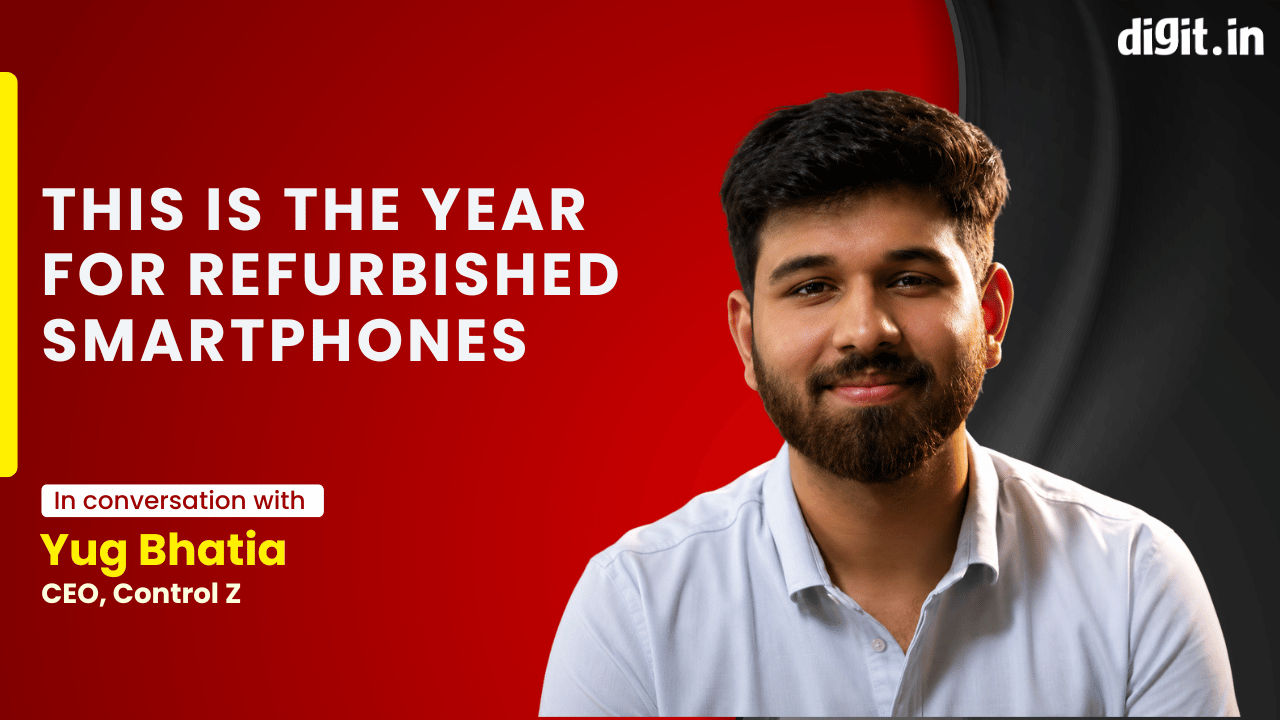

Buying a smartphone in India is becoming more expensive. Whether it is a recently released smartphone or an upcoming release, prices have risen quite a bit compared to the previous generation of devices. Also if you’d note, the price increase is not sudden but rather driven by the increasing cost of chipsets in the global market. With the increasing smartphone prices, we can see a change in the Indian smartphone market as people who would have earlier opted for a new phone are now looking to get a premium refurbished one that comes with better specifications but at a lower cost. This has also resulted in the rise of the companies who deal in refurbished smartphones.
 Survey
In an exclusive interview with Digit, Yug Bhatia, Founder and CEO of Control Z, discussed why refurbished phones are gaining popularity, how AI is being used as a marketing tool, and why he believes value has become more important than ever for Indian consumers.
Changing perceptions of refurbished devices
The refurbished smartphone market has existed for years, but consumer confidence has always been its biggest challenge. Many buyers associated refurbished phones with poor quality, visible scratches and unreliable performance. According to Yug Bhatia, that perception is slowly disappearing because companies are now focusing on offering products that feel almost identical to brand-new smartphones instead of simply selling used devices.
He explained that Control Z purchases older smartphones and renews them at its Gurgaon facility using an automated repair and testing process. According to the company, the device goes through more than 300 quality checks before reaching customers, and they also replace or refurbish several components wherever required to ensure that the final product delivers a premium experience rather than feeling like a second-hand purchase.
‘We present every phone absolutely like a new phone. It comes with 100 per cent battery health and an 18-month warranty,’ Bhatia said. He further added that beyond hardware the company also pays close attention to packaging and presentation. The idea is to make the unboxing experience feel similar to opening a new premium smartphone. According to him, when customers receive a device that looks, feels and performs like new, their hesitation towards refurbished products naturally starts to disappear.
Rising prices are driving refurbished demand
One of the biggest reasons behind the renewed interest in refurbished smartphones is the sharp increase in smartphone prices across almost every segment. From entry-level devices to premium flagships, consumers are now paying significantly more than they did a few years ago.
Bhatia believes the rise in chipset prices and component costs has accelerated the refurbished industry much faster than expected. In his view, the market has progressed by nearly two years because buyers are actively looking for alternatives that offer better value without forcing them to spend flagship-level money.
‘This is the year for refurbished phones,’ he said. Describing the sudden growth of the refurbished and second-hand smartphone market, he added that ‘the industry has moved ahead by at least two years because of the price increases.’
Normally, the value of older smartphones declines every year as newer models enter the market. However, the current situation has broken that pattern. Instead of becoming cheaper, refurbished devices have also become more expensive because demand has increased while overall smartphone prices continue to rise. While talking to Digit, Yug said that ‘Prices of the old models, specifically the premium Android devices and iPhones, should have fallen by 10 to 15 per cent, but instead they have gone up by around 20 per cent. That is something nobody has seen before.’
Value matters more than buying new
According to Bhatia, today’s buyers are becoming more practical with their purchases. Instead of focusing only on buying the latest smartphone, many consumers are now comparing what they actually receive for the money they spend.
He believes that someone with a budget of around Rs 30,000 is often better off purchasing a premium refurbished iPhone than buying a newly launched mid-range Android smartphone with weaker hardware. The overall experience, camera quality, software support and long-term performance can often be better on an older flagship device.
According to him, this shift is no longer limited to tech enthusiasts; it is now also visible among mainstream buyers. He said that consumers are increasingly recognising that refurbished devices can offer significantly better value without requiring them to compromise on quality, especially as smartphone prices continue to rise.
Smartphone industry is reshaping
During the interaction, we also touched upon the ongoing chipset crisis and its impact on smartphone pricing. While many people still view it as a temporary challenge, Bhatia believes the industry has entered a completely new phase.
He explained that higher semiconductor prices have permanently changed smartphone manufacturing costs. As a result, companies have little room to reduce prices, especially when premium components continue becoming more expensive. He said that ‘the smartphone industry has completely changed, and it’s not going back.’
Bhatia also believes that manufacturers will eventually pass higher production costs on to consumers because maintaining healthy profit margins remains essential. While companies may absorb a small part of the increase initially, doing so for a long period is not financially practical, particularly in the premium smartphone segment.
Government policies won’t affect the market
While the Indian government’s decision to remove import duties on several smartphone components has been welcomed across the industry, Bhatia believes the move will not significantly impact the second-hand market or lead to a substantial reduction in smartphone prices.
He explained that several manufacturers were already receiving subsidies or reduced duties while assembling products in India. He said that, although the new policies might increase accessibility, it is unlikely that they will be able to mitigate cost increases due to expensive chipsets and other hardware elements. According to him, customers should not assume that prices will fall immediately just because import duties have been changed since there are other more powerful factors in the market that affect smartphone prices.
AI isn’t driving upgrades yet
Artificial intelligence has become the new marketing point for smartphones. If you follow the smartphone industry, you must have noticed that almost every major smartphone launch now dedicates a significant amount of time to highlighting AI-powered cameras, editing tools, writing assistants, and productivity features.
However, Bhatia believes that AI has not yet become a strong enough reason for most people to upgrade their smartphones. In his opinion, many of these features still rely heavily on cloud computing, meaning users do not necessarily need expensive AI-focused hardware to access similar capabilities.
‘I personally don’t see any major AI use on phones except AI apps,’ he said. Instead, he feels smartphone companies are using AI as the latest marketing trend because every new generation needs a fresh selling point.
For buyers in the budget and mid-range segments, practical improvements such as more RAM, better storage, smoother software performance and longer update support would provide much greater value. Describing the same, he quoted that ‘for a Rs 20,000 phone, getting 6GB RAM is a much bigger deal than AI.’
Loyalty is bigger than specs
Another interesting observation from Bhatia was how consumer behaviour changes in the premium smartphone market. According to him, once buyers move beyond a certain price range, the technical specifications take the back seat as they become less important than brand preference.
He believes this explains Apple’s continued dominance in India’s premium smartphone segment. Buyers spending over Rs 50,000 often already know which brand they want, and small feature differences rarely influence their final decision. Stating the sales numbers from Control Z, Bhatia revealed that the iPhone 13 series remains the company’s best-selling refurbished smartphone lineup to date.
He didn’t stop there as he went ahead and explained that Indian buyers generally prefer purchasing one or two generations older iPhones because they offer a better balance between price and overall experience. Unlike several international markets where the newest Pro models attract maximum demand, Indian consumers often prioritise value, making previous-generation iPhones far more popular. Moreover, Yug also expects this trend to remain strong in the coming years as smartphone prices are still rising at a rapid pace.
Building trust is the key
When asked about the lack of trust in second-hand smartphones, especially from the older buyers who still believe refurbished devices are unreliable simply because they have been used before. Yug acknowledged that trust still remains one of the biggest challenges for the industry. However, he also added that Control Z is constantly working in this sector, as they are trying to change this perception by consistently delivering quality products, offering longer warranties and providing reliable after-sales service.
He further told us that a premium presentation also plays an important role because customers often judge the product before they even switch it on. He said that ‘the customer does not want to buy a pre-owned phone. They have simply never seen what a properly renewed phone looks like.’
While promoting the brand, he added that Control Z is expanding its offline retail presence so that customers can physically experience the products before making a purchase. Bhatia believes this helps build confidence, especially among buyers who still prefer visiting physical stores over ordering expensive devices online.
Refurbished smartphones are becoming the smarter choice
Yug Bhatia believes the future of refurbished phones is bright, and better quality checks, longer warranties, wider availability, and growing awareness are making them more popular among buyers. While he believes that new phones will always attract customers, he also trusts the stats that state more and more people are now looking for better value instead of the latest model. Lastly, he thinks that if the smartphone prices keep increasing the way they are now, then the premium refurbished phones could become one of the best-value choices in India’s smartphone market.


