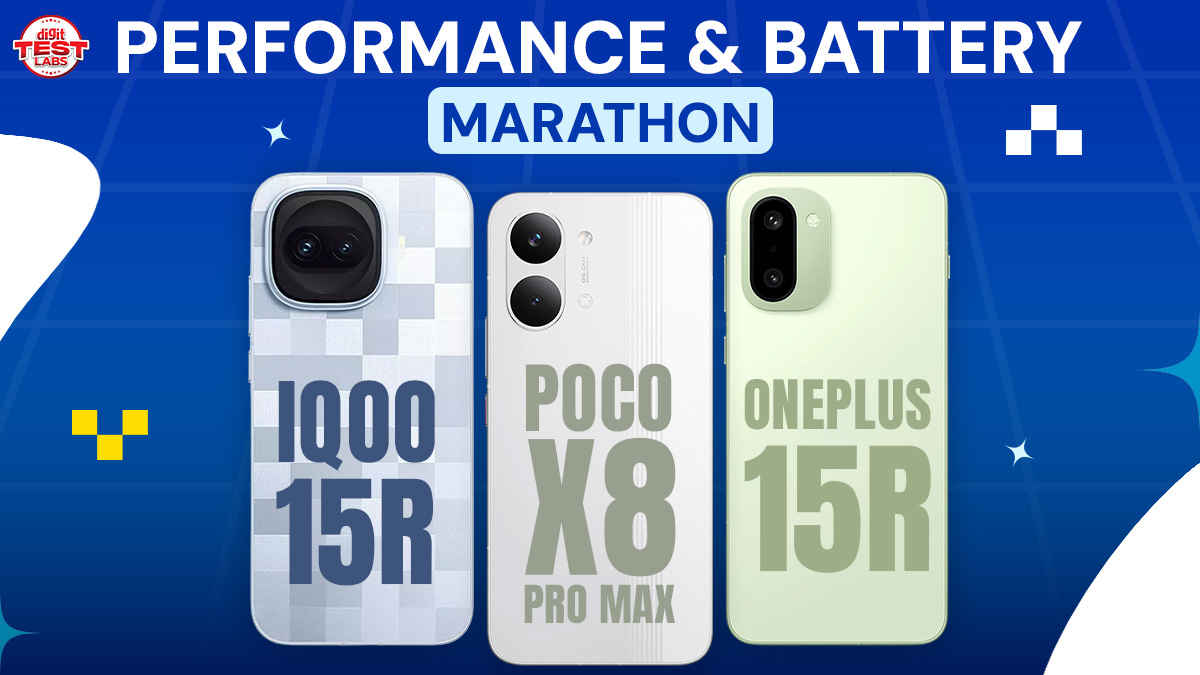
We recently spent some serious time in the Digit Test Labs to run a brutal 6.5-hour performance and battery-drain marathon. We picked three of the biggest heavyweights in the sub-Rs 50,000 smartphone segment: the POCO X8 Pro Max, the iQOO 15R, and the OnePlus 15R. These phones are built for speed, so we wanted to see which one actually lasts the longest and performs best when you push the hardware to its limits.
 Survey
On paper, the POCO X8 Pro Max has a massive 9,000mAh battery, which gives it a huge head start.
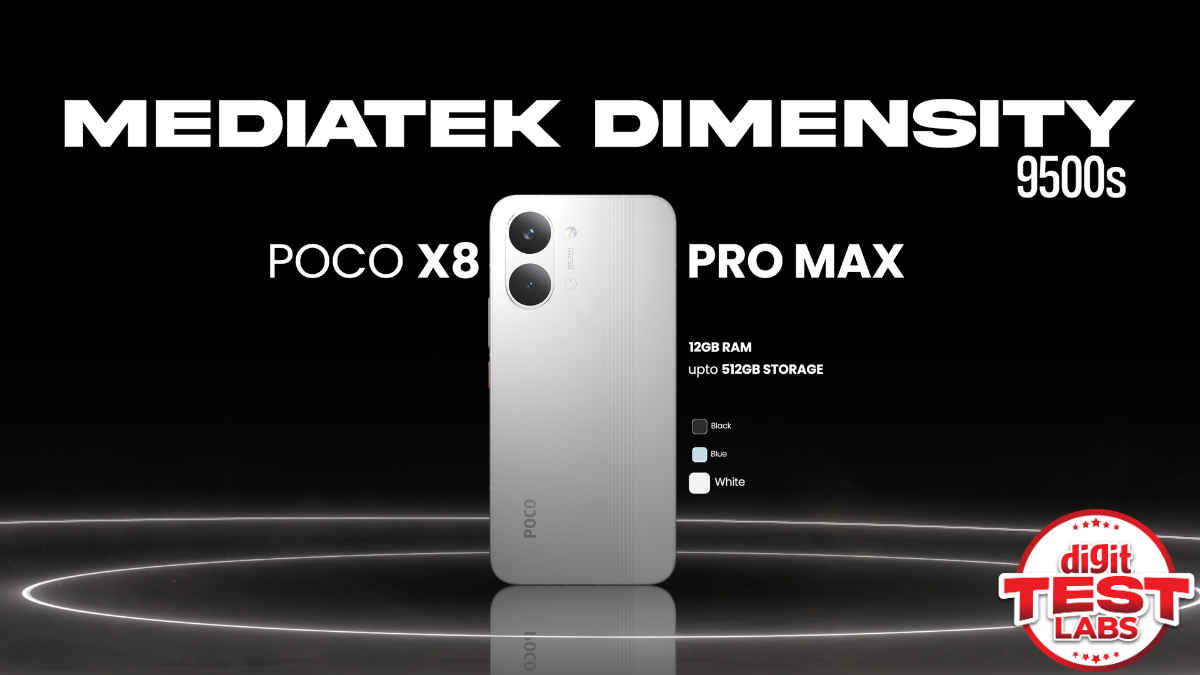
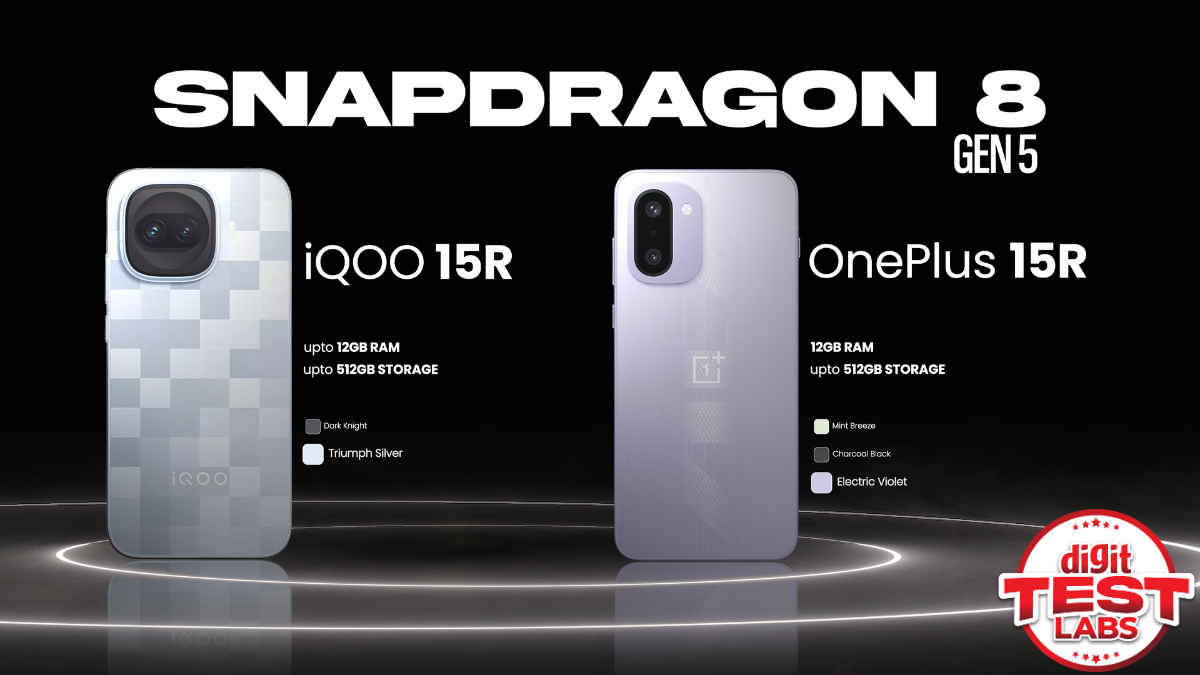
However, the iQOO and OnePlus both use the Snapdragon 8 Gen 5 chip. That is a very powerful yet efficient processor, so we wanted to see if clever software and a relatively smaller battery could keep up with the sheer size of the POCO unit.
Test conditions
We kept the entire test strictly controlled to make sure the data was as accurate as possible. We started by charging all three phones to exactly 100 per cent. To keep the playing field level, we manually locked the brightness on every device to 500 nits using a lux meter.
We also made sure the internal settings were identical across the board. We set the display profiles to their natural colour mode and left the refresh rates at their default out-of-the-box settings. To prevent any network-related drain issues, all three phones were connected to the same 5Ghz Wi-Fi network throughout the 6.5-hour test.
1.5 hours of real-world gaming
We started with gaming because these are performance machines. We had our team play 1.5 hours of high-intensity games like BGMI, Asphalt, and Genshin Impact.
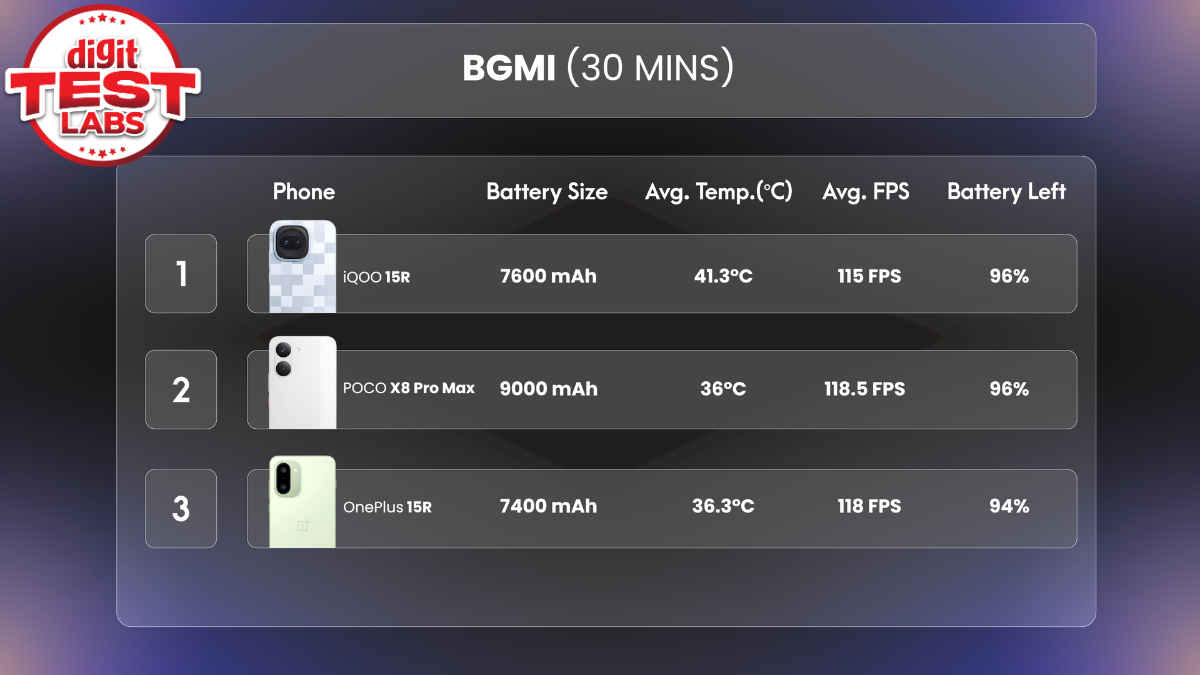
From the start in BGMI, all three phones easily hit 120 fps. But after just ten minutes, the heat started making a difference. The iQOO 15R climbed to over 41 degrees Celsius quite early, which caused its frame rate to wobble. The OnePlus 15R stayed steady at 118 fps, but the POCO X8 Pro Max was the most impressive. It stayed locked at 120 fps and stayed much cooler at 36 degrees.
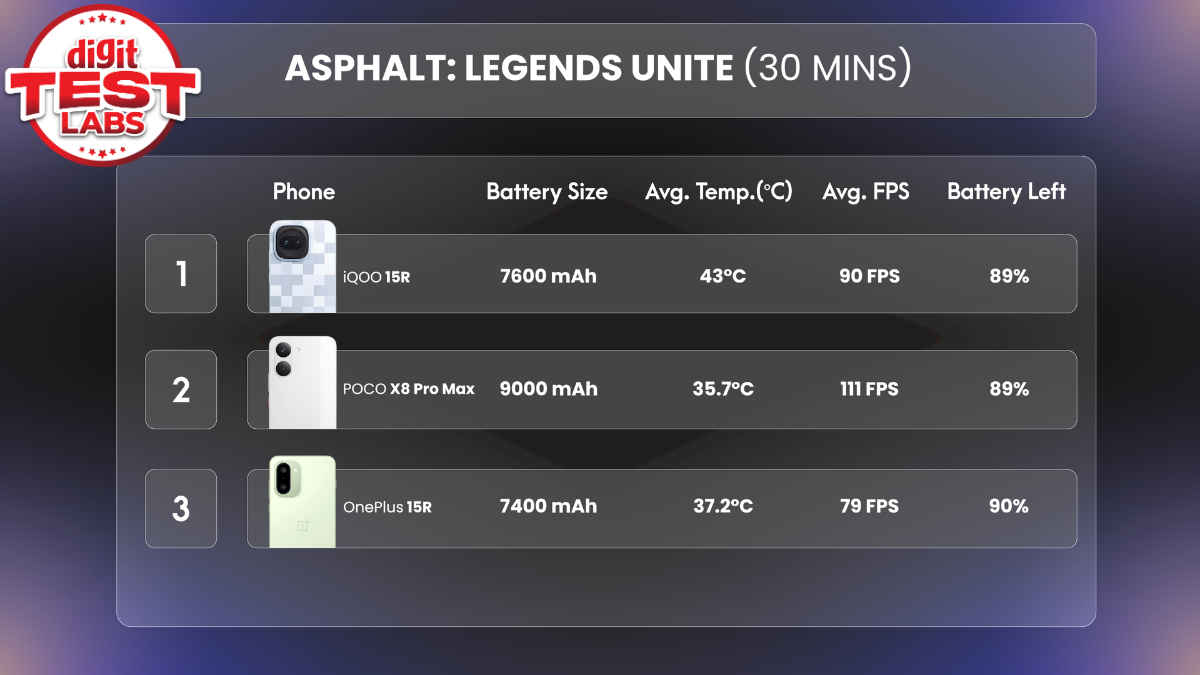
When we swapped over to Asphalt: Legends for the next 30 minutes, the efficiency story got even more interesting. The iQOO 15R began to overheat, reaching 43 degrees Celsius. This caused its performance to drop to an average of 90 fps. The OnePlus 15R also felt the pressure, averaging about 79 fps. Meanwhile, the POCO X8 Pro Max remained incredibly stable. It delivered a much smoother 111 fps average while staying a full five degrees cooler than the iQOO. That is a difference you can really feel in your hands during a long and intense session. After an hour of total gaming, the OnePlus was at 90 per cent battery, with the iQOO and POCO tied at 89 per cent.
Finally, it was time for Genshin Impact, which is a total GPU killer. The OnePlus 15R managed to claw back some ground here, ending the round with 82 per cent battery while maintaining 60 fps. The iQOO 15R also finished at 82 per cent battery but ran noticeably hotter at 40.2 degrees. The POCO X8 Pro Max continued to flex its muscles, even pushing up to 90 fps at one point, while the others stayed locked at 60.
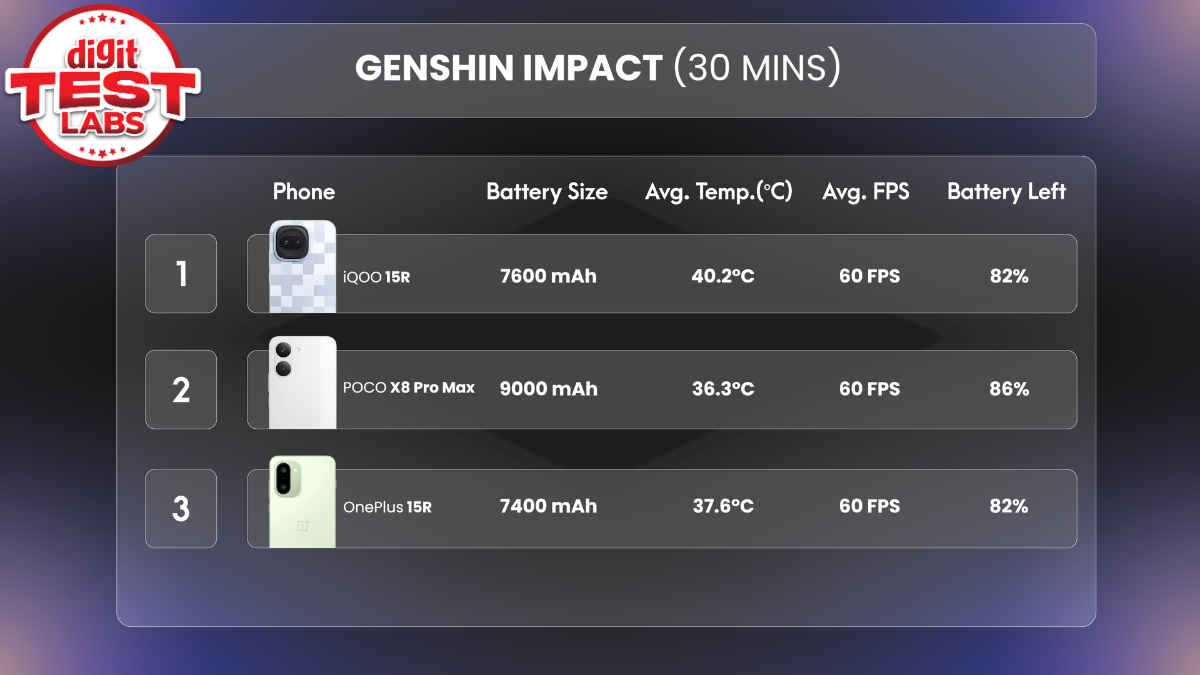
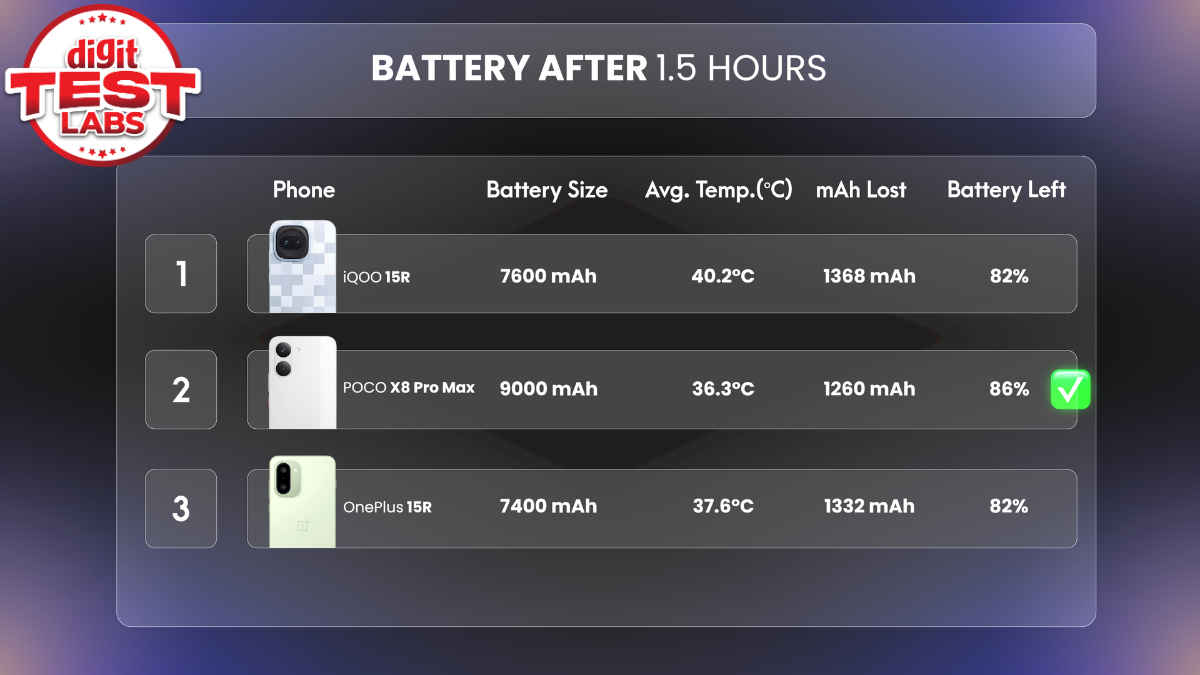
Even with that extra power, it ended the gaming round at a cool 36.3 degrees with 86 per cent battery left, showing the POCO has a massive lead in both cooling and endurance.
2 hours of YouTube video playback
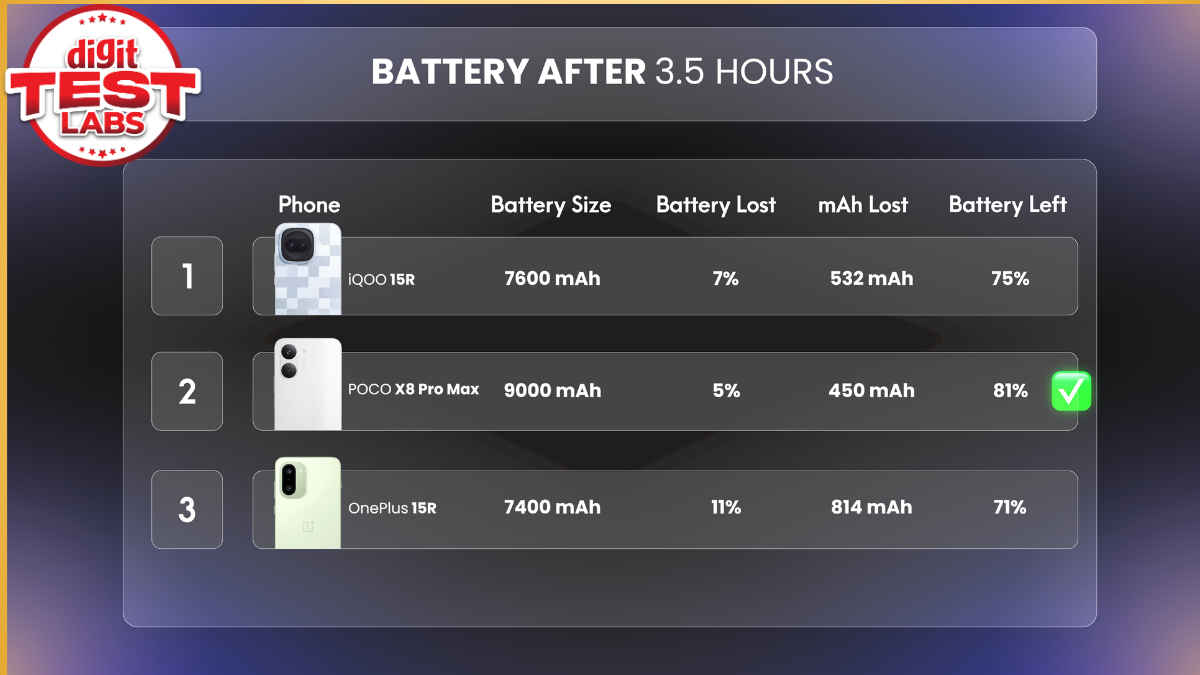
Next, we moved to a two-hour 1080p YouTube video playback round to give the phones a break. All three screens look great in this price range. The iQOO is incredibly bright, and the OnePlus feels very smooth. The POCO uses a 1.5K AMOLED panel that looks very high-end. Even after two hours of streaming, the POCO stayed in the lead with 81 per cent battery. The iQOO was at 75 per cent, and the OnePlus was at 71 per cent. At this point in the test, none of the phones was even warm to the touch.
1 hour of video recording (Front + Rear)
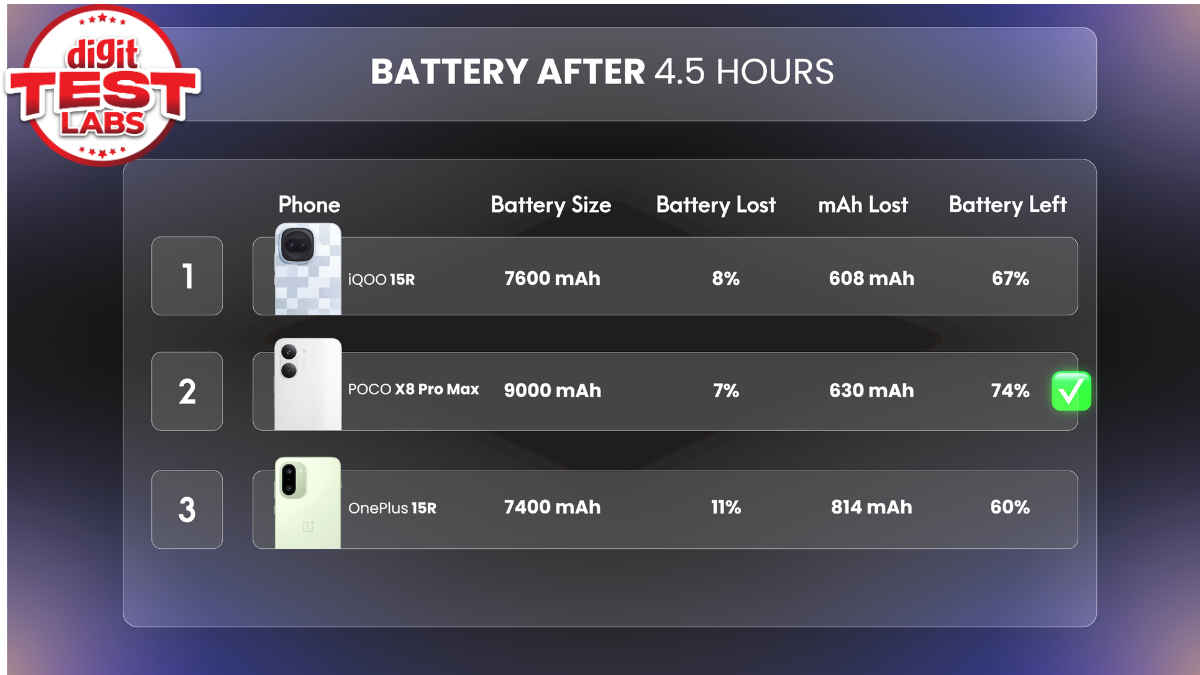
We then tested the cameras by recording video for an hour. This task usually makes phones get very hot. While the OnePlus and iQOO have better front-facing camera features, such as 4K recording, the POCO still managed the heat better. After 4.5 hours of testing, the POCO X8 Pro Max was at 74 per cent battery, the iQOO 15R at 67 per cent, and the OnePlus 15R at 60 per cent.
1 hour of social media
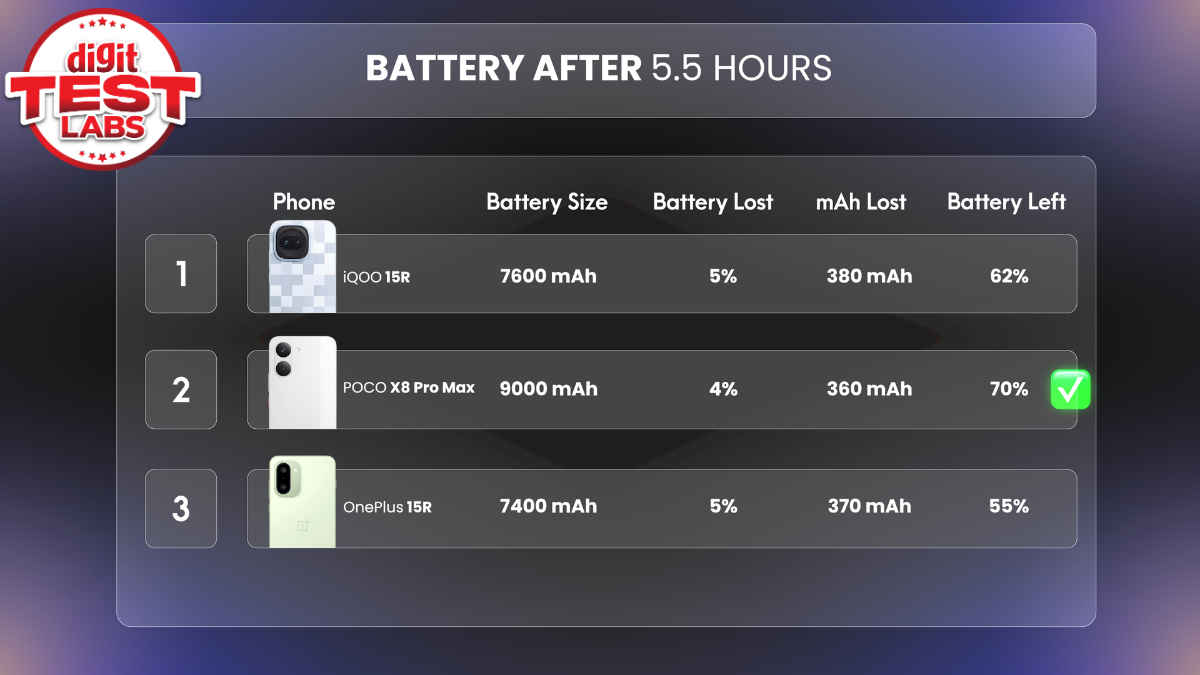
We followed the video recording round with an hour of Instagram scrolling, which showed that the POCO X8 Pro Max is very well-optimised for social media apps too, ending that round at 70 per cent battery, followed by the iQOO and OnePlus at 62 per cent and 55 per cent, respectively.
1 hour of benchmarks
To finish the day, we ran a one-hour benchmark gauntlet. This is where we test the chips’ raw power. The iQOO 15R and OnePlus 15R use the Snapdragon 8 Gen 5, while the POCO uses the new MediaTek Dimensity 9500s.
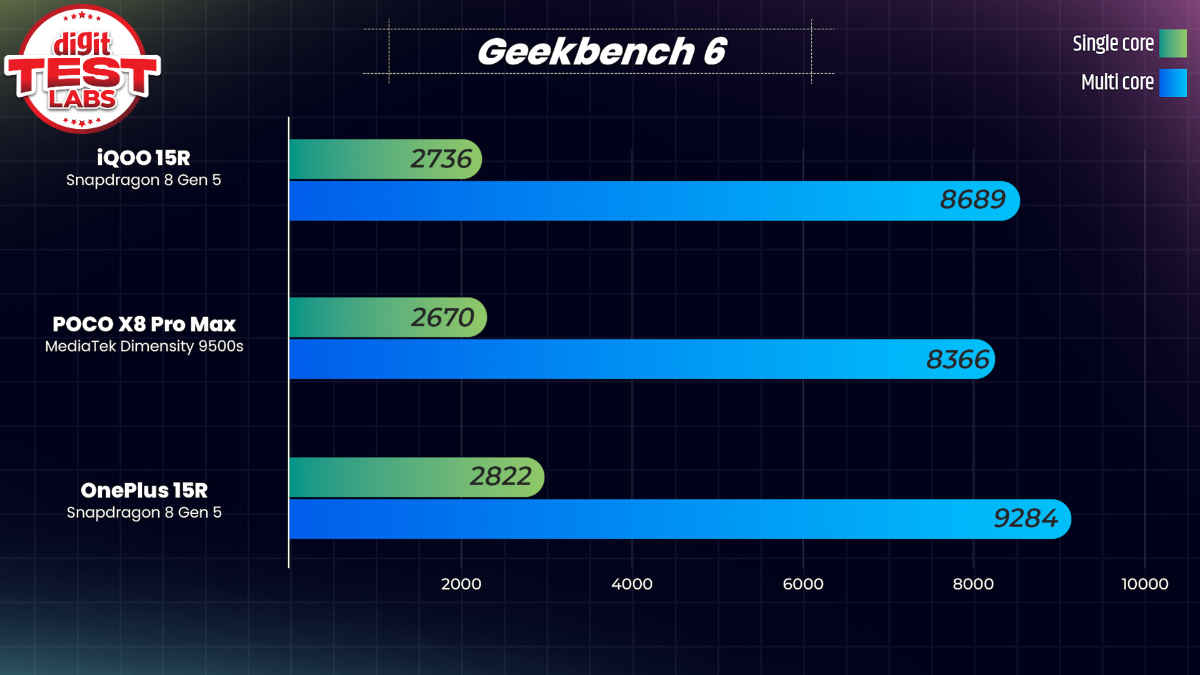
We started with Geekbench 6 to measure raw CPU power. The OnePlus 15R led the pack with a massive 2,822 single-core and 9,284 multi-core score. The iQOO followed closely behind. The POCO X8 Pro Max also held its own, putting up a very respectable 8,366 multi-core score.
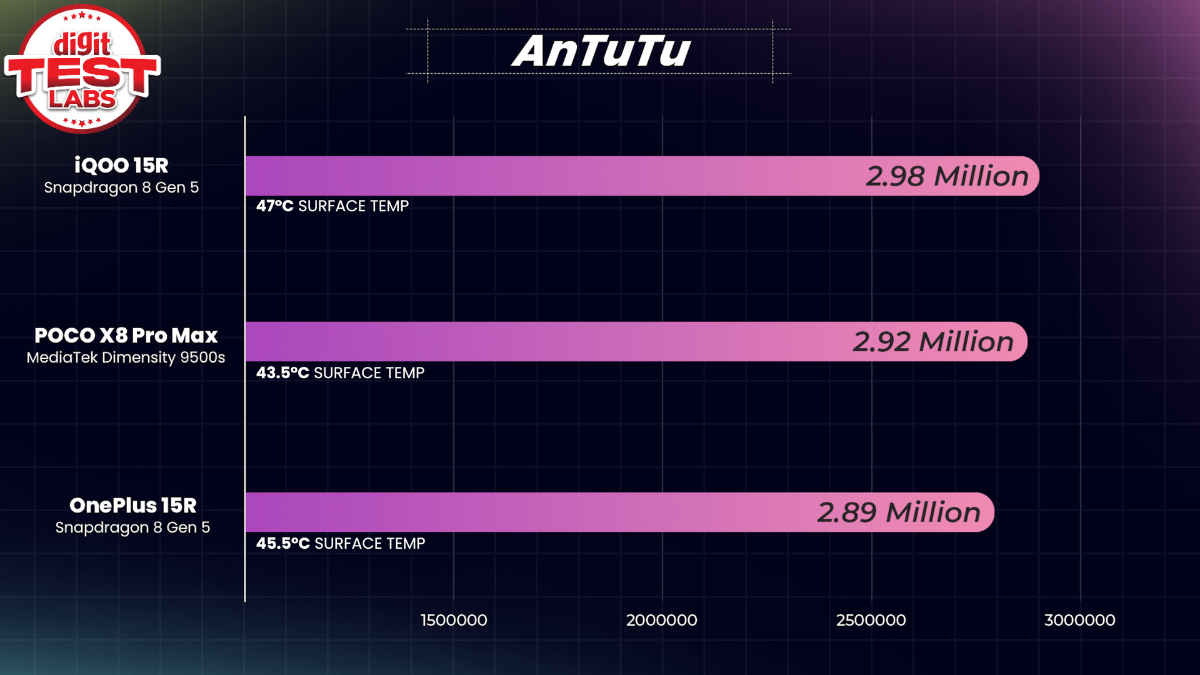
In Antutu, the POCO X8 Pro Max really showed off its hardware prowess. While the iQOO 15R took the crown for raw numbers with nearly 3 million, it paid for it with a spicy 47-degree Celcius surface temperature. The real story was between the OnePlus and the POCO. The OnePlus hit a score of 2.89 million but started sweating at 45.5 degrees. The POCO actually outscored it with a massive 2.92 million while staying a full two degrees cooler at 43.5 degrees.
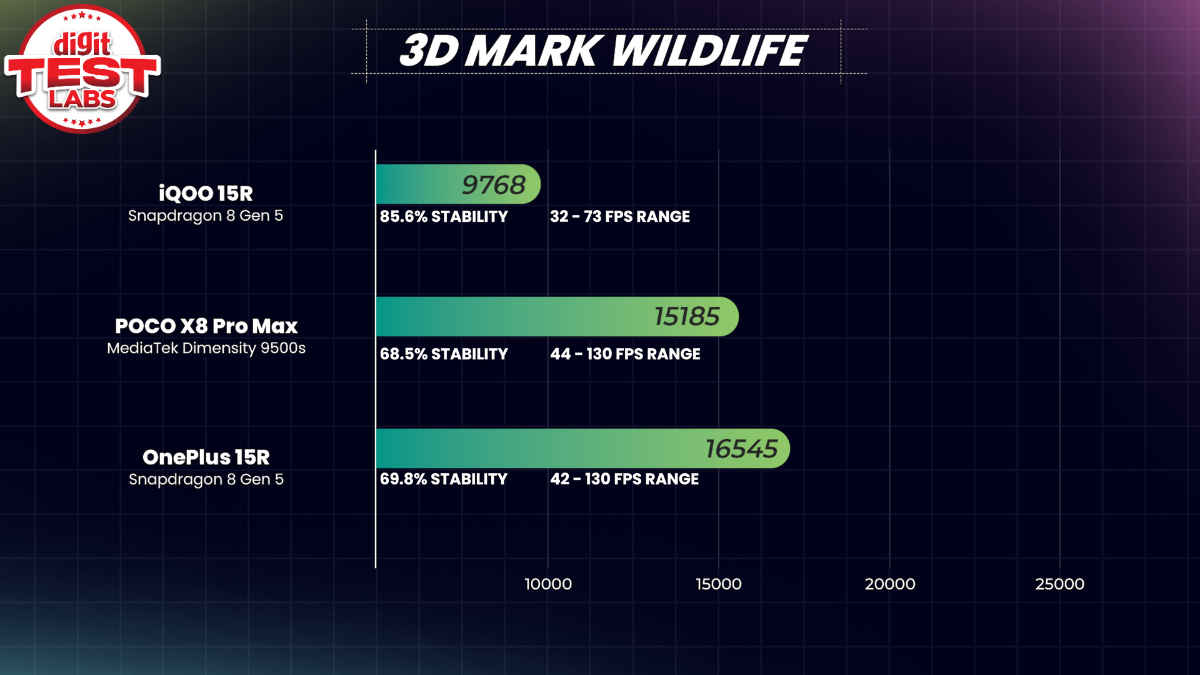
In the 3D Mark Wildlife Stress test, the OnePlus 15R put up a massive best loop of 16,545. However, the POCO X8 Pro Max impressed us more with its performance floor. Even at its lowest point in the 20-minute test, the POCO never dipped below 44 fps, outperforming both the OnePlus and the iQOO in raw consistency. The iQOO struggled to keep pace here with a best loop of just 9,768.
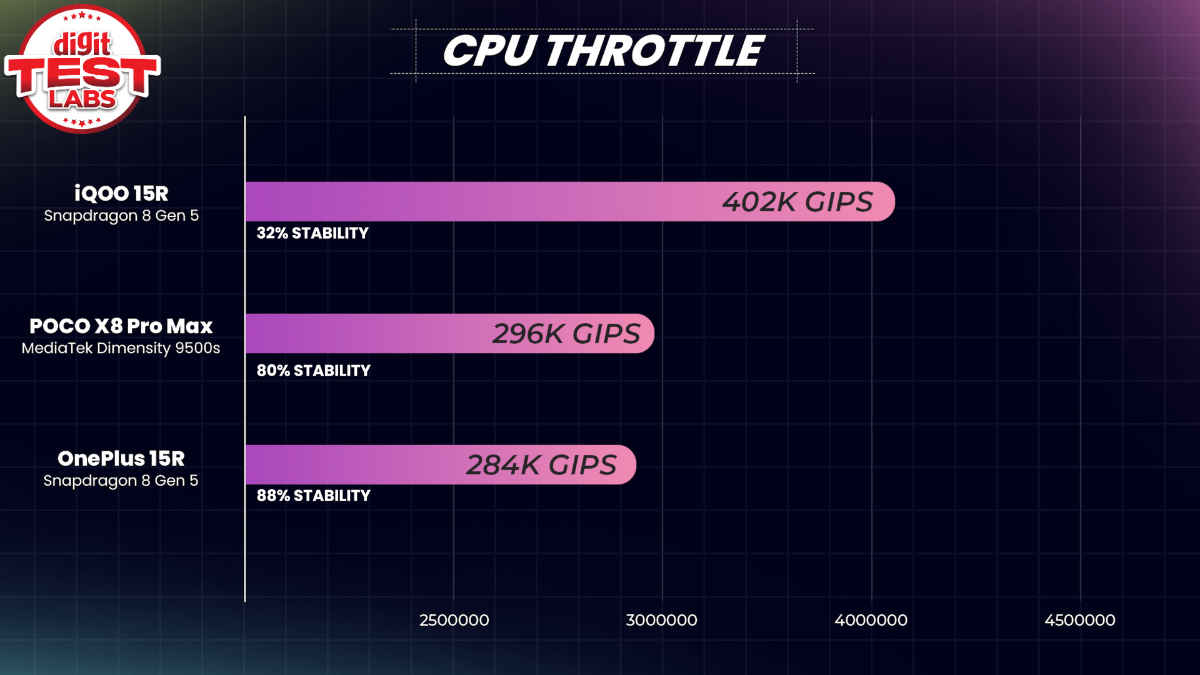
Last up was the CPU Throttling test. While the iQOO put up a high average, its stability tanked to just 32 per cent, meaning it slowed down significantly to stay cool. The OnePlus was much more stable at 88 per cent, but settled for the lowest average. The POCO X8 Pro Max hit the sweet spot, maintaining 80 per cent stability while delivering a solid 296 K average. It has the thermal discipline to keep its performance consistent over the long haul.
Final takeaway after 6.5 hours
After a full 6.5 hours of constant use, the POCO X8 Pro Max had 52 per cent battery remaining. The iQOO 15R ended with 41 per cent, while the OnePlus 15R had 34 per cent battery left.
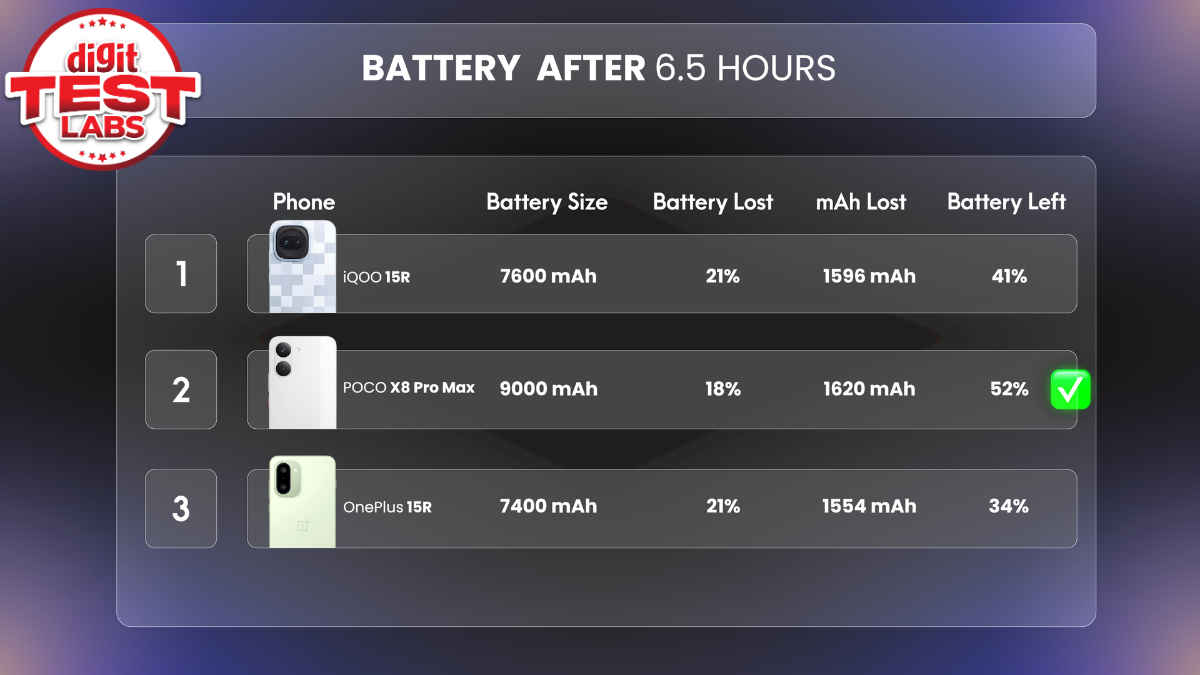
The math shows that despite having the largest 9,000mAh cell, the POCO actually used the least amount of power throughout the day. The X8 Pro Max not only has a bigger battery, but it also stays relatively cool under load.
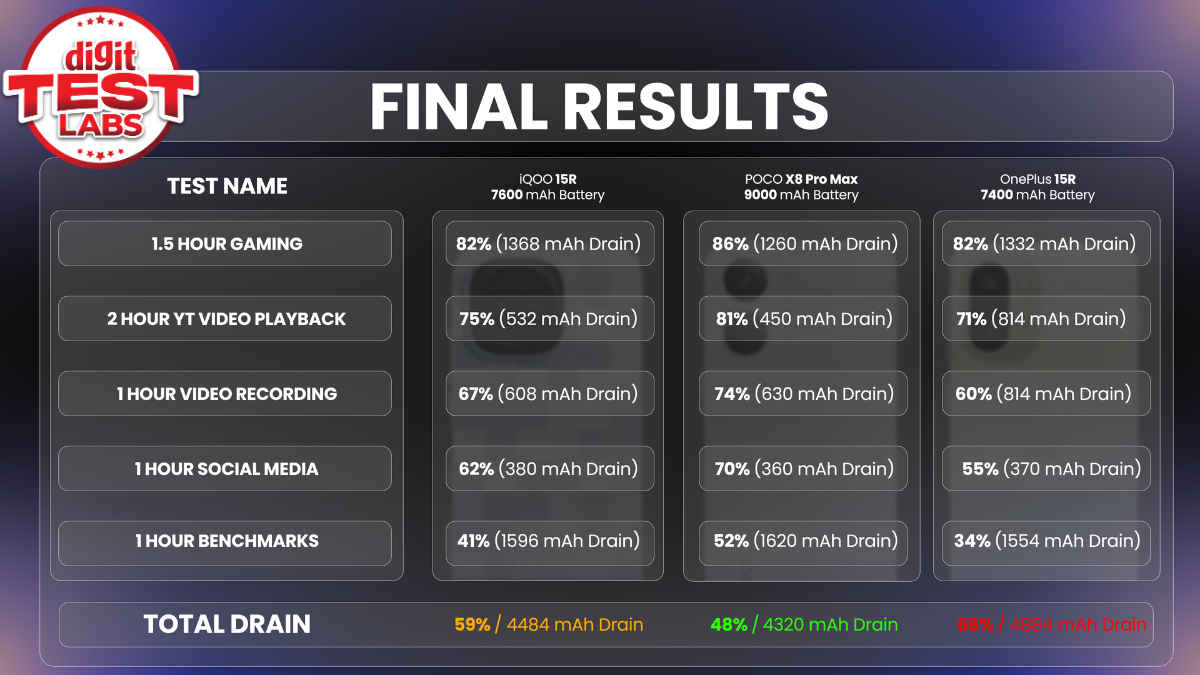
On a closing note, the POCO X8 Pro Max is the clear winner for anyone who games a lot or does not want to carry a charger everywhere. In our Digit Test Labs, it stayed the coolest and lasted the longest. Of course, the iQOO 15R is still a great choice if you want short bursts of extreme power, and the OnePlus 15R is a solid option for people who like that specific brand experience. But for the best mix of power and battery life, the POCO X8 Pro Max takes the win.
 Follow Us
Brand Story
Brand stories are sponsored stories that are a part of an initiative to take the brands messaging to our readers. View Full Profile


