
Motorola Edge 70 Pro vs Realme 16 Pro 5G: Why a 50MP Sony sensor might matter more than 200MP on paper
 Follow Us

The megapixel count on a smartphone’s spec sheet has become one of the most effective marketing figures in the industry, and also one of the most debated. A 200MP sensor sounds like it should produce sharper and more detailed photographs than a 50MP one. The math seems straightforward. But camera sensor engineering does not work that way, and the gap between what a specification promises and what a photograph actually looks like comes down to a range of factors that pixel count alone cannot account for: sensor size, the amount of light each pixel can capture, image processing quality, autofocus performance, and stabilisation capability all shape the final result. The Motorola Edge 70 Pro’s 50MP Sony Lytia 710 sensor is built on precisely this argument, prioritising sensor quality, light capture, and processing consistency over raw resolution.
 Survey
For buyers looking for a strong Android camera phone under Rs 40,000, both phones are competitive on paper. The Edge 70 Pro is priced at Rs 38,999 for the 8GB/256GB variant; the Realme 16 Pro 5G starts at Rs 37,999 (8GB/128GB) and goes up to Rs 40,999 (8GB/256GB). The choice between them is, in large part, a choice between two meaningfully different camera approaches at roughly the same outlay.
Camera specifications at a glance
| Feature | Motorola Edge 70 Pro | Realme 16 Pro 5G |
| Price | Rs 38,999 (8GB/256GB) | Rs 37,999 (8GB/128GB) / Rs 40,999 (8GB/256GB) |
| Display | 6.8-inch AMOLED, 144Hz | 6.78-inch AMOLED, 144Hz |
| Processor | Dimensity 8500 Extreme | Dimensity 7300 Max |
| Main camera | 50MP Sony Lytia 710, OIS | 200MP, OIS |
| Ultrawide camera | 50MP, 122° FOV, 2.5cm macro, 4K 60 fps | 8MP, 112° FOV |
| Selfie camera | 50MP, autofocus | 50MP |
| Rear video | 4K at 60 fps, HDR10+ | 4K at 30 fps |
| Front video | 4K at 60 fps | 4K at 30 fps |
| Colour science | Pantone Validated Colour, Pantone SkinTone Validation | TÜV-certified LumaColor |
| Battery | 6,500 mAh, 90W charging | 7,000 mAh, 80W charging |
| Software | Android 16, Hello UI | Android 16, Realme UI 7.0 |
What each camera is built to do
Motorola Edge 70 Pro
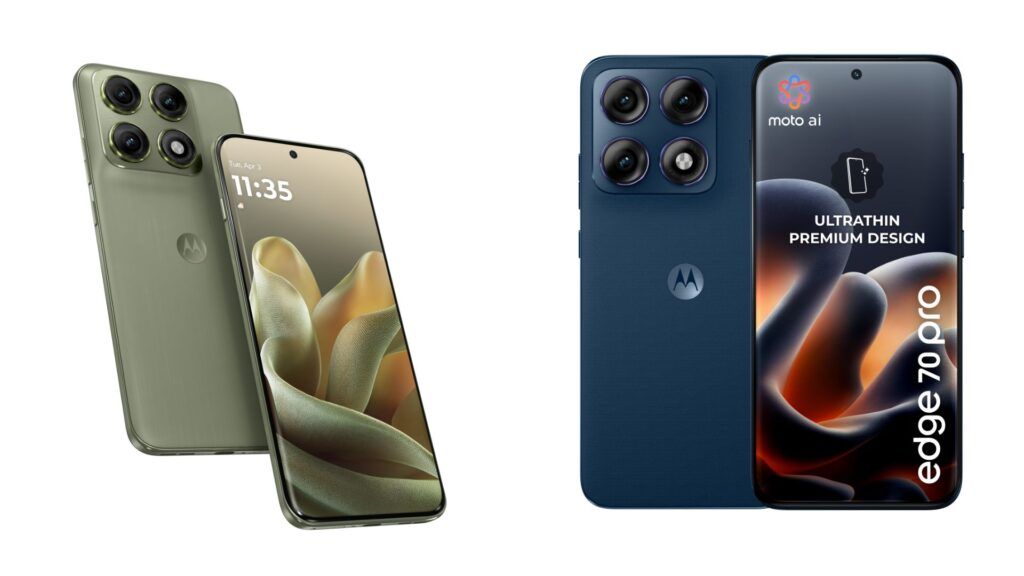
The Edge 70 Pro’s camera centres on a 50MP Sony Lytia 710 sensor with OIS, designed as a 3-in-1 sensor that prioritises light capture and processing consistency over resolution.
The main camera pairs with a 50MP ultrawide that doubles as a macro lens for shots from as close as 2.5cm, and a 50MP front camera with autofocus. All three cameras support 4K video at 60 fps.
Colour science runs through Pantone Validated Colour and Pantone SkinTone Validation, aimed at natural-looking tones in portraits and everyday photography.
Realme 16 Pro 5G
The Realme 16 Pro 5G leads with a 200MP main camera with OIS, designed for detail capture in bright conditions and for post-shoot cropping flexibility. Most photographs are processed using pixel-binning technology rather than saved at full 200MP resolution.
The front camera is 50MP, with both front and rear supporting 4K video at 30 fps. The ultrawide steps down to 8MP with a 112° field of view.
Does the Realme 16 Pro’s 200MP camera outperform the Edge 70 Pro’s 50MP Sony sensor?
Not in a straightforward way. Camera quality is shaped by more than resolution: sensor size, light capture capability, dynamic range, image processing, and stabilisation all influence the final photograph.
The Sony Lytia 710 sensor is designed to capture more light per pixel, which produces cleaner results with more natural colours in indoor and low-light conditions.
The Realme 16 Pro’s 200MP camera has a clear advantage for bright daylight shooting and for situations where heavy cropping is needed. In everyday use, however, images are processed at lower effective resolutions through pixel binning, which narrows the gap the headline figure implies.
Bottom line: Megapixels are an advantage in specific conditions. Across a broader range of everyday shooting, sensor quality and processing consistency carry more weight.
Which phone is better for daylight photography?
The Edge 70 Pro’s Sony Lytia 710 sensor produces vibrant, true-to-life colours in well-lit outdoor conditions. Pantone SkinTone Validation delivers natural skin tones in portrait photography rather than the over-smoothed output common in this segment.
The Realme 16 Pro’s 200MP main camera captures more detail in bright conditions, and its strongest advantage is cropping flexibility: near-full-resolution shooting gives more room to reframe a shot in post.
When viewed on a phone screen or shared on social media, the perceptible difference in detail is often narrower than the resolution gap suggests. Colour accuracy has a greater impact on how satisfying a photograph looks to most viewers.
Bottom line: For colour accuracy and portrait naturalness, the Edge 70 Pro holds the advantage. For high-resolution crops and maximum detail in bright daylight, the Realme 16 Pro has its merits.
Which phone is better for low-light photography?
The Sony Lytia 710 sensor is engineered to capture more light per frame. Combined with the Dimensity 8500 Extreme chipset, the Edge 70 Pro is designed to produce bright, detailed images with balanced colours in challenging conditions.
The system is also built to improve texture detail and motion handling, reducing blur when subjects are moving in low light.
The Realme 16 Pro includes a dedicated night mode with multi-frame processing to brighten scenes. It handles low-light photography adequately, though images can show more grain and softer shadow detail in darker environments.
Bottom line: For indoor photography and after-dark shooting, the Edge 70 Pro’s sensor architecture is better suited. Buyers who shoot primarily outdoors will find the gap less significant.
Which is the better phone for 4K video under Rs 40,000?
The Edge 70 Pro supports 4K video at 60 fps across all three cameras: the main sensor, the ultrawide, and the 50MP front camera. The Realme 16 Pro 5G records 4K at 30 fps on both front and rear cameras.
The 60 fps advantage on the Edge 70 Pro produces noticeably smoother motion, most apparent when walking while filming, panning, or recording fast-moving subjects. Horizon Lock adds further stabilisation for handheld recording.
For content creators and vloggers, or anyone looking specifically for a phone with 4K 60 fps on the front camera under Rs 40,000, the Edge 70 Pro stands out as one of the few options available at this price.
Bottom line: The 4K 60 fps capability across all three cameras is a concrete, verifiable specification difference. The Realme 16 Pro’s 30 fps cap applies to both front and rear video.
Are there phones under Rs 40,000 that excel in portrait photography?
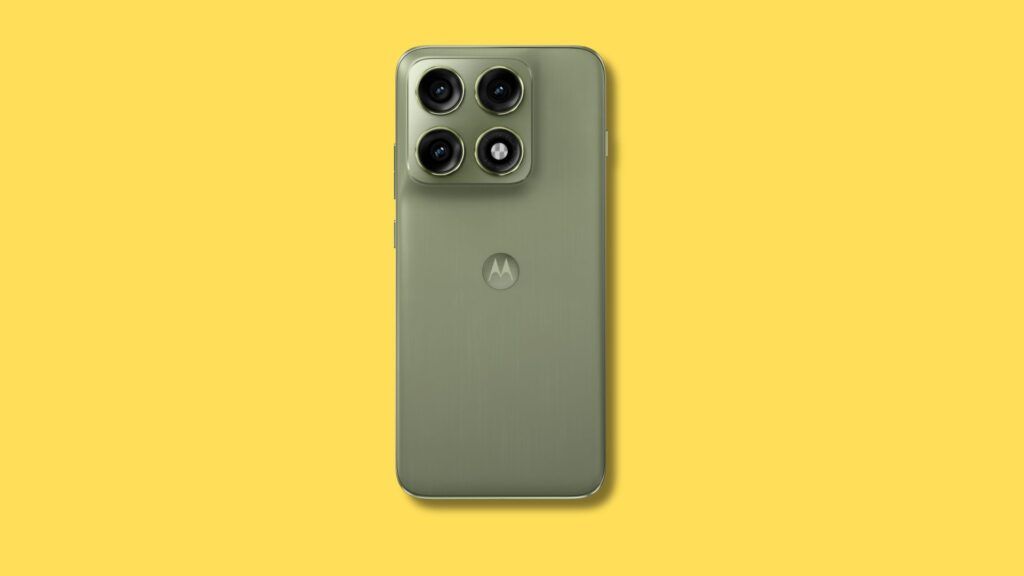
Both phones use a 50MP front camera, but their approach to colour science differs.
The Edge 70 Pro’s Pantone SkinTone Validation and Pantone Validated Colour processing are designed to produce accurate skin tones and natural colours in selfies and portraits. Autofocus on the front camera keeps subjects sharp at varying distances, and front video records at 4K 60 fps.
The Realme 16 Pro 5G’s front camera produces punchier, more processed output that suits users who prefer a high-contrast, saturated look. Front video records at 4K 30 fps.
Bottom line: For portrait photography where natural skin-tone accuracy is the priority, the Edge 70 Pro has a consistent hardware and software advantage. The Realme 16 Pro appeals to users who prefer a more vibrant, processed aesthetic.
Which phone has the better ultrawide camera?
The hardware difference here is significant and measurable. The Edge 70 Pro’s 50MP ultrawide with a 122° field of view is a substantially different proposition from the Realme 16 Pro’s 8MP ultrawide at 112°.
The higher-resolution ultrawide preserves considerably more detail in wide-angle shots, and switching between the main and ultrawide cameras on the Edge 70 Pro produces minimal quality loss. The 50MP ultrawide also doubles as a macro lens for shots from 2.5cm and supports 4K at 60 fps.
The Realme 16 Pro’s 8MP ultrawide handles everyday wide-angle shooting adequately, but at this resolution the quality step down from the main camera is more pronounced.
Bottom line: For wide-angle photography, group shots, travel scenes, and close-up work, the 50MP versus 8MP gap is the most concrete hardware difference between these two phones.
Motorola Edge 70 Pro vs Realme 16 Pro 5G: which is the right camera phone for you?
For buyers searching for a well-rounded camera phone under Rs 40,000, the Edge 70 Pro makes a strong case across the full range of scenarios: daylight, indoor, low-light, ultrawide, portrait, and video.
The combination of a 50MP Sony Lytia 710 main camera, a 50MP ultrawide with macro, Pantone colour science, and 4K 60 fps across all three cameras is a difficult package to match at this price.
The Realme 16 Pro 5G is the stronger pick for buyers who primarily shoot outdoors in good light and want the cropping flexibility of a high-resolution main sensor. For those where battery endurance is the headline priority, its 7,000 mAh cell is also the larger of the two.
For buyers weighing up the best camera and battery life under Rs 40,000, the Edge 70 Pro offers a more versatile camera system across conditions; the Realme 16 Pro offers more battery capacity. The right choice depends on which of those two priorities matters more.


