
Moto G Max vs Redmi Note 17 vs OnePlus Nord CE6 Lite: the best phones under Rs 30,000 compared
 Follow Us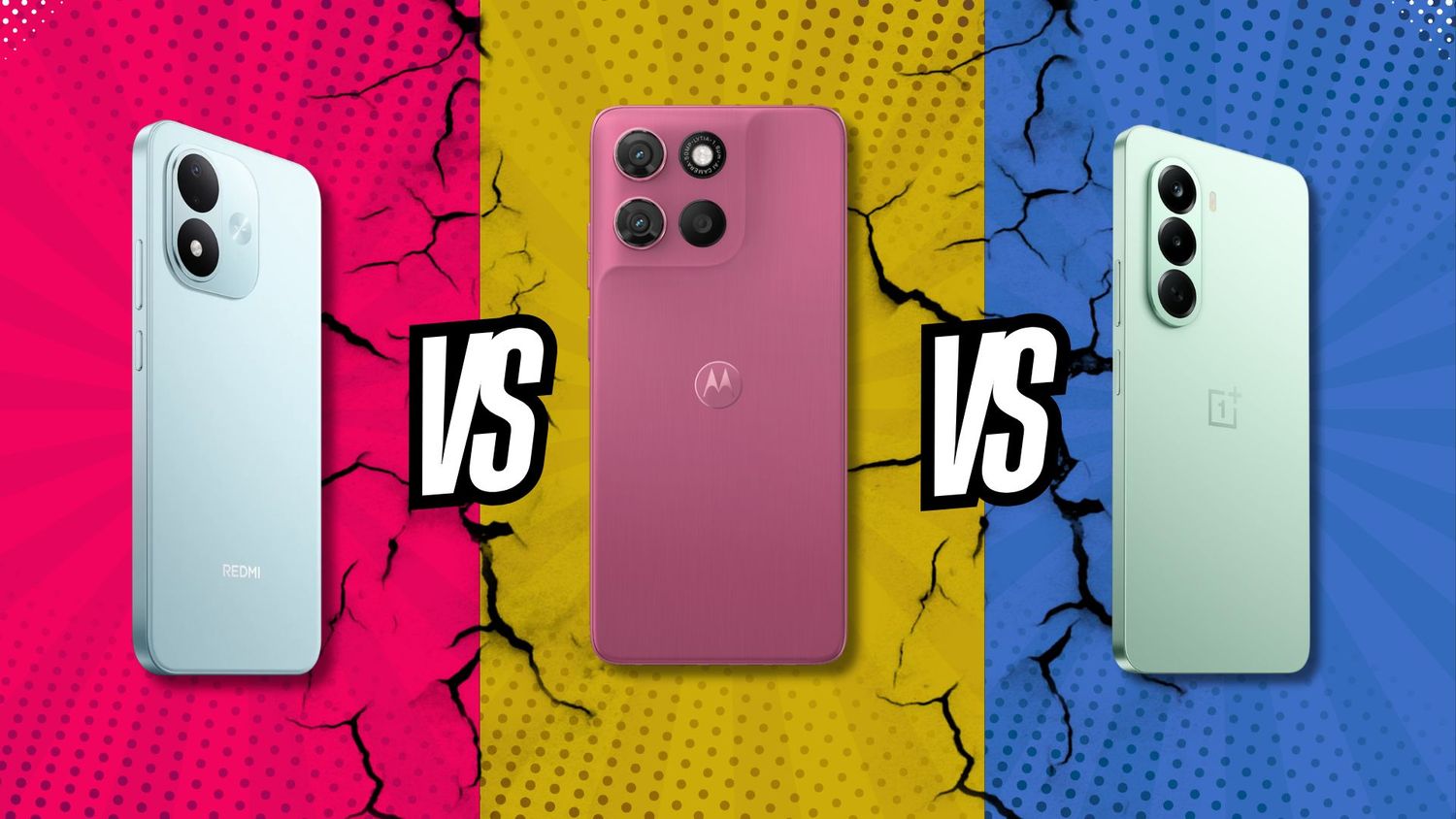

The Moto G Max has officially launched in India at roughly the same price band as the Redmi Note 17 and OnePlus Nord CE6 Lite. While each is built around different set of priorities and by extension, different types of users, all three phones are some of the best phones under Rs 30000 in India right now. The Moto G Max is positioned around camera and audio, the Redmi Note 17 around display and battery and the OnePlus Nord CE6 Lite around all-day performance and fast charging. So, choosing between them can become confusing but lets start with which of those priorities matches your use case closely.
 Survey
Price
| Model | Variants | Price |
| Moto G Max | 6GB + 128GB | Rs 27,999 (effective Rs 26,999 with bank discount) |
| Redmi Note 17 | 6GB + 128GB | Rs 27,999 |
| Redmi Note 17 | 8GB + 128GB | Rs 30,999 |
| OnePlus Nord CE6 Lite | 6GB + 128GB | Rs 24,999 |
| OnePlus Nord CE6 Lite | 8GB + 128GB | Rs 26,999 |
| OnePlus Nord CE6 Lite | 8GB + 256GB | Rs 29,999 |
The Nord CE6 Lite is the most flexible at this price range, offering three storage and RAM configurations. The Moto G Max and Redmi Note 17 both start at Rs 27,999, with the Redmi Note 17 going up to Rs 30,999 for the 8GB RAM tier.
Design and build
All three phones carry IP64 dust and splash resistance along with MIL-STD-810H military-grade durability certification. The Redmi Note 17 is the exception here, stepping up to IP65, which adds protection against low-pressure water jets in addition to splashes. The Note 17 has an edge when it comes to outdoor use in rain or dusty environments. The G Max and Note 17, both use Corning Gorilla Glass 7i on the front.
The Redmi Note 17 is the heaviest of the three at 225 g, marginally ahead of the Moto G Max at 213 g and the Nord CE6 Lite at 208 g. The G Max comes in Pantone-curated finishes: Stargazer, Alaskan Blue and Malaga. The Redmi Note 17 offers Arctic Blue, Starlight Purple and Dark Night. The Nord CE6 Lite comes in just two options: Vivid Mint and Hyper Black.
Display
The Redmi Note 17 uses a 6.9-inch AMOLED display with 1,800 nits peak brightness, TÜV Rheinland certification for low blue light and PWM and HydroTouch 2.0 for wet-finger responsiveness. For media consumption, the AMOLED panel’s contrast, colour depth and outdoor visibility are in a different category from the LCD panels in the other two.
The Moto G Max and Nord CE6 Lite both use 6.72-inch FHD+ LCD panels. The G Max runs at 120Hz with up to 1,050 nits in high brightness mode and Motorola’s Water Touch for wet-hand use. The Nord CE6 Lite pushes to 144Hz with up to 1,000 nits and a 240Hz touch sampling rate, making it the smoothest-scrolling LCD in the group. If viewing experience is not your priority, the Nord CE6 Lite’s 144Hz advantage over the G Max’s 120Hz is a meaningful difference for gaming and daily scrolling.
Performance and chipset
| Phone | Chipset | RAM | RAM type | Storage | UFS |
| Moto G Max | Snapdragon 6s Gen 4 (4nm) | 6GB | LPDDR5X | 128GB | UFS 3.1 |
| Redmi Note 17 | Snapdragon 4 Gen 4 (4nm) | 6GB/8GB | LPDDR4X | 128GB | UFS 2.2 |
| Nord CE6 Lite | Dimensity 7400 Apex (4nm) | 6GB/8GB | LPDDR4X | 128 or 256GB | UFS 3.1 |
The Snapdragon 6s Gen 4 in the Moto G Max is a tier above the Snapdragon 4 Gen 4 in the Redmi Note 17. The Nord CE6 Lite’s Dimensity 7400 Apex claims an AnTuTu score exceeding 1,030,000 and a 43% performance improvement over its predecessor. All three will handle everyday tasks without issues. But the differentiation shows under sustained gaming or heavy multitasking loads.
One specific difference that does not get enough attention: the Moto G Max’s 6GB LPDDR5X RAM is faster in bandwidth terms than the Nord CE6 Lite and Redmi Note 17’s LPDDR4X RAM. Both phones offer more RAM but at an older, slower standard. For most users the practical difference is minor, but it is worth knowing at this price point.
The Nord CE6 Lite also includes bypass charging, which routes power directly from the cable to the phone’s processor during intensive tasks rather than cycling through the battery.
Camera
Moto G Max features a 50MP Sony LYT-600 primary sensor (1/1.95-inch, f/1.8) with an 8MP ultrawide at 118° and a 32MP quad-pixel front camera. The Sony LYT-600 is a well-regarded sensor at this price, the ultrawide provides a second focal length for wider shots and the 32MP selfie camera is the highest-resolution front sensor in the group by a significant margin.
Nord CE6 Lite uses a 50MP Omnivision OV50D40 primary (1/2.88-inch, f/1.8) with a 2MP monochrome depth-assist secondary. The primary sensor is smaller than the G Max’s and the 2MP secondary adds negligible photographic value. The 8MP front camera has no OIS. Video maxes out at 4K 30fps.
Redmi Note 17 has a single 50MP rear camera, no ultrawide. The front camera is 8MP without autofocus. At Rs 27,999, the absence of a wide-angle lens is a notable compromise that buyers should factor in. If photography is a consideration, the Redmi Note 17 is the weakest option in this group.
The Moto G Max is the clear camera choice here. Neither competitor offers an ultrawide lens and neither comes close to the G Max’s selfie camera hardware.
Battery and charging
| Phone | Battery | Max wired charging | Reverse charging | In-box charger |
| Moto G Max | 7,000 mAh (Si-C) | 30W (supports) | No | 33W |
| Redmi Note 17 | 8,000 mAh (Si-C) | 45W | 22.5W reverse wired | 45W |
| Nord CE6 Lite | 7,000 mAh | 45W SUPERVOOC | 10W reverse | 45W |
The Redmi Note 17’s 8,000 mAh silicon-carbon battery is the largest in the group and the most likely to deliver multi-day battery life for moderate users. Combined with 45W charging it also refills faster than the Moto G Max.
The Moto G Max situation is slightly unusual: the phone supports 30W wired charging but ships with a 33W charger in the box, which means it charges at the phone’s maximum supported rate (30W) rather than the charger’s rated output.
The Nord CE6 Lite matches the Redmi Note 17 on 45W wired charging despite having a smaller battery and the bypass charging capability makes it the best choice for gaming while plugged in.
Software and updates
| Phone | OS | OS upgrades | Security patches |
| Moto G Max | Android 16 | 2 years | 3 years |
| Redmi Note 17 | Android 16, HyperOS 3 | 4 years | 6 years |
| Nord CE6 Lite | Android 16, OxygenOS 16 | 2 years | 4 years |
The Redmi Note 17 has the strongest software support commitment by a clear margin: four OS upgrades and six years of security patches. The Moto G Max and CE6 Lite offers only two OS upgrades and three/four years of security patches, which is below the market expectation at this price.
Verdict
Buy the Moto G Max if camera quality is your top priority. The Sony LYT-600 sensor, 8MP ultrawide and 32MP front camera make it the strongest imaging device in this group. The 3.5mm headphone jack and Dolby Atmos stereo speakers are also exclusive to the G Max here. Accept the slower charging and the shorter software support window.
Buy the Redmi Note 17 if you spend most of your time watching content or are a heavy daily user who needs the biggest battery available. The 8,000 mAh cell and AMOLED panel are the best in the group for those specific needs. The camera is the price you pay for it.
Buy the Nord CE6 Lite if you want the most balanced all-round option at the lowest price. Starting at Rs 24,999 with 45W charging, bypass capability, a 144Hz display and OxygenOS, it covers most use cases competently. The camera is not exceptional and the LPDDR4X RAM is a step below the G Max, but neither is a dealbreaker at this price tier.


