

Myth: Robot vacuum cleaners cannot clean corners properly because of their round design
 Follow Us
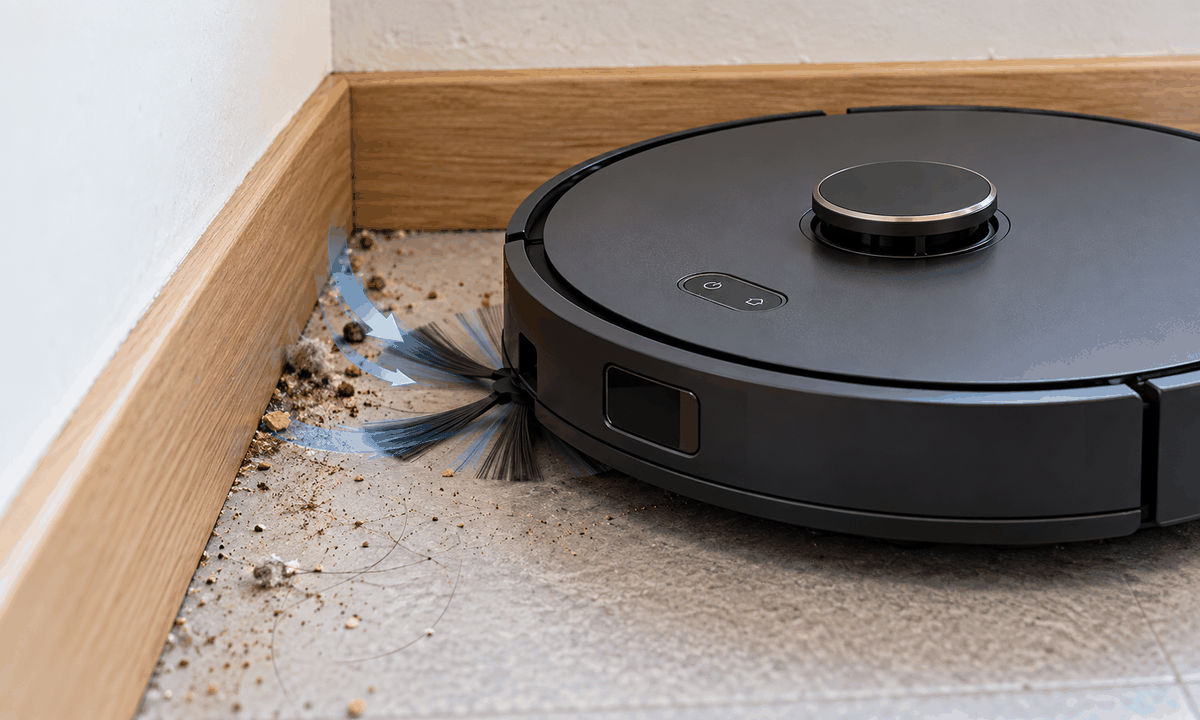

Robot vacuum cleaners have a design problem that is hard to ignore. Most of them are round, while the corners of our homes aren’t. If you have used one, you may have noticed dust collecting where two walls meet, even after the robot has finished cleaning the room. This has led to the belief that circular robot vacuums simply aren’t good at cleaning corners. But is their shape really the problem?
 Survey
There is some truth to it. The main body of a round robot vacuum cannot reach the point where two walls meet. But that doesn’t mean it cannot pick up dirt from there. Most models have one or two rotating side brushes that stick out from the body. As the robot moves along a wall, these brushes sweep dust, hair and crumbs towards the suction inlet.
Why do some corners still remain dirty?
Side brushes don’t always get the job done. Their reach is limited, and they may struggle with dirt sitting deep inside a corner. They can also push lightweight debris around instead of directing it towards the suction inlet. This is particularly noticeable when the brush is too short or has become tangled with hair.
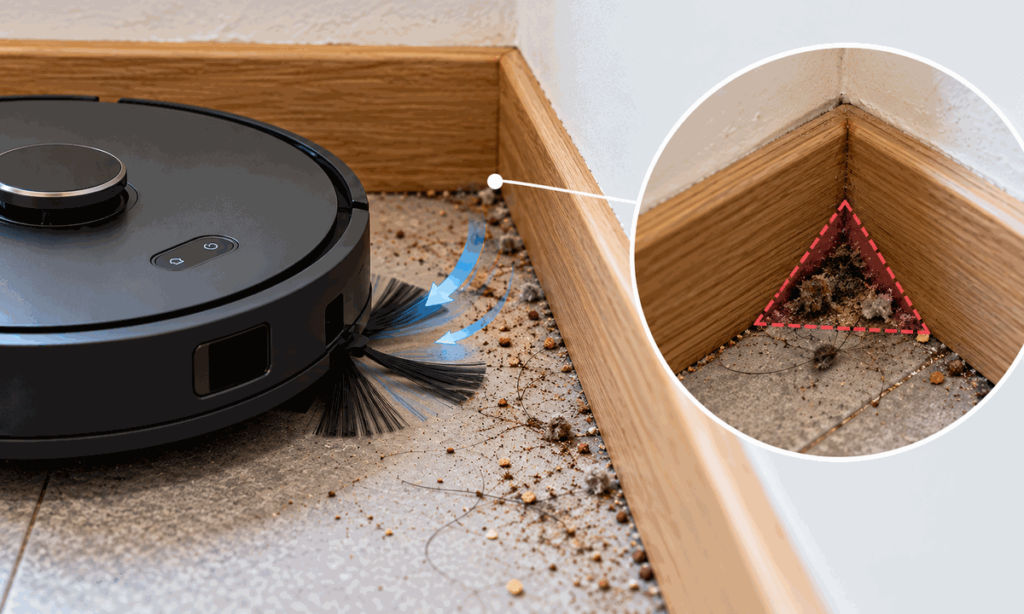
The problem isn’t limited to the corners where two walls meet. Dust also collects along skirting boards and around furniture legs, where the robot may not always get close enough. Its navigation and cleaning pattern play a role here, too.
Can newer designs do a better job?
Some manufacturers have started fitting robot vacuums with extendable side brushes. Unlike conventional brushes that remain in a fixed position, these can move outwards to reach further along walls and into corners.
Dreame’s X40 Ultra, for instance, has an extendable side brush. Roborock also uses its FlexiArm mechanism on select models, extending the side brush to reach areas that are difficult for a conventional circular vacuum to access.
There are also D-shaped robot vacuums. Their flatter front section allows them to get closer to walls and corners. However, changing the body shape alone doesn’t solve the problem. The position of the suction inlet and the cleaning brushes still matters.
Mopping has a similar limitation. A conventional round mop pad may leave a strip of floor untouched along walls. This is why some newer models also have extendable mop pads that reach beyond the robot’s body.
Do you still need to clean corners manually?
Occasionally, yes. Even robot vacuums with extendable brushes can miss some dirt, particularly in tight corners or around furniture. Hair can also get caught in the side brushes and reduce their effectiveness if they aren’t cleaned regularly.
If you’re buying a robot vacuum, check its side-brush design rather than looking at suction power alone. An extendable brush can be useful if your home has several tight corners or furniture placed close to walls. If you also want the robot to mop, an extendable mop pad is worth considering.
The verdict: A round robot vacuum cannot physically enter a sharp corner, but its side brushes can reach beyond the body and collect much of the dirt. Newer extendable mechanisms improve this further. So, the circular design does have limitations, but it doesn’t make robot vacuums incapable of cleaning corners.


