
OpenAI textGrain Watermark: No watermark doesn’t mean human written
 Follow Us

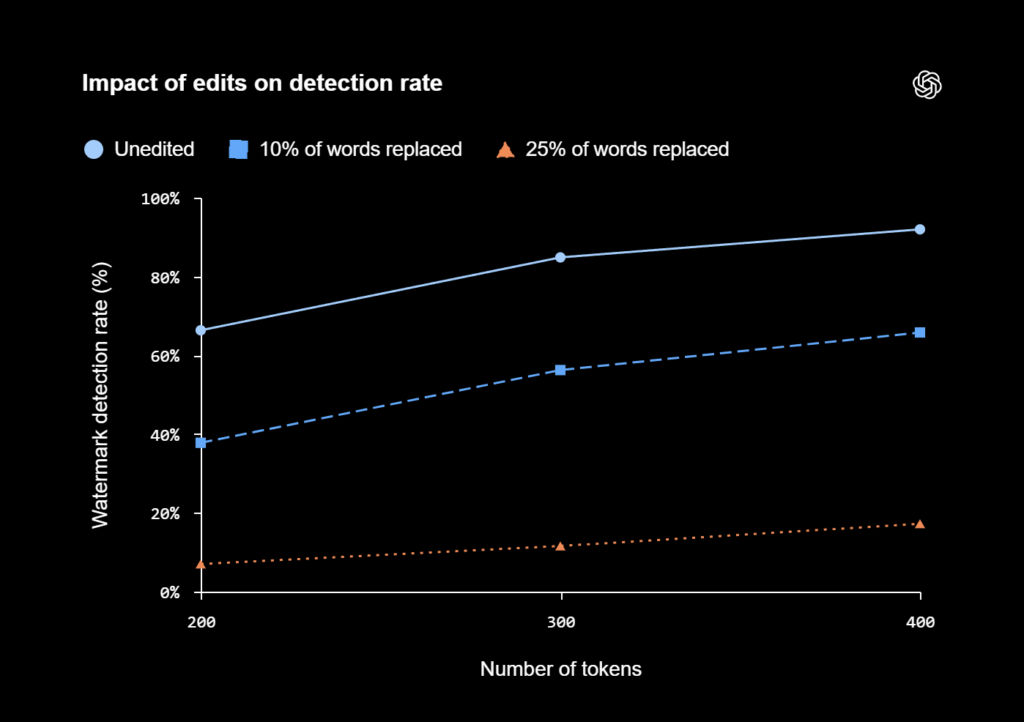
Substitute one in four words in a response generated by ChatGPT with a synonym, and the new OpenAI system will detect the watermark with an accuracy of around 17 percent. This comes straight from OpenAI’s own numbers based on the test performed on passages comprising 400 tokens. On October 5, OpenAI introduced its own watermark technology called textGrain. This seems to be a solution for detecting machine-generated text. But not really.
 Survey
Also read: Home Security Camera’s cost of ownership: Why your cheap CCTV actually costs 3x more
What textGrain actually does
textGrain feature incorporates statistical cues into the selection of words made by the model, guided by an undisclosed key. There are no markings of any sort. The detector, possessing the same key, identifies the existence of such a signature. As claimed by OpenAI, the technology was able to match or surpass the other techniques tried out, among them the Google SynthID for text.
This demand arises from the EU AI Act that mandates all generative AI services to mark the generated text as machine-identifiable. This is why the release is regional in nature. The API users across the globe have been provided with the option to enable this feature from today; however, it will be kept disabled by default. Users of ChatGPT and Codex in the EU will receive the marking in the next few weeks. Indian users will get nothing by default.
No watermark, no conclusion
That tempting thought process is, if there is no watermark, then it must have been written by a human being. But OpenAI closes that off for you. The text could evade detection due to its brevity, editing, and translation. It might come from a different model, be created before the watermarking process, or be produced by another company’s systems altogether.
Also read: Aleph Alpha Kolibri explained: Europe’s sovereign open weight answer to the US
Brevity makes a big difference. At a 1 percent error rate, the detector found roughly 80 percent of the watermarked 200-token excerpts and 95 percent of the 400-token ones. The maths texts did much worse, since there are far fewer ways to say something. Editing is also an issue. Substituting 10 percent of words with synonyms reduced detection accuracy from 92 percent to 66 percent. Think about the type of text being exchanged in the real world – short emails, shortened paragraphs, and edited texts that were run through a translator.
Even a hit has limits
Similarly, the positive detection outcome is rather vague in scope. All it means is that the tested text contains an OpenAI-generated or edited text portion. Nothing can be said about the extent of OpenAI’s participation, the responsibility for the passage or its accuracy. The tool cannot determine who the user or prompt author is and anything about ownership or whether any disclosures had to be made. Humanly edited text and ChatGPT response paste look equally valid to it.
Of course, no one except approved researchers and organizations can use this tool anyway. The reasons given by OpenAI are possible failures to detect the watermark and false detections. The teachers, recruiters or editors cannot run their passages through the system.
The fine print
Another caution from the technical report follows. The false positive guarantee of the report assumes a few idealistic conditions, according to the researchers, and the deployed key requires practical testing after that. All the math looks good on paper. But in reality, there are some issues. OpenAI states that it will soon revise the report and make textGrain available as open-source software.
Also read: iQOO Z11 vs Motorola Edge 70: One wins on battery, the other on almost everything else


