
We see Bharat as a market that deserves innovation designed around its actual needs: Cellecor’s Ravi Agarwal
 Follow Us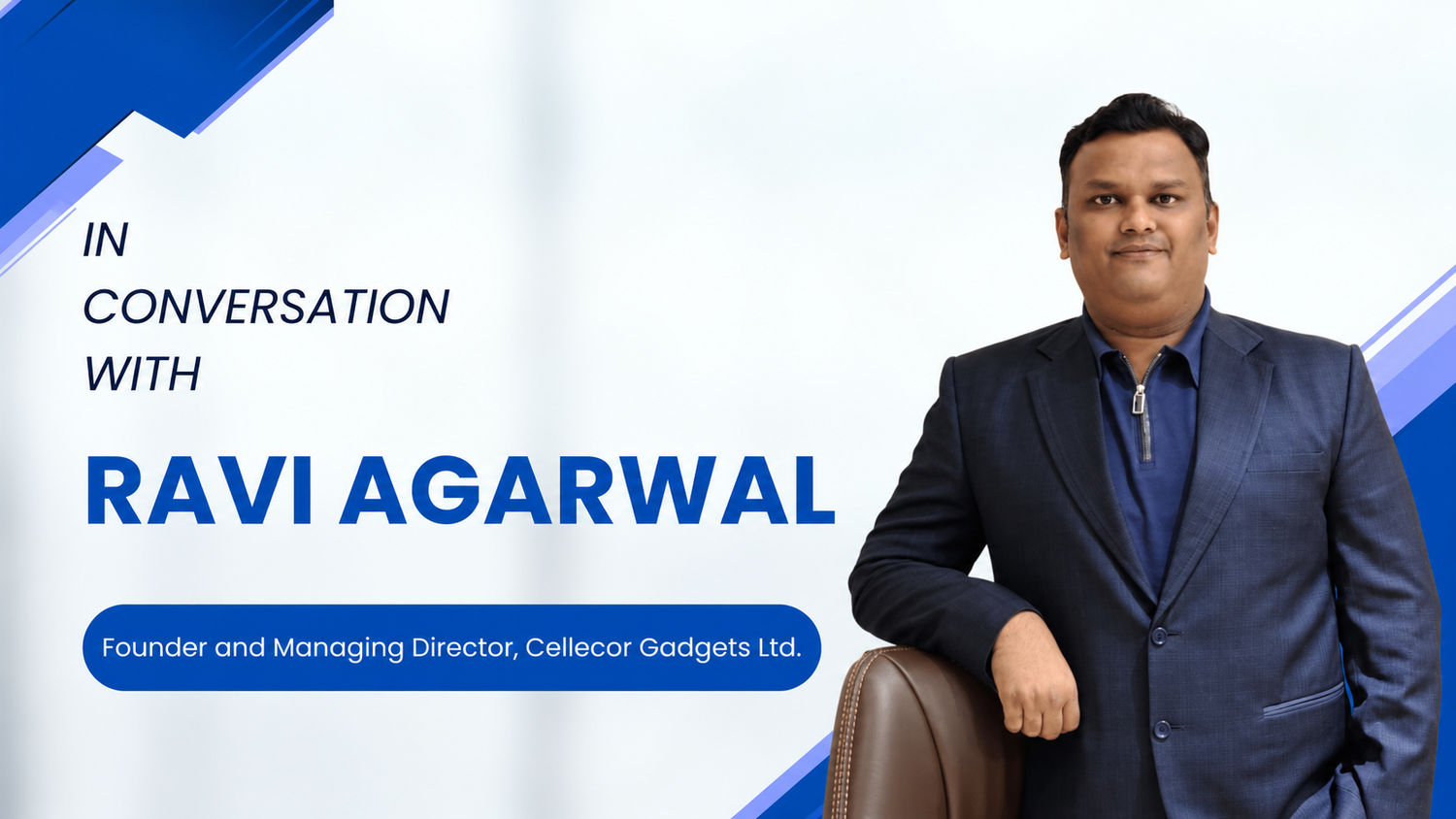

Cellecor is positioning itself as an affordable consumer electronics and home appliances brand, with a focus on products designed around Indian households and their everyday needs. But competing on price alone is not enough in a market where consumers also consider product quality, reliability and after-sales service. As the company looks to build consumer trust and expand into new markets, its approach to product development and affordability will be key to its growth. We spoke to Ravi Agarwal, Founder and Managing Director, Cellecor Gadgets Ltd., about how the company balances price and quality, understands consumers beyond major cities, and plans to build a stronger presence in India and overseas.
 Survey
Q. Affordability has been central to Cellecor’s positioning. Where does Cellecor draw the line between price and quality?
Ravi Agarwal: At Cellecor, we believe affordability should never mean asking consumers to compromise on the basic quality, reliability and usefulness they expect from a product. For many households, purchasing a television or a washing machine is a considered investment, and we have a responsibility to ensure that the value they receive justifies that investment.
The key is to understand which features genuinely matter to the consumer and where we can deliver the most value. India is a diverse market, and consumer needs vary considerably. A college student may be looking for a portable speaker or an electric kettle that fits a limited budget, while a family may need a rice cooker to simplify everyday cooking. A family may prioritise effective washing, ease of operation and a product that fits its budget over a long list of advanced functions. Not every household needs every premium feature available in the market.
This becomes particularly important in India, where consumer requirements vary significantly across regions, household sizes and income and age groups.
Our philosophy is to make technology accessible without losing sight of the fundamentals. Price determines whether a consumer can enter the category; quality and the experience over time determine whether they continue to trust the brand. That is the balance we want Cellecor to maintain.
Q. What is Cellecor learning from Tier 2, Tier 3, and rural consumers that established brands are missing?
Ravi Agarwal: One of the biggest lessons is that consumers in smaller towns and rural India are not less aspirational. They are equally interested in modern technology and a better quality of life, but they are often more conscious of how every rupee is spent.
Their needs also demonstrate why understanding the Indian consumer at a granular level matters. Take washing machines, for instance. Indian households deal with a wide variety of fabrics, from everyday cotton garments and school uniforms to delicate silk sarees. Laundry may include food stains from gravies, dust and mud, and different family members’ clothing in the same household. Consumers need appliances that address these everyday realities, not simply products designed around a generic global usage pattern.
Climate creates another important distinction. In North India, where summers can be exceptionally hot, an air conditioner is not merely a lifestyle upgrade; for many households, it is increasingly associated with comfort during prolonged heat. Similarly, in colder regions, a geyser can be an essential household appliance. Consumers also need products with appropriate safety protections, straightforward controls and clear operating instructions.
These are the kinds of realities that should influence product design, pricing and communication. We believe there is immense value in listening to consumers directly because their experiences reveal needs that a spreadsheet or a conventional market survey may not fully capture.
For Cellecor, the opportunity is to translate these insights into accessible, relevant technology. We do not see Bharat as a market that needs less innovation. We see it as a market that deserves innovation designed around its actual needs.
Q. How does Cellecor decide which new technologies are genuinely useful versus features added for marketing?
Ravi Agarwal: We start with a simple question: what real problem does this technology solve for the consumer? At Cellecor, we believe innovation should be measured by the value it creates in everyday life, rather than by the number of features a product offers.
We also recognise that usefulness is not universal. A young consumer looking for connected features may have different priorities from a family purchasing its first smart TV or someone buying a speaker for social occasions. Our decisions must therefore reflect the intended user, the price point and the purpose the product is expected to serve.
Ultimately, we want technology to earn its place in a product. The objective is not to offer the longest list of specifications, but to identify the right combination of performance, convenience and affordability. For us, the most meaningful innovation is technology that consumers can experience, understand and appreciate in their everyday lives.
Q. How does Cellecor plan to build consumer trust against global and established domestic brands?
Ravi Agarwal: Trust is built through consistent experiences, not just through visibility or advertising. Established brands have invested years in developing consumer familiarity, and we recognise that earning confidence requires us to demonstrate our value through the products and experiences we deliver.
For an Indian brand such as Cellecor, understanding local consumers can be an important advantage. Their requirements are shaped by regional climates, household practices, budgets and aspirations. When a brand understands these realities and translates that understanding into relevant products, it has an opportunity to build a more meaningful relationship with consumers.
However, understanding the consumer is only the beginning. The product must deliver on its promise, information must be transparent, and consumers must know where to turn when they need assistance. After-sales service and the way a company responds to a problem are just as important as the original purchase.
Our ambition is to earn trust one consumer at a time by combining accessibility with a consistent product experience. We want consumers to choose Cellecor because they see a brand that respects their money, understands their needs and takes its responsibility to them seriously.
Q. How is the company approaching quality, reliability and after-sales service as it scales?
Ravi Agarwal: As a company expands, quality and reliability become even more important because every consumer experience contributes to its reputation. A competitive price may encourage someone to try a product, but its performance and the support available after purchase shape their longer-term confidence.
We believe quality must be considered throughout the consumer journey, from product selection and manufacturing oversight to the information provided at the point of sale and the support available afterwards. It is also important to listen to customer feedback and identify recurring issues so that they can inform improvements.
Safety is particularly important in household appliances. Appropriate product design, compliance with applicable standards, correct installation and clear consumer guidance are therefore essential considerations.
As Cellecor scales, the objective must be to ensure that the consumer experience remains consistent across products and markets. That means treating service feedback as a source of learning rather than merely a problem to be resolved.
Growth is not simply about selling more products. It is about building the processes, accountability and consumer confidence needed to sustain that growth. We recognise that the larger a brand becomes, the greater its responsibility to deliver on its promises.
Q. Your approach to business has also been shaped by your understanding of people at the grassroots. How does this consumer understanding influence the products Cellecor develops and the decisions you make as a founder?
Ravi Agarwal: At Cellecor, we believe that building a meaningful business begins with understanding the people we serve. While market research and sales data are important, engaging directly with consumers offers a deeper perspective on not just what they want to buy, but why they need it and what barriers prevent them from accessing it.
This philosophy is reflected in our efforts to support rural women by gifting them washing machines. Such initiatives reinforce our belief that household appliances represent more than convenience; they can reduce the burden of everyday work, save time and make daily life easier.
This grassroots understanding also influences our approach to product relevance. Take everyday kitchen appliances such as grinders and choppers. In Indian households, where cooking often involves a variety of spices, chutneys, pastes and freshly prepared ingredients, these appliances need to be practical, easy to operate and suited to local cooking habits. For a consumer managing a busy household, a chopper that simplifies food preparation or a grinder that supports everyday cooking can make a meaningful difference. The product must not only fit the family’s budget but also deliver convenience and dependable performance.
These examples reinforce why we believe consumer understanding should be an integral part of product development and business strategy, rather than being limited to marketing campaigns. By understanding people’s everyday realities, we can build products that are relevant, accessible and valuable to the consumers we serve, while ensuring that commercial growth and consumer value reinforce each other.
Q. Why is Africa, particularly the Liberia facility, strategically important, and what does Cellecor see in the similarities between Indian and African consumers?
Ravi Agarwal: Our interest in Africa reflects our ambition to take Cellecor’s consumer electronics and home appliance proposition to new markets. We see opportunities in markets where consumers are aspiring to better technology and greater convenience while remaining conscious of affordability and value.
There are similarities between many Indian and African consumer markets, particularly in the importance of price, practical utility and access to products that improve everyday life. However, Africa is not a single, uniform market. Consumer preferences, climate, purchasing power, distribution networks and infrastructure vary considerably between countries. A successful expansion strategy must recognise these differences and adapt to local requirements.
The lessons we have learnt in India are relevant in this context. We have seen the importance of understanding how consumers use products in their homes, the conditions in which appliances operate and the features that genuinely matter to them. These principles can help us approach new markets thoughtfully, while remaining open to differences in local needs.
Liberia is strategically relevant to our international expansion, and the facility should be viewed in the context of our broader ambitions in the region. The opportunity is to develop a sustainable presence, understand local demand and build the capabilities needed to serve consumers effectively.
Ultimately, international expansion is not simply about taking an Indian product and selling it elsewhere. It requires listening to consumers in each market, understanding their priorities and adapting the business accordingly. That consumer-first approach is what we want to carry forward as Cellecor grows beyond India.


