

Claude won’t let you copy another app or game from scratch anymore
 Follow Us
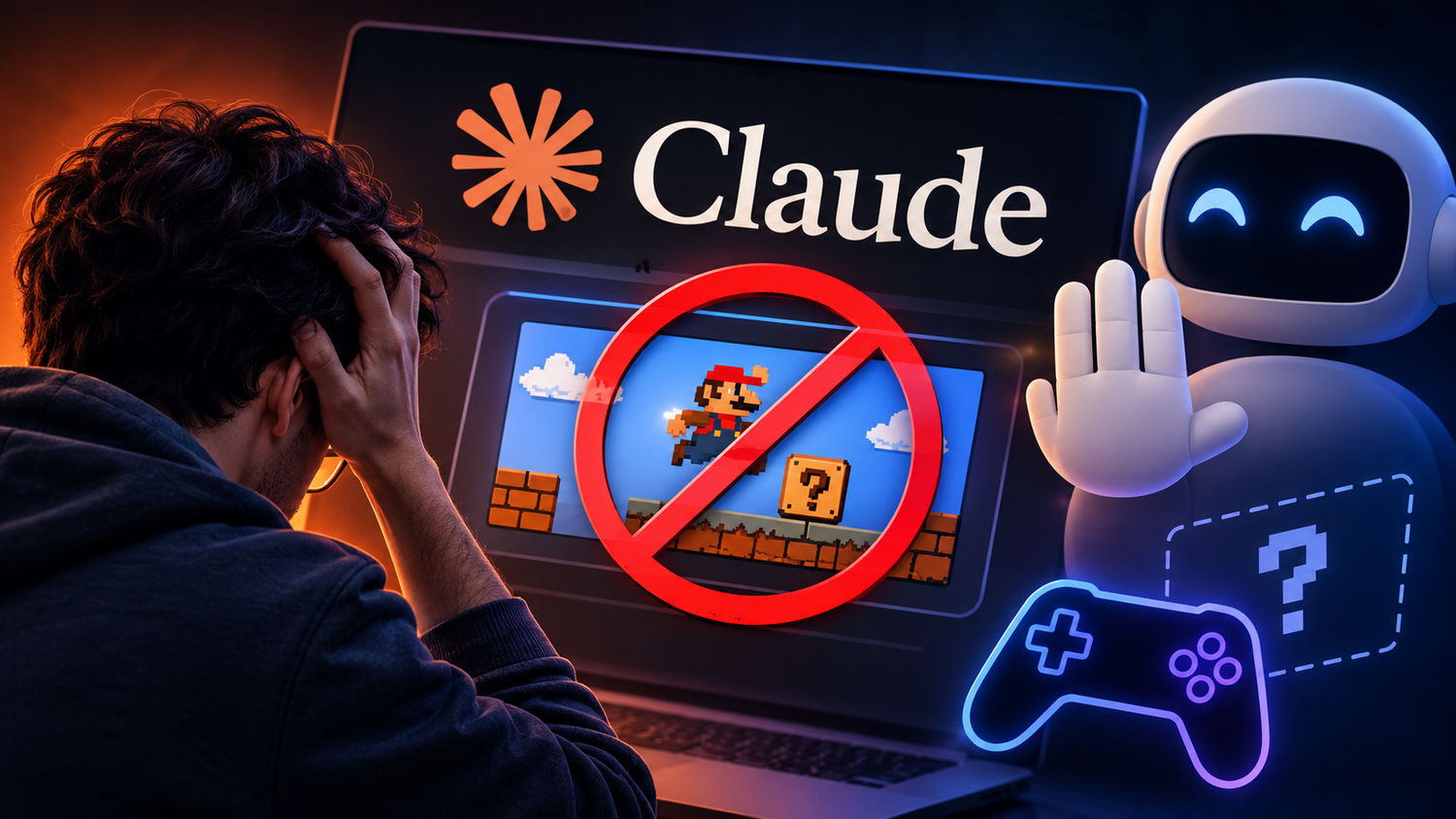

Requesting Claude Code to create a new version of an existing game may now receive a definite no from the AI. Anthropic has included two additional lines in the Claude Code prompt on Opus 5.5, instructing the AI not to build a copy of an existing game, even when it is given a new name and made to appear as original work. This development was confirmed by an employee of Anthropic on October 30, and the developers are not pleased. But what has changed, what remains possible, and why does it matter?
 Survey
Also read: OpenAI Grid Protectors: How AI data centers will cut power use in a crisis
What did Anthropic change in Claude Code?
That’s the entire edit, says Addy Osmani of Anthropic, who revealed it publicly. It was included by Anthropic in Claude Code’s prompt in Opus 5.5 in order to prevent the model from reproducing someone else’s particular game, which would go against the rules of using Claude. According to a screenshot circulating on X, the language used is intended to make Claude create new games, games based on particular genres, and games created by yourself, but no copy of any other existing game, even with a different name.
Can Claude still help you build a game?
Yes, and Anthropic maintains this is the whole point. Original games, games in a particular genre, and games made using your own art and design are designed to continue working. Platformers are good; a roguelike of your own design is good. But a pixel-perfect Mario game with the names changed is now a red line for Claude. Osmani added that Anthropic will keep iterating to find the right balance, and asked users to send him any refusal on work that is theirs.
Is Claude blocking reverse engineering as well?
According to reports, the answer is yes, and that is precisely where the fury comes in. Tech site Tom’s Hardware reached out to Jarred Walton, an ex-colleague of Anthropic who was performing tests with software he has been developing. It all was working fine until the 31st of October when he had trouble, which disappeared once he switched to Opus 4.8. Another person who was running checks on Opus 5.5 in Claude Code requested reverse engineering of a product activation, but it triggered the protections.
Also read: Using AI to make your smart TVs faster? Know these risks first
Anthropic has not officially announced a new reverse engineering clause, but Mr. Walton believes that they did indeed add one.
Does this affect every Claude model and tool?
Not really, as far as one can make out. It seems to be limited to Claude Code with Opus 5.5 only. According to the report of Tom’s Hardware, bypassing Opus by sending a call via other harness or wrapper could be one way around it. However, it has not been tested yet. Anthropic also has Cyber Verification Program wherein approved organizations are offered full cybersecurity features of its frontier models.
Why are developers so angry about it?
Whereas the distinction between cloning and learning is unclear, and the line between the two can’t be drawn by a two-line rule. Consider this. It is common practice to decompile games in order to understand their mechanism, while it is also standard procedure to look into one’s own software to discover any bugs. A system that fails to distinguish the two from piracy views every request with suspicion.
Alternative names of such systems as the OpenCode model or the DeepSeek model have already appeared online as people try to work around this issue. Anthropic wants to protect the intellectual property. Users want a program that doesn’t judge them. And the two objectives came to a head with a blunt change of prompt.
Also read: MIT Researchers show LLMs can edit neural network weights without training: Here’s what it means


