
Apple, Intel and 18A: Why the foundry deal could rewrite the future of PCs
 Follow Us
Intel’s 18A node offers Apple a strategic second advanced-node supplier
A potential Apple deal could validate Intel’s foundry comeback narrative
CES 2026 looms as Intel positions Panther Lake (built on 18A) for AI PC leadership

In a different timeline, the Apple–Intel story ended with a breakup tweet and a clean block-and-unfollow. In 2020, Apple walked away from Intel’s x86 roadmap and built its own M-series silicon, powered by TSMC’s process tech, and their divorce looked permanent. In an unprecedented “back to the future” twist, the two look set to reunite – not as CPU vendor and OEM, but as designer and foundry. And strategically, it might just be the smartest move either company makes this decade.
 Survey
Why Apple is likely friends with Intel again
On paper, on the back of the M5-based MacBook and iPad launch, Apple doesn’t need Intel anymore. The M-series transition worked, because MacBooks are cooler, faster, and more battery-efficient than the old Intel era machines – something we have tested and benchmarked here in the Digit Test Labs over the past three years. On that front, TSMC has delivered bleeding-edge nodes on schedule when Intel just couldn’t. So why even flirt with the idea of putting Apple silicon on Intel’s 18A/18A-P process from 2027? It all comes down to managing risk, leverage, and politics.
Right now, Apple’s entire advanced-node world is welded to TSMC, whose most critical fabs sit in a very tense geopolitical corner of the world – Taiwan, in the shadow of China. Diversifying even part of the M-series stack to a US fab gives Apple a second supply anchor and a little more sleep at night. Starting with “lowest-end M processors” – think MacBook Air-class or entry iPad silicon – lets Apple qualify Intel’s process without risking its halo Macs, as Ming-Chi Kuo reports.
There’s price and leverage, too. A credible second source at 18A means Apple can negotiate harder with TSMC on future N2 and beyond, instead of being the captive mega-customer that always blinks first. TSMC publicly insists its enhanced 3 nm N3P is roughly comparable to Intel 18A on power, performance and area, and that its 2 nm N2 node will beat it outright – but once Apple has real silicon back from Arizona, it can stop taking anyone’s word for it.
And then there’s Washington. The Trump administration has just taken roughly a 10% stake in Intel, turning the company into something close to a national semiconductor champion, on top of CHIPS Act grants and loans. Japan’s SoftBank has added another $2 billion, and Nvidia is buying about 4–5% of Intel in stock as part of a co-development deal.
For Apple, the optics of “some Macs now run on US-made, US-backed silicon” are akin to political insurance in a world where supply chains are now deeply ingrained in foreign policy.
Intel needs Apple validation more than money
On Intel’s side, the calculus couldn’t be simpler: this is existential. Cash helps, and the Nvidia / US government / SoftBank money cannon is real. But for a foundry comeback, confidence is the real currency – and you don’t buy that. You earn it with outside customers on your most advanced node. And Apple provides as big a validation as any, as far as Intel’s concerned. A scorned lover pulling you back into a tight embrace.
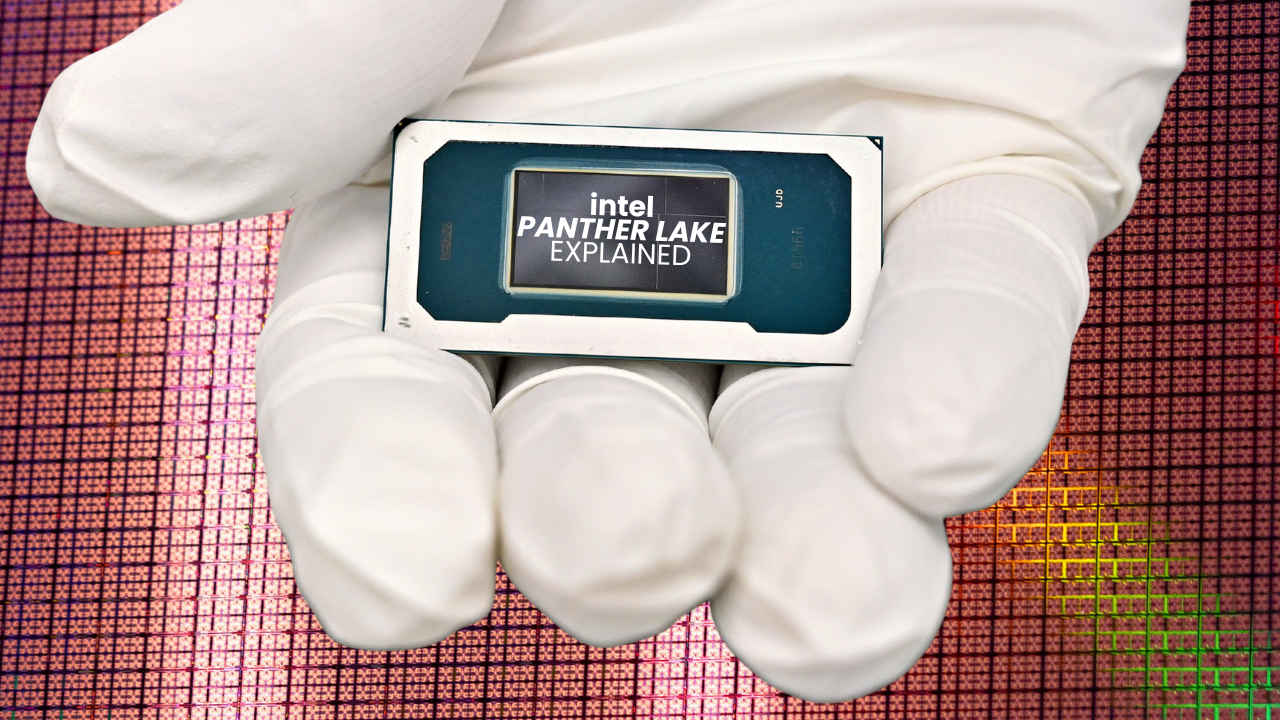
Now Fab 52 in Arizona, the first high-volume 18A fab, is ramping. Panther Lake – what we expect to see branded as Intel Core Ultra 300-series laptops at CES 2026 – is the showcase client product for that node, with Clearwater Forest following on the data-center side. All of that is necessary, but not quite sufficient, something that Intel knows all too well.
If you’re trying to convince the world that your foundry is truly back, getting Apple to tape out custom SoCs on your brand-new 18A-P flow is the closest thing to a cheat code. Apple’s bar for process, yield and packaging – including hybrid-bonded 3D stacking like Foveros Direct – is notoriously brutal. If Intel can hit Apple’s dates (PDK 1.0/1.1 in early 2026, volume shipments of an entry-level M-series part in 2H 2027), every other fabless giant suddenly has a much harder time dismissing Intel Foundry Services as a political vanity project.
That external validation matters even more because Intel’s own bench has been wobbling. The company just lost its Chief Technology and AI Officer, Sachin Katti, to OpenAI, with CEO Lip-Bu Tan now personally babysitting Intel’s AI and advanced tech groups. It’s a very public reminder that top technical talent now gravitates toward whoever is closest to the AI compute fire – and right now, that’s Nvidia and hyperscale AI labs, not Santa Clara. An Apple design win on 18A doesn’t fix Intel’s org chart, but it does send a clear signal: the fabs are worth betting on again.
The AI PC war makes timing everything
Layer all this onto the PC world we’re about to walk into in 2026, and the Apple-Intel chips rumour becomes even more interesting.
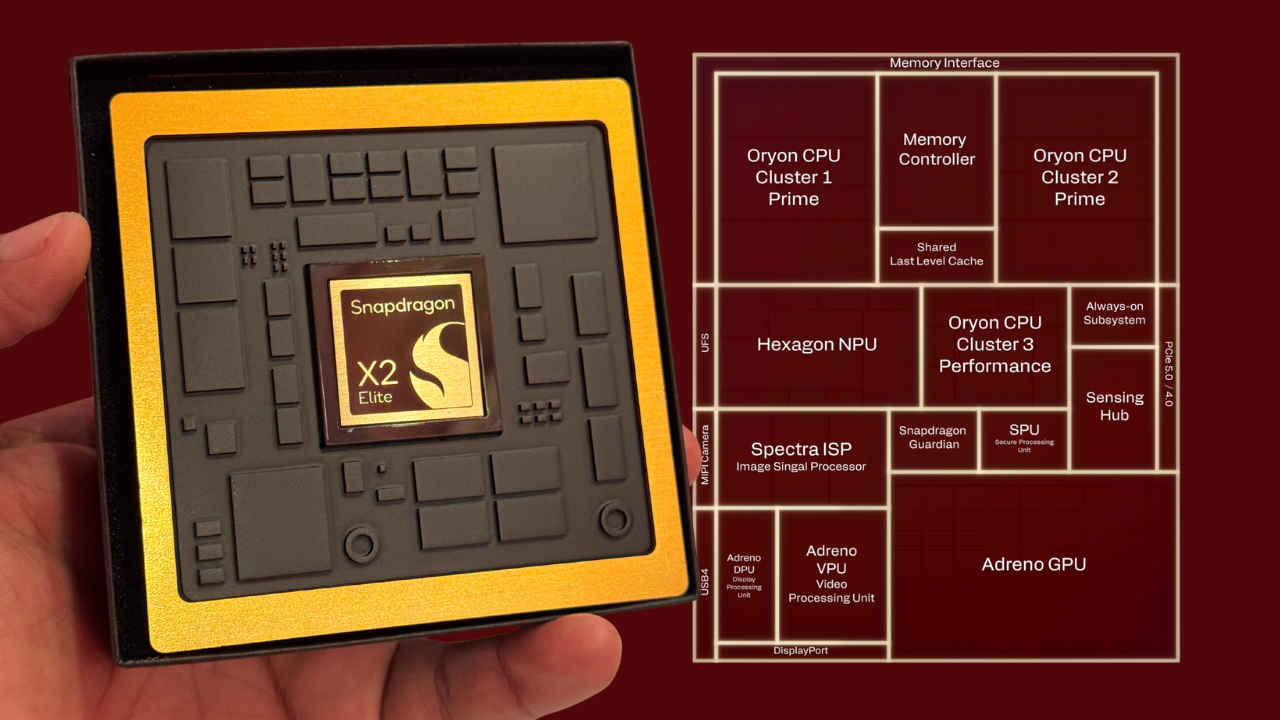
Qualcomm’s Snapdragon X2 Elite and X2 Elite Extreme are promising 18-core ARM CPUs, up to 80 TOPS NPUs and multi-day battery life in Copilot+ class Windows laptops, available from spring 2026. AMD has Zen 6 CPUs and next-gen Ryzen AI parts on its roadmap for 2026 as well, with more aggressive on-die AI. Intel’s response is Panther Lake, the first mass-market AI PC platform built on 18A, meant to claw back performance-per-watt leadership and show that x86 can still hang in an AI-first world.
So as CES 2026 rolls around, Intel doesn’t just want to show OEMs some slick AI benchmarks, it wants to walk into those hotel-suite briefings with a story that says, “This node is so real, Apple’s building M-series parts on it next.” Even if those Macs only ship a year later, the narrative halo arrives early.
For OEMs deciding which way to lean with Qualcomm’s second-gen ARM PCs, AMD’s Zen 6 “AI PC” plays, or yet another generation of Intel silicon, that halo matters.
Foundry first, everything else second?
The quiet subtext in all of this: Intel is gradually morphing from “an IDM that happens to own fabs” into “a national-scale foundry that happens to design CPUs.”
Between the US government’s near-10% stake, SoftBank’s capital, and Nvidia’s $5 billion ticket, Intel is now the closest thing the West has to a strategically underwritten alternative to TSMC at advanced nodes. If it can layer Apple volume on top of that – even just tens of millions of entry-level M-series dies per year – Intel suddenly has a credible story that Fab 52 and its successors are bankable assets.
The irony is delicious. After years of Intel chips sitting inside Macs, the next phase of the relationship could be Intel fabs quietly powering Apple silicon from beneath the packaging, no stickers, no fanfare – just wafers rolling out of Arizona, stamped with two companies’ futures.
Also read: China going to win AI race thanks to cheaper electricity, warns NVIDIA CEO


