
“This could be gaming’s iPod moment”: Arc co-founder on India’s first Rs 30,000 gaming handheld
 Follow Us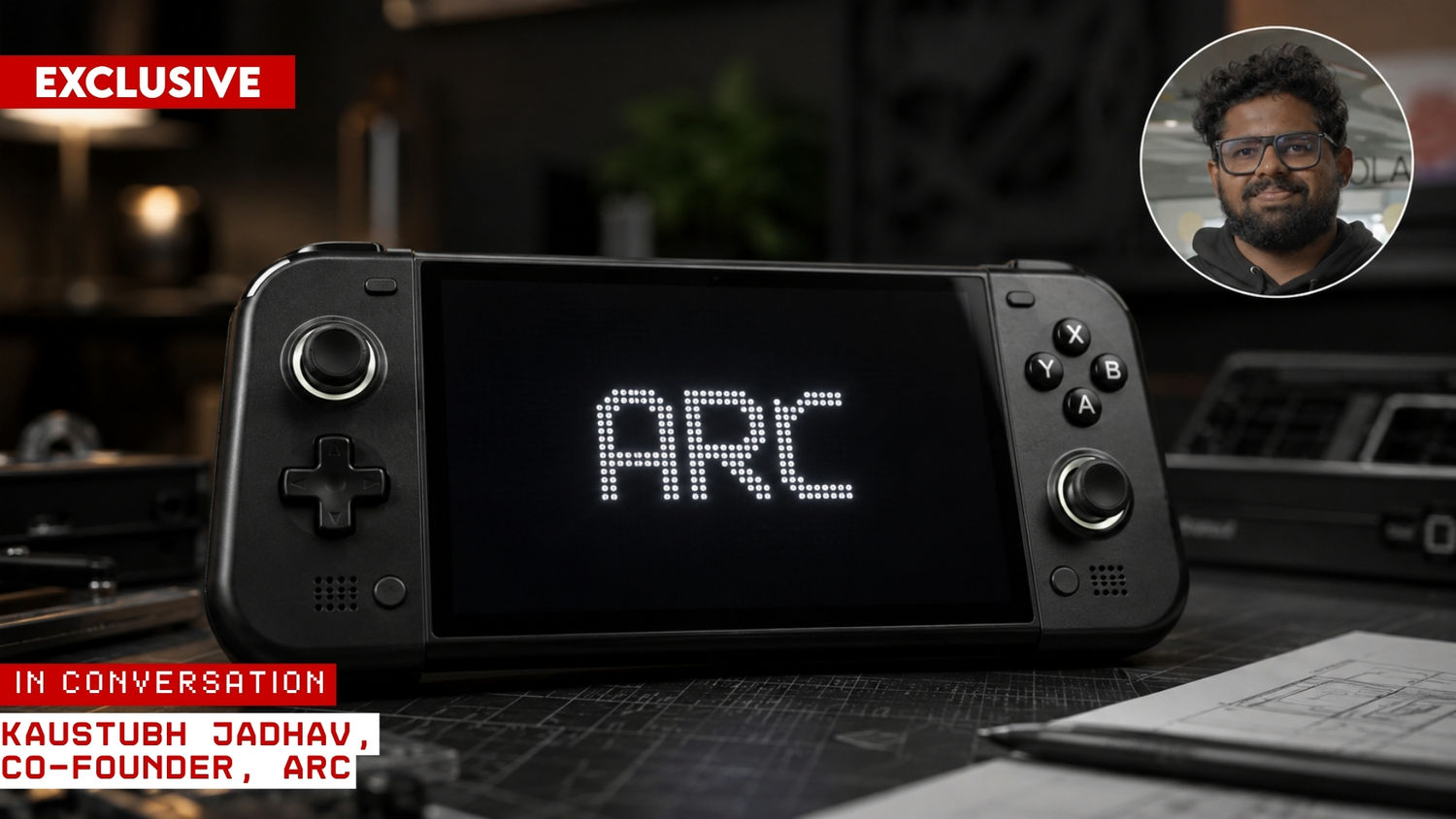

Approximately 2.5 lakh gaming handhelds, including Steam Deck units and Nintendo Switch consoles, were imported into India in a single year, bought by consumers navigating grey-market channels, import duties, and hardware engineered primarily for Western infrastructure, because nothing built specifically in the Indian context existed. That was the moment that pushed Kaustubh K. Jadhav and Jobin Joseph, the two co-founders of Arc (Zenalli Innovative Technologies Limited) to push for an Indian handheld gaming console.
 Survey
In an exclusive interview with Jadhav, he calls the underlying demand a “genre and content exodus”. Indian gamers have spent years watching global gaming culture on YouTube, Twitch and Kick, absorbing the appetite for titles like Red Dead Redemption, God of War, and Assassin’s Creed, while the hardware required to play them has remained priced upwards of Rs 50,000 before a single game is purchased.
Mobile gaming’s dominance in India, he argues, is not a reflection of what Indian players want, but a reflection of what they can afford. The country’s gaming market has confined itself to two or three titles not because the players lacks ambition, but because the market lacks the device to fulfil their appetite.
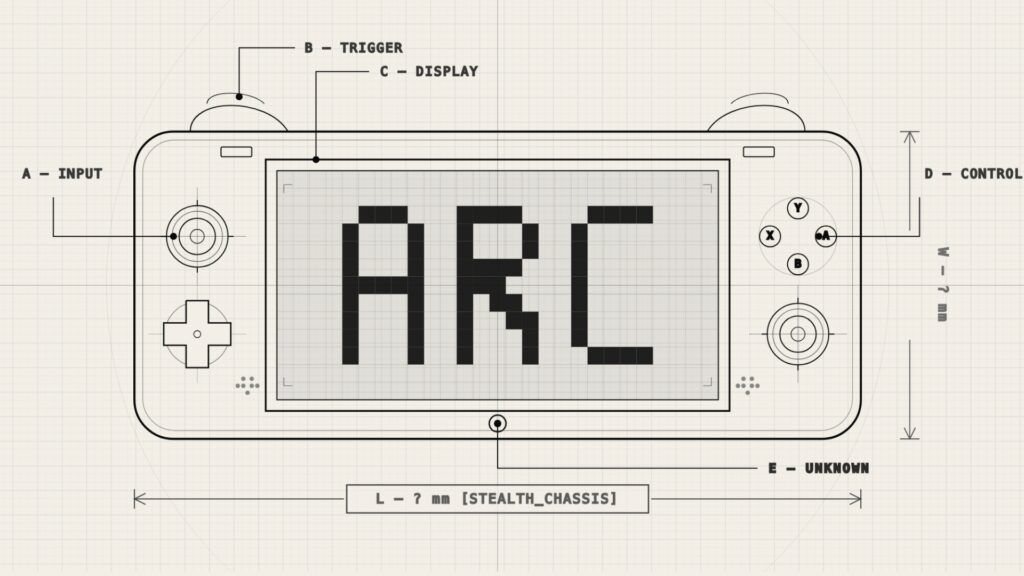
Arc, the consumer gaming brand under Bengaluru-based Zenalli Innovative Technologies Limited, is attempting to close that gap with the Arc X1 which is India’s first home-grown dedicated gaming handheld, built on an ARM-based architecture. The Arc X1 runs a proprietary gaming operating system called OWL OS on an AOSP foundation, assembled at two facilities in Bengaluru and Chennai and targeted at a price point below $300 (approximately Rs 25,000).
The Arc X1 is positioning itself in a space that no existing product occupies and The company has been building in public, paying close attention to what the public is saying back.
Why not x86, why not Windows
Arc has been in official development for 14 to 18 months and the architecture the company has arrived at is as much the result of what it ruled out as what it chose.
The first candidate was x86, specifically AMD’s Zen architecture, the same silicon family that powers the ROG Ally. “The price point that we wanted to achieve was getting very difficult,” Jadhav told Digit. The device was growing physically larger with each thermal iteration, battery requirements were inflating accordingly and the gap between the Arc X1 and a PlayStation was narrowing to a point that destroyed the product’s reason to exist.
“The difference between us and a PlayStation would not have been more than Rs 10,000,” he said. “And I think that will discourage somebody to buy a device like this and the product’s core argument collapses.”
Linux was the next option and the appeal was openness and control. But the fundamental problem was not the operating system itself. Software support on Linux is thin enough to require a substantially larger engineering team than Zenalli currently runs, dedicated to maintaining a stack that would have consumed the company’s resources before the first device could ship.
“Our support would be very, very bad,” Jadhav said. “We would end up dying in the process of building the first device itself.”
Windows came after Linux but was rejected on performance grounds and Jadhav explained his objection to it is empirical. Put a ROG Ally and a Steam Deck side by side on equivalent or inferior hardware, he says, and the Steam Deck consistently outperforms Ally, because Valve’s SteamOS has been built around gameplay rather than adapted from a general-purpose desktop operating system.
What remained was AOSP, Android’s open-source project. The team built on it and they brought in engineers with LineageOS experience and integrated Steam Proton, the compatibility layer Valve developed to run Windows-native games on Linux directly into the stack. The chipset partnership that Arc has secured, with a partner it is not naming ahead of a formal co-announcement, gave the team access to low-level AOSP functions that permitted hardware-adjacent optimisations beyond what standard Android development allows. “The chipset we are using is also a gaming silicon,” Jadhav said. “It is not normal processing.”
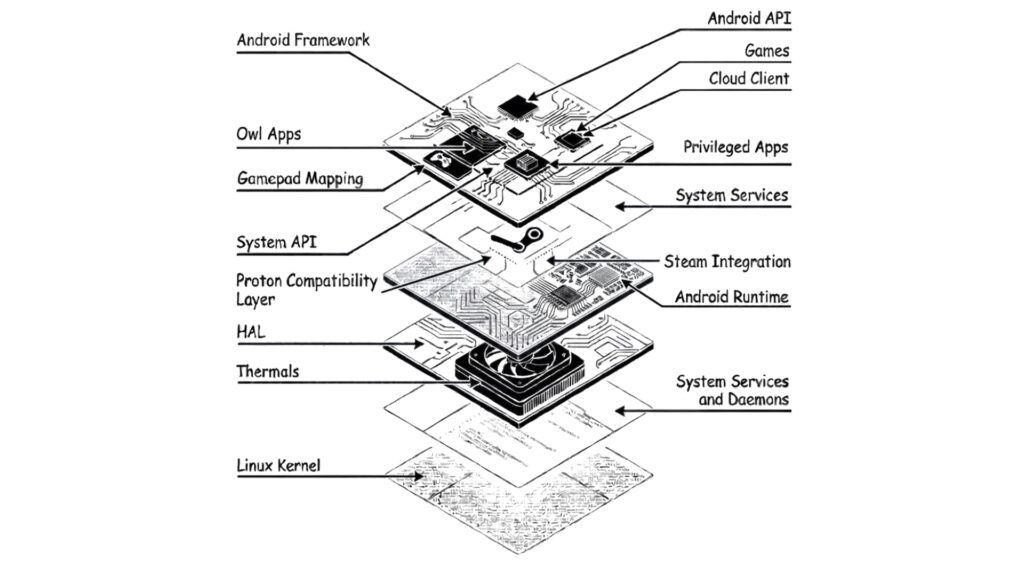
The result is OWL OS which has been built from AOSP with a controller-first navigation and system-level gaming optimisations. Its architecture, which Arc has now published, runs from a Linux Kernel at the base upward through a hardware abstraction layer managing thermals and system daemons, through a Proton Compatibility Layer and Android Runtime sitting side by side at the next tier, then through a system API layer with Steam Integration built in and up to an application layer comprising Owl Apps, Privileged Apps, Gamepad Mapping and System Services, before reaching the Android Framework at the top with API access for games and cloud clients.
The significance of this structure is that the compatibility and gaming infrastructure are not sitting on top of Android as a skin or a launcher. They are woven into the operating system from the hardware upward. OWL OS also ships with a gamepad overlay system that Jadhav describes as working like a subtitle track, allowing users to apply controller templates to any game without leaving the interface and a proprietary haptic system being developed in parallel with the device that he says goes beyond what current handhelds including the ROG Ally offer. Detailed specifications including the name of its chipset partner are being held until the formal announcement.
What you can actually play
Arc’s approach to content runs across three distinct layers and Jadhav is candid about where things stand exactly.
The first is native Android gaming. Because OWL OS is built on AOSP, every game that runs on Android runs on the Arc X1 and for the Indian market that means BGMI, Call of Duty Mobile and Genshin Impact, to name a few, all benefiting from the handheld’s physical gamepad and a 20-point touch system. Jadhav’s claim is not just that these games work, but that they work meaningfully better: sustained thermal performance on dedicated hardware removes the clock-throttling that comes from extended sessions on a smartphone and the physical controls change the experience of games that were designed to support them. Arc has also confirmed that Hades II runs on the device at native 60 frames per second, which may be where the hardware’s ceiling sits for natively supported titles.
The second layer is PC game compatibility through the OWL OS emulation stack. At present, Jadhav says the system can run approximately 25–30% of the Steam library, with the compatibility toolchain drawing on GameHub and GameNative. The distinction he draws is rather than running emulation as a sandboxed application above the operating system, OWL OS treats the OS itself as the container.
“Instead of a container system sitting on top of the OS, the OS itself is the container,” he says. “Our ability to go deeper with these games goes higher.” Confirmed playable titles at this stage include Red Dead Redemption, God of War, and multiple Assassin’s Creed entries, with older titles and AA games performing reliably and current-generation AAA titles an ongoing optimisation project. “We have to optimise a lot of things and push forward,” Jadhav said. Arc is also building a community-driven emulation library on a contributor model, structured along the lines of a GitHub for game emulation, intended to expand the compatible title list as the user base grows.
The third layer is cloud gaming and it is the one Jadhav is openly bullish on it as a channel specifically suited to Indian consumption patterns. Xbox Cloud Gaming and Nvidia GeForce Now are both active in India and at a monthly subscription of approximately Rs 500–700, both services sit within the UPI-based recurring payment patterns Indian consumers have already adopted at scale.
“The gaming experience is not accessible where you want to play a good AAA game on cloud on a mobile phone. Not fun at all. Not on an iPad because the aspect ratio is bad.” The Arc X1, with its 7-inch-plus bezel-less display and dedicated controls, is being positioned as the device that makes cloud gaming viable for Indian players who currently have no good answer for it.
The manufacturing reality
Building the device in India proved harder than the team expected. The Arc X1 requires a 16-layer PCB and when they approached Indian electronics manufacturers, the most capable among them were working to eight layers. White-labelling was considered internally as a route around the problem but then rejected. Jadhav says a white-labelled device would have meant carrying somebody else’s product under Arc’s logo, with no proprietary technology and nothing defensible in the engineering.
The solution was to move the component supply chain to Southeast Asia, with vendors in Vietnam, Hong Kong, Taiwan and the Philippines supplying major components, while final assembly is handled by two partners, one in Bengaluru and one in Chennai. Jadhav credits the iPhone manufacturing expansion in India which has attracted high-quality electronics manufacturing services (EMS) companies into the country, as a significant factor in making Indian assembly viable at this stage. In addition, certain smaller components are being sourced domestically.
The chipset procurement was the most sustained challenge the company has faced. Jadhav spent two to three months working to secure access, sitting in the US headquarters of their chip partner while co-founder Jobin Joseph worked simultaneously from the company’s Taiwan office, running both sides of the same conversation to arrive at a minimum order quantity the company could manage. “Going into the office of a major chipset provider and asking for a very small MOQ is, I would say, chaotic and humbling every single day,” he said. On the memory side, the team used forward contracting to manage costs and limit exposure to DRAM market volatility, which has pushed up component prices across the consumer electronics industry through this period.
The buyer and the price
Arc is targeting two specific demographic profiles. The first is India’s urban 18-to-38 cohort: people tracking global gaming culture closely, already importing Steam Deck units or Nintendo Switches through unofficial channels, who want a dedicated device rather than a secondary phone. The second is the aspirational young professional in their mid-to-late twenties, sharing accommodation, earning an entry-level salary, for whom a PlayStation plus a game library represents a purchase decision that does not fit the realities of their life but who is increasingly aware of the gaming experiences they are missing.
Jadhav describes a behavioural pattern he has observed closely in Southeast Asian markets, particularly in Thailand and Vietnam, that he believes is beginning to emerge in India. The dual-device buyer, carrying an iPhone as the primary communications device and a mid-range Android phone as the primary entertainment device, specifically to protect the iPhone from the thermals of sustained gaming sessions. “We don’t want to position our device as a secondary communication device. We want to position ourselves as a primary entertainment device.”
The sub-$300 target price (approximately Rs 28,000 at current exchange rates) is designed to occupy a gap that no current product fills. Arc’s social media campaign, launched while the device is still in development, has generated 1.5 million impressions and more than 26,000 comments. Jadhav says 75–80% of those comments has nothing to do with specifications: “I always wanted to buy a ROG Ally. I went to the showroom and said no. Steam is not even catering to us. If you guys are able to pull that off, I will buy the first device.” The company’s first-year ambition is one million units.
The long game
The analogy Jadhav returns to most often when describing what Arc is trying to do is music. “Think about games as music,” he said. “You appreciate music when you can access it and you develop a taste for it.” His argument is that Indian gaming is not a market with low demand but a market with constrained access and that mobile gaming’s hold on the Indian player base is a product of economics rather than preference. The 75–80% of Indian gamers playing exclusively on mobile are there because nothing affordable enough to replace the phone has existed, not because mobile gaming is the experience they would choose.
The comparison Jadhav reaches for to capture Arc’s ambition is the iPod, a device that did not invent the desire for music but removed the barriers that had been keeping people from acting on it. Cloud gaming, in this framing, plays the role of the iTunes Store; it is legal, affordable, structured around subscription habits that Indian consumers already have through UPI and requiring only a device worth using to become someone’s primary entertainment channel. “If we are able to do that somehow,” Jadhav said, “I think we can solve, or maybe create, a market altogether.”
Arc will open beta testing for a selected group of waitlisted users in the coming days with chipset and full hardware specification announcements to follow. A subscription service is under consideration alongside the device, though Jadhav declined to confirm specifics at this stage.


