

NVIDIA GeForce Now coming to India: Mumbai servers, ultra‑low latency, RTX 5080 hardware and big questions on price
 Follow Us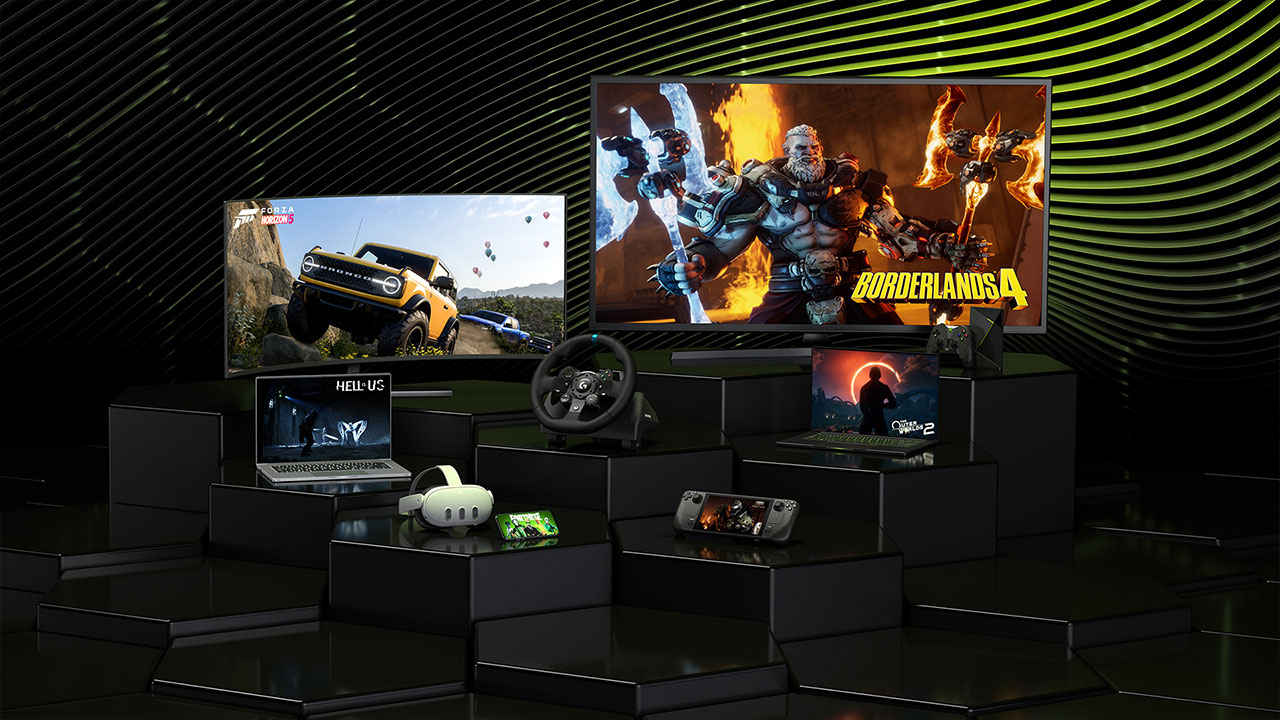

India has finally had its first real taste of GeForce Now. At a preview event in Mumbai, NVIDIA confirmed that its cloud gaming platform will launch in India within this calendar quarter, with servers already live in the Mumbai region. While the company carefully avoided sharing pricing, the hands‑on session made one thing very clear: if your internet is good, almost any screen in your house can now behave like an RTX 4080 or even 5080‑class gaming PC.
 Survey
Why GeForce Now arriving in India matters
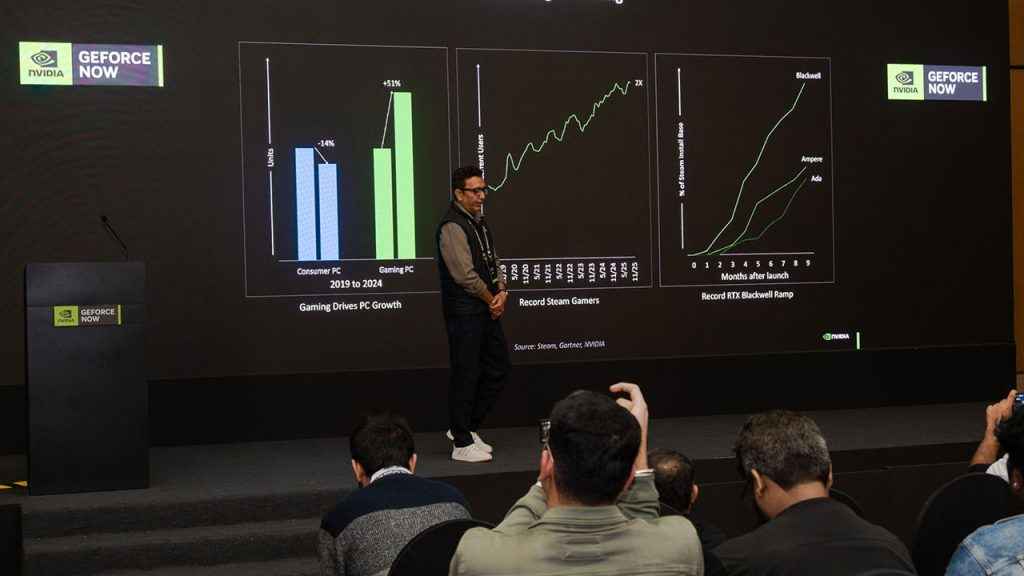
NVIDIA’s presenters opened with a simple thesis: this is the right moment to bring GeForce Now to India. They backed it up with numbers. Steam’s user base in India has grown roughly 150% over the last four-to-five years, and the average download speed here is now around 50 Mbps according to Steam’s own telemetry, a far cry from where we were a decade ago. In other words, the pipes are finally good enough for cloud gaming to be more than a curiosity.
At the same time, India is still a market where dedicated gaming PCs are a luxury. Most people own entry-level and mid-range laptops, work machines, budget phones or smart TVs that were never designed to run modern AAA games locally. GeForce Now pitches itself as the bridge: instead of buying a gaming rig, you stream from one that lives in NVIDIA’s data centre. For a price‑sensitive market, that proposition only works if the experience really feels like a proper PC and the monthly bill doesn’t sting.
The Mumbai Demo: A hardware museum running the future
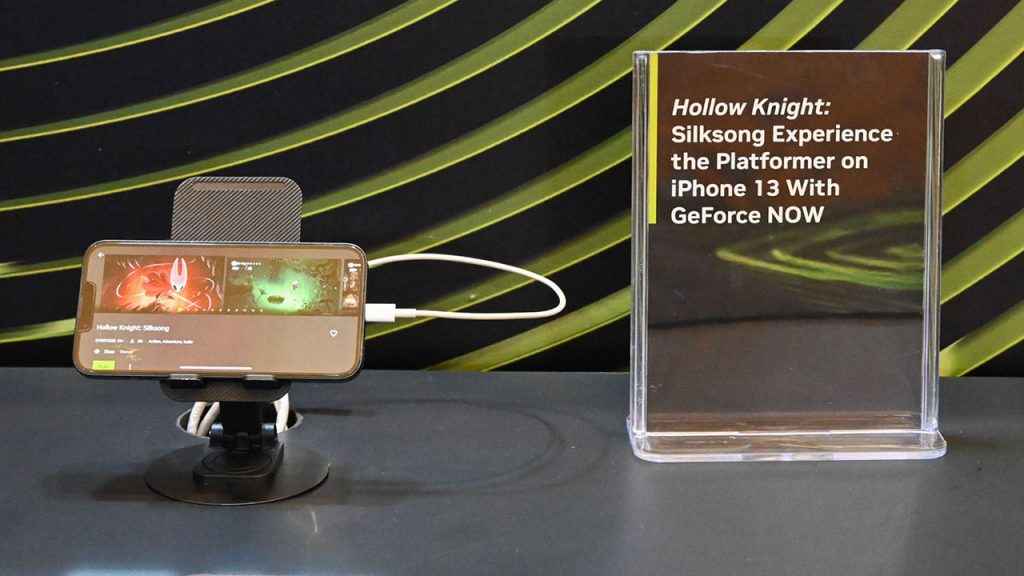
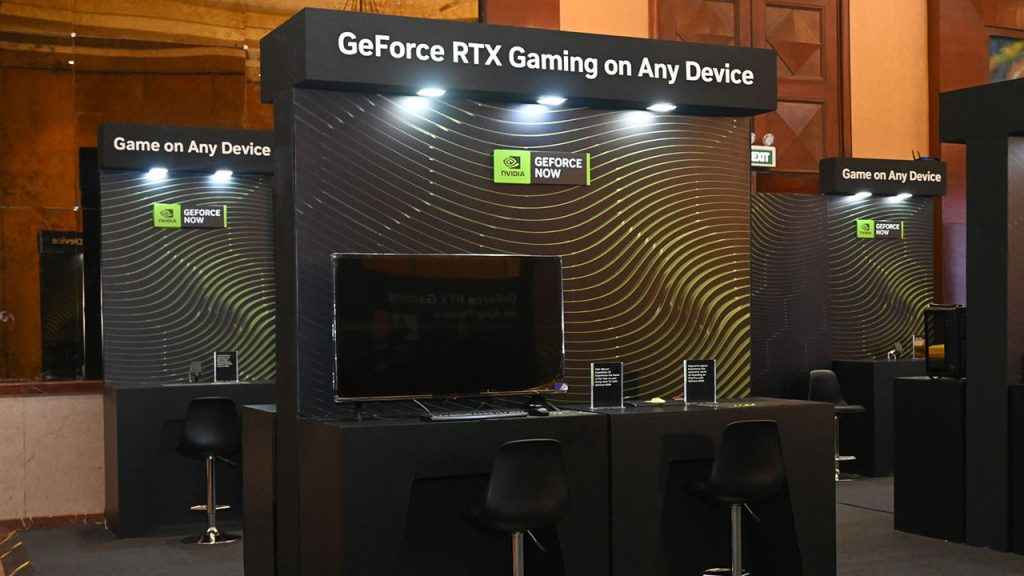
The demo area in Mumbai looked less like a cutting‑edge gaming lab and more like a tech recycler’s storeroom, and that was entirely the point. Rows of visibly old phones, scuffed laptops, modest televisions and well‑used tablets were all signed into GeForce Now and happily rendering big, beautiful worlds. If it had a screen and could get online, NVIDIA wanted it on display.
Under the hood, India is getting the latest generation of hardware. NVIDIA confirmed that the local rollout is built on new RTX 5080 “SuperPods,” backed by updated CPUs running at 4.4 GHz, 8 cores and 16 threads per instance, along with doubled system memory compared to the previous generation. Those 5080 servers sit alongside existing RTX 4080 hardware, giving NVIDIA flexibility in how it assigns resources tier‑by‑tier. Networking has also been upgraded with ConnectX‑7 adapters and a transport stack they brand as RiverMax to better pace packets.
The hardware itself remains invisible to the player. What you see is that battered office laptop suddenly driving maxed‑out visuals it could never dream of running locally. That’s the magic trick GeForce Now is trying to sell.
Latency and image quality: Does it feel local?
Cloud gaming lives or dies on latency. NVIDIA spent a noticeable chunk of its presentation explaining click‑to‑photon delay: the time from pressing a mouse button to seeing the result on screen. There are two parts to that delay, the processing on the server and the network trip between your device and the data centre.
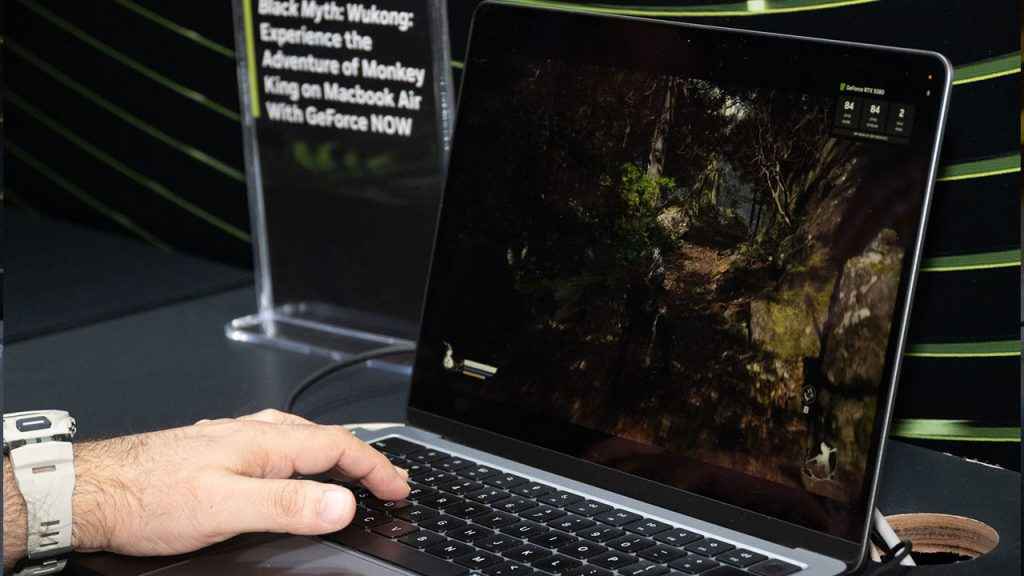
For the India service, the servers are located in the Mumbai region, and during the preview, test systems in the same city were seeing around 2 milliseconds of raw network latency to the cluster. That number is almost comically low; the total in‑game latency is obviously higher once you add encoding, decoding and game logic, but it shows how much headroom NVIDIA has if you’re close to the city.
NVIDIA also showed a comparative example using Overwatch: in their lab test, a GeForce Now session ran at around 30 ms total system latency, while a PlayStation‑class console at 120 Hz sat closer to 49 ms. That’s not a scientific benchmark for every game, but it illustrates their argument that cloud play does not automatically mean “second‑class” responsiveness. For the story‑driven, slower‑paced games they chose for the Mumbai hands‑on, any extra delay was effectively a non‑issue.
On the image quality front, the India rollout benefits from some of NVIDIA’s newest streaming tech. The service supports up to 360 fps streaming if your display and tier support it, and a feature NVIDIA calls “Cinematic Quality Streaming” (CQS) lets Ultimate‑tier users crank up streaming quality when they have at least a 100 Mbps connection. NVIDIA showed a zoomed‑in comparison where foliage, tree bark and fine details looked visibly sharper with CQS enabled, the kind of difference image‑quality obsessives care about. The bottom line: with enough bandwidth, the stream can look extremely close to a local PC.
Your game library, not their store
One of the most important clarifications at the preview was philosophical. GeForce Now is not a store. NVIDIA repeatedly emphasised that the service is about taking the game libraries you already own and making them playable from the cloud.
As of now, they support more than 4,000 games, working with over 300 publishers. The platform integrates with Steam, Epic Games Store, Xbox, Ubisoft Connect and others, and even supports standalone launchers like PlayAverse or Albion Online. You log into those services inside GeForce Now, and the games you own, if they’re supported, simply appear.
There are two categories of titles from a backend point of view. “Ready‑to‑play” games are pre‑integrated, curated experiences that NVIDIA has tested and tuned for streaming. “Install‑to‑play” titles are smaller or newer games where developers opt in to a more flexible system that lets GeForce Now spin up an instance by installing the game on demand. For Indian players, the practical meaning is simple: a lot of what you already own on Steam or other stores can follow you into the cloud, and that library will continue to grow.
Interestingly, the games NVIDIA highlighted during the demo were mostly narrative‑heavy or slower experiences. That’s a smart choice for a first impression: even if you’re sceptical about twitch shooters over the cloud, it’s much easier to see the upside of high‑fidelity streaming in a story‑based game where a fraction of a second doesn’t decide the outcome.
Everything becomes a gaming rig
GeForce Now’s biggest party trick, especially in a country full of ageing hardware, is the way it flattens the device hierarchy. If it has a screen and can run a client or a capable browser, it can act as a gaming PC.
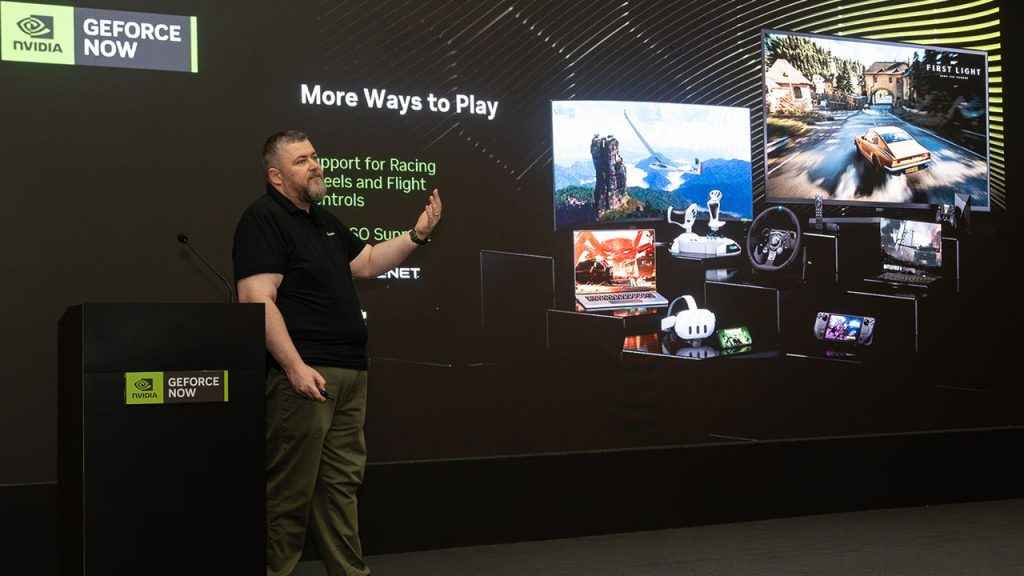
NVIDIA walked through a growing list of native clients: Windows, macOS, Chromebooks, a newly launched Linux client (available as a package for Ubuntu), smart TV apps for Samsung and LG, and a dedicated Amazon Fire TV client. There is also a client for Valve’s Steam Deck and planned support for more streaming sticks and embedded platforms.
Beyond screens, NVIDIA has been steadily adding support for peripherals that serious players care about: racing wheels, HOTAS flight sticks, and even VR headsets in “virtual screen” mode, such as Meta Quest, where GeForce Now is mirrored into a giant floating display rather than delivering true VR. For India, this breadth matters because it aligns with how people actually consume entertainment here, on TVs in the living room, shared PCs in the study, phones in bed and tablets on the couch.
One of the more striking demo vignettes was watching a “junk” QA laptop, something that would struggle with modern games at the best of times, stream a visually dense title at high settings purely via the data centre. It’s the sort of moment that sells the cloud pitch better than any slide deck.
NVIDIA GeForce Now India pricing, still unknown
For all the technical ambition on display, the most basic question from the Indian perspective went unanswered: how much will this cost? During the Q&A, NVIDIA representatives flatly refused to talk pricing or even confirm which membership tiers will be available at launch. All they promised was a “special hands‑on window” or early review period before an open beta, and that more details would follow “in a couple of days.”
That silence matters because pricing is not a side note in India; it is the core of the story. This is a market where free‑to‑play mobile games dominate, where many PC gamers wait for deep discounts on Steam, and where subscription fatigue is real thanks to OTT platforms, music services and existing game subs. A cloud service that expects premium Western pricing will struggle to scale beyond enthusiasts.
We can only speculate, but an India‑friendly structure almost has to look different from the US or EU. A plausible model could include:
- A free tier with long queues and limited session lengths to let anyone try the service on non‑gaming hardware.
- A mid‑tier that offers a comfortable pool of hours per month, tuned for weekend gaming and shared household use rather than unlimited play.
- An “Ultimate” tier that taps into the 4080/5080 SuperPods and higher frame rates, priced aggressively enough that over a few years it still beats buying and upgrading a gaming PC.
However NVIDIA slices the tiers, two constraints will define success: the monthly price in rupees and how many usable hours you get before hitting fair‑usage caps or session limits.
GeForce Now vs Xbox Game Pass in India
Cloud gaming isn’t arriving in a vacuum. Xbox Game Pass Ultimate is already available in India and includes access to a rotating library of games plus cloud streaming. For many players, this is the natural comparison.
The biggest difference lies under the hood. Game Pass streams from Xbox‑class hardware in Microsoft’s data centres. It is tuned for a console experience and, in practice, often targets console‑style image quality and frame rates. GeForce Now in India, by contrast, will leverage RTX 4080 and 5080‑class SuperPods, with higher potential frame rates, ray tracing, DLSS, Reflex, and technologies like Cloud G‑Sync to smooth out delivery. On paper, this gives NVIDIA a significant performance advantage, especially for high refresh‑rate monitors and competitive titles.
The business models are also very different:
- Game Pass is a content subscription first. You pay to access a curated library, including day‑one first‑party titles, and cloud streaming is one way to play them.
- GeForce Now is a hardware subscription first. You pay for time on a powerful virtual PC in the cloud but still need to own games separately on Steam, Epic, Ubisoft and other stores.
For Indian gamers deciding where to put their money, the trade‑off will be stark. If you don’t already have a big library and mainly want variety and discovery, Game Pass remains the better value. If you have built up a catalogue of PC games over years of sales and bundles, GeForce Now could be the most cost‑effective way to play them at high quality without a hardware upgrade, provided NVIDIA gets the local pricing right.
Network realities: Who really benefits?
NVIDIA cited Steam’s approximately 50 Mbps average download speed for India as evidence that the network is ready. That’s encouraging, but averages hide as much as they reveal. Urban fibre users in cities like Mumbai, Delhi, Bengaluru and Hyderabad already enjoy 100 Mbps connections or higher. For them, especially those close to the Mumbai region where the servers sit, GeForce Now could feel uncannily close to a local machine.
Outside the metros, however, things get trickier. The promise of low latency and high bitrate assumes not just decent bandwidth but also low jitter, stable routing and minimal packet loss. NVIDIA talked about future work with ISPs on modern packet handling and congestion control, referencing technologies like L4S‑style network support, but stressed that they have no specific Indian ISP partners to announce yet. For now, routing quality will largely depend on your existing broadband provider.
What the Mumbai event does prove is the upper bound: under ideal conditions, with servers close by and a clean connection, GeForce Now delivers the kind of latency and image quality that can rival or exceed local console play for many genres. The real test will begin when the service opens up to people on everyday home connections across the country.
A high‑end PC in the sky, waiting for the right price
After a few hours with the India preview, it’s hard not to be impressed. On a good connection in Mumbai, the games NVIDIA chose i.e. story‑heavy and visually rich titles, they all looked sharp, reacted quickly and ran flawlessly on devices that, by rights, should have been left behind generations ago. The combination of 5080‑class SuperPods, low network latency and mature streaming tech convincingly sells the idea that the “real” PC can live somewhere in a server rack.
For India, the potential is enormous. A country full of office laptops, student machines and old TVs could suddenly have access to high‑end PC gaming without the upfront cost or maintenance of a desktop. In that sense, GeForce Now could be as transformative for mid‑range hardware owners as cheap mobile data was for smartphone users.
But potential is not destiny. The unanswered questions around pricing, tier structure and fair‑usage limits loom over everything. If NVIDIA manages to tune its rupee pricing to Indian realities and offers enough usable hours for mainstream players, GeForce Now could very quickly become the default aspiration for PC‑grade gaming here, the virtual rig everyone borrows instead of building their own. If it comes in too close to Western pricing, it risks being a brilliant demo that turns into a niche enthusiast product, battling Xbox Game Pass Ultimate for a relatively small slice of the market.
For now, all we can say with confidence is this: the technology is ready, the servers are humming in Mumbai, and the experience on show feels like a genuine, no‑compromise PC in the cloud. The rest will depend entirely on the number NVIDIA finally puts on the price tag.


