
Kurukshetra: Ascension tops 1 million players across PC, Android and iOS – here’s why
 Follow Us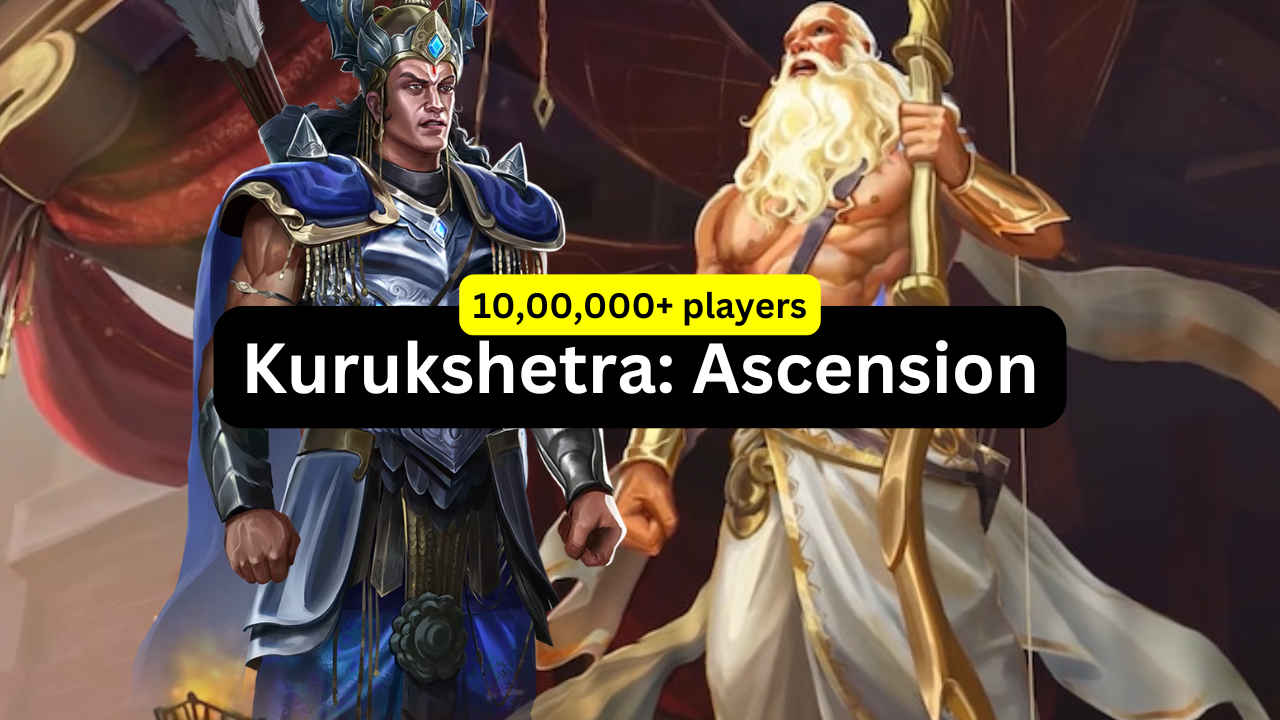

It’s not every day a homegrown Indian game reaches a million players across PC and mobile, let alone a strategy game inspired by epic literature. Yet, Kurukshetra: Ascension has done exactly that, all the while carving out a niche in an Indian gaming landscape dominated by fast-paced battle royales and hyper-casual time killers.
 Survey
When Studio Sirah’s press release landed in my inbox, touting “over 14 crore matches” and “9,60,186 hours in the Duels mode,” I’ll admit I did a double-take. In an industry overshadowed by global juggernauts, hitting these milestones is no small feat, especially for a game that draws from the Mahabharata and Ramayana. But that’s exactly the reason behind its success, the secret sauce of combining revered epic tales with a gameplay style tailor made for it.
To dig deeper, I reached out to Abhaas Shah, CEO and co-founder of Studio Sirah, for a candid conversation about the journey so far and where India’s first card collection strategy game might be headed next. Below are excerpts from our email exchange, where Abhaas explains how Kurukshetra: Ascension was born, why it resonates with Indian culture, and what’s in store for future expansions.

Also read: Best gaming PC under 50,000: CPU, GPU, Motherboard, RAM, Monitor in January 2025
Before diving into the interview, a quick recap: Launched in February 2022, Kurukshetra: Ascension recently crossed one million players across PC, Android, and iOS. That’s an accomplishment for any new gaming IP, but especially notable for a strategy game with local cultural roots. The press release notes over 14.6 million (1.46 crore) matches in total. That’s an insane number of battles, especially when you consider this isn’t your typical five-minute mobile session type of game.
Players have collectively spent 9,60,186 hours in Duels mode alone, going head-to-head in both casual and competitive showdowns, with Arjuna as the most popular hero pick, appearing in nearly 3.9 million matches. And yes, it’s not just about numbers – some fans of the game have clocked nearly 2,000 hours in the game’s various modes, proof that Kurukshetra: Ascension can keep you hooked if it aligns with your gaming tastes. With that context in mind, let’s hear from Abhaas himself.
Q) How did the idea for this game come about?
Abhaas: Both Studio Sirah and Kurukshetra itself were founded by my brother and I based on a few key insights. First, we saw (and still see) a massive opportunity in the mid-core gaming space with Indian themes. Our epics are rich, insightful and full of mystery and wonder. Casual games dominate the market, and hardcore genres like shooters and open-world RPGs demand massive resources. The midcore space is empty, and Indian players have expressed their desire for Indian IP games in multiple large-scale surveys.
Second, we wanted to build something that was ambitious yet achievable for a small team. A 2D pipeline aligned with our capabilities, and we had already developed a compelling prototype before securing funding. Countries like China and Japan have shown that CCGs based on local IP can thrive in a fledgling gaming ecosystem, and we believed a similar model could work in India. CCGs also offer strong monetisation potential through high ARPPU and long player retention.
Finally, a CCG was the ideal genre to bring the vast, interconnected world of Indian mythology to life. This format allowed us to showcase hundreds of characters and their unique stories in a way that other genres simply couldn’t. It also provided a solid foundation to establish a universe that could be expanded with future games.”
Q) What was the thinking behind combining the legends and heroes from the Mahabharata into a Hearthstone-like gameplay?
Abhaas: The heroes of the epics offered a perfect fit for a duel-based game, which is at the core of the card battler genre. The Kurukshetra war is a series of duels between legendary warriors after all. Hearthstone was a game I loved to play – it simplified the genre for the digital era surprisingly well.
Also read: Nintendo Switch 2 to finally debut later this year: Here’s how it will look
We were excited by some innovations in core mechanics, such as a melee-ranged system to bring out the archer archetype for our heroes, and a major role for weapons in the game.
The card-based system also allowed us to showcase the diversity of the epic’s characters and their abilities. Each card became a narrative tool, where gameplay and lore intersect. For example, you can play as Arjuna to wield celestial astras or deploy Bhishma, with cards like Icchha-Mrityu and Gangaputra.
This approach enabled us to blend storytelling with strategy, making the gameplay both immersive and true to the source material. Our goal was to bridge the gap between modern gaming and mythology in a way that resonates with both casual players and mythology enthusiasts.
Q) Did you have any fear about a potential backlash, given the highly revered source material in India?
Abhaas: We didn’t fear backlash, but we were mindful of the responsibility that comes with adapting such revered material. Our approach was guided by two key principles. First, we ensured the utmost respect for the source material by engaging in extensive research to remain faithful to its spirit. We wanted to preserve the ethos and mood of the epics in both their narrative and aesthetic representation. Players can also not play as major gods, though their presence is felt in the narrative and philosophy.
Second, we focused on aligning the game mechanics with the lore. For example, Arjuna’s gameplay reflects his mastery of astras as the son of Indra, while Sugriva commands an ever-strengthening Vaanar army. These choices weren’t just about creating fun gameplay – they were about ensuring that every interaction in the game felt authentic to the characters and stories of Indian mythology. By balancing authenticity with creativity, we aimed to honour the source material while making it accessible to a wider audience.
Q) Any interesting stats or figures about Indian gamers playing your game?
Abhaas: While we’ve touched upon some of these details in our announcement, we can also share that the top five states that have played our game in India are: Maharashtra, Karnataka, Uttar Pradesh, West Bengal, and Gujarat. Furthermore, our top players have individually spent over 2,000 hours in-game.
Also read: GTA 6 price in India could cross Rs 9,000: What we know about Rockstar’s potential pricing strategy
You heard that right – 2,000 hours. Let’s not forget the broader press release notes: a million players, 14.6 million total matches, and nearly a million hours in Duels mode. That’s a testament to how thoroughly Kurukshetra: Ascension has connected with its audience, especially for a mid-core card battler.
Q) What are your future plans for Kurukshetra: Ascension?
Abhaas: We plan to continue building on Kurukshetra: Ascension by releasing regular seasonal updates. The game has seen 11 seasons of content, the latest focusing on Himavat and the Himalayas. Our next season will take players to the Gardens of Kama so expect those details soon.
In addition to this, we’re developing a second game set in the same universe, exploring a different genre – 3D RTS instead of CCG – while staying rooted in Indian mythology. Expect an official announcement when we’re closer to the beta stage.
Also read: PlayStation brings Predictive AI to make your gaming experience super smooth, here’s how
As of right now, Kurukshetra is in its 11th season of content, and the new content expansions (like “Journey to the Himalayas”) are built around fresh heroes, new cards, and a brand-new Karma Pass. The exciting part is that we can expect expansions that continue to mine India’s epic heritage, showcasing lesser-known characters and story arcs. That means we might see expansions from varied mythological events – like the time Arjuna single-handedly held off an army, or perhaps something from the Ramayana’s lesser-explored corners.
A sign of things to come
If this is any sign, Kurukshetra: Ascension has proven that Indian audiences (and arguably a global diaspora) are more than ready for mythologically rich, mid-core experiences. No, it’s not the only type of game that can succeed in India, but it does highlight the appetite for something different from the mainstream. And with a million players behind it, the fact that it’s not just a “casual” or “endless runner” style game is refreshing. It’s got depth, updates, seasons – and a dedicated fan base that has collectively spent thousands of hours waging duels reminiscent of the Kurukshetra War, now that’s a strong validation of Studio Sirah’s approach.
So next time you’re looking to scratch that strategic itch, maybe skip that 47th round of your go-to battle royale. Instead, consider stepping into an epic duel guided by the likes of Arjuna, Bhishma, or whomever they add next. Because behind those 2D cards is a little piece of cultural pride, lovingly baked into a digital battleground.
Also read: Top 5 unusual games of 2024: PC, mobile, console and browser games you must try


