

From Woodstock to AI: How JBL’s 80 year legacy could shape its future
 Follow Us
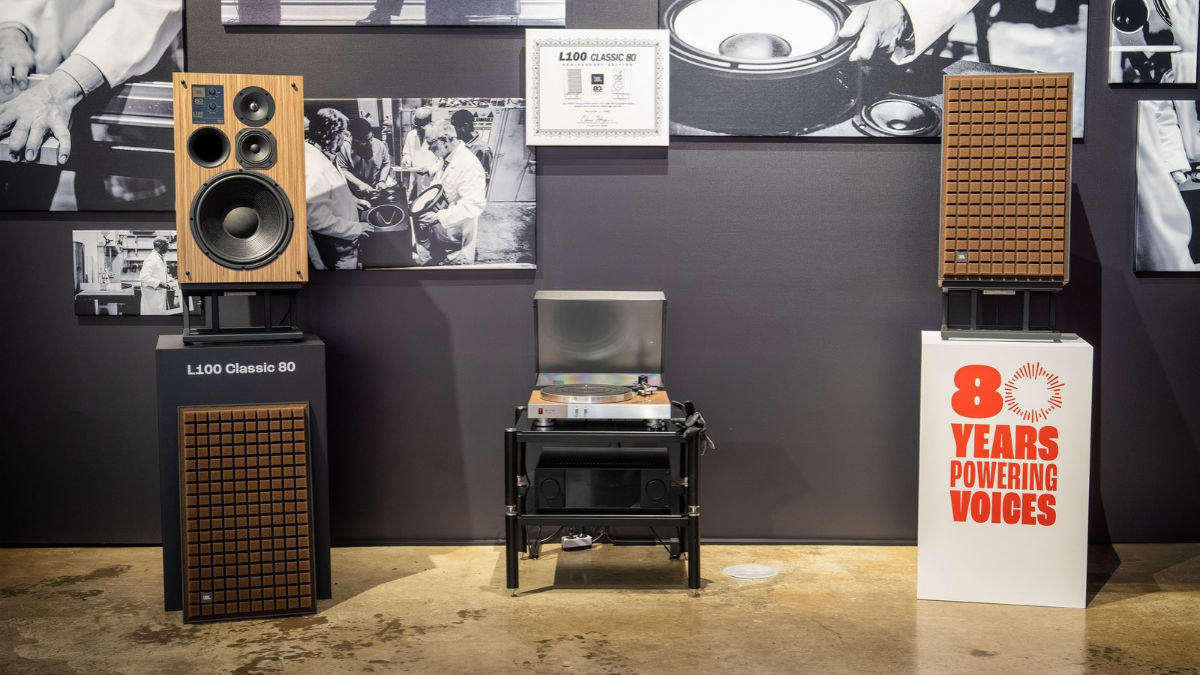

When I flew to Seoul, South Korea, on JBL’s invitation, I wasn’t sure what to expect. JBL is a brand that was founded in 1946, even before India gained its independence, and I knew it as one of the best-known brands in the audio space. Its products have shaped sound in cinemas, recording studios, concert venues, and homes. At JBL’s 80th anniversary exhibition, I got to see some of the iconic products that shaped its journey and speak to key executives from JBL and its parent company, Harman International. The exhibition and these interactions helped me understand how JBL’s professional audio expertise found its way into consumer products, and how technologies such as AI could make listening more personal while preserving the sound principles that have defined the brand.
 Survey
So, here, we’ll look at the products that shaped JBL’s journey, how its professional audio expertise made its way into consumer products, and how AI could shape its future.
From radios to cinemas
Before JBL was founded in 1946, its founder, James B. Lansing, was building speaker drivers for radios. A 1929 Jackson-Bell radio displayed at the exhibition contains one of the early drivers associated with his work. As radios grew larger in the 1930s, the need for more powerful speakers increased. Lansing saw opportunities beyond radio sets, including public address systems and cinema sound.
MGM Studios approached Lansing in 1934 to help address sound problems in its films. The resulting Shearer Horn was a two-way cinema speaker system that received an Academy Award for technical achievement in 1936.
Also Read: Best portable Bluetooth party speakers under Rs 30000 to buy in this festive sale
The work also extended into recording studios. Large cinema speakers were not practical in smaller studio spaces, prompting Lansing to develop the more compact Iconic. Its design was later adapted into the Iconic Salon in 1937, an early example of luxury home audio.
These products established a pattern that would continue across JBL’s history. The company would develop a technology for professional use and later adapt it for the home, as required by the listener and environment.
Inception of JBL, D130 driver, L100 and Woodstock
JBL was founded in 1946, and its D130 driver entered mass production a year later. This driver was part of many of its iconic products, and it was even used at Woodstock in 1969 and in the Grateful Dead’s famous Wall of Sound touring system in the 1970s.
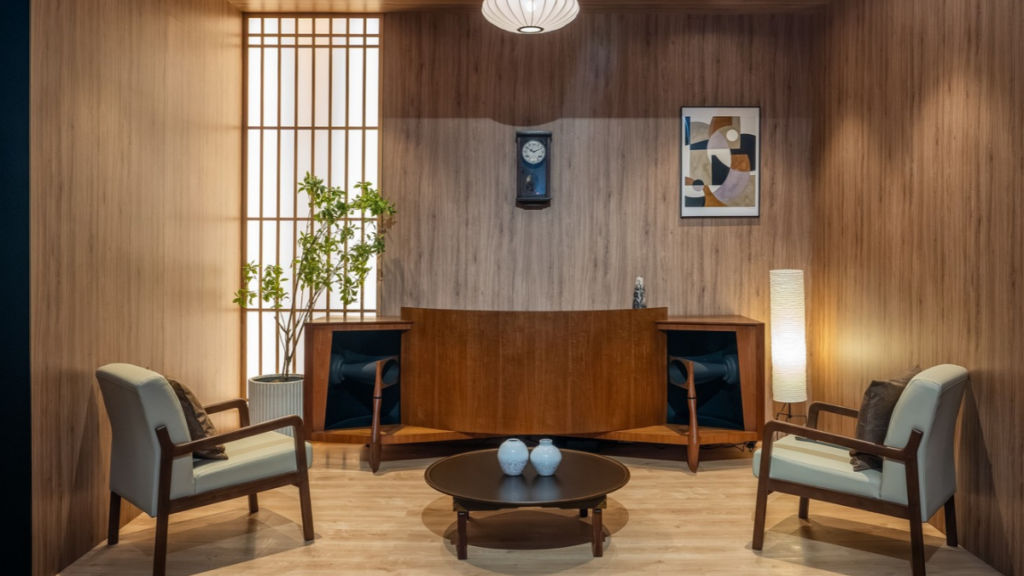
JBL continued to explore high-end home audio with the Paragon and other models, including the Hartsfield and Olympus. It also developed products that brought professional monitoring technology closer to ordinary listeners.
The 4310 studio monitor, introduced in 1968, is one example. Recording engineers liked it so much that some began using it with their home hi-fi systems. JBL then adapted the monitor into the L100 Century, introduced in 1970. The L100 became one of the brand’s best-selling loudspeakers during that decade.
The transition was not simply about selling a studio speaker to more people. It showed how a product designed for professional requirements could be adapted for home use.
From portable PA systems to PartyBox
JBL’s professional audio experience also shaped its portable products. In 1979, the company introduced the Cabaret Series, which it describes as the industry’s first portable PA system. At the time, musicians often relied on the sound systems installed at venues where they performed. The Cabaret Series aimed to bring professional sound into a format that could be transported and set up more easily. Its handles and stackable cabinet design were part of that approach.
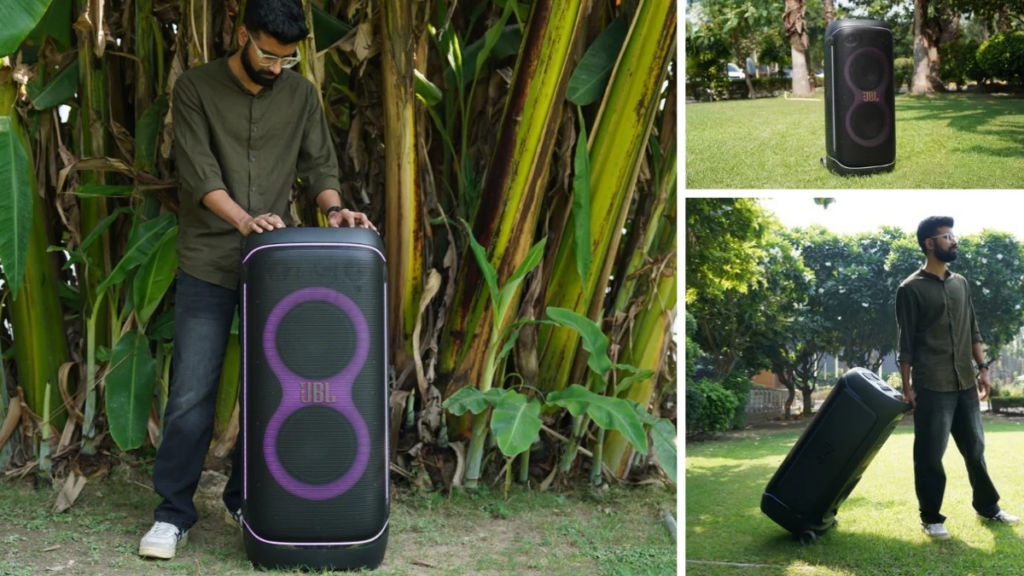
Today, the same broad idea can be seen in JBL’s PartyBox range. A PartyBox 720 is currently in the Digit Test Labs and, in one instance, I recall, playing it at full volume rattled the whole vacant office floor and housekeeping staff got alarmed.
Meanwhile, JBL’s current portfolio also extends towards ultra-premium home listening with speakers like The Everest series. So, the brand has different products for different use cases and listening environments.
Preserving the sound while giving users control
That range raises a question for JBL: how can it preserve a recognisable sound identity while adapting to different products, environments and user preferences?
Dave Rogers, President of Harman International’s Lifestyle Division, identified horns, waveguides and accuracy as fundamental elements of JBL’s approach. In a stadium, these techniques help engineers direct sound across a large area. But he suggests the same is true for developing the signature sound for home and car audio.
That said, he agrees all listeners do not want the same sound. So, it gives users toggles to adjust the sound to suit their preferences. AI can help take this further by learning about the room environment and how a person uses a product, then adapting settings or suggesting changes. JBL’s signature sound still remains the baseline, and listeners can return to it when they want to.
For instance, the sound settings that work for a quiet room may not be ideal for a large gathering. Rather than asking users to keep making adjustments themselves, an intelligent system powered by AI could help manage some of these changes.
The company also acknowledges that a feature like AI or any of these toggles should not be complicated or something the user has to manage constantly.
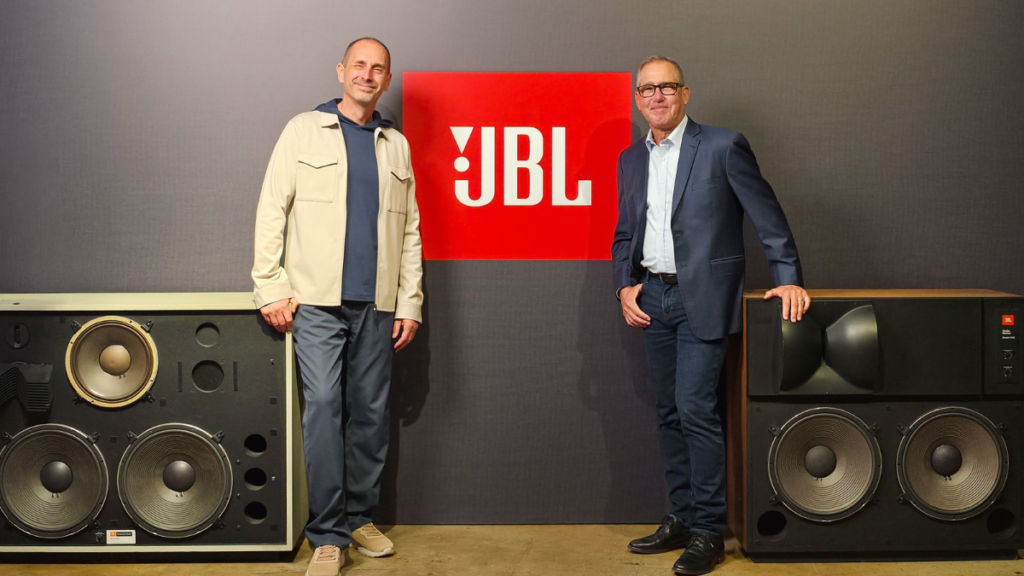
In a separate interaction with Digit, Rogers discussed JBL’s approach to sound, personalisation and the changing audio market. Stay tuned for the full conversation, which will explore these issues in greater detail.
Making listening more personal
AI introduces a further possibility. Instead of relying on users to adjust every setting, audio systems could respond to their environment, the content being played and the listener’s preferences.
In a separate conversation with Digit, Armin Prommersberger, CTO of Harman International, described his vision for this direction in simple terms: ‘For me, the future is about removing friction.’
He envisages systems that could understand a user’s preferences and coordinate compatible devices with little manual input. For example, a home entertainment setup could prepare the television, surround sound system and lights for a film, rather than requiring users to adjust each device separately.
That idea builds on a familiar audio challenge. JBL has spent decades developing ways to deliver sound in different settings. AI could help systems adapt that experience with less effort from the listener.
Prommersberger’s wider conversation with Digit explores how Harman is approaching AI in engineering and audio products, including the potential to make some advanced capabilities more accessible. His full interaction will be published separately.
What JBL’s next chapter needs to get right
Throughout JBL’s history, you could see the movement of audio technology between professional and consumer use. The D130 driver connects the brand to major music events, the 4310 helped shape its home speaker business, and the Cabaret Series established an approach to portable professional sound that continues in products such as the PartyBox.
AI could extend that pattern. It may help JBL adapt sound to different environments, give listeners more control and deliver software improvements at a faster pace. It could also make complex audio systems easier to use.
The challenge now would be to make these capabilities useful without losing sight of the basics. You and I still need good sound, reliable performance, and products that suit our needs and budgets. And as it is with every AI-sprinkled product, a speaker does not become better simply because it uses AI.
So, JBL appears to be in a unique position to combine its audio engineering heritage with AI, using its understanding of sound and how people use its products to make listening more adaptive, personal, and convenient. If it gets this balance right, its legacy will live on not just in iconic products, but in how its future products respond to listeners.
Keep reading Digit.in for similar stories.


