
 E-Magazine
JBL can always produce a better-sounding product: Dave Rogers, President, Lifestyle Division, Harman International
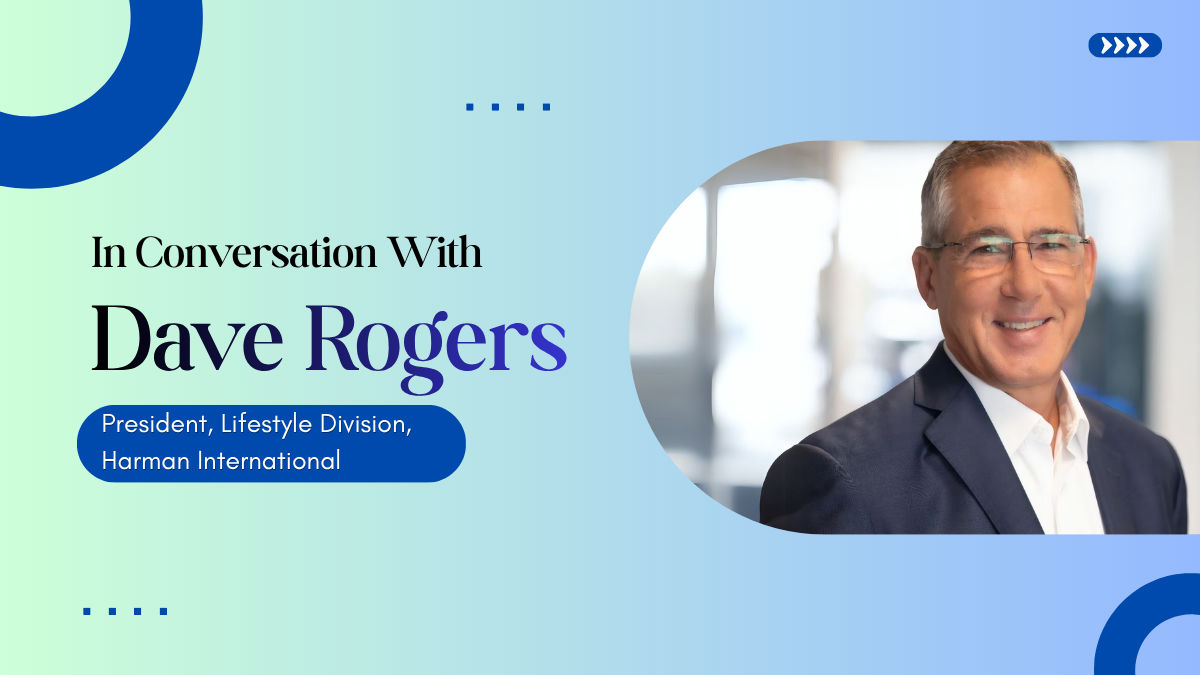
As JBL marks 80 years in the audio industry, the brand is looking to balance its professional audio heritage with the changing needs of consumer listening. In an interview at the anniversary event in Seoul, Dave Rogers, president of Harman International's Lifestyle Division, discussed how JBL plans to retain its signature sound while using AI to offer more personalised listening experiences. He also spoke about the importance of local market input in India, JBL's approach to connectivity across different platforms, and the growing role of spatial audio and over-the-air software updates. Rogers also shared how the brand's product strategy is evolving as consumer expectations, competition and the audio market continue to change.
JBL was founded by James B. Lansing in 1946, even before India gained independence. The brand has witnessed its fair share of transitions and evolution over the years. What has JBL been keen to preserve through these changes?
Dave Rogers: From the very beginning, there has been a strong focus on live performance and bringing experiences to life around the world. This includes stages, cinemas, stadiums, bars, houses of worship and homes.
That focus helped expand the business in its early days, and our technology development was centred around it.
JBL pioneered loudspeaker technology for cinemas and professional audio. Eighty years later, it has a strong presence in the consumer market while retaining its professional audio roots. The brand is also known for iconic products such as the Lansing Iconic, Shearer Horn and D130 driver. Which of those elements can we still find in current JBL products?
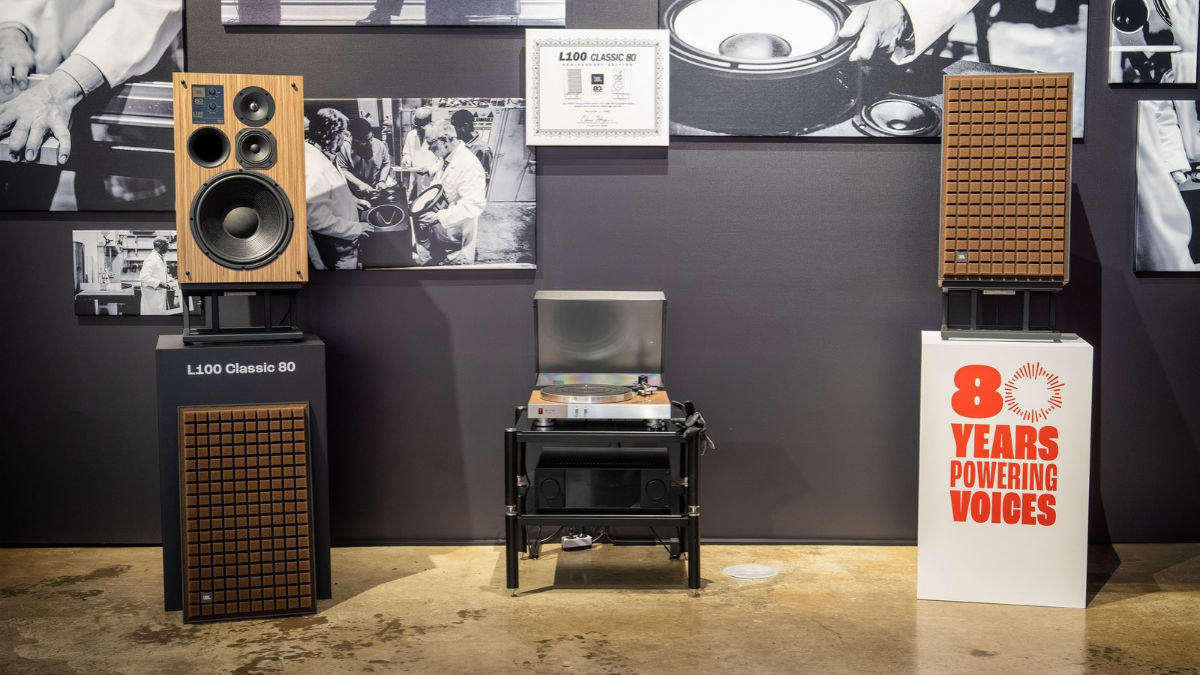
Dave Rogers: This entire exhibition walks people through what we have done, when we did it, how we achieved it and what we focused on.
The use of horns, waveguides and accuracy are three fundamental attributes that we continue to pursue. In a large space such as a stadium, you need the right coverage pattern. You achieve that through horns, waveguides and other measures to ensure everyone gets good sound, regardless of where they are seated.
That philosophy applies to every environment, whether it is your home, car or a large event. We want to provide the best possible sound experience, wherever you are.
I recently reviewed the JBL PartyBox 720. It is clearly designed for large gatherings, but it can also be used at home for parties and other occasions. So I can relate to that approach.
Dave Rogers: We also use some of these technologies in our high-end home audio products. For instance, we use similar driver, tweeter and mid-range technologies in products sold through our luxury audio business. You can hear the difference in their performance when you compare them with other brands.
One thing I have noticed recently is JBL's growing use of AI across its products. At the same time, the brand has a strong identity built around its signature sound. How do you balance that identity with features such as Personi-Fi and adaptive sound, which give users more control over their listening experience?
Dave Rogers: Our scientists and engineers have documented extensive research into what constitutes good sound. We have a signature JBL sound curve against which we measure every product we develop.
Different products serve different needs, depending on factors such as room size and the listening environment. Our aim is to offer consumers the right product for the way they want to enjoy their content.
How do you balance giving users more control through AI, adaptive sound and Personi-Fi while retaining JBL's signature sound?
Dave Rogers: We ship every product with our signature sound. Consumers expect that from us, but we also believe they should be able to adjust it to their preferences.
It is important to have a baseline. Users should be able to experiment with different settings and return to the original sound whenever they want. We offer several customisation options.
With AI, products can also learn about the room environment and the user's habits. They can adapt and suggest settings that may improve the listening experience.
Our objective is to make this process simple. Consumers should not have to work hard to get the sound they like. We believe in our signature sound, but ultimately, everyone should be free to customise it.
You have witnessed the audio industry evolve over several decades. Do you think the way consumers perceive and experience sound has changed over the years?
Dave Rogers: The way sound is delivered has certainly changed. Consumers have also been willing to make compromises in exchange for convenience.
We moved from CDs, which offered full-bandwidth audio, to compressed digital music. People accepted more compression because they no longer had to carry CDs everywhere.
The same thing happened when streaming became popular. Now, we also have access to full-bandwidth streaming.
Consumers adapt to get what they want. However, they still recognise the difference between good and bad sound. Put two products next to each other and play the same music through them, and people can hear the difference. They can then decide whether the difference is worth spending $100 or $150.
Ultimately, a consumer's decision comes down to value. Sound quality, performance, features, pricing and overall build quality all play a role. Consumers also consider what they are willing to compromise on to get the convenience they want.
Coming to India, we have a vast and diverse music culture, and JBL has a strong product presence in the country. Does JBL develop products specifically for India, or are there products in the pipeline that cater to Indian consumers?
Dave Rogers: We generally like to develop a single SKU that can be sold around the world. However, we understand that every market is local. Our philosophy is to encourage local decision-making, input and creation.
Our team in India has a high proportion of Indian employees who provide product ideas and guidance on how we should adapt certain products for local consumers. We have followed this approach since we first entered the Indian market.
In our professional audio business, there are other factors we need to monitor, such as safety regulations. For instance, installing a large speaker array in a stadium involves several regulatory requirements. We provide global support to help address these needs.
We also take feedback from individual markets and conduct comparisons with local competitors. The competitive landscape in India is different from that in China, the US or Western markets.
Speaking of competition and value, India has several aggressive homegrown brands as well as international players. How does JBL justify its value proposition to Indian consumers?
Dave Rogers: Consumers know JBL and Harman for offering world-class products that have been around for a long time. We have been selling in India for decades.
There is value in knowing that the same company whose technology powers live concerts also offers products that consumers can buy for around $99.
We face competition from lower-priced brands in markets such as China, and the same applies elsewhere. However, we know that we will not compromise on sound quality.
There are certain things we will not compromise on, including fit, finish and quality. This approach has helped us build a healthy business, and we believe we can grow further by strengthening our marketing and communication.
Indian consumers are also becoming more aspirational. Products such as iPhones are gaining wider acceptance, and this trend extends across different product categories. Is JBL seeing a similar shift, with consumers placing greater importance on quality and value rather than simply looking for the lowest price?
Dave Rogers: The market has expanded, and you can see that reflected in our product roadmaps.
Take our portable Bluetooth speaker range, for example. We started with a single $99 Bluetooth speaker. Then we introduced a $49 product because consumers wanted more options. Today, the range extends up to $599, with seven products in total.
We have seen a similar evolution with the PartyBox range. We initially launched two products, the PartyBox 310 and 510, and the category quickly became popular around the world, including in India.
We have since moved on to the next generation, with products such as the PartyBox Ultimate and the PartyBox 720. The latter even comes with wheels, making it easier to move around.
People want these experiences, but their requirements depend on how they plan to use the products. Our role is to provide solutions for those different needs.
Many consumers in India prefer audio accessories that work closely with their smartphones. Smartphone brands are also trying to build their own connected ecosystems and keep users within them. How does JBL appeal to these consumers?
I am referring to smartphone ecosystems and the tendency of brands to create closed ecosystems.
Dave Rogers: Our approach has a few parts. First, we want to deliver products and content in the way consumers prefer. We believe we can produce better-sounding products for different environments and listening situations.
Second, there are several connectivity platforms, and some companies are trying to create closed ecosystems. We want to remain as platform-agnostic as possible. For instance, our products are compatible with Apple AirPlay and Google platforms.
We do not want to lock consumers into a particular ecosystem. That approach also applies to products from Chinese brands and other manufacturers.
JBL has also worked closely with artists and creators over the years, including through initiatives such as the JBL Music Academy. What does the brand learn from artists and creators, and how do those learnings influence products for everyday listeners?
Dave Rogers: We have worked with artists from the beginning, both in recording studios and in live performances.
More recently, we acquired a company called Flux. Its technology focuses on spatial and three-dimensional sound, allowing audio to be steered throughout the listening environment.
We are working with artists to understand how to optimise this technology. We are also beginning to see stadiums adopt it.
In professional audio, this technology provides more channels of sound and allows the audience to experience music differently during a live performance.
There are several products on display here, and I have had the opportunity to use many of them. Beyond the current product range, is there a particular product or technological development that interests you the most?
Dave Rogers: I am interested in any technology that finds a connection with the market, whatever form it takes.
Sometimes, a technology is significantly better than competing solutions, and consumers naturally gravitate towards it. At other times, you build a product that offers a great experience at the right price, and people love it.
When you find those opportunities in the market, it means you have got something right.
AI is useful because the data we collect can help us identify these opportunities more quickly. We can then implement improvements through software.
In the past, getting a new feature into the market could take a year or two. Now, we can potentially deliver it in six months or less. With over-the-air updates, we can introduce new features or programme changes through an app update, potentially within 90 days, while maintaining backward compatibility across millions of devices.
Things were moving quickly before, but the pace of development is even faster now.
Keep reading Digit.in for similar interactions.

G. S. Vasan G.S. Vasan is the chief copy editor at Digit, where he leads coverage of TV, audio, and appliances. His work spans reviews, news, features, and maintaining key content pages. Before joining Digit, he worked with publications like Smartprix and 91mobiles, bringing over seven years of experience in tech journalism. His articles reflect both his expertise and passion for technology.
View full profile