
Garmin CIRQA vs Fitbit Air vs Whoop: Price, subscription, features, sensors and everything compared
 Follow Us
Garmin CIRQA is aimed at athletes with detailed training and recovery metrics, up to 10 days of battery life and no mandatory subscription.
Fitbit Air is the lightest and most affordable option, focusing on everyday activity, sleep and wellness tracking.
Whoop 5.0 offers the longest battery life and a recovery-focused experience, but its subscription makes it more expensive over time.
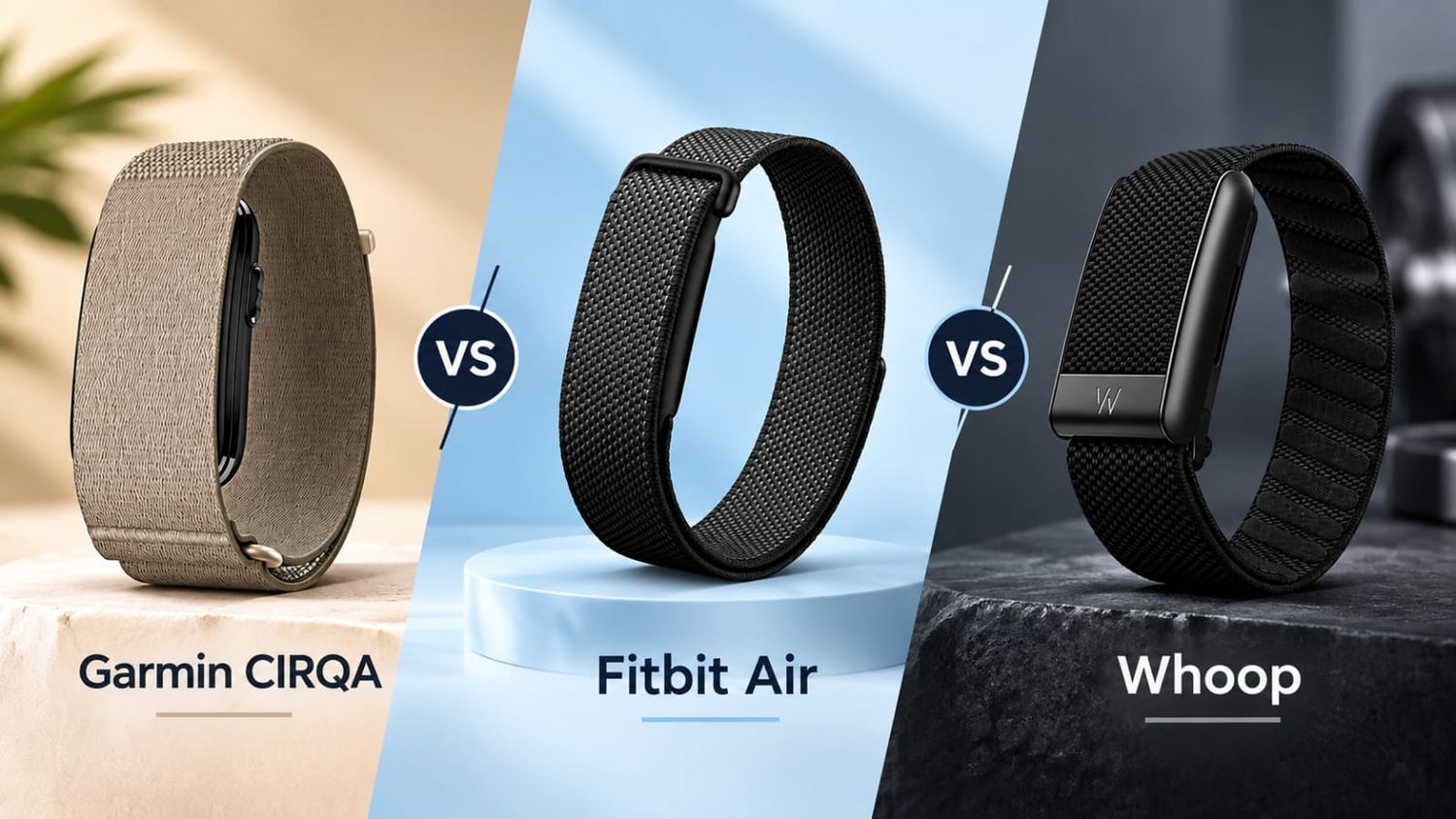

Screen-free fitness trackers are becoming an interesting alternative to smartwatches for people who love to track health and fitness. Many companies have introduced their fitness bands across categories. Garmin CIRQA, Fitbit Air and Whoop 5.0 are three examples, but they approach the category very differently.
 Survey
Garmin CIRQA is aimed at people who want detailed training and recovery metrics without a mandatory subscription. Fitbit Air takes a simpler approach, focusing on everyday activity, sleep and general wellness in a lightweight design. Whoop 5.0, meanwhile, is built almost entirely around recovery, strain and sleep, with a subscription at the centre of the experience.
So, which one makes the most sense? Here is how the three compare across price, design, sensors, battery and software.
Garmin CIRQA vs Fitbit Air vs Whoop 5.0: Price and subscription
The biggest difference between these trackers is actually how you pay for their software. Garmin CIRQA costs Rs 25,990 in India and offers its core health and fitness tracking without a mandatory monthly fee. Garmin does have an optional Connect Plus subscription, but it is not required for the basic experience.
Fitbit Air costs Rs 13,999, making it the most affordable option here. Its core tracking features are available without a subscription, although some advanced insights and features can be linked to Google’s premium health offering.
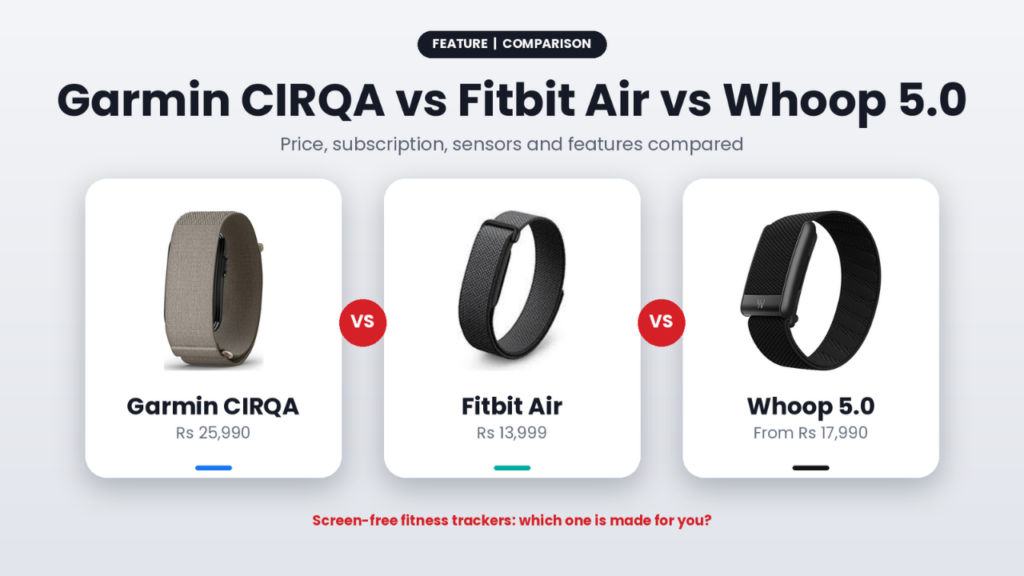
Whoop 5.0 starts at around Rs 17,990 to Rs 23,990, with the first 12 months of membership included. After that, continued access requires a recurring membership that depends on which one you choose.
That makes the long-term cost very different. Garmin is effectively a one-time hardware purchase for its core experience, while Whoop is an ongoing service.
Over three years, Garmin would cost around Rs 25,990 for the hardware, while Whoop could cost roughly Rs 51,000 to Rs 57,000 depending on the initial purchase price and subsequent membership fees.
Garmin CIRQA vs Fitbit Air vs Whoop 5.0 design and comfort
All three trackers are screen-free, but their designs are quite different. The Garmin CIRQA uses a compact pod attached to a fabric-style band and weighs roughly 14.8g to 20.7g depending on the configuration. It is also the only one here with a physical button, allowing users to start, pause or control workouts without reaching for their phone.
The Fitbit Air is the lightest. Its tracker pod weighs around 5.2g on its own and is designed to sit unobtrusively on the wrist. There is no screen or physical button, so most interaction happens through the companion app.
The Whoop 5.0 weighs around 26.5g, making it the heaviest of the three. However, its design allows the sensor to be moved to different compatible bands and Whoop Body apparel, including options designed for the bicep and other parts of the body.
Garmin CIRQA vs Fitbit Air vs Whoop 5.0 sensors and tracking
All three trackers use optical sensors to collect health data, but their approach to that data is different.
Garmin CIRQA uses the company’s Elevate Gen 4 optical heart-rate sensor, along with Pulse Ox, skin-temperature sensing and an accelerometer. It is designed around continuous monitoring of physical activity, cardiovascular metrics and recovery.
On the other hand, Fitbit Air uses an optical heart-rate sensor, SpO2 sensors, a 3-axis accelerometer, gyroscope and temperature sensor. Its focus is more on everyday movement, sleep and general wellness.
Whoop 5.0 takes a more data-heavy approach, continuously collecting biometric information and using it to build its Recovery, Sleep and Strain scores. Higher-end Whoop hardware tiers also add additional health-monitoring capabilities.
However, a higher sensor count does not automatically mean a better tracker. The software interpreting that information is arguably more important. Garmin, Fitbit and Whoop can collect similar categories of health data but present them in very different ways.
Garmin CIRQA vs Fitbit Air vs Whoop 5.0: Which one is made for you
Garmin CIRQA’s biggest strength is the depth of its training ecosystem. Its data feeds into Garmin Connect, where users can access metrics such as Body Battery, Training Readiness, recovery information and VO2 Max estimates. Instead of simply telling you how active you have been, the platform attempts to explain whether your body is ready for another workout.
The physical button is another useful advantage. During a sweaty workout, being able to press a button to start or control a session can be more convenient than using a phone. However, this level of detail may be unnecessary for someone who simply wants to monitor steps, sleep and basic health information.
Fitbit Air takes a simpler approach. Its focus is everyday activity, sleep, heart-rate tracking and general health rather than making users constantly think about training load and recovery.
It can automatically recognise certain activities and provides features such as Daily Readiness and Cardio Load. Its integration with Google’s health ecosystem also brings AI-powered coaching and personalised insights into the experience. This makes Fitbit Air appealing to people who want a wearable they can largely forget about.
Its price is another major advantage. At Rs 13,999, it is considerably cheaper than Garmin and costs less to get started with than Whoop. For someone who mainly wants to monitor steps, sleep and everyday activity, spending more on a specialised training tracker may not be necessary.
Speaking of the Whoop, it has the clearest philosophy of the three. Rather than trying to function as a general-purpose fitness tracker, it revolves around three central metrics: Sleep, Recovery and Strain.
The idea is to understand how much stress your body has experienced, how well you have recovered and how much training you should take on.
The Journal also allows the users to record lifestyle factors such as caffeine, hydration, diet, sleep habits and other behaviours. Over time, Whoop attempts to identify relationships between these habits and recovery. And its AI Coach adds another layer by using accumulated data to provide personalised recommendations.
So, if you are a serious athlete or someone who enjoys analysing their health data, it is for you. But it can be excessive for someone who simply wants to count steps or check whether they slept well.
Garmin CIRQA vs Fitbit Air vs Whoop 5.0 battery life and charging
Battery life is another area where the three differ. Garmin CIRQA can last up to 10 days, depending on usage. Charging requires removing the tracker and connecting it to its charging cable. On the other hand, Fitbit Air offers up to seven days of battery life and uses a magnetic charging setup. Whoop 5.0 has the longest battery life here, at 14 days or more depending on usage.
More importantly, Whoop’s charging system is designed to avoid interrupting tracking. Its waterproof battery pack slides onto the device while it remains on your wrist, allowing the tracker to charge without being removed.
Garmin CIRQA vs Fitbit Air vs Whoop: Which one should you buy?
Garmin CIRQA makes the most sense for athletes who want detailed training and recovery information without committing to a mandatory subscription. Its physical button, Garmin Connect ecosystem and performance metrics give it the strongest athletic focus.
Fitbit Air is the sensible choice for someone who wants a lightweight and affordable screen-free tracker for everyday wellness. At Rs 13,999, it is easily the affordable option here and should appeal to users who care more about sleep, steps and general health than advanced training analysis.
Whoop 5.0 is the most specialised option. Its focus on Recovery, Sleep and Strain makes it particularly compelling for serious athletes and data enthusiasts who want to understand how lifestyle affects performance. Its long battery life and on-body charging are also major advantages. However, its subscription cannot be ignored. The lower upfront price can make Whoop look attractive next to Garmin, but the long-term ownership cost is higher.
Ultimately, the choice comes down to what you want from a screen-free wearable. Garmin is the athlete’s tracker, Fitbit is the everyday wellness option, and Whoop is the recovery specialist.


