
Samsung OLED S95H: Best premium TV for movies and gaming
 Follow Us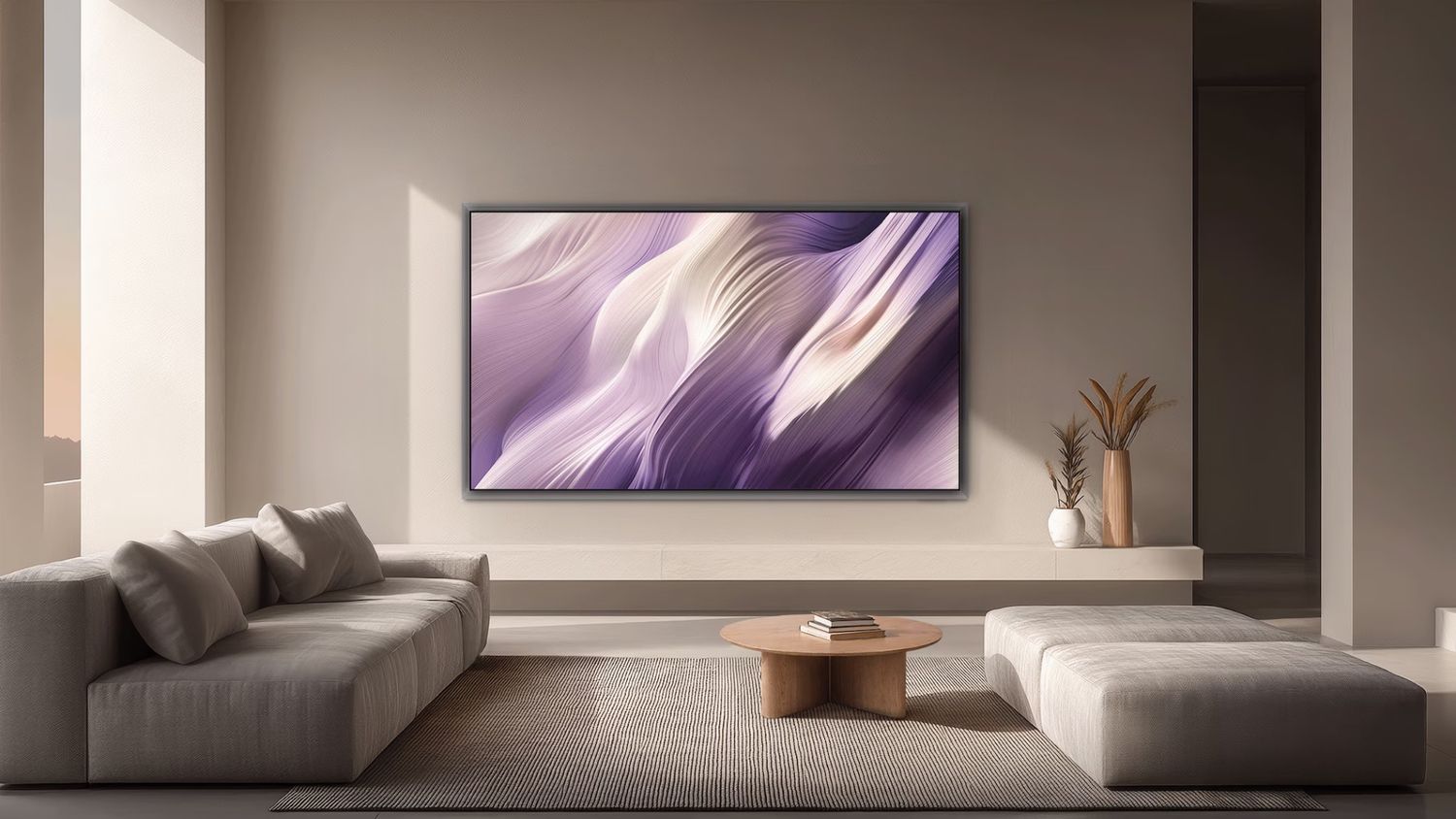

If you are searching for the best OLED TV, it is easy to get stuck looking only at panel technology, resolution, and picture quality. Those things obviously matter, but they are not the only things that can affect how you use a TV every day.
 Survey
The room where the TV sits, the amount of daylight it gets, whether you play games on it and even whether you want a soundbar can change what you should actually look for. Samsung’s OLED S95H brings a few features into the mix that are worth understanding if you are considering a premium OLED TV.
Here are four reasons why the Samsung OLED S95H stands out as a TV for movies, gaming and everyday entertainment. But first, here is a quick summary:
At a glance: What makes the Samsung OLED S95H worth considering?
- Glare Free technology: Reduces distracting reflections during bright-room viewing.
- 165Hz refresh rate: Enables smoother gameplay with compatible hardware and games.
- 70W, 4.2.2-channel audio: Provides powerful built-in sound for films, sports and streaming.
- FloatLayer Design: Gives the TV a floating appearance when wall-mounted, complementing a premium living room.
Let’s now understand each of them in depth.
Glare Free technology for bright-room viewing
For film enthusiasts, picture quality is not just about deep blacks and rich colours. The screen must also remain comfortable to watch under the lighting conditions in which it is used. For instance, during the afternoon, sunlight coming through a window can fall directly on the screen, while lamps and ceiling lights can create their own reflections at night. These distractions are particularly easy to notice in dark scenes, where a reflection can take attention away from what you are watching.
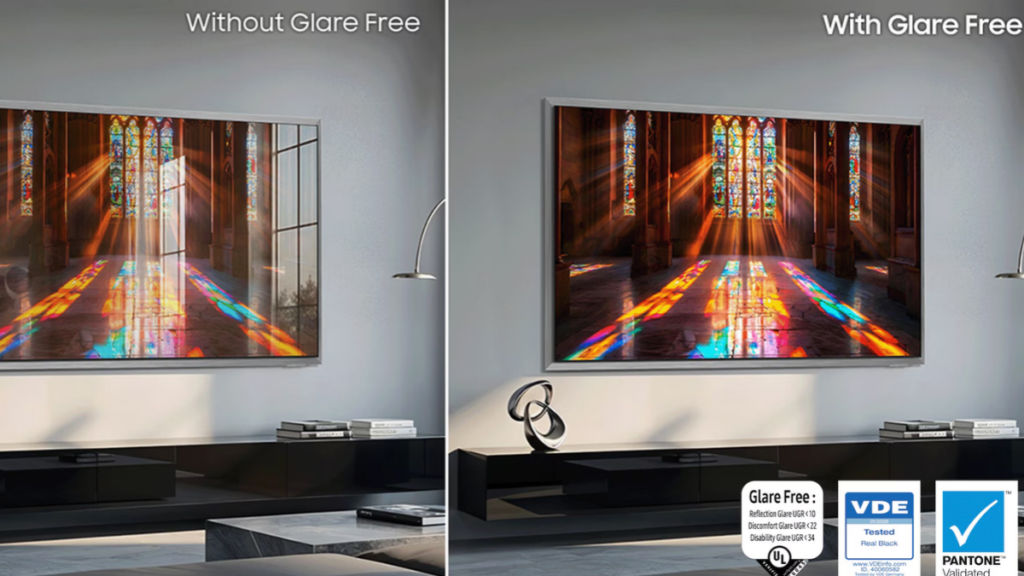
Samsung’s Glare Free technology addresses this practical aspect of the viewing experience. Thanks to it, premium TVs like the S95H can be comfortably used for watching films, sports and streaming content in a bright living room.
So, as general advice, if your TV will sit opposite a window or in a brightly lit room, consider reflection handling of the TV alongside factors like HDR brightness and contrast.
165Hz puts gaming firmly on the feature list
The gaming side of the S95H starts with its 165Hz refresh rate, supported by VRR. Samsung also uses a dedicated gaming chipset and includes features such as FreeSync Premium Pro, G-SYNC, Auto Game Mode and Game Motion Plus.
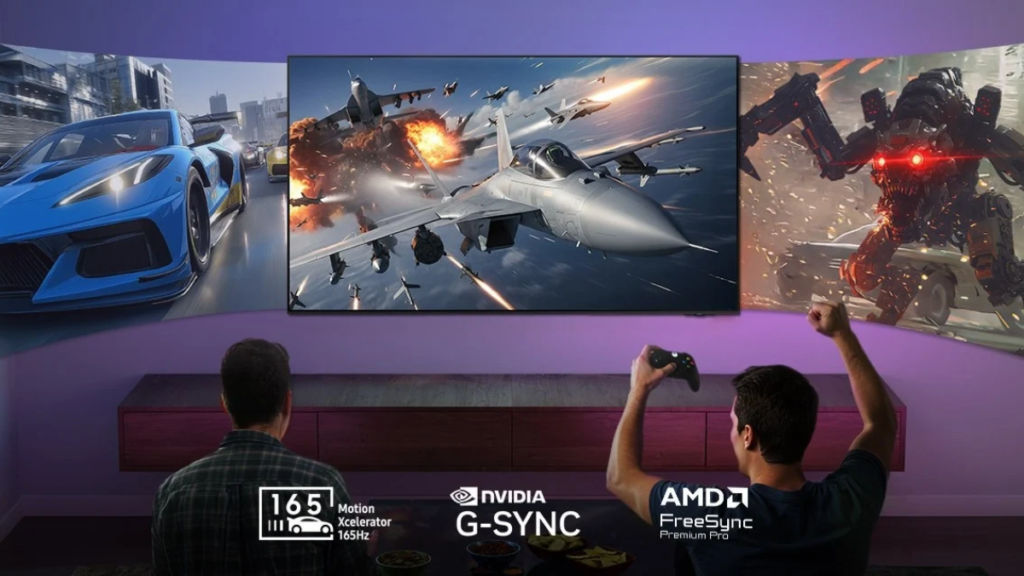
A higher refresh rate has the most obvious use with PC gaming, where compatible hardware can produce frame rates above 60fps. VRR handles changes in frame rate by allowing the display to adjust its refresh rate accordingly, helping the two stay in sync during gameplay.
For someone shopping for a 4K 165Hz gaming TV, the rest of the gaming hardware matters as well. A powerful PC and a compatible game can make better use of 165Hz than a setup that cannot produce higher frame rates. Console gamers have their own limits to consider, so console users should check the features supported by their particular setup.
The speakers are doing quite a bit of the work here
The S95H has 70W of audio output and a 4.2.2-channel speaker configuration. Samsung pairs this with Dolby Atmos and Object Tracking Sound+, while Q-Symphony allows compatible Samsung audio equipment to work alongside the TV speakers.

That gives the television a fairly complete audio setup on its own. If you are watching a movie, following a sports match or simply streaming shows in the evening, you can use the TV’s speakers without immediately having another piece of hardware sitting underneath it.
A soundbar can still make sense for someone building a dedicated home-theatre system. For everyone else, the built-in configuration is a useful part of the S95H’s overall package, particularly if you have been looking at an OLED TV with 70W sound or 4.2.2-channel audio.
FloatLayer design keeps the focus on the display
There is a different side to a premium television that only becomes obvious after it has been installed. The TV remains a large object in the room even when it is switched off, and its frame, bezels, and profile can affect the overall look of the setup.
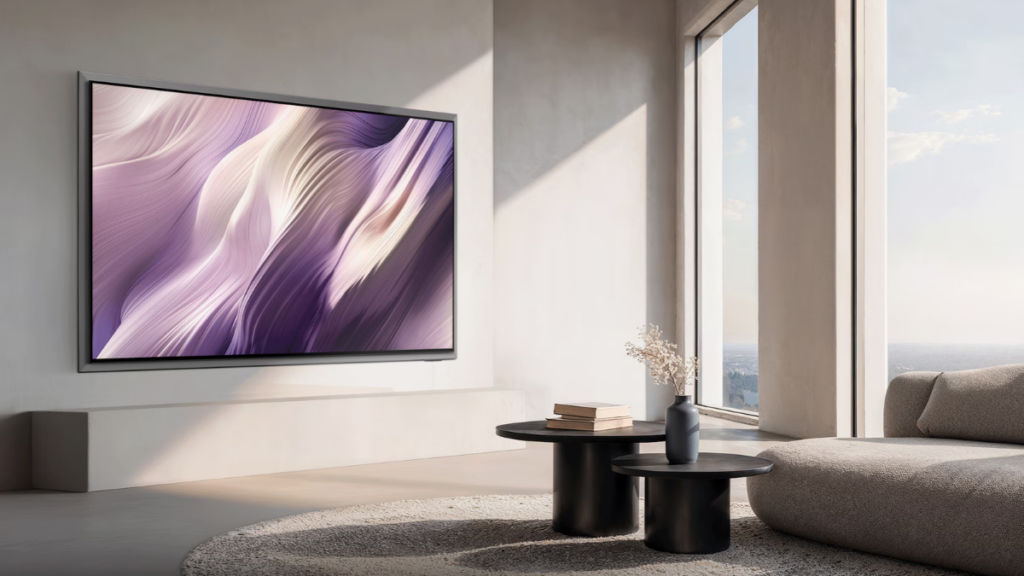
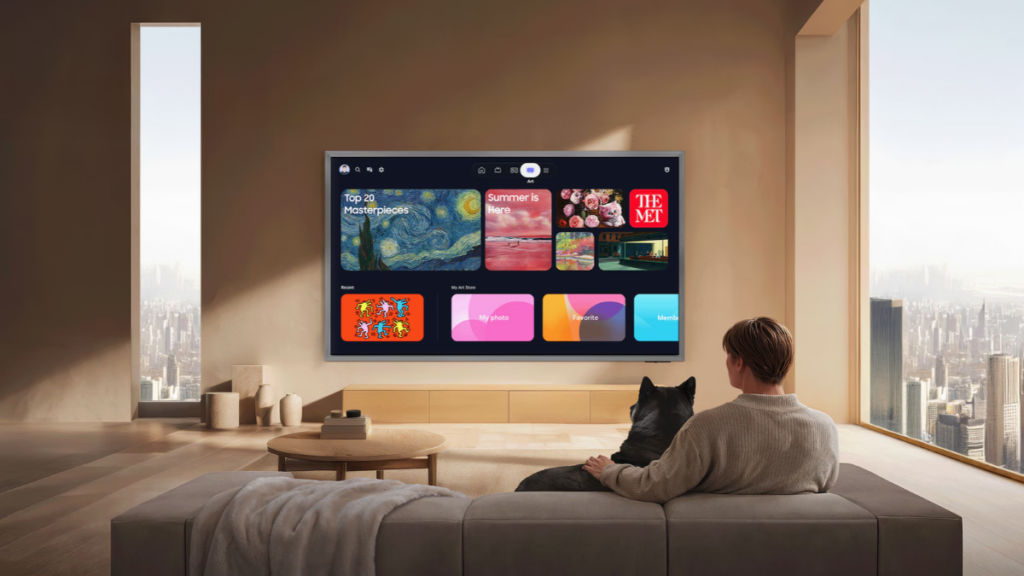
Samsung uses FloatLayer Design on the S95H, with a four-bezel-less construction and a slim profile. When wall-mounted, the design is intended to give the display a floating appearance, keeping the television visually close to the wall.

For a living room where the TV occupies a prominent position, these details can be more noticeable than they sound on a specification sheet. The display becomes part of the furniture and decor, particularly in a premium home entertainment setup.
Now that you understand what makes the S95H special, let’s see where it stands in the premium Indian TV space. And Samsung’s own S90H can come into your consideration while browsing for premium OLED TVs in India.
Samsung OLED S95H vs S90H: Which one should you buy?
Samsung’s OLED range includes the S95H and S90H, aimed at buyers with different priorities and budgets. Both offer Glare Free technology and support gaming at up to 165Hz. The main differences lie in their positioning, picture features, built-in audio and design.
The Samsung OLED S95H is the flagship choice. It features OLED HDR Pro, a 70W 4.2.2-channel speaker system with Object Tracking Sound+, and FloatLayer Design. It is aimed at buyers who want a more complete premium package for movies, sports, gaming and everyday viewing.
The Samsung OLED S90H is the alternative to consider when budget matters more. It features OLED HDR+, Glare Free technology and 165Hz gaming support, along with a 40W 2.1-channel speaker system and LaserSlim Design.
A key difference between them is in built-in audio: The S95H has more speaker output and a different channel configuration, making it the stronger choice for buyers who want to rely on the TV’s own speakers. The S90H doesn’t have weak speakers, but it places greater emphasis on display and gaming features.
Samsung S90H starts at 48 inches, while the S95H starts at 55 inches.
For buyers who want Samsung’s more premium combination of audio, picture features and design, the S95H is the model to prioritise. The S90H remains worth considering if its lower entry price leaves more room in your budget for a larger screen or external audio equipment.
How does the Samsung S95H compare to other premium OLED TVs?
Samsung is not the only brand competing for buyers in the premium OLED segment. Other brands like LG and Sony have alternatives with different approaches to HDR, picture processing, and gaming. Now, the right choice depends on which features you value most. Let’s understand how they stack up against the S95H.
Is the LG C6 a better-value premium OLED TV?
The LG OLED evo C6 is a strong premium OLED TV, with Dolby Vision support, an Alpha 11 AI Processor 4K Gen3 and VRR support up to 165Hz. It is well suited to buyers who want high-end picture quality and gaming features. However, the Samsung OLED S95H takes a different approach, placing greater emphasis on the overall entertainment experience.
The S95H combines OLED HDR Pro with Glare Free technology, which is designed to reduce distracting reflections in bright rooms. Its 70W, 4.2.2-channel speaker system also offers a more substantial built-in audio configuration than the C6’s 40W, 2.2-channel system in the 65-inch variant. Add FloatLayer Design to this equation, and Samsung makes a case for buyers who want premium picture features, immersive sound and a more considered living-room setup in one television.
The choice, therefore, goes beyond price. The LG C6 has an advantage for viewers who prioritise Dolby Vision, while the Samsung S95H offers comparable HDR10+ visuals and is also aligned with those who want reflection management, powerful built-in audio and a premium design alongside high-refresh-rate gaming.
For buyers looking for a TV that can handle films, sports, gaming and everyday streaming, the Samsung OLED S95H makes a strong case as the more complete all-round package.
Is the LG G6 or Samsung S95H better for dark rooms?
The LG G6 and Samsung OLED S95H are both flagship OLED TVs for 2026, but they cater to slightly different viewing preferences. In a dedicated dark room, reflection handling becomes less important, making HDR performance, picture processing, and supported formats more relevant.
The LG G6 supports Dolby Vision, which can appeal to film enthusiasts who watch compatible movies and streaming content. The Samsung S95H, meanwhile, supports HDR10+ Advanced, a competing HDR format that, like Dolby Vision, uses dynamic metadata to optimise brightness and contrast for compatible content. Samsung does not support Dolby Vision, so buyers should consider which formats their preferred streaming services and film libraries use.
The S95H also features Glare Free technology, which is designed to reduce distracting reflections when watching TV in a brightly lit room. Its 165Hz refresh rate and advanced gaming features make it suitable for compatible PC gaming setups. This combination is relevant for Indian homes where the same television may be used in changing light conditions throughout the day.
For dedicated movie viewing in a controlled, dark room, the LG G6 deserves consideration, particularly if Dolby Vision matters to you. However, for buyers who want a television for films, sports, streaming and gaming across different lighting conditions, the Samsung OLED S95H offers a strong all-round package.
Is the Sony Bravia 9 II the best TV for movies and streaming?
The Sony Bravia 9 II shows how far RGB Mini LED technology has come, with extremely high brightness, rich colours and effective reflection handling. These features make it a strong option for bright living rooms. However, OLED still has an advantage in pixel-level contrast and dark-scene precision, which matter when watching films in a dimly lit room.
Unlike the Bravia 9 II, which uses an RGB LED backlight with local dimming zones, the Samsung OLED S95H uses self-illuminating pixels. Each pixel can control its own light output or switch off completely. This allows OLED to produce deep blacks and precise contrast without the backlight blooming that can affect even advanced LED TVs. The difference is especially useful in dark scenes, where details in shadows, bright highlights and black backgrounds need to remain distinct.
The S95H also addresses a traditional OLED weakness with Glare Free technology, which is designed to reduce distracting reflections during daytime viewing. Its OLED HDR Pro picture technology, 165Hz refresh rate and gaming features make it suitable for a mix of films, streaming, sports and gaming. The 70W, 4.2.2-channel audio system adds to its appeal for buyers who want capable built-in sound.
The Bravia 9 II remains worth considering if very high brightness and a large screen are your priorities. But for viewers who value OLED’s precise contrast, convincing dark scenes and a cinematic viewing experience, the Samsung OLED S95H makes a strong case. It combines these picture characteristics with reflection management, high-refresh-rate gaming and powerful built-in audio, making it a compelling all-round choice for home entertainment.
Premium OLED TVs in India: What do high-end models cost?
High-end OLED TVs occupy the premium segment of the Indian television market. Their cost varies by screen size, model range, picture technology and features. And on top of the line lies the Flagship models which typically command a higher price for their advanced picture processing, reflection handling, gaming features, built-in audio and design.
Screen size is a major factor. Larger models cost more, while older flagship TVs may become more accessible when retailers offer discounts. The choice also depends on the features you value. If you want Dolby Vision support, high refresh rates, anti-reflection technology and more powerful built-in speakers, you should consider flagship TVs.
For context, if you are considering Samsung’s OLED range, the S90H is worth exploring for its combination of gaming and viewing features, while the S95H is for you if you are seeking Samsung’s more premium package of picture technology, 70W audio and FloatLayer Design.
So, the important point for you is to compare TVs at the same screen size and account for the features you will use. Let’s understand this better.
How budget, screen size and room brightness affect your choice
Even among premium OLED TVs, the best option depends on your space and how you intend to use it. These are some aspects you should factor in:
- Budget: First of all, decide which features justify the extra cost. For instance, the S90H is worth considering if you want Glare Free technology and high-refresh-rate gaming at a lower entry price. The S95H is the stronger fit if you value its upgraded built-in audio and FloatLayer Design.
- Screen size: Next, choose a screen that suits your viewing distance and available space. A larger television can make films and sports more involving, but compare models at the same size before judging their relative value. Also check the TV’s width, stand and wall-mounting requirements.
- Room brightness: Also, reflection handling becomes particularly important if sunlight or lamps frequently hit the screen. Glare Free technology is designed to reduce these distractions. In a dark room, you may place greater weight on HDR performance, picture processing and supported HDR formats.
- HDR formats: Samsung’s OLED TVs support HDR10+ but not Dolby Vision. Unless you have Dolby Vision-based film collection or streaming subscriptions, S95H’s HDR10+ format support, its reflection handling, gaming and built-in audio carry more weight. This makes the Samsung TV a strong contender for a premium TV experience.
- Built-in sound: A more capable speaker system may reduce the need to buy a soundbar immediately.
- Gaming: A high refresh rate and VRR support are useful if your PC or console can take advantage of them.
Needless to say, before making a decision, compare the final prices for equivalent screen sizes and check the available warranty, installation requirements and current offers. These practical details can influence value as much as the headline specifications.
So, which OLED TV brings it all together?
The answer to ‘Which is the best OLED TV?’ depends largely on how and where you plan to use it. A bright living room can make reflection handling important, while a gaming setup brings refresh rate, VRR and gaming support into focus. Built-in audio and the TV’s physical design can also shape the experience once the television becomes a permanent part of the room.
The Samsung OLED S95H brings these areas together with its Glare Free display, 165Hz refresh rate, dedicated gaming chipset, 70W 4.2.2-channel audio and FloatLayer Design. The result is a premium OLED TV that has features aimed at different kinds of everyday use, rather than focusing on just one aspect of the viewing experience.
The S90H is worth considering if you want many of Samsung’s core display and gaming features at a lower entry price. But buyers who want the more premium combination of sound, picture features and design should put the S95H first on their shortlist.
Choosing an OLED TV eventually comes down to what you expect from it once it is installed at home. Picture quality remains central, while factors such as room lighting, gaming, sound and design can decide how well the TV fits into your setup. For buyers looking for an OLED that brings these elements together in one package, the Samsung OLED S95H is designed to fit that role. That’s what makes the S95H the hero of Samsung’s range and a strong all-round choice for movies, streaming, sports and gaming.


