
 E-Magazine
What Rs 15,000 to 25,000 gets you in a smartphone in 2026 vs 2025
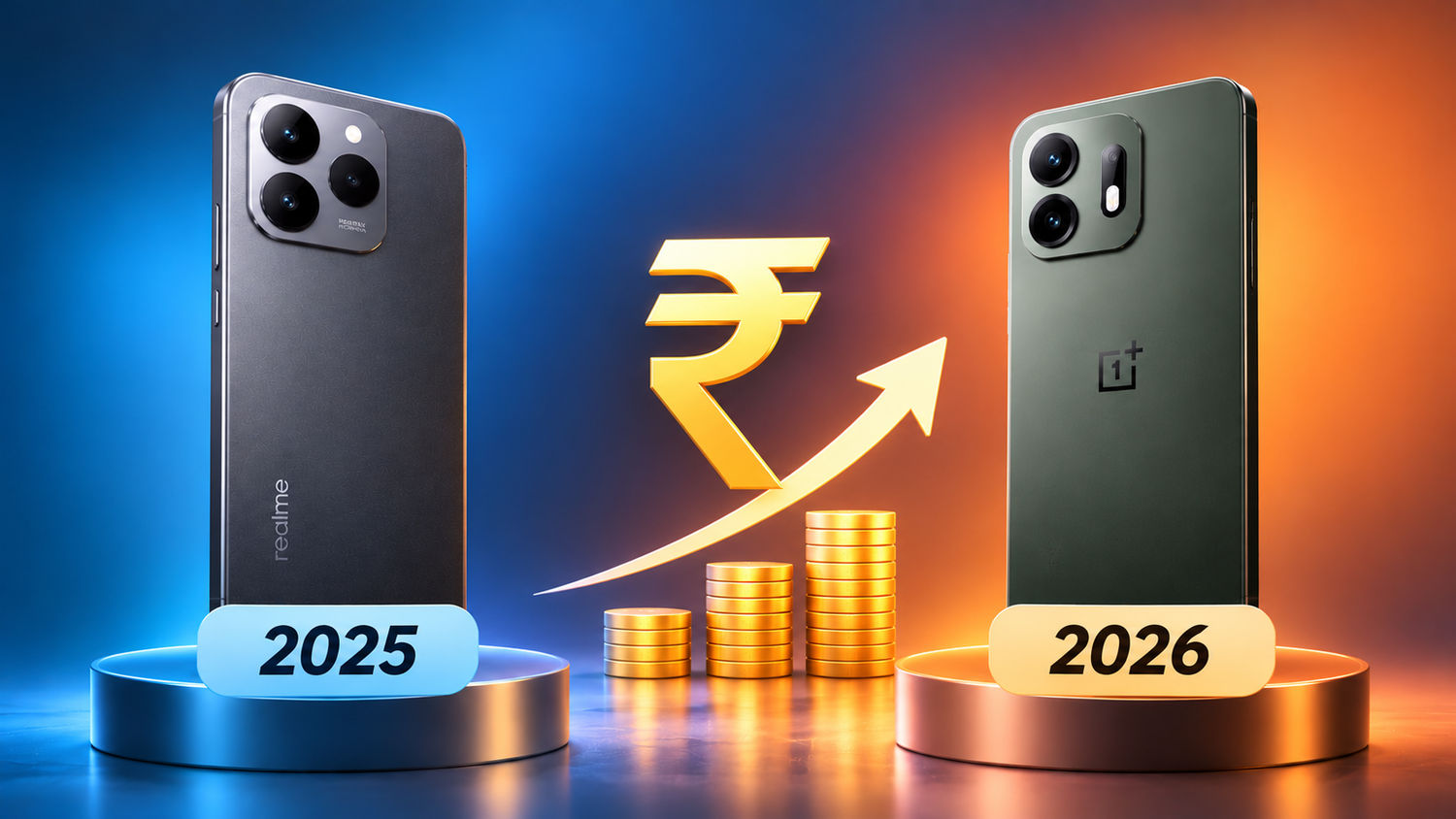
For years, buying a new smartphone meant getting more for your money. Faster processors, better displays, more RAM, and bigger batteries became the norm with every new generation. Even if you weren't particularly interested in specifications, you could generally expect your money to go a little further every year.
But 2026 has thrown a spanner in the works, and much of the blame lies with what the industry has dubbed 'RAMageddon', the ongoing global memory crisis. With AI data centres consuming enormous amounts of memory and manufacturers prioritising more lucrative enterprise demand, DRAM and NAND flash prices have climbed sharply. Smartphone brands are now caught between rising component costs and consumers who can only afford to spend so much.
The result? Smartphones are getting more expensive, while some manufacturers are cutting back on RAM, displays, storage, and other hardware to keep prices under control. In certain cases, a phone launched last year offers better specifications and performance than a newer model selling at the same price, or even higher.
The impact is already visible in the Indian smartphone market. According to a recent Counterpoint Research study, smartphone sales declined by an estimated 22% year-on-year during the 2026 festive season. Rising prices and consumers postponing purchases have contributed to the slowdown.
But while the industry has been discussing the memory crisis for months, we wanted to look at what it actually means for someone buying a budget smartphone. What does Rs 15,000 or Rs 25,000 get you in 2026 compared with 2025, and how much are consumers having to compromise?
To find out, we compared four smartphones tested at the Digit Test Labs. The Redmi 15 and Mivi One in the Rs 15,000 segment, and the Realme 15T and OnePlus N6 in the sub-Rs 25,000 category. While four phones cannot represent the entire market, their specifications and our testing results offer an interesting look at how the value proposition of budget smartphones is changing.
What Rs 15,000 bought you in 2025 vs 2026
Let's start with the Redmi 15 5G, which launched in August 2025, and the Mivi One 5G, which arrived in September 2026. Both were priced at Rs 14,999, but the hardware on offer is quite different.
| Specifications | Redmi 15 (2025) | Mivi One (2026) |
| Launch price | Rs 14,999 | Rs 14,999 |
| RAM + storage | 6 GB + 128 GB | 4 GB + 128 GB |
| Processor | Snapdragon 6s Gen 3 | Snapdragon 4 Gen 2 |
| Display | 6.9-inch FHD+ LCD | 6.75-inch HD+ LCD |
| Refresh rate | 144 Hz | Up to 120 Hz |
| Battery | 7,000 mAh | 6,000 mAh |
| Charging | 33 W | 18 W |
You don't need to be particularly obsessed with specifications to spot the differences. The Redmi offers 50% more physical RAM, a sharper display, a bigger battery, and faster charging. The Mivi One does have a newer Android 16 software experience and a promise of two major Android upgrades, but you're giving up quite a bit of hardware for the same money.
Interestingly, the benchmark numbers tell a slightly different story depending on which test you look at.
| Digit Test Labs benchmark | Redmi 15 (2025) | Mivi One (2026) |
| AnTuTu | 455,548 | 664,902 |
| Geekbench 5 single-core | 932 | 787 |
| Geekbench 5 multi-core | 2,216 | 2,089 |
| PCMark Work 3.0 | 12,237 | 9,128 |
| 3DMark Wild Life | 1,594 | 754 |
| CPU throttling stability | 85% | 92% |
| Sequential read (MB/s) | 530 | 954 |
| Maximum measured brightness | 1,024 nits | 1,020 nits |
| Charging time (0–100%) | 110 minutes | 120 minutes |
The Mivi One scores roughly 46% higher in AnTuTu. If you stopped looking at the numbers there, you'd probably assume the newer phone was comfortably faster. Except, there's a catch.
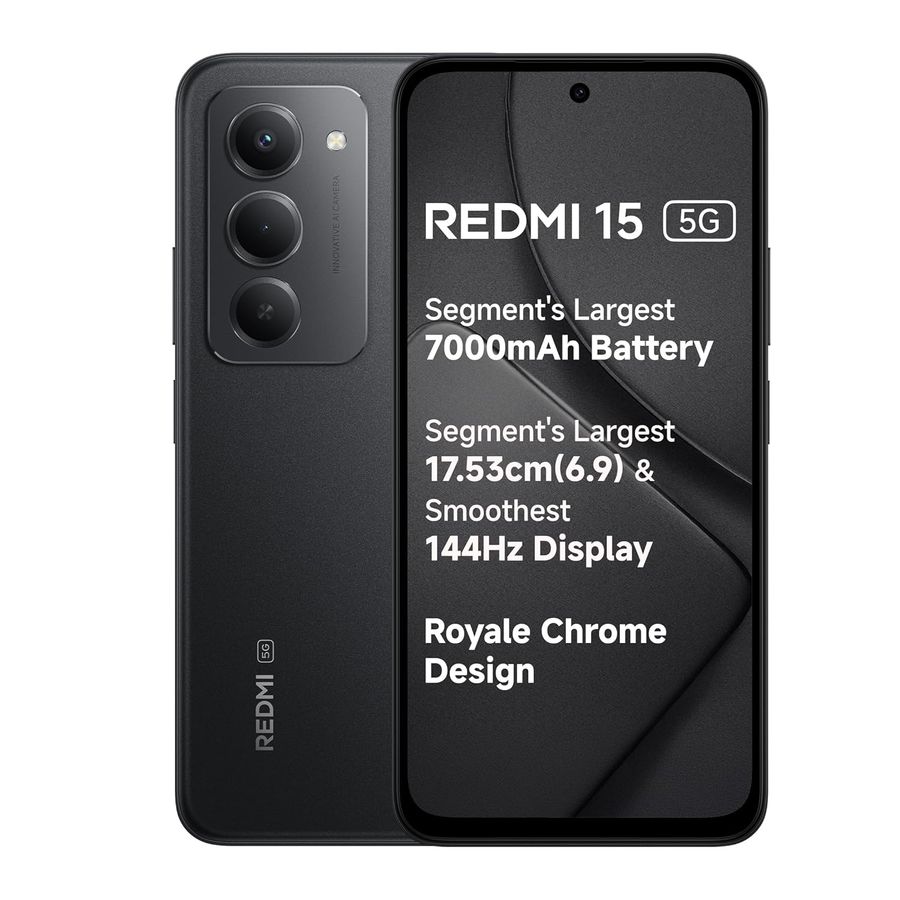
The Redmi scores around 34% higher in PCMark Work 3.0, which evaluates performance across productivity workloads. It also scores more than twice as high in 3DMark Wild Life, suggesting a significant advantage in graphics performance. Geekbench 5 favours the Redmi as well.
To be fair, the Mivi One isn't losing everywhere. It delivers faster sequential storage reads and better CPU stability under sustained load.
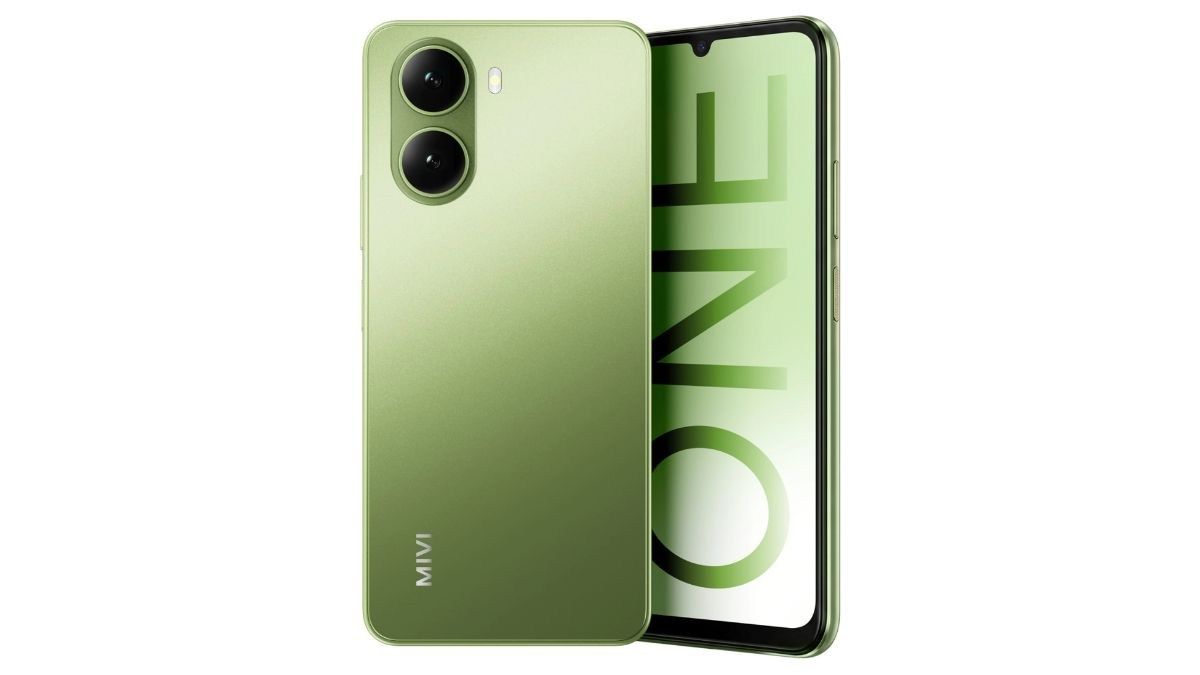
Still, at the same Rs 14,999 price, the older Redmi offers more RAM, a higher-resolution display, a larger battery, and stronger results in several important performance tests. For a market that has spent years convincing us that every new generation is an upgrade, that's a rather awkward result.
Why are manufacturers cutting specifications?
The memory crisis explains why smartphone manufacturers are under pressure, but the scale of the problem becomes clearer when you look at what individual components now cost. Speaking to Digit, Tarun Pathak, Research Director at Counterpoint Research, confirmed that the compromises we're seeing in our testing are part of a broader industry trend.
According to Pathak, memory previously accounted for around 12–13% of the total bill of materials (BoM) in smartphones priced below Rs 15,000–Rs 20,000. That share has now climbed to approximately 35–40%. For manufacturers operating in price-sensitive segments, that's a massive increase in costs, and something else inevitably has to give.
One of the first casualties is RAM. Pathak explained that brands which previously offered 8 GB of RAM at a particular price point are now reducing that to 6 GB, or even 4 GB in some cases. Selfie cameras are another area where manufacturers are cutting back, with some moving from 50 MP to 32 MP sensors, or from 32 MP to 16 MP.
The compromises don't end there. Pathak said some manufacturers are opting for older-generation chipsets instead of newer alternatives, while others are switching from faster UFS 3.2 storage to UFS 2.2. Charging speeds are also being reduced, sometimes from 80 W to 45 W or lower. Even displays aren't immune, with some brands replacing OLED panels with cheaper IPS LCD screens.
Many of these changes can easily go unnoticed when you're browsing smartphone listings. A manufacturer can still advertise a large battery, a high-refresh-rate display, or the latest AI features, while quietly cutting costs on components that receive less attention.
However, these compromises only go so far in offsetting rising costs. According to Pathak, specification reductions save manufacturers around 10–15% of the bill of materials, which isn't enough to absorb the increase in component costs. As a result, much of the additional expense still gets passed on to consumers.
The result is an increasingly frustrating situation for buyers. Manufacturers are cutting specifications to keep costs down, yet consumers are still having to pay more for their smartphones.
What about smartphones closer to Rs 25,000?
You might expect things to improve once you move up the price ladder. After all, spending over Rs 20,000 should buy you some breathing room when it comes to hardware specifications.
Unfortunately, our second comparison suggests that compromises aren't limited to entry-level smartphones.
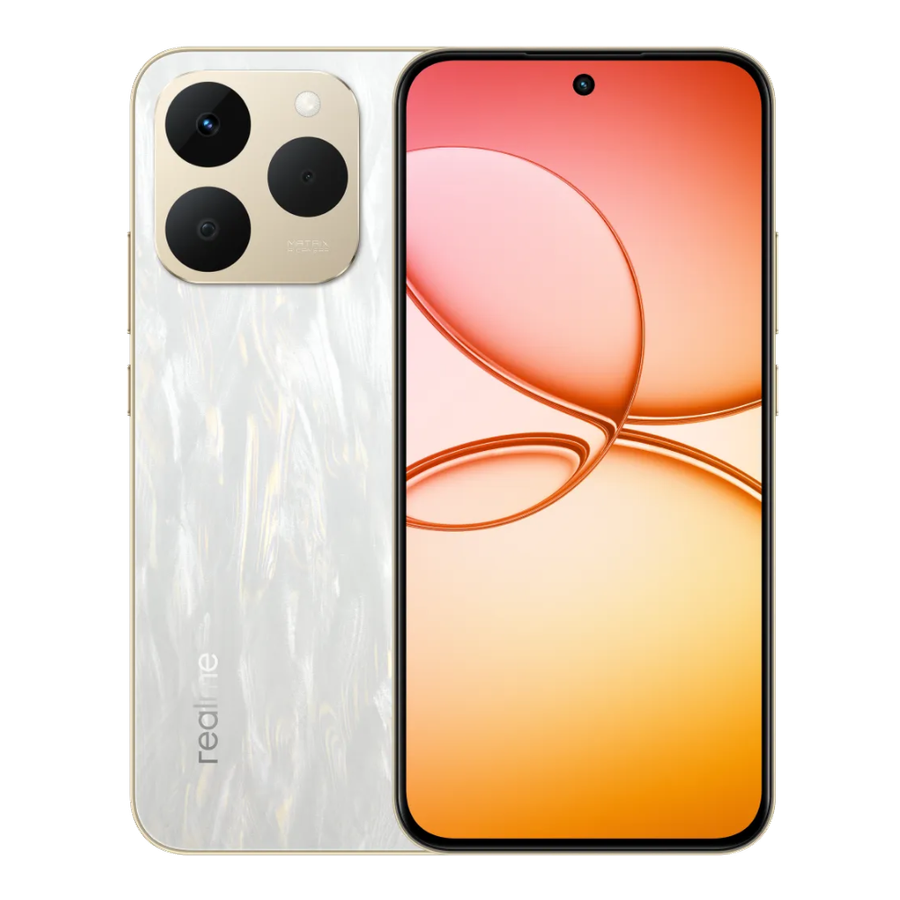
The Realme 15T launched in September 2025 at Rs 20,999, while the OnePlus N6 arrived in June 2026 at Rs 22,999. An introductory Rs 2,000 instant bank discount brought the OnePlus's effective price down to Rs 20,999 for eligible buyers.
| Specifications | Realme 15T (2025) | OnePlus N6 (2026) |
| Base launch price | Rs 20,999 | Rs 22,999 (Promotional launch price: Rs 20,999) |
| RAM + storage | 8 GB + 128 GB | 4 GB + 128 GB |
| Processor | Dimensity 6400 Max | Dimensity 6360 Apex |
| Display | 6.57-inch FHD+ AMOLED | 6.75-inch HD+ LCD |
| Refresh rate | Up to 120 Hz | Up to 120 Hz |
| Battery | 7,000 mAh | 8,000 mAh |
| Charging | 60 W | 45 W |
| Selfie camera | 50 MP | 8 MP |
Looking at the specifications side by side, the compromises become fairly obvious. Despite costing Rs 2,000 more at launch, the OnePlus N6 offers just 4 GB of RAM compared with 8 GB on the Realme 15T. That's half the physical RAM for a higher asking price. Not exactly the kind of math a smartphone buyer wants to see. The OnePlus also swaps the Realme's Full HD+ AMOLED display for a lower-resolution HD+ LCD panel, a significant downgrade in a segment where AMOLED displays have become increasingly common.
Our benchmark scores reinforce the difference.
| Digit Test Labs benchmark | Realme 15T (2025) | OnePlus N6 (2026) |
| AnTuTu | 458,532 | 617,192 |
| Geekbench 5 single-core | 803 | 785 |
| Geekbench 5 multi-core | 1,957 | 2,015 |
| PCMark Work 3.0 | 10,597 | 7,658 |
| 3DMark Wild Life | 1,374 | 1,314 |
| CPU throttling stability | 86% | 95% |
| Sequential read (MB/s) | 530 | 954 |
| Maximum measured brightness | 2,140 nits | 1,080 nits |
| Charging time (0–100%) | 75 minutes | 81 minutes |
The OnePlus scores roughly 35% higher in AnTuTu. However, the Realme performs substantially better in PCMark Work 3.0 and holds a small lead in 3DMark Wild Life. Once again, a higher AnTuTu score doesn't tell the complete story.
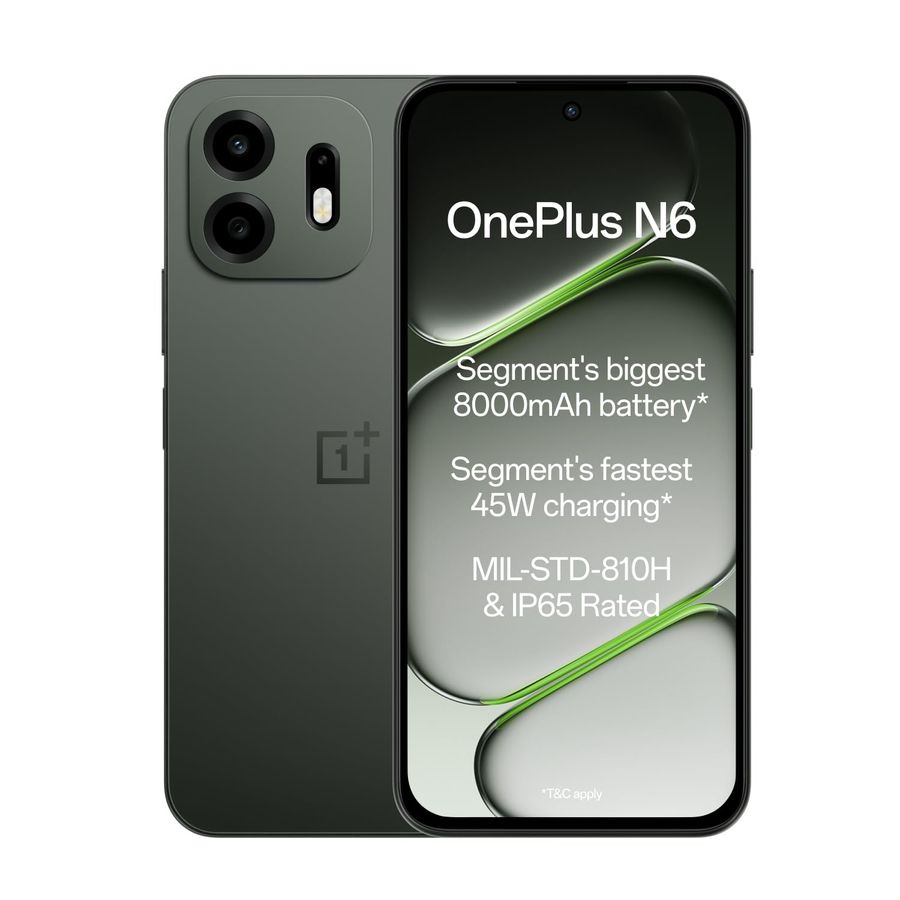
There's also a considerable difference in display brightness. The Realme recorded a maximum luminance of 2,140 nits, nearly twice the OnePlus's 1,080 nits.
Now, the OnePlus does have one rather large advantage. Its battery. The 8,000mAh unit delivered better endurance in our tests, particularly during GPS navigation and video streaming. OnePlus also maintained 95% performance in our CPU throttling test, compared with 86% on the Realme.
So there's no denying that the newer phone brings improvements. But those gains come alongside compromises in RAM, display technology, resolution, and certain aspects of performance.
Are older smartphones actually becoming better purchases?
This is perhaps the most interesting outcome of the changes we're seeing in the smartphone market. For the longest time, recommending an older smartphone came with a few caveats. Sure, you might save some money, but the newer model usually offered better hardware in several areas.
Today, that assumption isn't quite as reliable. Pathak told Digit that manufacturers are facing particularly intense pressure in the sub-Rs 20,000 segment, where offering competitive specifications is becoming increasingly difficult.
He believes older-generation smartphones are now looking more attractive than newer releases, calling it potentially “the first time that has happened in history.”
That's quite a shift. We're accustomed to telling people to wait for the next model. Now, there may be a perfectly good reason to buy the previous one instead.
Pathak also highlighted growing consumer interest in refurbished and pre-owned smartphones. With new devices becoming more expensive and manufacturers cutting specifications, some buyers are increasingly looking at alternatives that offer better hardware for their money.
Of course, an older smartphone isn't automatically a better deal. You still need to consider how many software updates it has left, the battery's condition, the warranty and, most importantly, what it actually costs today.
But an older phone with more RAM, a better display, and stronger performance at a discounted price certainly deserves consideration.
Indians are keeping their smartphones longer, and who can blame them?
Another consequence of rising prices is that people are becoming less eager to replace their smartphones. According to Pathak, India's average smartphone replacement cycle is around 42 months and is moving towards approximately 47–48 months. That's nearly four years between upgrades.
He also attributed a significant portion of the recent festive-season sales decline to consumers postponing purchases rather than replacing their existing devices.
And that makes sense. If your three-year-old smartphone still handles WhatsApp, YouTube, payments, navigation, and the occasional game without much trouble, spending Rs 20,000 or more on a replacement becomes a difficult proposition, especially if the new phone doesn't offer noticeably better hardware.
Pathak also told Digit that more consumers are choosing to repair their existing smartphones rather than replace them, particularly when repair costs are manageable. Display damage remains an exception in some cases, since screens can account for a significant portion of a phone's repair bill. But for other issues, keeping an existing device running can be the more attractive choice.
Pathak expects manufacturers to continue trimming specifications in 2027 as they deal with rising component costs, potentially making the value proposition of newer budget smartphones even harder to justify.
So, should you buy an older smartphone instead?
Not necessarily. But you should stop assuming that the newest smartphone is automatically the best one for your money.
Our testing doesn't suggest that every budget smartphone launched in 2026 is worse than what was available in 2025. The newer models do bring improvements in certain areas, but the important question is whether those gains are worth the compromises elsewhere.
A bigger battery is useful, but would you trade a Full HD+ AMOLED display and half your RAM for it? Similarly, does a higher AnTuTu score matter if the phone performs worse in productivity and graphics benchmarks? These are decisions buyers increasingly have to make.
For years, India's budget smartphone market followed a fairly predictable formula: spend the same amount next year, and you'll probably get something better. In 2026, rising component costs and changing hardware priorities have made that expectation less reliable.
The takeaway is simple. Whether you're spending Rs 15,000 or Rs 25,000, compare what's available across generations before making a purchase. The newest smartphone might still be the best choice, but for the first time in years, there's a stronger case for looking at what came before it.

Dhriti Datta Perpetually sporting a death stare, this one can be seen tinkering around with her smartphone which she holds more dear than life itself and stuffing her face with copious amounts of bacon.
View full profile