
Snapdragon 8 Elite Gen 6 vs 8 Elite Extreme Gen 6: Who really needs the Extreme?
 Follow Us
Qualcomm splits its 2nm flagship silicon into two distinct tiers
Extreme adds matrix cores, dedicated GPU memory and 8K60 video
Bigger on-chip memory aims to ease the industry's RAM crunch

Picking a Snapdragon-based Android flagship was fairly simple, because there was only one top-tier chip to contend with year after year, something that every brand’s hero phone ran on. That has certainty ended at Snapdragon Summit 2026.
 Survey
Breaking from tradition (and borrowing a leaf from its X2 Elite announcements last year), Qualcomm didn’t just unveil a single successor to last year’s Snapdragon 8 Elite Gen 5. It made things very interesting by unveiling two top-class variants – the Snapdragon 8 Elite Gen 6 and an even more powerful version of it, the Snapdragon 8 Elite Extreme Gen 6. If the “Extreme” tag sounds familiar, that’s because Qualcomm first used it on its X2 Elite Extreme laptop chip.
What’s important to note here is that both the Snapdragon 8 Elite Gen 6 and Extreme chips share the same CPU, the same underlying 2nm process and the modem. So let’s analyse what extra oomph and muscle the Extreme bring to Snapdragon’s offerings, and where does the standard Gen 6 leave you short-changed, if at all.
Same heart, different muscle strength
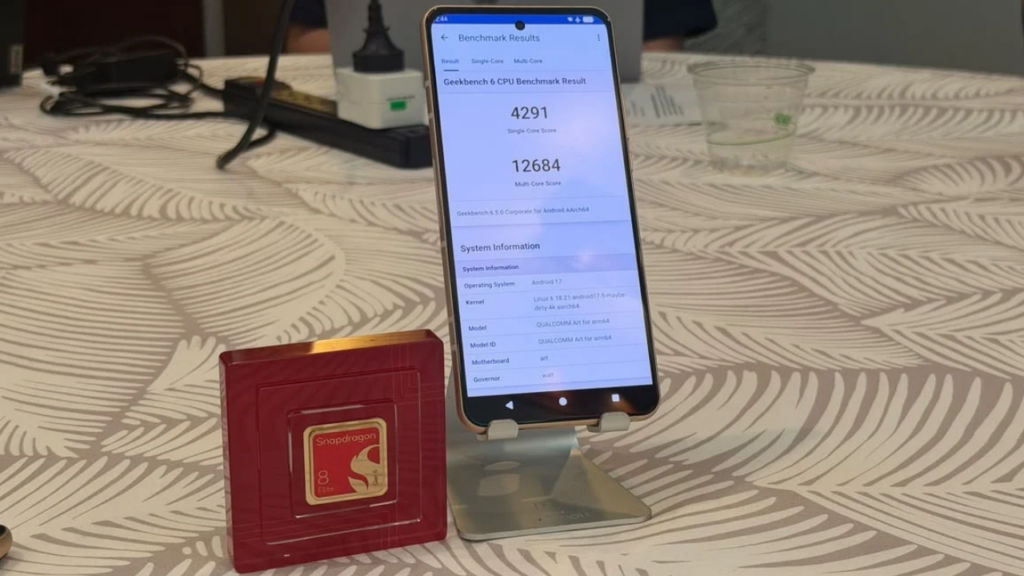
Let’s start with what’s common between the Snapdragon 8 Elite Gen 6 vs Elite Extreme Gen 6, because there’s quite a lot. TSMC’s 2nm process is common to both the chip variants, so is Qualcomm’s latest Oryon CPU – which has two Prime cores clocked up to 5GHz and six Performance cores up to 4GHz, backed by 16MB of shared Oryon Flex Cache. Also, both of these are the world’s first smartphone chips to cross the 5GHz barrier, in case you didn’t notice already.
Both chips also have the following things in common: LPDDR6/LPDDR5X support up to 24GB, UFS 5.0 storage, triple 20-bit AI ISPs capable of 320MP photos, the X105 5G modem with satellite connectivity, Wi-Fi 8, and triple-frequency GNSS with NavIC support – a small but welcome touch for Indian users.
Even the CPU gap is slim. Qualcomm claims the Extreme’s CPU is 13% faster than the 8 Elite Gen 5, compared to 10% on the standard Gen 6. And both the chip variants promise 37% better CPU power efficiency. That difference isn’t going to show up if you’re just going to be scrolling Instagram or doing UPI transactions, by the way.
Where the Extreme pulls away
Therefore, the real separation between the two Snapdragon 8 Elite Gen 6 and Extreme Gen 6 chips shows up in three key areas – graphics, AI and video. And that’s where it matters the most, far more than any clock-speed bump.
On the graphics performance front, the Extreme’s Adreno GPU is 44% faster than last year’s chip, against 35% on the standard Gen 6. Important to note here that only the Extreme gets 18MB of dedicated Adreno High Performance Memory and Adreno Matrix Cores – AI units built right into the GPU. These power Adreno Neural Fusion, essentially Qualcomm’s take on DLSS-style upscaling and AI frame generation. Everything that will widen the smile on no-nonsense mobile gamers.
Why does this matter? According to Qualcomm, running AI rendering tricks inside the graphics pipeline itself – instead of shuttling data across to the NPU – cuts both latency and power draw. For gamers, that should mean higher frame rates without the battery nosedive.

Also read: ‘AI is the new UI’: Qualcomm CEO Cristiano Amon says smartphones are entering the agentic era
AI is where the gap is arguably widest, in my opinion. Both Snapdragon chips get a redesigned Hexagon NPU with a new Element Accelerator for faster prompt processing. But the standard Gen 6’s NPU is 14% faster than Gen 5, while the Extreme’s is 35% faster, with 33% better AI performance per watt, according to data provided by Qualcomm.
The Extreme’s NPU also gets 50% more shared memory, letting it host 30B+ parameter Mixture of Experts models and long-context documents entirely on the phone. For a chip generation marketed squarely at agentic AI, that’s a big deal.
Video is the most visible split. The Extreme shoots 8K at 60fps and 4K slow-motion at 240fps, and natively supports the professional APV codec and the efficient VVC (H.266) codec. The standard Gen 6 tops out at 8K 30fps and 4K 120fps slow-mo.
How it tackles the memory crunch
Here’s where things get interesting beyond the spec sheet. If you’ve followed the industry this year, you’ll know memory is both scarce and expensive, with AI data centres hoovering up DRAM supply and phone (and laptop) makers feeling the squeeze. Some flagships are already launching with less RAM than their predecessors – Google’s Pixel 11 Pro being a case in point.
Qualcomm’s answer to this problem is to keep more data on the chip. The 16MB Flex Cache, the Extreme’s 50% larger NPU shared memory and its 18MB of dedicated GPU memory all exist to reduce trips to external RAM – which are anyway slower and consume extra power. Keeping AI rendering inside the GPU, therefore, serves the same goal.
But let’s keep things in perspective. On-chip memory is measured in megabytes, phone RAM in gigabytes. Smarter caching eases the pressure on RAM – it doesn’t replace it for multitasking, heavy apps or larger AI models. My worry is that some brands may use this narrative to quietly trim RAM at the same price. So, keep an extra close eye on the spec sheet of phones launching later this year.
Who the Extreme is for – and who it isn’t
Qualcomm knows its created a problem of plenty up top, and hence it’s relatively straightforward in the choice matrix. The Extreme makes sense if you’re a serious mobile gamer who wants sustained high frame rates, a creator who wants to shoot 8K 60fps or APV footage, or an early adopter keen on running bigger on-device AI models and agents as they arrive. It’s also the safer bet if you keep phones longer up to 4-5 years, so it will age gracefully before you upgrade.
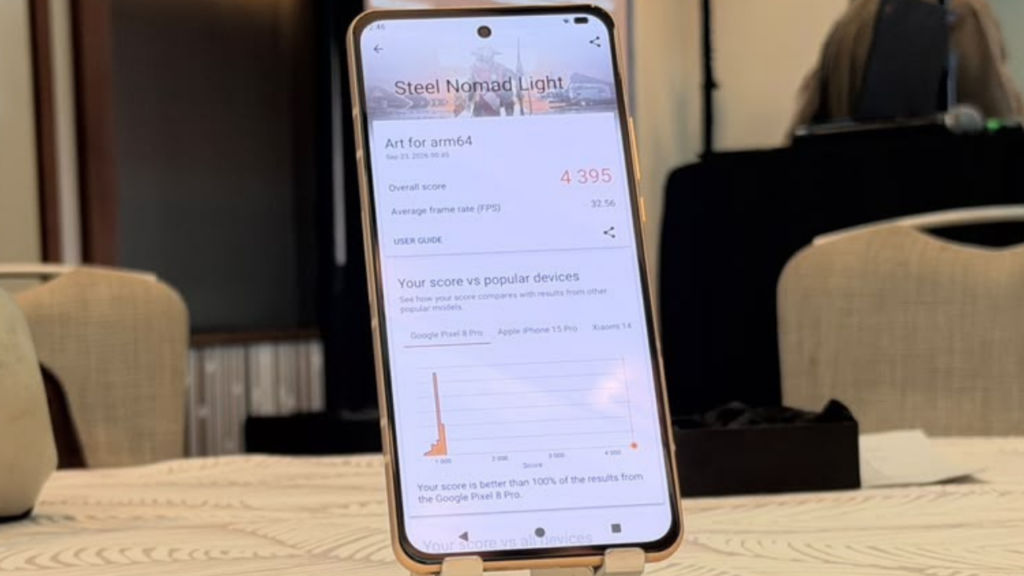
For everyone else, the standard Gen 6 is more than enough. Even last year’s Gen 5 handles practically every everyday task with ease, so if your day revolves around WhatsApp, UPI, OTT streaming and social media, you’ll struggle to tell the two chips apart.
The bigger picture to keep in view
With the Snapdragon 8 Elite Gen 6 and 8 Elite Extreme Gen 6, Qualcomm is acknowledging something the industry has long known, that even flagship buyers need variety at the top of the pyramid. The standard Gen 6 is the sensible flagship most people will buy, while the Extreme is the no-compromise option for people who want to live on the cutting-edge.
As far as I’m concerned, the bigger story isn’t the 5GHz headline. Seems to me that Qualcomm has designed its silicon in a world where memory isn’t cheap or plentiful. And don’t forget, both these chips will lock horns with Apple’s A20 Pro and MediaTek’s Dimensity 9600 Pro in the coming weeks and months… where benchmarks will settle that fight. Interesting times ahead.
Also read: Motorola is back in the flagship race with Signature 27 and Qualcomm’s new 2nm Snapdragon chip


