
How Samsung redesigned the Galaxy Z Fold 8 Ultra and Fold 8 from the inside out: Sunghoon Moon explains
 Follow Us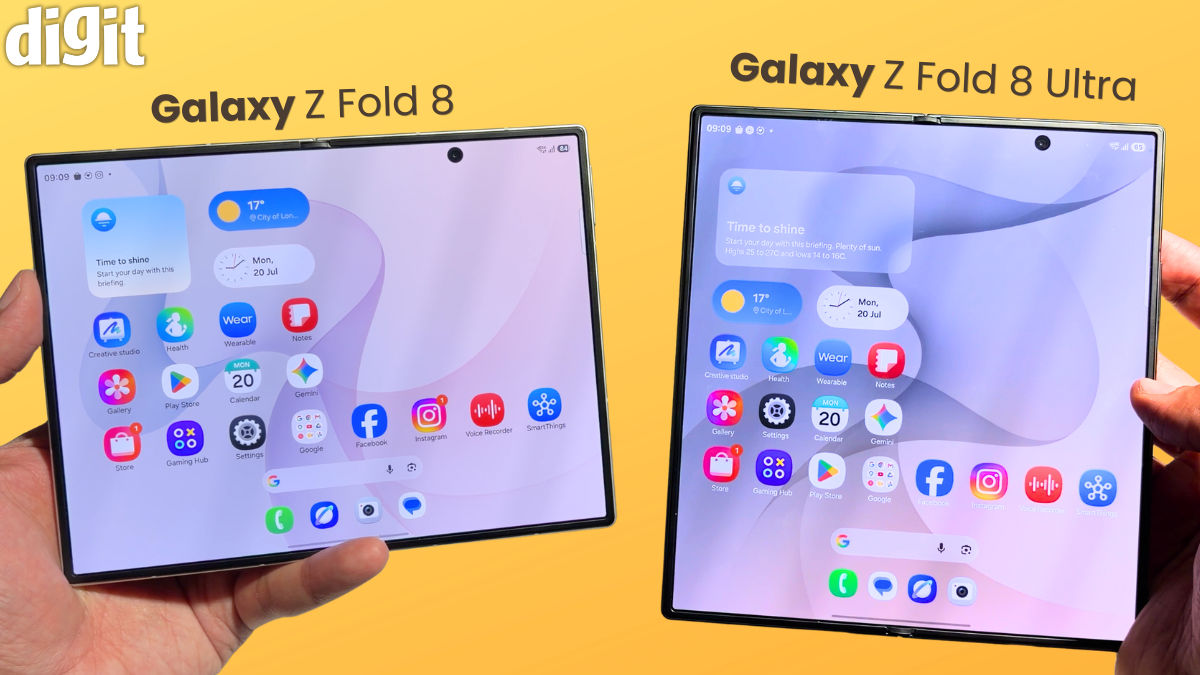

Right now, the Galaxy Z8 series, especially the Fold 8 and Fold 8 Ultra, is already selling like hotcakes. But before these devices became a smash hit for Samsung, I had a chance to sit down with Sunghoon Moon, Samsung’s Executive Vice President and Senior Executive of Mobile R&D for Hardware, during a media roundtable at Galaxy Unpacked in London last month. Samsung, as a pioneer in the foldable smartphone space, has been making Galaxy Folds for the last seven generations. However, the company’s pitch with the Galaxy Z Fold 8 is not simply about making a phone that folds but about wanting to make the hardware feel like a conventional flagship device that happens to open into a larger screen. Sounds simple in words, but in reality, a lot of time has gone into reworking almost every part of the latest foldable phones.
 Survey
Also read: Galaxy Z Fold 8 Ultra vs Z Fold 8: Which Samsung foldable should you buy?
I’ve been using the Galaxy Z Fold 8 as my daily driver for a month now, and I do agree with everything Moon explained about the engineering behind the latest Galaxy Z8 devices.
Specifically about the Galaxy Z Fold 8, the biggest change is the new aspect ratio. Samsung has made the Fold 8 broader, moving away from the tall, narrow shape of earlier generations. In use, that makes the outer screen feel closer to a compact and conventional smartphone, while the inner display remains the real reason to buy a foldable. The only catch I found while reviewing the phone is app support. And Moon admitted that the change was not straightforward because many apps were not originally built around the new aspect ratio. ‘Our native apps, but also the Google apps and third-party apps, have to cater to this new aspect ratio,’ he said.
Additionally, that wider shape would be less useful if the Galaxy Z Fold 8 still felt bulky. Samsung says its new Flex Titanium structure helps solve that. The system uses a titanium plate and a precision-engineered titanium-alloy film beneath the display, making the display module 10 per cent thinner. Samsung says that frees up internal space for other components while also helping reduce crease visibility.
Moon explained why this required a rethink of the entire phone. ‘Making a device thinner, for example, means redesigning the display, hinge, battery, thermal system, and internal architecture together,’ he said. For me, this is where the Galaxy Z Fold 8, despite featuring a brand-new foldable form factor, feels more mature. Having a slimmer and lighter foldable, practically, feels easier to hold and less conspicuous in my jeans pocket.
Samsung has also moved to silicon-carbon battery technology for the new Galaxy Z8 series. The Fold 8 and Fold 8 Ultra use a dual-path charging architecture designed to distribute power more efficiently, while the Ultra gets a 5,000mAh battery and 45W charging. Samsung says the Ultra can reach 67 per cent in 30 minutes. A claim we have tested at Digit and can confirm.
Interestingly, Moon pushed back on the idea that Samsung was not after the much higher charging speeds offered by some Chinese rivals. ‘We don’t think it’s just about chasing the numbers on paper,’ he said. ‘What really matters about the charging speed is how effective and efficient it feels in the real-life scenarios of our users.’
There was also a question around durability that was raised during the roundtable, particularly around how Samsung is validating the Fold 8 phones for long-term use. The company says the Galaxy Z8 series has gone through more than 100 reliability tests, covering drops, repeated folding, pressure, moisture, and debris. When Moon was asked how many times the phone had been folded during testing, he explained that the result depends on the conditions and environment in which the tests are carried out.
He was also asked what he sees as the biggest challenge that still remains for foldable phones. His answer was refreshingly matter-of-fact: ‘As an engineer, it is my belief that there is no such thing as an end to the challenges that we face in the continuous journey of evolving our product.’ That mindset comes through in the Galaxy Z Fold 8. As I mentioned above, Samsung has spent seven generations working on the details that make a foldable easier to use, and this generation continues that process with a thinner build, a wider aspect ratio, a new display structure, and larger silicon-carbon batteries.


