
Lenovo IdeaPad Vibe hands-on: More colours for the mainstream laptop
 Follow Us
The colours are what make the IdeaPad Vibe stand out from its predecessors.
AMD and Snapdragon variants to be available at launch, Intel options to arrive later.
Comes with a decent mix of ports and prices start at €799. Indian pricing not yet available.
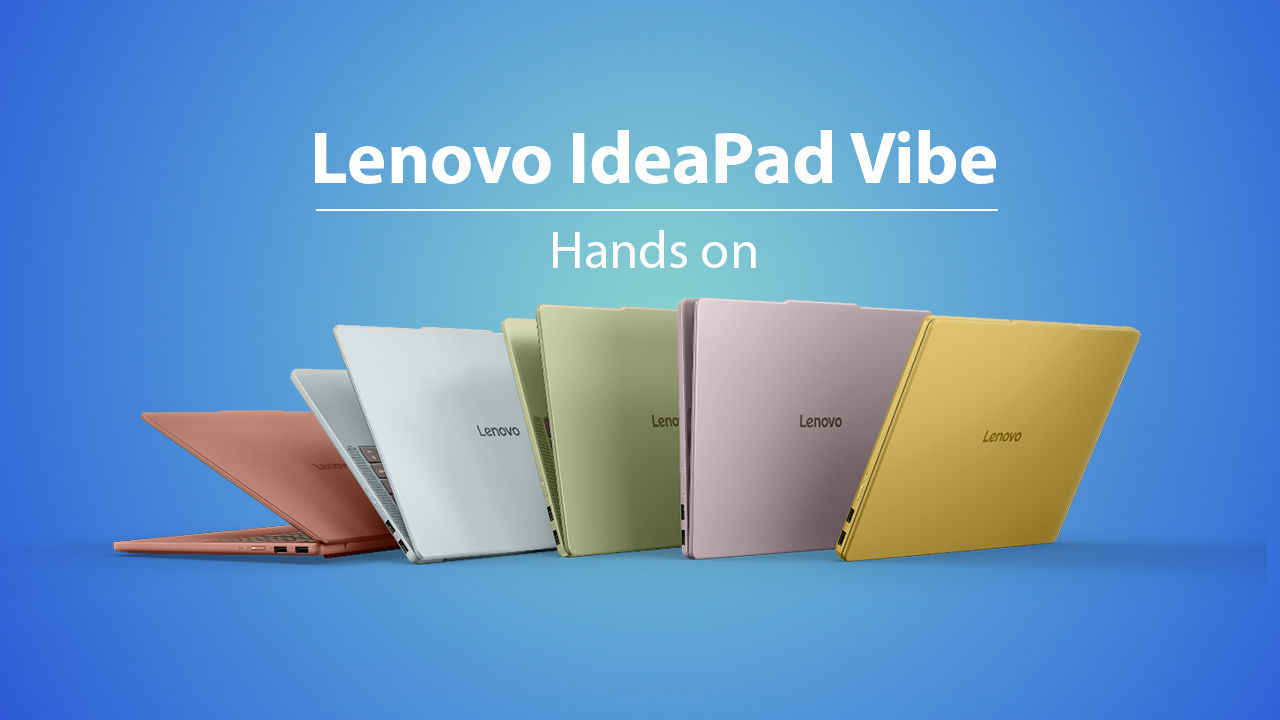

The mainstream laptop market has developed a grey problem. Devices that are otherwise separated by processors, display resolutions and increasingly vague AI claims often end up looking remarkably similar. Silver, dark grey and occasionally blue remain the default choices, with manufacturers seemingly afraid that any stronger colour might frighten corporate buyers. The Lenovo IdeaPad Vibe feels like a direct response to that uniformity. After spending some time with a few of the 14-inch configurations at IFA 2026, including Snapdragon X and AMD Ryzen AI variants, the clearest takeaway was not about performance or artificial intelligence. It was that a mainstream laptop can have some personality without turning into a novelty. The IdeaPad Vibe is not an experimental form factor or an expensive fashion collaboration. Underneath the colours, this is still a fairly conventional IdeaPad. Lenovo has simply recognised that conventional does not have to mean anonymous.
 Survey
Lenovo IdeaPad Vibe comes in seven colours
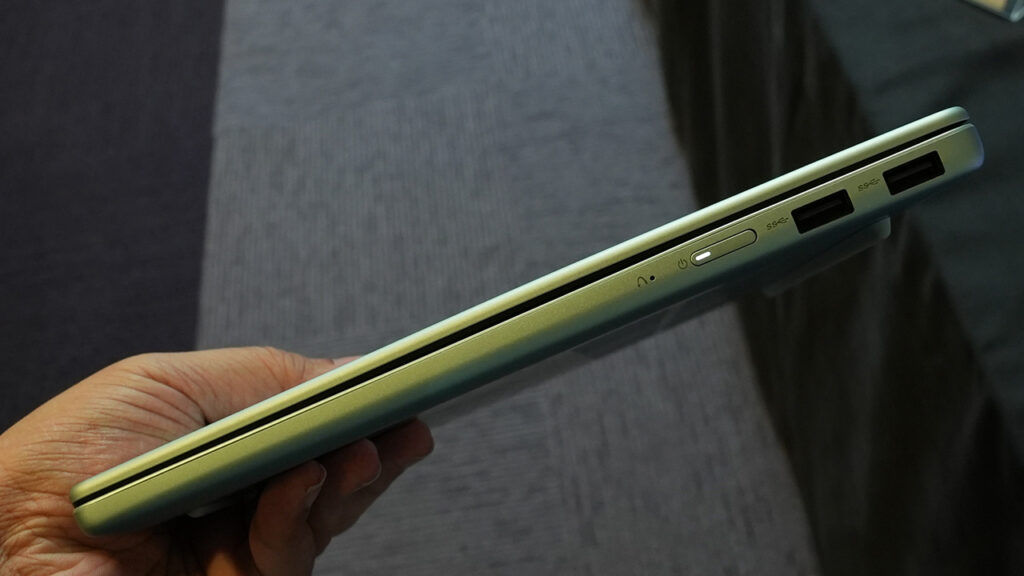
Lenovo is offering the IdeaPad Vibe in seven finishes: Dreamy Violet, Spicy Gold, Zen Green, Chill Blue, Radiant Coral, Moody Blue and Lowkey Grey. We spent time with the Zen Green and Moody Blue versions, and both looked appreciably better in person than they did in the initial product images. Between the two models that we experienced, we feel that the Zen Green variant is likely to attract more attention. It is distinctive without being excessively bright, and the shade gives the laptop an identity without making it look like a toy. Moody Blue is the more restrained of the two, but it still offers more character than the dark navy finishes commonly used as substitutes for black.
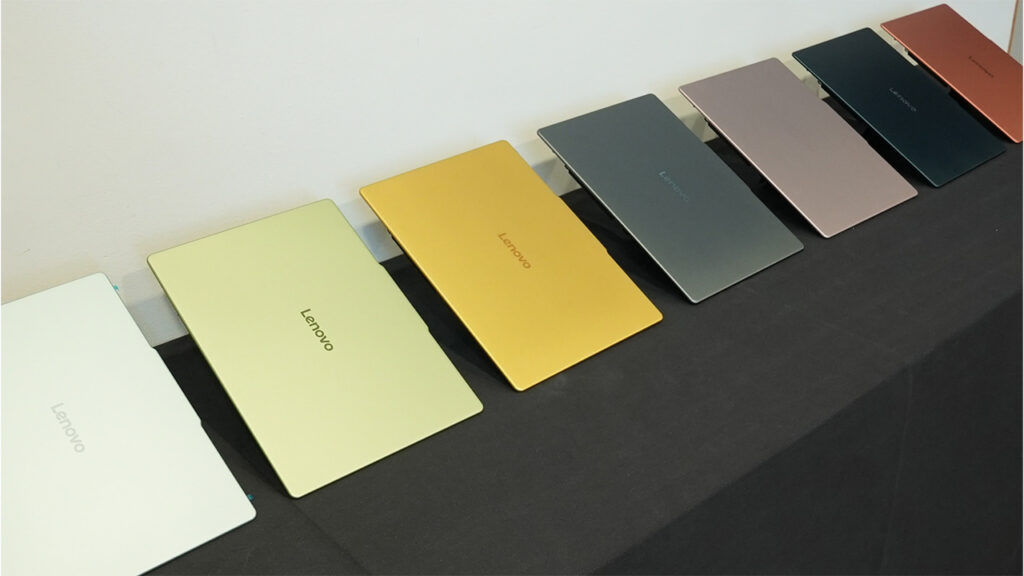
Importantly, neither colour looked like it had simply been applied to generate a louder product image. The finishes felt considered, and they worked with the relatively simple design of the chassis. On the functional side, the surfaces also resisted fingerprints reasonably well during our time with the machines. That is particularly useful on the darker Moody Blue model, since deep blue laptops can quickly begin to look untidy under show-floor lighting. The unit we handled remained presentable despite being picked up and moved around repeatedly. This is where the IdeaPad Vibe makes its strongest argument. Colour is not being treated as an expensive limited-edition extra. It is the central idea behind an otherwise accessible laptop family.
The design is solid, but fundamentally familiar
Look beyond the finish and the IdeaPad Vibe is not attempting to reinvent Lenovo’s mainstream notebook design. The chassis felt solid, the construction appeared tidy and there were no immediately concerning gaps or weak points on the units we handled. At the same time, there was little about the underlying shape or materials that felt unusual. That is not necessarily a criticism. A laptop expected to start at €799 needs to balance design, portability and configuration options without becoming needlessly elaborate. The Vibe feels like a familiar IdeaPad that has been allowed to express itself.
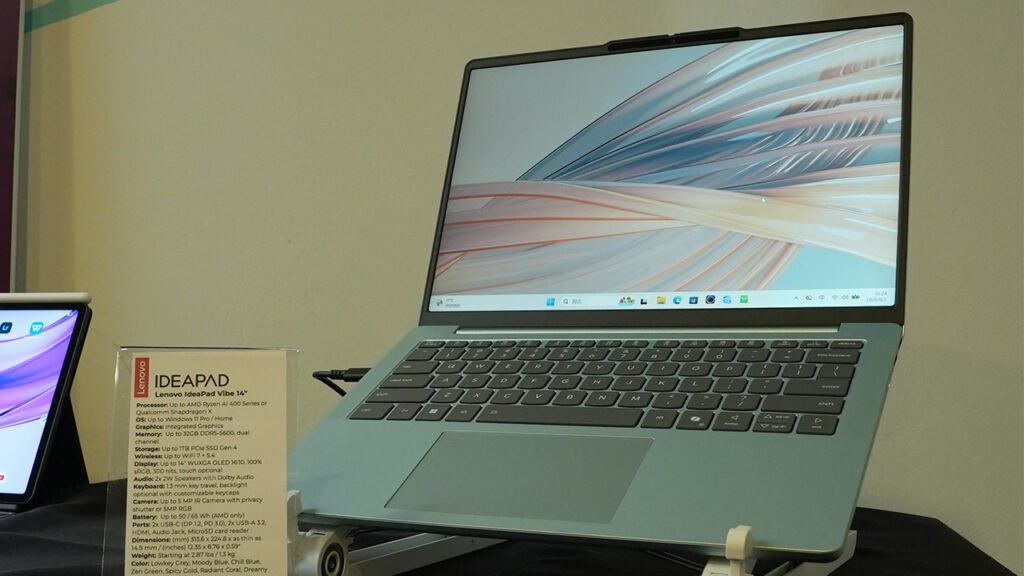
The 14-inch model was also easy to lift and carry with one hand. Lenovo says configurations can start at approximately 1.3 kg, which places the device in a comfortable range for students, commuters and anyone regularly moving between meeting rooms. We did not spend time with the 15-inch version, so it is difficult to say whether the larger model preserves the same balance. On the 14-inch machine, however, the combination of manageable weight and a reasonably rigid chassis made for a good initial impression.
There is an argument that Lenovo could have gone further. The colour options are refreshing, but the overall silhouette remains safe. Buyers expecting the Vibe name to signal a radically different design may find the result more conservative than anticipated. For most of its intended audience, that restraint may be helpful. The laptop looks different enough to be recognisable without becoming impractical in a classroom, office or shared workspace. Sometimes, too much personality can work against you.
Custom keycaps are a small but effective touch
Lenovo is also introducing replaceable keycaps that allow buyers to add contrasting colours to the keyboard. It could easily have become a gimmick, but on the IdeaPad Vibe it adds a modest degree of personalisation without interfering with normal use. The effect is closer to adding an accent than rebuilding a mechanical keyboard. It gives the laptop some extra character, particularly when the keycap colour is paired with the exterior finish.
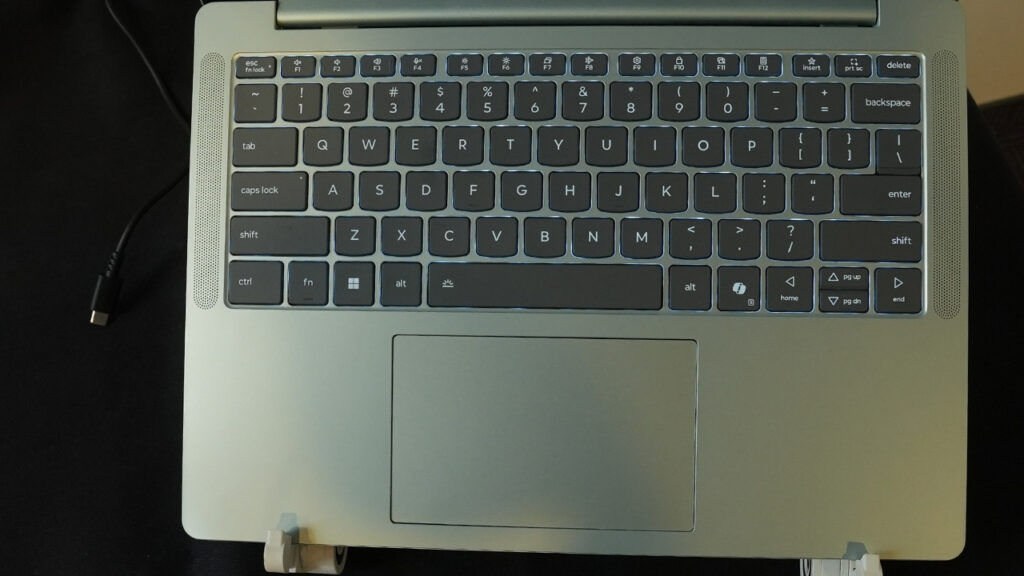
The keyboard itself may be more important than the customisation. The typing deck felt firm during our hands-on session, without the soft or hollow sensation that sometimes appears on lower-priced thin laptops. A short show-floor session cannot establish long-term typing comfort, but the initial feedback was reassuring.
The touchpad was less memorable. It worked as expected and did not present any obvious tracking problems, but its feel was ordinary compared with the more polished haptic or glass touchpads appearing on premium notebooks. That is understandable at this price, though it is also an area where the Vibe’s otherwise considered presentation gives way to its mainstream positioning. In other words, the keyboard contributes to the laptop’s character. The touchpad simply does its job.
OLED is available, but the IPS display is perfectly usable
Lenovo is offering multiple display options across the IdeaPad Vibe family. Select configurations receive an OLED panel with up to full DCI-P3 coverage, while IPS versions can offer a 120 Hz refresh rate and up to full sRGB coverage. OLED configurations are restricted to Lowkey Grey and Moody Blue, which creates a slightly awkward trade-off. Some of the more expressive colours may not be available with the most desirable screen. Although, this might change later on.
An OLED-equipped model was among the configurations launched, but the IPS screen we spent time examining looked perfectly adequate for a mainstream laptop. Text appeared clear, motion was smooth and there was nothing during the session that immediately made the panel feel like an obvious compromise. We’d get a bit more clarity once these come into our Digit Test Labs to measure brightness, colour accuracy, contrast and response times. Show-floor lighting is particularly unhelpful for judging displays. The existence of OLED and high-refresh-rate IPS choices is nevertheless encouraging. It gives buyers some flexibility, provided Lenovo does not tie the better displays too tightly to specific processors, memory capacities or colours.
Snapdragon and AMD with some customisability
The IdeaPad Vibe will be available with Snapdragon X processors and AMD Ryzen AI 400 Series hardware, with Intel models planned for later. That makes the range more configurable than its design-led positioning initially suggests. Snapdragon configurations support Copilot+ PC features and can include up to 24 GB of memory. Their biggest potential attraction is likely to be battery life, provided Lenovo’s claims translate into realistic mixed-use endurance.
AMD models offer a more conventional Windows environment and greater upgrade flexibility. They can support up to 32 GB of dual-slot memory and SSD expansion up to 1 TB. For buyers concerned about application or peripheral compatibility on Windows on Arm, the AMD version may be the safer choice. But as things go, Qualcomm has been actively working on increasing the pool of compatible apps and most of the commonly used apps have been compatible with Windows on Arm for quite some time now.
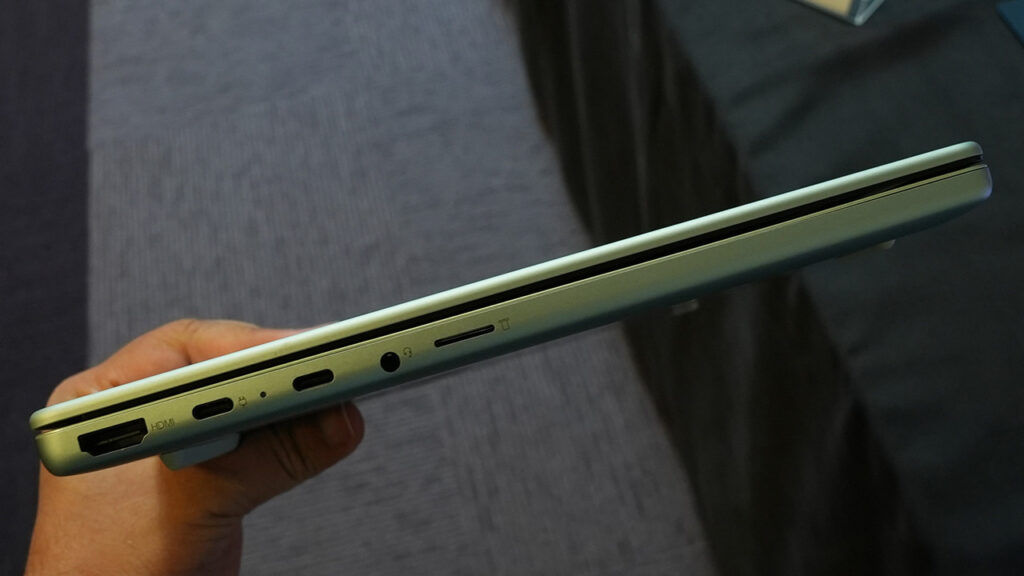
Lenovo also includes two SSD slots, USB Type-A and Type-C connectivity, HDMI, a microSD card reader and an audio jack. Performance, battery life, sustained thermals and fan behaviour could not be evaluated during this hands-on session. Those factors will ultimately determine whether the Vibe is competitive beyond its appearance. Snapdragon and AMD configurations could also behave quite differently, so the processor badge should not be treated as a minor specification choice.
AI comes in the form of Qira
Like practically every PC launched in 2026, the IdeaPad Vibe is being presented as an AI PC. Snapdragon versions offer Copilot+ experiences, while Ryzen AI configurations provide their own local acceleration. Select models also support Lenovo Qira, the company’s cross-device personal AI system. Qira is intended to connect information and actions across Lenovo PCs, tablets, Motorola devices and services such as email, calendars and collaboration platforms. That could eventually become useful, particularly for people already invested in Lenovo and Motorola hardware.
Refreshing, not radical
The Lenovo IdeaPad Vibe is a refreshing mainstream laptop, even if it is not a radical one. Its chassis is conventional, the touchpad is what you’re used to and the different processor and display combinations allow for a fair amount of flexibility in the options. What makes it stand apart from being just another routine IdeaPad refresh is Lenovo’s decision to use colours, and a lot of them. At an expected European starting price of €799, the IdeaPad Vibe will still need to prove itself on battery life, display quality and performance. Regional Indian pricing will also determine how compelling it is when it reaches the market. For now, the Vibe succeeds because it addresses something the laptop industry has neglected. It does not pretend that colour transforms the computing experience. It simply recognises that a device used every day does not have to look like office equipment.


