
Our focus is to build durable products that are adjacent to our main business: Urban Company’s Rishabhdhwaj Singh
 Follow Us

Urban Company has traditionally been known as a home services platform, but the company is now building products for the same homes it already services. It has expanded from servicing appliances to developing its own water purifiers and smart locks, with a focus on durability, connected features and after-sales support. We spoke to Rishabhdhwaj Singh, SVP of Engineering at Urban Company, about why the company is moving into hardware, how it is using IoT and AI to improve the ownership experience, and what it sees as the next phase of its product strategy.
 Survey
Q: At what point did you realise that you should become a product company and not just a service platform?
Rishabhdhwaj Singh: We don’t really call ourselves a product company. We are India’s largest home services company, where our service professionals go into people’s homes and deliver services.
Appliance repair is one of our core categories and a very big category. AC servicing is an area where we have been active for many years, along with servicing many appliance brands. While doing this, we realised that something was wrong. Many OEMs and appliance manufacturers were not focusing enough on making durable products. That was when we realised that, since we were already so deeply involved in repairing and servicing these products, an extension of what we already do in servicing them would be to build durable products ourselves.
So, our focus is to build durable products that are adjacent to our main business, which is servicing these products.
Q: Why water purifiers in particular, and not air conditioners, given that you just mentioned AC servicing as one of your main areas?
Rishabhdhwaj Singh: We started with water purifiers because this is a category where we had gone very deep in understanding how to repair and service products.
We understood what the problem was. The filters were not supposed to last very long. They would usually last six months. Over the last two and a half to three years, we have really innovated and tried to build water purifiers that last.
Our first product, M2 Pro, was built in a way that it would last for two years. We have lived up to that promise. Many customers are now completing two years with these products, and 75% of them, which is by far the highest in the industry and almost three times what others do, have refreshed them for the next year.
So, we went very deep into RO water purifiers and how to build better products. That’s the reason why we launched RO water purifiers as our first product.
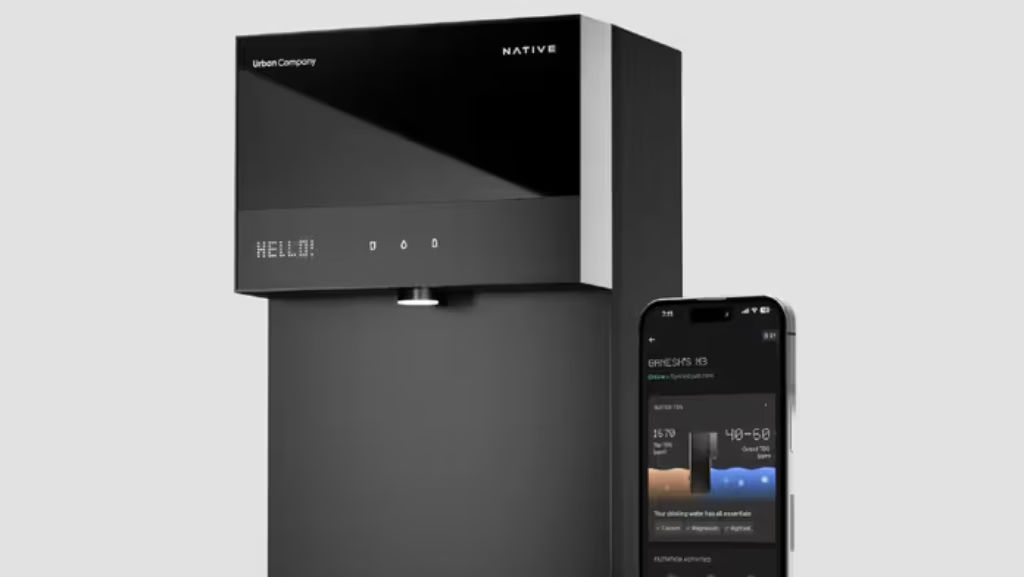
Now, we have extended that by launching the M3 and M3 Pro, which are the first and the only products in the market where the filters will last three years.
Q: These days, especially with water purifiers, brands tend to load products with features, and that becomes the main pitch and highlight. But consumers also care about the installation experience and after-sales experience. So, how do you decide what needs to be included in the product, and what are the areas you are focusing on?
Rishabhdhwaj Singh: We go backwards from the consumer problem.
When we went deep into water purifiers, what we realised was that the first problem was that consumers had to change their filters every six months. They were not built to last.
This was the first problem we wanted to solve. We wanted to build a product that lasted two years and now one that lasts three years minimum. Then we refresh it, and it lasts for another three years. So, this will continue for at least nine to twelve years.
That was the first problem we attacked. Then we introduced smartness into it because three years is a really long time. We wanted our consumers to have peace of mind over those three years.
That’s why we added a lot of IoT and smartness into it, so consumers can track how the water purifier is working, how the purification circuit is working and how the filters are working in real time.
Q: And is AI or edge computing a part of this new product?
Rishabhdhwaj Singh: We just demonstrated on stage half an hour ago how IoT and Urban Company’s AI stack are coming together to give consumers complete peace of mind for three years.
Our water purifiers are built to stream data from the purifier continuously in real time. At any point, for every purification or dispensing event, every aspect of the water purifier is streamed to our servers in real time.
Then Urban Company’s AI stack, which has already seen hundreds of thousands of devices, comes together to provide an end-to-end experience.
We had a demo on stage where an AI agent was able to see the metrics from a customer’s device in real time and work with the consumer to resolve an issue.
There was a low-pressure situation at the consumer’s end, and so purification wasn’t happening. The system received the data and understood that the pressure was low. It relied on a pressure sensor in the device for this. Then, in real-time, a voice AI agent tells the customer to turn the valve for the pressure to come in and it will tell the customer once the pressure issue has been resolved.
That’s a deep level of integration that we have done, probably for the first time in the industry, where IoT and AI are coming together to resolve an issue.
Q: Is there still any area where you feel innovation is missing in the water purifier category?
Rishabhdhwaj Singh: We have tried to bridge a lot of gaps. I think the biggest problem, as I said, was that these products were not built to last.
Then it was a black box. If anything broke, you would get a service professional to visit, repair it and pay the AMC charge all over again.
That is what we have cracked, or at least tried to crack, and we have done it pretty successfully. The filters and membrane will last more than anybody else’s, and there are various sensors in the machine that bring in a lot of smartness through IoT.
This integrates with our AI stack to give real-time visibility to the customer. These are the two areas that we have blended.
We have also tried to make the machine a lot less boring, with an experience that is way above what is available elsewhere. We have launched the world’s first dot-matrix display in a water purifier. It’s something that is very cool and will keep animating.
Q: One thing I’ve noticed, especially with elderly people, whether it’s my mom or my mother-in-law, is that even if a product is smart, has AI features and looks good, they can find it difficult to understand the features or use the app and the interface on the purifier. What has the company done to address that?
Rishabhdhwaj Singh: That’s a fair point, and that’s why we are not throwing the words AI or IoT at the consumer. We have built something that is truly simple.
I think one of the key things we have cracked in the M3 and M3 Pro is that we have added a display on the device itself. Anything that is available on the app is also available on the device.
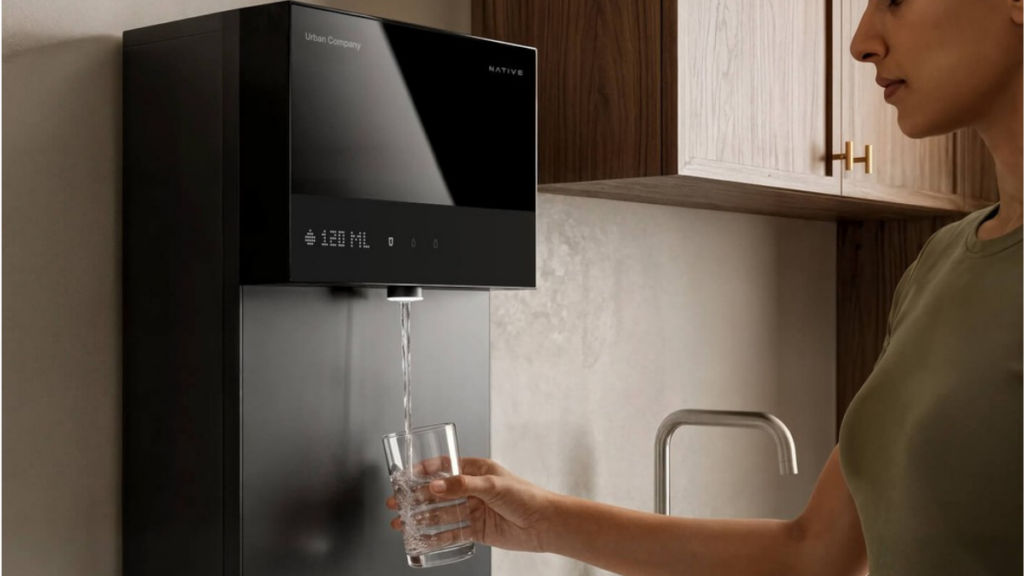
You will get to see real-time input and output TDS. If purification is happening, there will be an animation on the display itself.
A lot of features are available directly on the device. IoT and AI are also key problems that we are trying to solve, but we have made the usability as simple as possible.
For example, most users struggle to connect their devices. I’m going a bit technical here, but we have added Bluetooth Low Energy as a technology, which makes make the Wi-Fi setup process as seamless as possible. All you need to do is enter your Wi-Fi password, and the purifier can connect within 10 to 15 seconds.
On the homepage of the app, if you have an M3 or M3 Pro, all the data you need is right there in very simple terms.
In fact, a month or a few weeks down the line, we will also be launching widgets that can come to your phone’s home screen. You will be able to use the water purifier directly from your phone’s home screen.
If you have concerns or questions about whether the water purifier is working properly over three years, you should be able to talk to our AI agent with the press of a button. The AI agent will talk with you and address your concerns because it has all the data it needs.
We have at least made an honest attempt to make it as simple as possible. That’s one of the reasons why we see a very high adoption of these features as well.
Q: Now, coming to smart locks. What’s the biggest barrier you see to smart lock adoption?
Rishabhdhwaj Singh: Smart locks are doing very well. Both the Smart Lock Pro, which was our first-generation lock, and the Lock Ultra, which was just launched, are very close to our hearts.
I would really request you to try the Lock Ultra. I’m pretty sure, as someone who appreciates technology, you will really like it. Please do try it out.
I honestly believe that the industry was missing good products, and we took an honest shot with the Lock Pro a couple of years ago and definitely with the Lock Ultra.
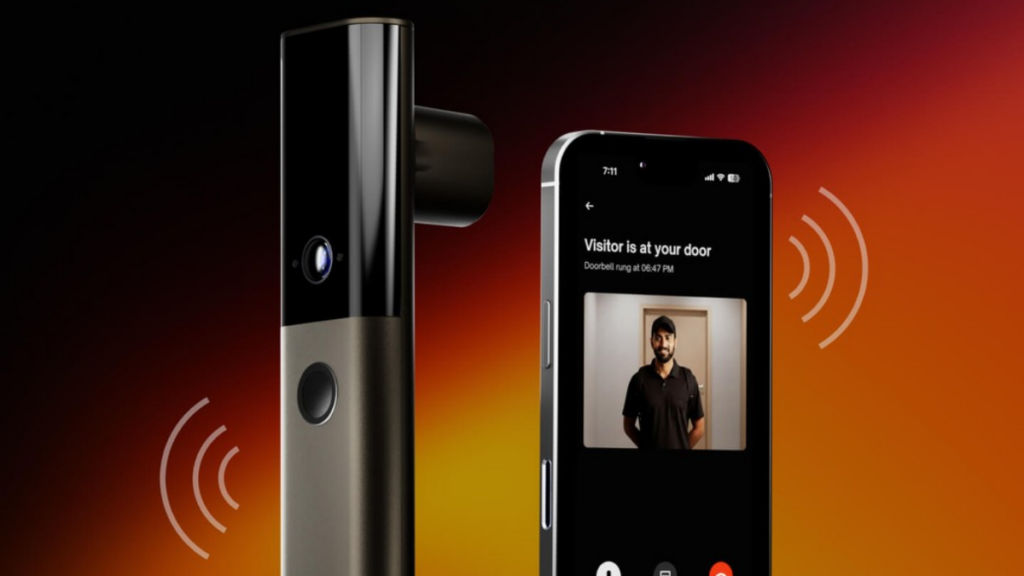
We are not thinking about it as just a lock. We call it your digital domain because it is always alive and always monitoring your surroundings to make sure that your home is as secure as possible.
If there is any lurker, you will get to know, and the convenience is at another level. With face unlock, you can just walk into your house. The biggest innovation we have developed here is that it integrates with your normal doorbell. Your normal doorbell, which everybody has at home, can be used with the lock.
Your guest presses the normal doorbell. The lock is always alive. Within one second, you get a notification on your phone. You can then unlock it from the notification itself, see who has come in, talk to them if necessary, or simply unlock the door.
Nobody has been able to replicate this.
We are very proud of it. It is a patented technology, patent pending and under review.
This is an innovation that others have not come close to, and when such innovation comes to a category, I honestly believe it speeds up adoption.
Q: I believe security is a key aspect of a smart lock because trust is important. Since a lot of data is involved, as you mentioned, the lock is continuously monitoring its surroundings. How do you convince customers about the safety of that data, as well as protection from external threats, both digital and physical?
Rishabhdhwaj Singh: The lock is the most secure lock. We have claimed it to be 100 times stronger than any other lock, both physically and digitally.
We can’t hack it. We have worked a lot on its security, both in terms of attacks and data privacy.
The data is end-to-end encrypted. It is encrypted at rest as well. Nobody apart from our systems, not even me or any of our engineers, has access to the data.
The data is fully encrypted at rest. The systems process and use it to lock, unlock or show information on the app, and then it gets encrypted.
Obviously, everything is under the purview of the DPDP Act. So, we have worked really hard to make sure that we set a very high bar in terms of privacy.
Q: The brand now has two product categories. Do you consider these products to be part of a siloed or isolated ecosystem, or do you see them becoming part of a broader ecosystem where products from other brands could also work with them, whether through Matter or other interoperability standards?
Rishabhdhwaj Singh: We are following ecosystems like Matter very closely, and at any point where the cost justifies the usability, we will definitely take a stab at it.
As we discussed, we work backwards from the consumer problem. At this point, we are able to give customers a superior experience on our own platform.
But this is obviously something we have at the back of our minds.
Q: Are these products made in India or assembled in India?
Rishabhdhwaj Singh: Our products are designed in Bangalore in our labs. A lot of innovation happens in our labs, and our water purifiers are fully made and assembled in India at our plant.
The same is true for the locks. The locks are also designed and owned end-to-end in India, in our labs in Bangalore. The assembly currently happens through a vendor in China.
Q: Besides these two categories, are there any other categories that the company is considering or thinking about launching in the near future?
Rishabhdhwaj Singh: The last couple of years have been spent going really deep into solving these two categories, and the M3, M3 Pro and Lock Ultra are the end products of that.
As of now, our focus has been on water purifiers. We’ll see where we go from here.
Also Read: Projectors can replace TVs, but have not yet: ViewSonic MD Muneer Ahmad Khant


