MIT scientists used AI to design antibiotics that kill deadly superbugs like MRSA and gonorrhea
Generative AI helped researchers create brand-new antibiotic structures with novel mechanisms of action
Breakthrough study shows AI can explore vast chemical spaces to fight drug-resistant bacteria
In a breakthrough that could reshape the fight against antibiotic-resistant bacteria, MIT researchers have harnessed generative artificial intelligence (AI) to design novel compounds capable of killing drug-resistant superbugs like methicillin-resistant Staphylococcus aureus (MRSA) and Neisseria gonorrhoeae, the bacteria behind gonorrhea. Published in Cell on August 14, 2025, their work signals a new era in antibiotic discovery, offering hope against a global crisis that claims nearly 5 million lives annually. Here’s how they did it.
 Survey
Also read: Microsoft’s medical AI system is four times more accurate than human doctors: Here’s how


The Superbug crisis
Antibiotic resistance is one of humanity’s most pressing challenges. Bacteria like MRSA, which causes severe skin and bloodstream infections, and N. gonorrhoeae, increasingly untreatable due to resistance, are outpacing our ability to develop new drugs. Traditional antibiotic discovery is slow, expensive, and often produces compounds too similar to existing ones, which bacteria quickly overcome. With the World Health Organization warning that superbugs could cause 10 million deaths annually by 2050, the need for innovation is urgent.
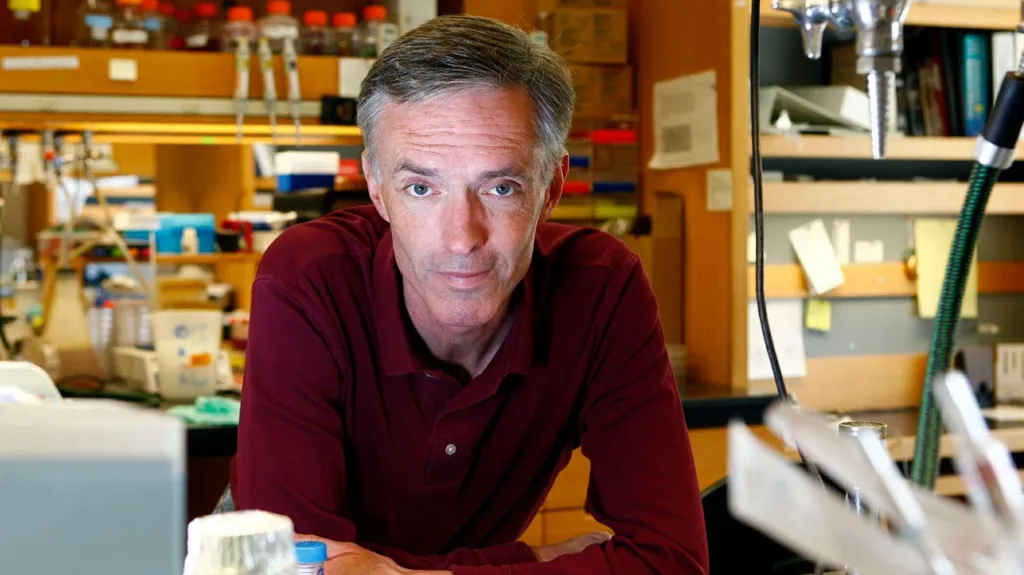
Enter the MIT team, led by James Collins, the Termeer Professor of Medical Engineering and Science in MIT’s Institute for Medical Engineering and Science (IMES) and Department of Biological Engineering, with lead authors Aarti Krishnan, Melis Anahtar, and Jacqueline Valeri. Their solution: use generative AI to explore vast “chemical spaces” and create entirely new molecules with unique mechanisms to outsmart resistant bacteria.
The researchers employed two distinct AI-driven approaches to design antibiotics, showcasing the technology’s versatility.
A strike against Gonorrhea and MRSA
For Neisseria gonorrhoeae, the team started with a library of 45 million chemical fragments. Machine-learning models, trained to predict antibacterial activity, screened these fragments to identify a promising candidate dubbed F1. This fragment became the foundation for two generative AI algorithms: Chemically Reasonable Mutations (CReM) and Fragment-based Variational Autoencoder (F-VAE). These tools generated 7 million F1-containing compounds, which were then filtered for efficacy, safety, and novelty, ensuring they wouldn’t be easily defeated by existing resistance mechanisms.
After rigorous screening, only two compounds could be synthesized in the lab. One, named NG1, proved exceptional. In laboratory tests, NG1 killed drug-resistant N. gonorrhoeae by targeting LptA, a protein critical for bacterial membrane synthesis. This novel mechanism makes it harder for the bacteria to evolve resistance, offering a significant advantage over traditional antibiotics.
For MRSA, the team took a freer approach. Instead of anchoring their design to a specific fragment, they let the AI generate 29 million compounds from scratch, guided only by basic chemical rules. Machine-learning models then filtered these for antibacterial activity and safety, narrowing the pool to 22 compounds that could be synthesized. Six showed strong activity, with the top performer, DN1, clearing MRSA infections in mouse models. DN1 works by disrupting bacterial cell membranes in a unique way, distinct from existing antibiotics, making it a powerful new weapon.
Also read: What is cloud seeding? How Delhi is getting its first artificial rain
Why it’s a game-changer
The MIT team’s AI-driven approach is a departure from traditional drug discovery. By generating and screening millions of compounds computationally, AI drastically reduces the time and cost of finding viable candidates. More importantly, it produces molecules with novel structures and mechanisms, like NG1’s targeting of LptA or DN1’s membrane-disrupting action. These fresh approaches make it tougher for bacteria to adapt, addressing a key challenge in combating resistance.
“This approach allows us to explore chemical spaces that are impractical to search with conventional methods,” Collins explains. “We’re discovering new classes of antibiotics that bacteria haven’t seen before.”
While NG1 and DN1 are promising, they’re not ready for the pharmacy yet. The compounds require further optimization to enhance their potency and ensure safety for human use. Clinical trials, which could take years, are the next step. But the MIT team is already looking forward. In collaboration with Phare Bio, a nonprofit focused on antibiotic development, they’re refining NG1 and DN1 and plan to apply their AI platform to other deadly pathogens, such as Mycobacterium tuberculosis and Pseudomonas aeruginosa.
“We’re just beginning to tap into AI’s potential,” says Krishnan, one of the lead researchers. “This platform could accelerate the discovery of antibiotics for a wide range of resistant bacteria.”
The MIT study, supported by the National Institutes of Health, the Broad Institute, and others, is a powerful example of how AI can tackle humanity’s biggest challenges. As superbugs continue to threaten global health, innovations like these offer a lifeline. By combining cutting-edge technology with scientific ingenuity, the MIT team led by Collins and driven by researchers like Krishnan, Anahtar, and Valeri is paving the way for a future where antibiotic resistance may no longer hold medicine hostage.
For now, NG1 and DN1 are early victories in a long battle. But in the labs of MIT, AI is proving to be a formidable ally in the fight to save lives from the growing threat of superbugs.
Also read: Scientists develop blood test that reveals how fast your organs are aging
 Follow Us
Vyom Ramani
A journalist with a soft spot for tech, games, and things that go beep. While waiting for a delayed metro or rebooting his brain, you’ll find him solving Rubik’s Cubes, bingeing F1, or hunting for the next great snack. View Full Profile


