
Devialet’s Henri Hervé: AI might make premium sound mainstream
 Follow Us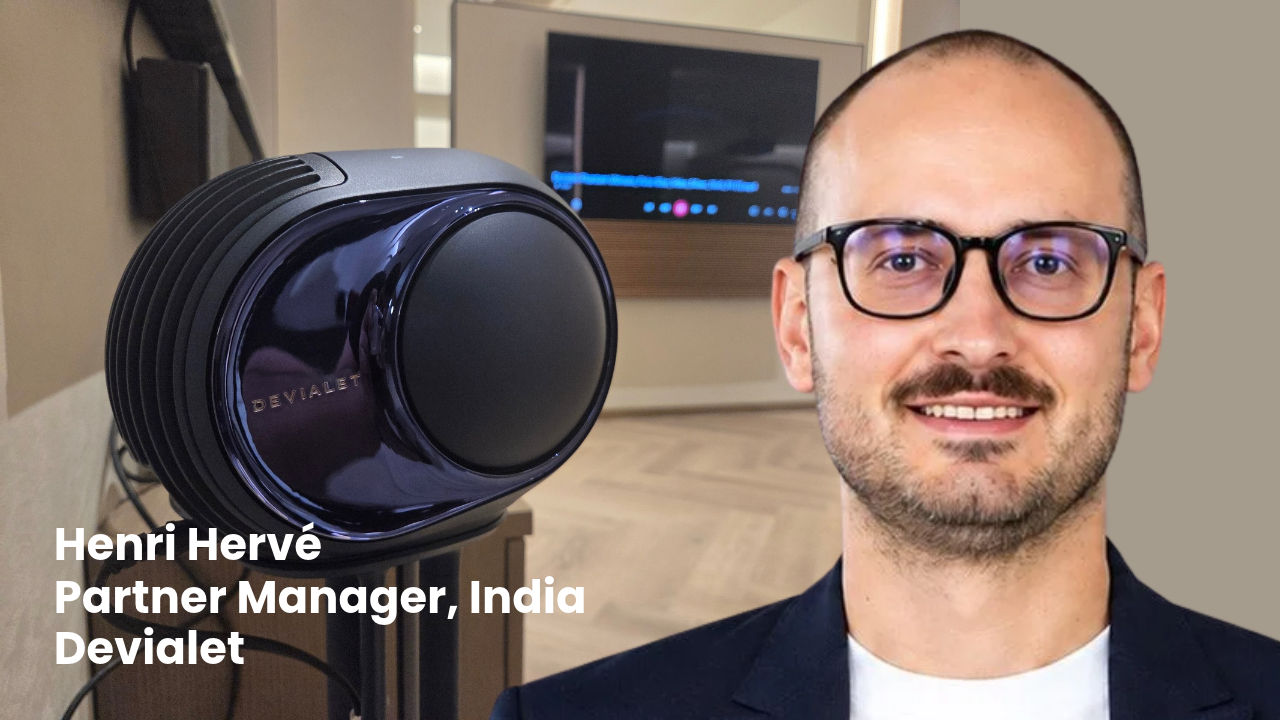

A lakh-rupee speaker is a hard sell in a country still negotiating with fifty-thousand-rupee soundbars. This is the market that Devialet is trying to work with, and this was the question I asked Henri Hervé, Devialet’s Partner Manager for Asia and Technical Solutions Ambassador for APAC, who was visiting India for the launch of the Phantom Ultimate Pulse Blue speaker: will the luxurious speaker ever become mainstream, or will exclusivity be the whole purpose of the product?
 Survey
The response he gave clearly differentiated between two aspects which are easily conflated: the possibility of making the category easier to access, and the willingness of Devialet to do so. The latter he did not deny. The former, however, he did not commit to, nor did he close off.
Also read: Gemini 4 Argon: Google is giving defenders a Cyber AI with no guardrails
First, the Pulse Blue itself
The occasion for the conversation was the Phantom Ultimate Pulse Blue, a limited-edition colorway rather than a new speaker. “In terms of performances, it’s going to be the exact same thing as the Phantom Ultimate 98db,” Hervé said. The attention went into design and color instead: a shade Devialet calls Pulse Blue, tied to the brand’s first global ambassador, Formula One driver Isaac Hadjar of Oracle Red Bull Racing. “Pulse, it’s about speed, alertness, precision,” Hervé said, “and that’s what we bring with our Phantom Ultimate.”
He said that the edition was going to serve a dual purpose in India; it is supposed to be a little drop for the Devialet users who have not yet upgraded from the old Phantom series to the new Phantom Ultimate Series, but at the same time also serve as a gateway to the brand for the F1 fans, who don’t even know Devialet. He further mentioned that it happened to coincide with Ganesh Chaturthi. “Luckily enough, it’s released while we are starting some major festive season in India,” he said, “That’s a very nice coincidence, actually.”
The exclusivity problem
That much is simple. The more difficult question, and the one I was interested in getting at, is what it takes to get someone to buy an Phantom Ultimate in India at all. Indians are budget-minded, Devialet’s least expensive Phantom still costs six figures, and most consumers have not yet reconciled themselves with spending good money on sound.
Also read: Google Fitbit Air vs Noise REP: Price, battery, health tracking and more compared
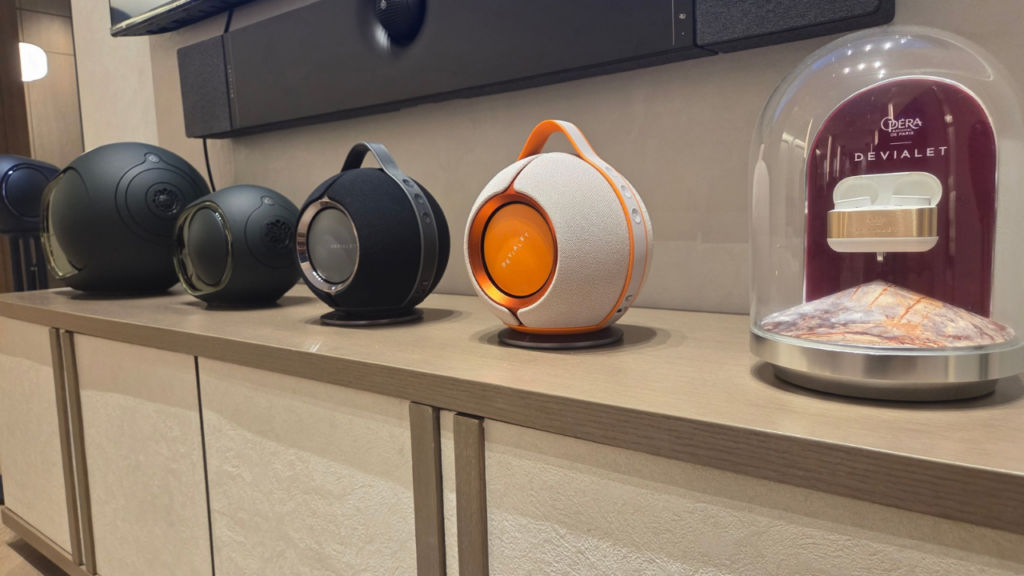
The selling points he offers in order to bridge this gap have nothing to do with specifications. “Music is conveying emotions,” he told me. “If you start letting yourself go from only focusing on the price but focusing on the sound experience, the music and the emotions that is going to bring this system to you, that’s where you start to take people on your side.” This approach involves demo rooms, hotel installations in five-star hotels, and brand partnerships in order to make potential customers experience the product rather than its price.
What Hervé actually said about AI
I asked him directly: is luxury audio, as a category, capable of going mainstream in India, or is that structurally impossible?
“I think you can still elevate sound experience through products that are not going to be that expensive,” Hervé said. But he immediately drew a line between the category-wide possibility and his own employer. “Is it going to be through Devialet? I don’t know. The brand positioning right now is still on the premium and luxury market. I don’t know if Devialet would take the step of going towards much cheaper solutions.”
His case for the category, not Devialet specifically, rested on AI’s potential inside signal processing. “Signal processing has a lot to do with the sound quality or the sound experience from a product,” he said. “You can also imagine that maybe AI would be able to unlock some R&D in signal processing research. You see it with the medical industry. You see some big steps forward in medical imaging. It’s signal processing. So why wouldn’t it allow now on audio signal processing some big steps forward?”
It’s a broad industry-related statement, not a roadmap. As Hervé noted, there were no specific decisions on the matter at Devialet, and “there is nothing that I know for sure about Devialet on how we plan to use AI.” What Hervé did share was his personal guess on where the technology might end up used for the brand – first as a way of understanding how users interact with devices for tuning purposes and much later, maybe, even inside the process itself. “I’m guessing that it could be first about the customer use of our products. And later on, maybe some new technologies that will see the day using AI to unlock some possibilities.”
Proprietary tech over smart features
Every audio brand right now is racing toward “smart” with voice assistants, app ecosystems, adaptive everything. Hervé doesn’t think that’s where the real fight is if you really want to stand out. “I don’t think having smart features is the best way to differentiate yourself,” he said. “It’s still what’s at the core of Devialet. It’s innovation through technologies to provide a breathtaking sound experience.” He points to ADH, SAM and HBI, Devialet’s proprietary technologies, all of which got new generations with the Phantom Ultimate line rather than getting swapped out for smart-feature parity.
Where this leaves things
None of this is Devialet signaling a cheaper future. Hervé was careful on that point every time it came up. What he did say is that the technical ceiling on affordable sound quality isn’t fixed, and that AI is one plausible way that ceiling moves, for the industry broadly.
“I do think it would tend to become more mainstream,” he said, about luxury audio as a segment. “But I’m not sure how many years it would take.” That’s a hedge, not a forecast, and it’s about the category, not about Devialet’s own plans.
Also read: HomePad can finally be the missing piece in Apple’s smart home ecosystem, here is why


