
 E-Magazine
AI handles 37-percent of entry-level tasks, not jobs, says Pearson India
Pearson India survey: AI now handles 37% of entry-level tasks
Employers want graduates who can explain when AI fails
Lack of time is the biggest barrier to AI reskilling

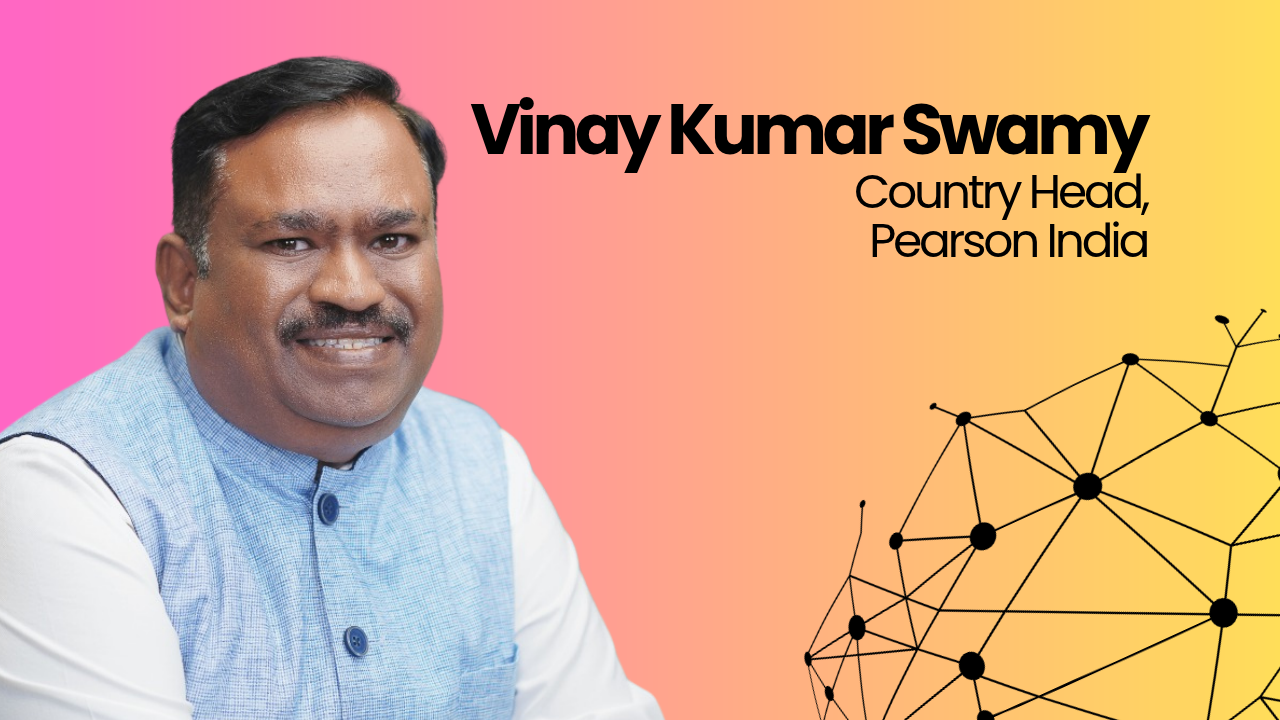
As AI keeps disrupting the future of work, its present consequences are showing up likely in the death of the entry-level job. But there’s more nuance to this, according to Vinay Kumar Swamy, Country Head of Pearson India. He believes AI isn't erasing jobs wholesale so much as rewriting what employers expect from fresh graduates joining the workforce.
"AI is definitely disrupting the market, and there are changes that are happening very quickly," says Swamy, who has led Pearson India for four years, without sugarcoating the problem.
“Almost 37% of the entry-level tasks are managed by AI today,” Swamy claims, based on a Pearson survey on AI readiness at work. The important distinction here is tasks, not jobs. "So, we should not confuse that 37% of the job loss will be there or hiring cuts are going to happen. But it's the changes that are happening."
AI skills beyond just prompt-and-paste
When I suggested to Swamy that AI in the workplace will likely lead to freshers learning from chatbots rather than senior colleagues, Swamy’s response was measured. Knowing how to use the tools, he says, is par for the course now.
"Youngsters know how to use AI tools. Any fresh graduate knows how to prompt a tool, get the output and just copy-paste it. But that's not what the requirement is," suggests Swamy.
What employers actually want, though, is critical engagement. "Questioning the output of an AI, that is more important. And making a judgement call on whether to follow or dismiss AI-generated output or recommendation is what is even more important today. And that's what I would call AI readiness."
He recalls a recent Bengaluru university hackathon where judges wanted more than working solutions. "They wanted the students to come back and tell when AI will likely fail. Because it is not the same answer, it forces people to think."
That’s what AI readiness looks like, according to Swamy. "They should be able to question the output. They should be able to use human judgement. And of course, that cannot be built overnight."
Swamy points at three shifts in terms of AI readiness that employers want. "They do not want people just to know the technology. Secondly, is there a simpler solution without using any AI.” The third is what he calls "trusted evidence,” proof of applied skill rather than certification. " think that is the shift that is happening."
Solving for AI readiness with continuous learning
Employers can't just wait for job-ready graduates to show up. Industry-academia integration needs to be deeper and more present, believes Swamy. "Industry should also put efforts, work with universities because their curriculum becomes stagnant. Curriculum can’t wait to be updated every three years, especially in the AI industry."
With about 55,000 higher education institutions in India, AI readiness curriculum needs to be refreshed at scale. While AI penetration is nearly two and a half times the global average in India, access isn't the problem, because of the government's push on courses and partnerships with learning companies. Swamy’s hoping for effective speed and reach.
"It needs to be at a scale, and we need to also include the bottom of the pyramid." Tier-2 and Tier-3 talent has strong technical skills, he says – what's missing are the capabilities that make people employable.

Despite teething troubles, Swamy remains upbeat. "As AI has opened doors, it's going to definitely reshape a lot of jobs. The only thing is people should be prepared to learn. And reskilling is the need of the hour."
And reskilling can’t be an overnight phenomenon, it needs time. "People should be given time, and then people should be given enough opportunity to use their learnings practically," according to Swamy.
But Swamy also admits that is also the biggest paradox. "The biggest barrier is that, you know, there is no time. We need to create that little bit of space." Just like universities award credits that learners can carry forward, organisations need to offer motivation or incentives to speed up AI adoption through AI readiness training and development, emphasises Swamy.

Jayesh Shinde Executive Editor at Digit. Technology journalist since Jan 2008, with stints at Indiatimes.com and PCWorld.in. Enthusiastic dad, reluctant traveler, weekend gamer, LOTR nerd, pseudo bon vivant.
View full profile