
 E-Magazine
AI earbuds want to remember everything for you, but is that a good idea?

We've all been there. You're in a meeting, someone mentions an important deadline, and by the time you get around to writing it down, you've forgotten the exact date. Or maybe someone recommends a great restaurant, and three days later, all you remember is that it apparently serves excellent pasta.
Nothing thinks it has a solution to problems like these, and interestingly, it involves a pair of wireless earbuds.
The company recently unveiled its upcoming Ear (note), a pair of AI-powered earbuds with a microphone-equipped charging case capable of recording conversations, transcribing them, and generating AI summaries. The case features dedicated Talk and Record buttons, allowing users to capture personal notes or conversations without having to reach for their smartphones.
The Ear (note) is scheduled to launch on December 8, with pricing and complete specifications yet to be announced. But the idea behind it is already worth discussing.
We're moving towards a future where our devices could remember conversations, meetings and information on our behalf. And while that sounds incredibly useful, it also raises an interesting question: how much of our everyday lives do we actually want technology to remember?
There's a genuinely useful idea here
Let's give credit where it's due. AI-powered note-taking is one of those applications of artificial intelligence that solves a fairly ordinary problem.
Instead of concentrating on writing everything down during a meeting, you could focus on the discussion and review a summary afterwards. Students could revisit lectures, journalists could organise interviews, and professionals could keep track of decisions without frantically typing notes.
There's research supporting some of these benefits. A 2026 study published in Cogent Education examined how students used AI transcription tools to prepare meeting minutes. Participants reported that automated transcription reduced the effort involved in taking notes and helped them concentrate on discussions with their supervisors.
The qualitative study involved just 10 students, so its findings shouldn't be treated as universal. However, they support the idea that AI-assisted note-taking can make conversations more productive.
And Nothing's approach has an advantage over dedicated AI recording devices. Earbuds are already something many people carry and use every day. Integrating note-taking into an existing product category could make the technology more accessible without asking consumers to adopt yet another gadget.
The Ear (note) is part of a growing category that includes products such as Plaud's AI recorders and other transcription-focused wearables. In India, it's still a niche category but the appeal is understandable. A searchable record of important conversations could save considerable time. But convenience is only one part of the equation.
When does convenient recording become uncomfortable?
Imagine sitting across from a friend who's wearing AI earbuds. You're having a perfectly ordinary conversation when you realise the device could potentially be recording and transcribing everything you're saying. Would you feel comfortable?
Recording conversations isn't a new concept. Smartphones have been capable of doing it for years. But wearable devices can make recording considerably less conspicuous, particularly when microphones are built into accessories we already use.
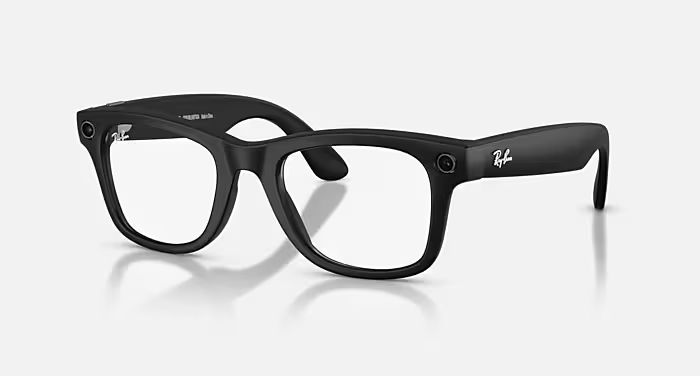
Researchers have been examining this problem. A 2025 IEEE study examining AI wearables, including Meta's Ray-Ban smart glasses and the Plaud NotePin, identified concerns involving consent, passive recording and transparency around how collected information might be used.
Researchers at the MIT Media Lab explored a related problem in 2024 with MeMic, a wearable designed to record only the person wearing it. Their work included an online study involving 168 participants comparing the social acceptability of different recording approaches.
The broader lesson is that making recording technically easy doesn't automatically make it socially acceptable.
To be clear, Nothing isn't proposing that every conversation should be recorded continuously. Its Ear (note) includes physical recording controls, giving users a deliberate way to activate the feature. That's an important distinction.
However, manufacturers will still need to make it obvious when recording is taking place, explain how recordings are stored and processed, and provide users with appropriate privacy controls.
After all, someone agreeing to have a conversation with you hasn't necessarily agreed to have that conversation transcribed, summarised, and stored by an AI service.
Could relying on AI affect how much we remember?
There's another, less obvious question worth asking. If AI remembers everything for us, will we become less inclined to remember things ourselves? We've already outsourced plenty of everyday memory tasks to technology. Our phones remember appointments, passwords, birthdays, and directions. AI-generated notes could become another extension of that convenience.
But taking notes also serves a purpose beyond creating a written record. The process of identifying important information, organising it, and writing it down can help us understand and remember it.
A 2025 research paper on AI-supported note-taking explored this relationship through an experiment involving 30 participants. The researchers compared different levels of AI assistance and examined how automation influenced cognitive engagement.
The findings suggested that greater AI assistance could reduce the mental effort participants invested in the material, raising questions about how much of the note-taking process should be automated. This doesn't mean AI notes are inherently bad for memory. In fact, being able to revisit an accurate transcript could be extremely helpful.
The question is whether we're using AI to support our understanding or allowing it to replace the effort involved in understanding something. And there's a practical problem too. AI-generated summaries aren't always perfect.
The 2026 Cogent Education study also found that participants encountered incomplete transcripts, missing details, and misinterpretations. For an informal conversation, those errors might be harmless. In a business meeting or interview, a misunderstood statement could have more serious consequences.
Having a transcript to verify an AI-generated summary may therefore be just as important as the summary itself.
The next big feature in earbuds might have nothing to do with sound
For years, wireless earbuds have largely competed on familiar features: sound quality, active noise cancellation, battery life, and connectivity. Products such as Nothing's Ear (note) suggest that the category could evolve beyond audio playback into something closer to a personal AI assistant. For people who regularly deal with large amounts of spoken information, that could be genuinely valuable.
But the success of these products will depend on more than transcription accuracy. Manufacturers will also need to establish trust, offer meaningful privacy protections, and demonstrate why consumers should pay for AI features they might already access through their smartphones.
Nothing's upcoming Ear (note) is an interesting step in that direction. Its combination of familiar earbuds and dedicated recording controls makes the concept more approachable than carrying a separate AI recorder.
Whether it delivers on that promise is something we'll only know after the product launches. For now, the bigger question is how much responsibility we're comfortable handing over to our devices.

Dhriti Datta Dhriti is the Head of Test Labs and Reviews at Digit. Her fascination with technology began at 13, when she started rooting Android phones and experimenting with custom ROMs, often learning the hard way what not to flash. What started as curiosity soon became a passion for understanding how technology works and how it shapes our everyday lives. With a postgraduate background in journalism and creative writing, she brings together her love for gadgets and storytelling to cover consumer technology, AI, and the latest developments in the tech industry. She particularly enjoys exploring technology through in-depth features, reviews, and videos. When she isn't testing gadgets or chasing her next story, you'll likely find her lost in fiction, gaming late into the night, or eating an irresponsible amount of bacon.
View full profile