Delhi tries cloud seeding to trigger artificial rain and clear dangerous pollution from its choking air.
First artificial rain project in Delhi uses science to battle smog with cloud seeding technology
Cloud seeding aims to bring rain, offering hope against Delhi’s persistent pollution and toxic skies.

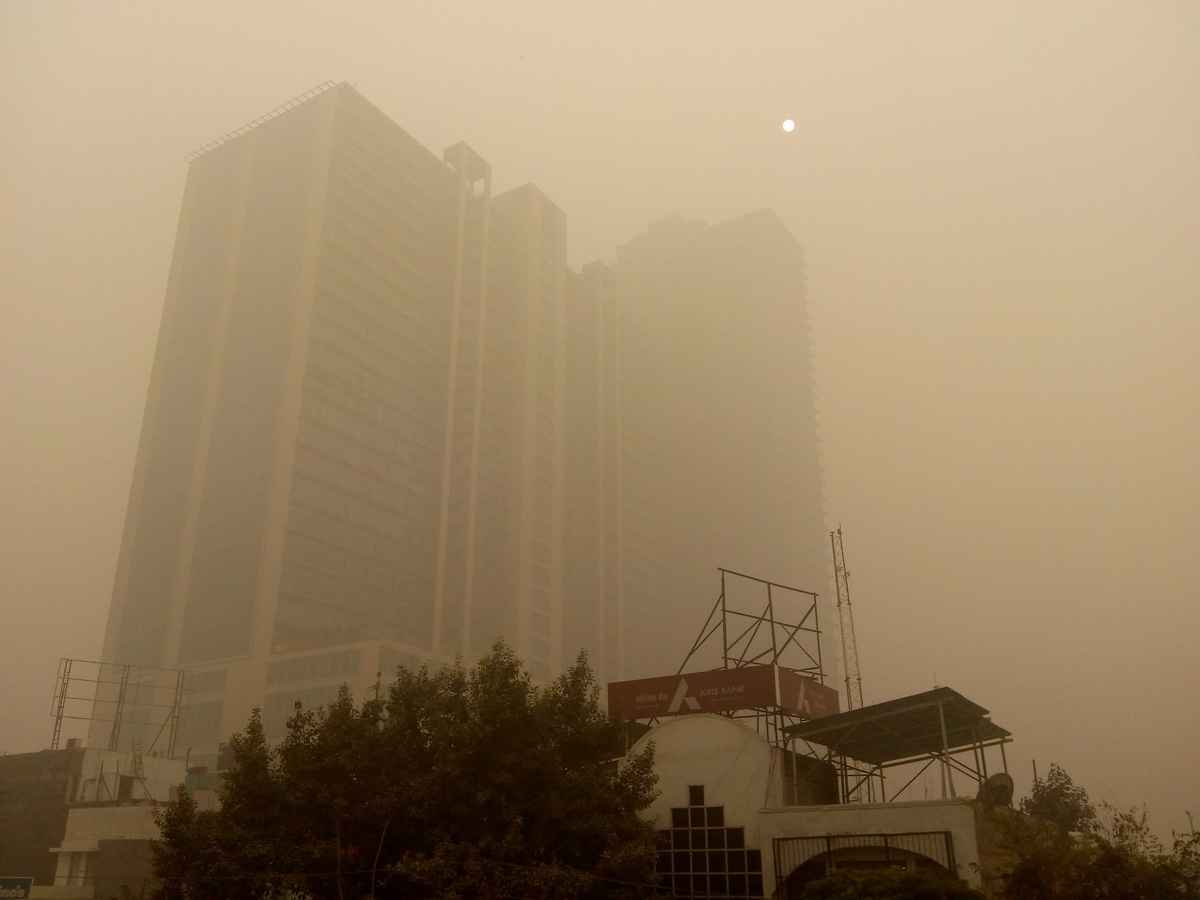
In the height of Delhi’s oppressive smog season, as the city’s skyline disappears into a grey haze and residents gasp beneath masks and air purifiers, an unusual hope is rising from the clouds above. For the first time in its history, India’s capital is turning to science to coax the skies into helping: artificial rain through cloud seeding.
 Survey
It sounds almost like science fiction, making rain on demand, but cloud seeding has been a part of weather modification toolkits worldwide for decades. What makes Delhi’s case remarkable is that this isn’t about irrigation or boosting crops. This is about survival in a city suffocated by pollution.


Also read: As AQI in Indian Cities Decay, In-House Air Quality Solutions Rise
What is cloud seeding, really?
At its core, cloud seeding is a method of nudging the atmosphere to produce more rain or snow than it might have otherwise. It works on a simple principle: clouds are full of tiny water droplets or ice crystals, but not all of them fall as rain. They often need help to clump together into drops heavy enough to fall to the ground.
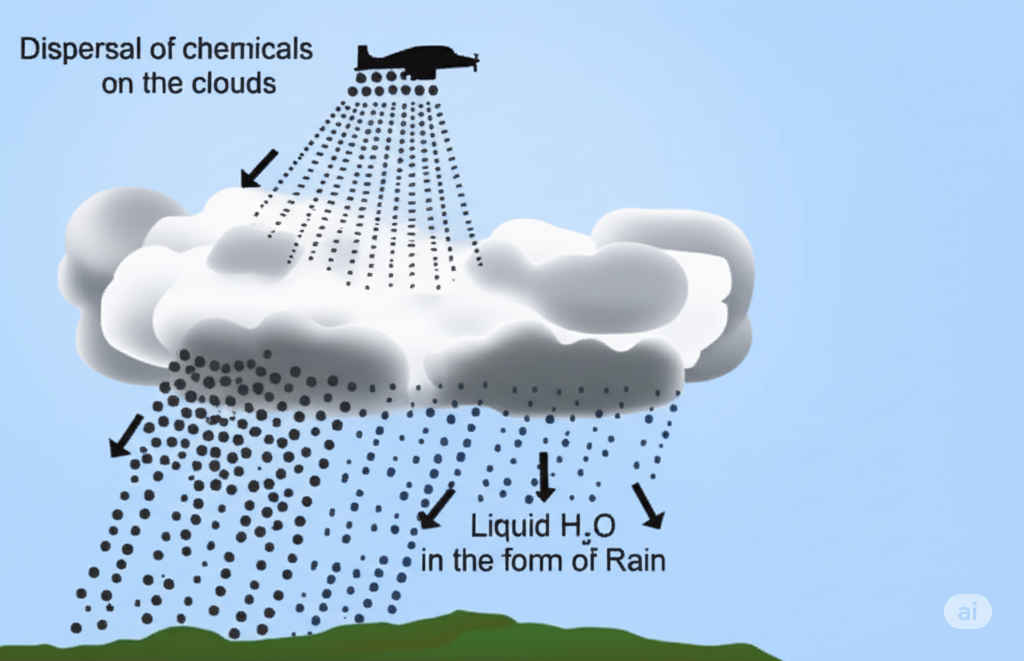
This is where cloud seeding comes in. Planes or ground-based machines disperse tiny particles, usually silver iodide, potassium iodide, or various salts like table salt or rock salt into the clouds. These particles act as a kind of scaffolding, or “nuclei,” around which moisture can gather and grow. The aim is to speed up or enhance the natural process that turns clouds into rain.
But cloud seeding is not a magic wand that summons rain from clear skies. It can only work on existing clouds that already have enough moisture. The success of any attempt depends heavily on the presence of the right kind of clouds and the prevailing weather conditions.
Also read: UBC’s Quantum “Translator” Chips: Explained
There are different approaches to cloud seeding. Static seeding involves introducing substances like silver iodide into clouds to encourage water droplets to form. Dynamic seeding aims to intensify the natural upward air currents in clouds, making them grow and produce more rain. Hygroscopic seeding, on the other hand, uses salts to draw moisture in the lower parts of clouds, helping smaller droplets merge into larger ones. Whatever the method, the objective is the same: to make existing clouds more productive, to turn potential into precipitation.
Delhi’s artificial rain experiment
Between July 4 and 11, 2025, Delhi plans to launch its first artificial rain mission. The operation is being led by IIT Kanpur in collaboration with the India Meteorological Department (IMD), with the backing of the Delhi government.
The reason? To battle the capital’s persistent air pollution. By triggering rain, authorities hope to wash away harmful particulate matter that lingers in the atmosphere, creating a temporary but much-needed improvement in air quality.
Modified Cessna aircraft will fly over northwest and outer parts of the city, releasing a calculated mix of silver iodide nanoparticles, iodised salt, and rock salt into moisture-rich clouds. Each sortie is expected to cover about 100 square kilometres in a 90-minute flight. At least five flights are planned during the trial period. The budget for the operation is Rs 3.21 crore, a small price in the face of Delhi’s annual pollution crises.
But this isn’t just about technical details. The operation represents a turning point in how the city approaches environmental emergencies. It is a move that combines hope, science, and necessity.
Taking a cautious step
Cloud seeding has been tried before in parts of India, especially in drought-hit regions of Maharashtra and Karnataka. But this is the first time it is being deployed to combat pollution in a major city. The results are far from guaranteed. The entire effort depends on the cooperation of the weather, if the right clouds don’t appear, there is nothing to seed.
Still, in a city desperate for cleaner air, even the chance of rain offers a glimmer of relief. Delhi’s artificial rain experiment is not just about making it rain. It is about reimagining how a city can harness science to survive in an era of climate extremes and environmental peril.
 Follow Us
Vyom Ramani
A journalist with a soft spot for tech, games, and things that go beep. While waiting for a delayed metro or rebooting his brain, you’ll find him solving Rubik’s Cubes, bingeing F1, or hunting for the next great snack. View Full Profile


