Satya Nadella says AI must earn its energy use by delivering real-world impact, not just hype.
Healthcare, education, and bureaucracy are AI’s real tests, not synthetic benchmarks, says Microsoft CEO.
From EMRs to mortgages, Nadella outlines how AI can fix inefficiencies and improve everyday life.
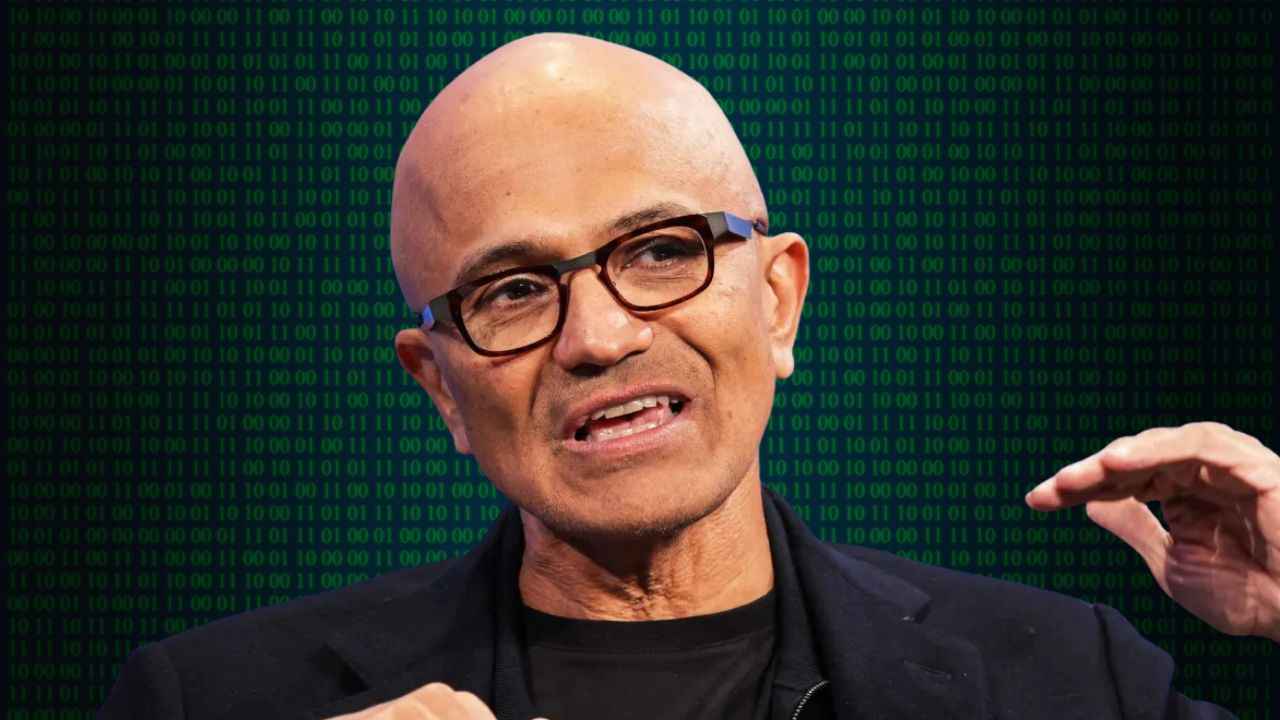
Microsoft CEO Satya Nadella has a clear message for the tech industry: AI’s true benchmark isn’t found in flashy demos or benchmark tests, it’s in whether it makes a meaningful, measurable difference in people’s lives. Speaking candidly in a recent conversation, Nadella laid out his philosophy on the future of AI, the importance of social responsibility, and how the next five years could determine whether this technology justifies its immense energy demands.
 Survey
The real benchmark for AI progress is whether it makes a real difference in people’s lives — in healthcare, education, and productivity.
— Satya Nadella (@satyanadella) June 25, 2025
Thanks to @ycombinator for having me at AI Startup School. pic.twitter.com/o54T268cpA


AI must earn its energy
“If you’re going to use energy, you better have social permission to use energy,” Nadella said, pointing to a fundamental question that lies at the heart of the AI boom. With AI training and deployment consuming increasing amounts of electricity, from massive model training runs to everyday inference, the onus, according to Nadella, is on the industry to prove that this energy use translates to societal benefit.
Also read: What is Gentle Singularity: Sam Altman’s vision for the future of AI?
Nadella argued that it’s not enough for AI to wow on synthetic tests or in lab conditions. Instead, it must deliver social surplus, clear economic and community-level improvements. “If we really are not creating social surplus, economic surplus, as measured by countries and communities, we just can’t consume energy,” he said. In other words, AI must justify its existence in real-world utility, not just abstract innovation.
Real-world impact over theoretical AGI
While much of the AI world obsesses over the race to artificial general intelligence (AGI), Nadella redirected attention toward something far more grounded: making life easier for everyday people. He gave a simple yet powerful example – mortgage approvals.
“You get a mortgage loan and instead of three months or two months of waiting around… those things could potentially go away,” he said. He imagines an AI-powered future where the bureaucratic nightmares of paperwork-heavy tasks from housing to healthcare are drastically reduced or even eliminated.
Also read: Microsoft accused of using 2 lakh copyrighted books for AI training: Here’s what happened
In Nadella’s view, it’s these kinds of applications, not AGI milestones or model parameters, that will define AI’s legacy. The success of AI will not be judged in labs, but in how efficiently it handles the tasks that currently waste human time and productivity.
Fixing the hidden costs in healthcare
Nowhere is this more apparent than in healthcare. In the U.S., nearly 18–19% of GDP is spent on healthcare, yet much of that cost isn’t due to breakthrough medicines or surgeries, it’s inefficiencies in workflow. “Everybody talks about the magical drug, blah, blah, blah… except all of the cost is in workflow,” Nadella noted bluntly. From administrative overload to slow hospital discharges, he believes AI, particularly large language models (LLMs) applied to electronic medical records can drastically cut down waste.
He offered a specific case: discharge management. “You take the backend of an EMR system with just an LLM and a prompt, that itself is going to save so much time and money and energy that it would sort of pay for itself.” In this vision, AI doesn’t have to be revolutionary, it just has to make systems less broken. That’s where the real value lies.
For Nadella, the path forward is clear: prove it. The burden is on the tech industry to show that AI is producing measurable improvements in productivity, education, and health outcomes. This isn’t about marketing slides or optimistic forecasts, it’s about hard data. “If we’re not showing up in real stats… that is not just an AGI or AI benchmark,” he emphasized. And Microsoft, under Nadella’s leadership, appears focused on exactly that kind of impact.
By shifting the spotlight from grand ambitions to everyday usefulness, Nadella may be offering a blueprint not just for responsible AI development but for a more human-centered technological future.
Also read: What is Microsoft’s Mu: A small AI model for Windows 11 Settings
 Follow Us
Vyom Ramani
A journalist with a soft spot for tech, games, and things that go beep. While waiting for a delayed metro or rebooting his brain, you’ll find him solving Rubik’s Cubes, bingeing F1, or hunting for the next great snack. View Full Profile


