Tech CEOs agree change is coming, so does AI means prosperity or pain for workers?
From job loss to wage boosts, each leader offers a distinct survival guide for the AI era
It’s not man versus machine, it’s man with machine, or replaced by those who know how
There’s a quiet storm rolling across the professional world, and it speaks Python, predicts like a prophet, and never asks for a coffee break. Artificial intelligence is no longer knocking at the door of human employment, it’s inside, rewriting the job description.
 Survey
So what happens next? Mass unemployment? A golden age of productivity? Depending on who you ask in Silicon Valley, the answer is “yes” to all of it.


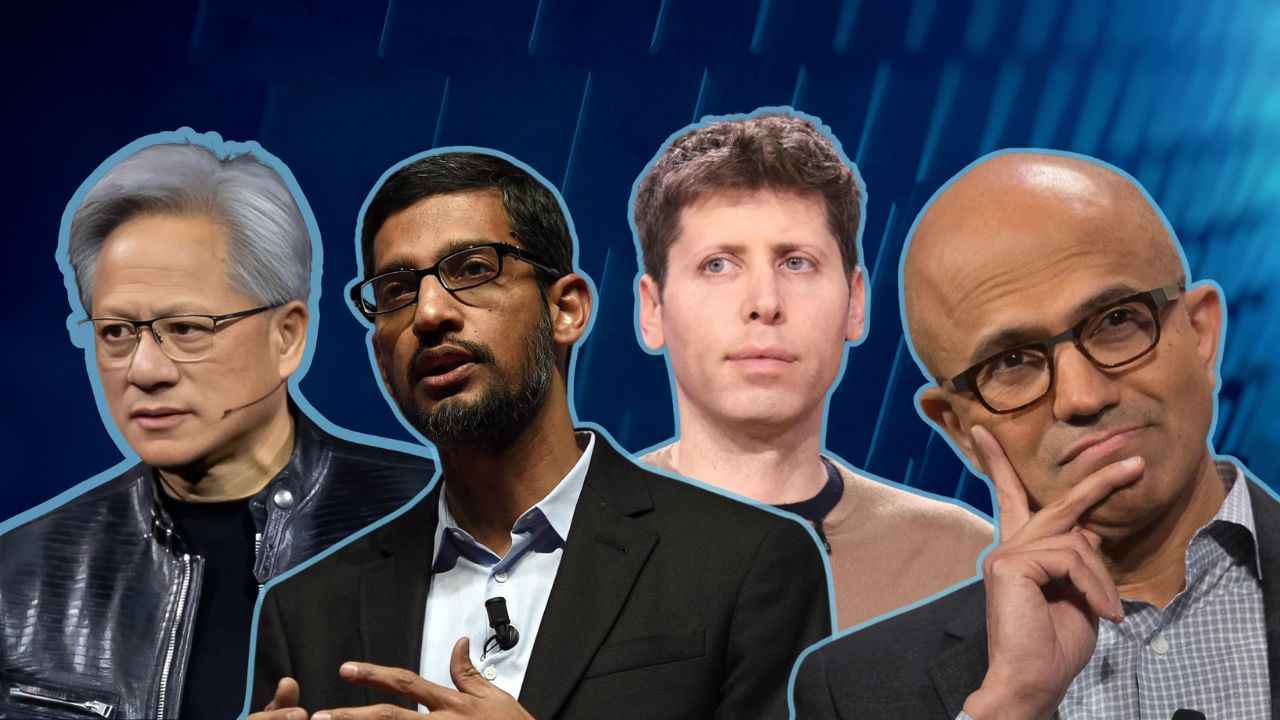
At the center of this storm stand the modern tech oracles: Sam Altman (OpenAI), Jensen Huang (NVIDIA), Sundar Pichai (Google), and Satya Nadella (Microsoft). Their companies build the tools reshaping work as we know it. But what do they really think AI is going to do to our jobs?
We looked past the press releases and into the quotes from each leader, and what we found is a conversation far more complex (and honest) than corporate optimism usually allows.
Also read: What is Gentle Singularity: Sam Altman’s vision for the future of AI?
Sam Altman, OpenAI CEO, on AI replacing human jobs
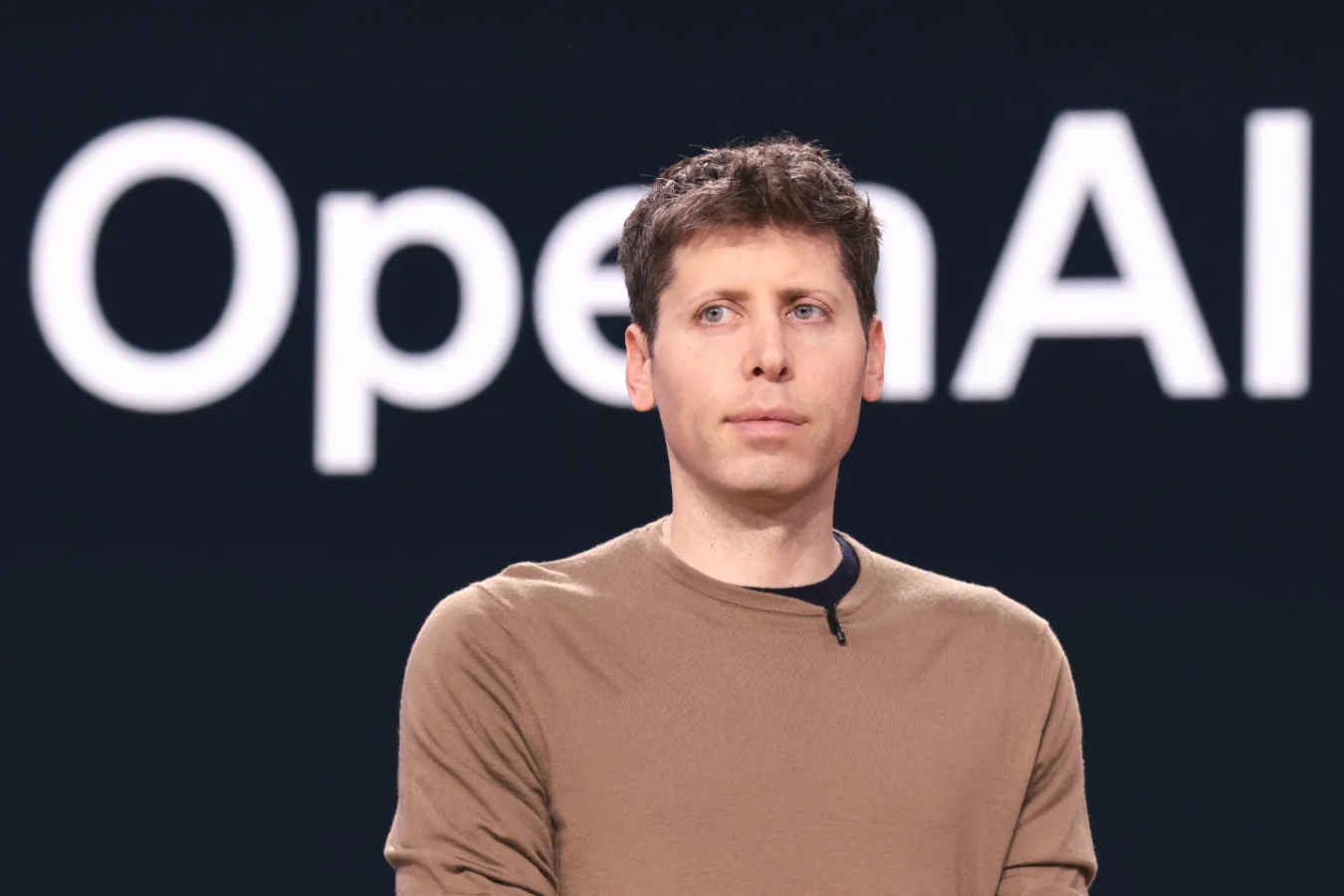
Sam Altman is both evangelist and alarm bell for artificial intelligence. He’s not sugarcoating anything anymore.
In a blog post, he wrote, “There will be very hard parts like whole classes of jobs going away, but on the other hand, the world will be getting so much richer so quickly.” Altman’s candid acknowledgment of job displacement reflects a sobering reality: AI, like ChatGPT and its successors, could render entire professions obsolete. Yet, he remains optimistic, adding, “I am very confident that people will figure out what to do about that.” His faith in human adaptability suggests a belief that society can navigate this upheaval, provided it acts swiftly to harness AI’s wealth-generating potential.
Jensen Huang, NVIDIA CEO, on the rise of the AI-powered worker
No one has profited more directly from the AI explosion than NVIDIA CEO Jensen Huang, whose GPUs are now the gold standard for AI infrastructure.
Nvidia’s CEO, Jensen Huang, sees AI as a transformative force that demands proactive engagement. Speaking at the VivaTech conference in Paris in June 2025, he said, “Some jobs will be obsolete, but many jobs are going to be created. Whenever companies are more productive, they hire more people.” Huang’s view underscores a dynamic labor market where AI-driven productivity could fuel job growth, but only for those who adapt. He doubled down on this at the Milken Institute Global Conference in May 2025, warning, “You’re not going to lose your job to an AI, but you’re going to lose your job to someone who uses AI.” For Huang, the key to surviving AI’s rise is embracing it as a tool, not fearing it as a replacement.
Sundar Pichai, Google CEO, on chasing breakthroughs over job safety
Google’s CEO, Sundar Pichai, takes a more reserved stance, focusing on AI’s technical trajectory rather than its immediate labor implications. At the DealBook Summit in December 2024, he remarked, “The hill is steeper … You’re definitely going to need deeper breakthroughs as we get to the next stage.” While Pichai didn’t directly address job loss, his comments about AI’s challenges and corporate benefits, like cost savings and efficiency, hint at a future where businesses gain more than workers. Google’s heavy investment in AI, from Gemini to quantum computing, suggests Pichai is prioritizing innovation over short-term labor concerns, leaving questions about job displacement unanswered.
Satya Nadella, Microsoft CEO, on AI making work more valuable
Also read: AI will affect these jobs in the coming years: Is yours on the list?
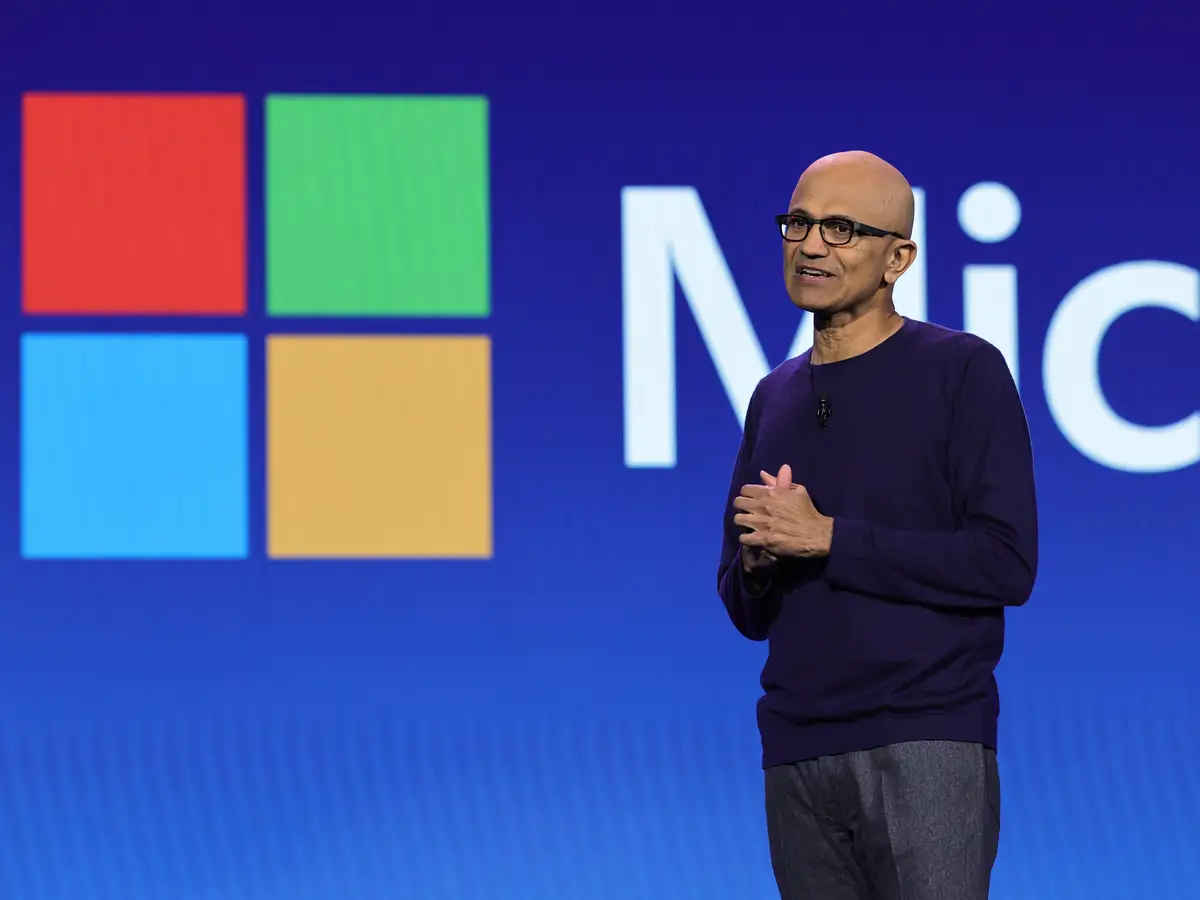
At Microsoft, Satya Nadella isn’t sounding the alarms—he’s flipping the script. AI, he argues, isn’t a job killer but a wage raiser. In interviews with Yahoo Finance and Fortune, Nadella insists that instead of replacing workers, AI will amplify expertise, allowing employees to deliver more value and, in turn, earn more. “Instead of taking jobs,” he said, “AI will help increase wages, as employees can provide more expertise.” It’s a vision of AI as a productivity engine, one that could lead to workers capturing a greater share of economic growth. Nadella doesn’t deny that the labor landscape is shifting, but he frames it as an evolution, not an elimination. Microsoft’s own internal data already shows a significant chunk of code being written by AI tools like GitHub Copilot, but the focus is on freeing up humans for higher-order thinking, not phasing them out. His bet is that in the long run, AI won’t shrink the workforce, instead it’ll redefine what human work is worth.
So, who’s right?
It turns out all four leaders agree on one thing: change is inevitable. Whether you call it disruption, transformation, or a reckoning, AI is rewriting what it means to work.
- Altman warns us.
- Huang challenges us.
- Pichai reassures us.
- Nadella reorganizes us.
Together, their words paint a picture that’s both exhilarating and unnerving. The next decade won’t be about man vs machine. It will be about man with machine, or man replaced by those who are.
You don’t have to beat the AI. You have to partner with it. And if you’re not learning how to do that, you may not be unemployed tomorrow but someone who is will be closer to running the world.
Also read: Will AI take your job? Alphabet CEO Sundar Pichai says it is an accelerator, not a threat
 Follow Us
Vyom Ramani
A journalist with a soft spot for tech, games, and things that go beep. While waiting for a delayed metro or rebooting his brain, you’ll find him solving Rubik’s Cubes, bingeing F1, or hunting for the next great snack. View Full Profile


