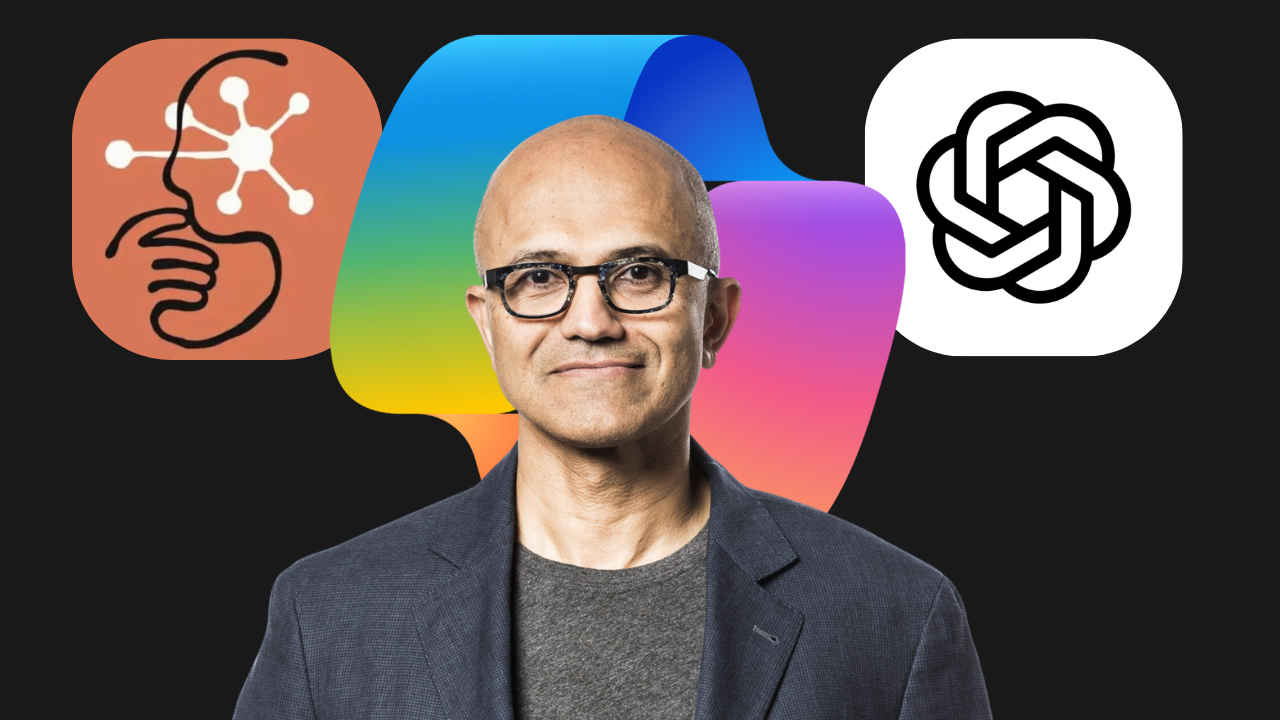
For years, Microsoft’s artificial intelligence strategy seemed almost synonymous with OpenAI. From its multibillion-dollar investment to the deep integration of GPT models into Office 365, Teams, and Azure, the Redmond giant positioned OpenAI as its flagship AI partner. But with Anthropic’s Claude models now entering Microsoft products, the company is signaling a new phase: one where no single AI partner dominates.
 Survey
This diversification raises big questions: what does it mean for Microsoft’s enterprise customers, for OpenAI’s role in its ecosystem, and for the future of generative AI itself?


Also read: Microsoft plans to reduce OpenAI reliance by integrating Anthropic AI into Office 365 apps
Why Microsoft is turning to Anthropic
At first glance, the decision to bring Anthropic’s Claude Sonnet 4 into Office 365 looks like a simple case of adding more horsepower. In practice, it’s about hedging risk.

Relying too heavily on one vendor leaves Microsoft exposed, technologically, financially, and politically. By integrating Anthropic, the company reduces dependence on OpenAI while gaining access to alternative capabilities, like Claude’s strengths in generating polished slides, handling nuanced financial data, and maintaining guardrails around sensitive content.
Adding Anthropic isn’t free. Microsoft gets OpenAI’s models at no additional licensing cost due to its deep partnership, but Anthropic access runs through AWS, a rival cloud provider. That means Microsoft is effectively paying a competitor to bolster its own ecosystem.
The move shows how important flexibility has become. Just as enterprises once embraced multi-cloud strategies to avoid vendor lock-in, Microsoft is signaling the same philosophy with AI. The trade-off: higher costs today in exchange for long-term bargaining power and resilience.
What this means for OpenAI
OpenAI remains central to Microsoft’s AI identity, powering Copilot across Word, Excel, Outlook, and more. But Anthropic’s arrival hints at a subtle shift.
- It reduces OpenAI’s exclusive hold over Microsoft products.
- It signals to investors and customers that Microsoft won’t tie its destiny to one company.
- It could push OpenAI to accelerate innovation or adjust pricing as competition tightens inside Microsoft’s ecosystem.
In short, Anthropic’s inclusion isn’t a betrayal, it’s a strategic counterweight.
Also read: Anthropic explains how AI learns what it wasn’t taught
The user perspective
For everyday Office 365 users, this diversification might not be immediately visible. But under the hood, the changes could be significant:
- Excel might lean on Anthropic for complex financial analysis.
- PowerPoint could tap Claude’s reputation for clean, structured outputs.
- Word and Outlook may still rely on OpenAI’s GPT models for natural language mastery.
Over time, Microsoft could even introduce model-agnostic Copilot features, where tasks are routed to the AI best suited for the job. That would mark a real leap forward in enterprise AI usability.
The future of Microsoft’s AI s trategy
By weaving Anthropic into its portfolio, Microsoft is acknowledging a new reality: the age of the AI multiverse, where no single model reigns supreme.
This strategy offers flexibility in adapting to strengths and weaknesses across providers and a choice for enterprises demanding transparency about which model powers their workflows.
The downside? Rising costs and potential complexity in product consistency. But for Microsoft, the bet is clear: a diversified AI stack today secures its relevance in an unpredictable future.Microsoft’s embrace of Anthropic doesn’t replace OpenAI – it reframes it. In the battle of Anthropic vs OpenAI, the real winner might be Microsoft itself, if it can balance the strengths of both and keep enterprise trust intact.
Also read: Fair use vs copyright: Anthropic’s case and its impact on AI training
 Follow Us
Vyom Ramani
A journalist with a soft spot for tech, games, and things that go beep. While waiting for a delayed metro or rebooting his brain, you’ll find him solving Rubik’s Cubes, bingeing F1, or hunting for the next great snack. View Full Profile


