A comparison of ChatGPT’s Study Mode and Gemini’s Guided Learning for student productivity
Explores how Google and OpenAI are redefining AI-powered study tools with unique learning experiences
Your learning style decides whether structure or flexibility helps you study smarter
In the age of AI tutors, the way we study is undergoing a quiet but radical transformation. Just a year ago, students were asking ChatGPT to explain tough homework questions or summarize dense textbooks. But what was once a workaround is now evolving into something more intentional: AI as a structured learning companion. Instead of just giving answers, these tools are learning to teach.
 Survey
OpenAI took the first step with its Study Mode, a dedicated feature inside ChatGPT that focuses on helping students actually understand what they’re studying. Now, Google has responded with Guided Learning, a new Gemini-based mode designed to deliver a more structured, visual, and lesson-like experience.


The result? Two of the world’s most advanced AI systems are going head-to-head for the role of your digital study buddy. But they take very different paths to get there.
Also read: Study mode in ChatGPT explained: How students can use AI more effectively
ChatGPT’s Study Mode: The conversational coach
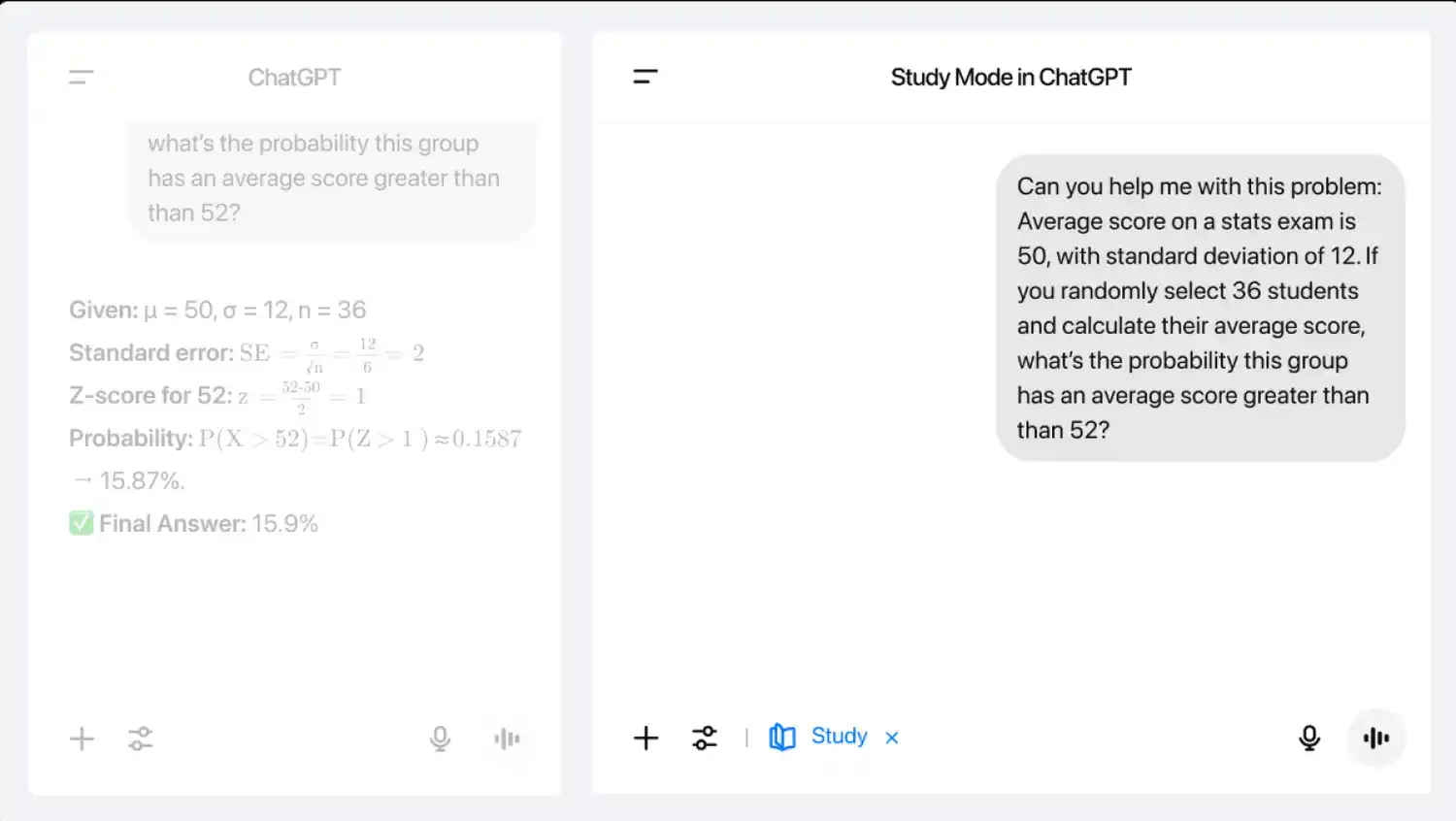
OpenAI’s Study Mode feels like sitting across from a helpful, endlessly patient tutor. You enter a topic – photosynthesis, statistics, ancient history – and it walks you through the core ideas with adaptive, back-and-forth dialogue. You can stop to ask, “Wait, what does that mean?” or ask it to quiz you, and it recalibrates in real time.
This strength, being flexible and reactive, makes Study Mode great for exploratory learning. It’s like having a smart, responsive coach who adjusts to your pace, fills in the gaps, and keeps the tone light and accessible.
But it’s not without its trade-offs. The experience is heavily text-based unless you’re using GPT-4o, which can handle visuals and voice. There’s also no default path or lesson structure; you guide the session, which can be both empowering and overwhelming, depending on your learning style.
Gemini’s Guided Learning: The visual instructor
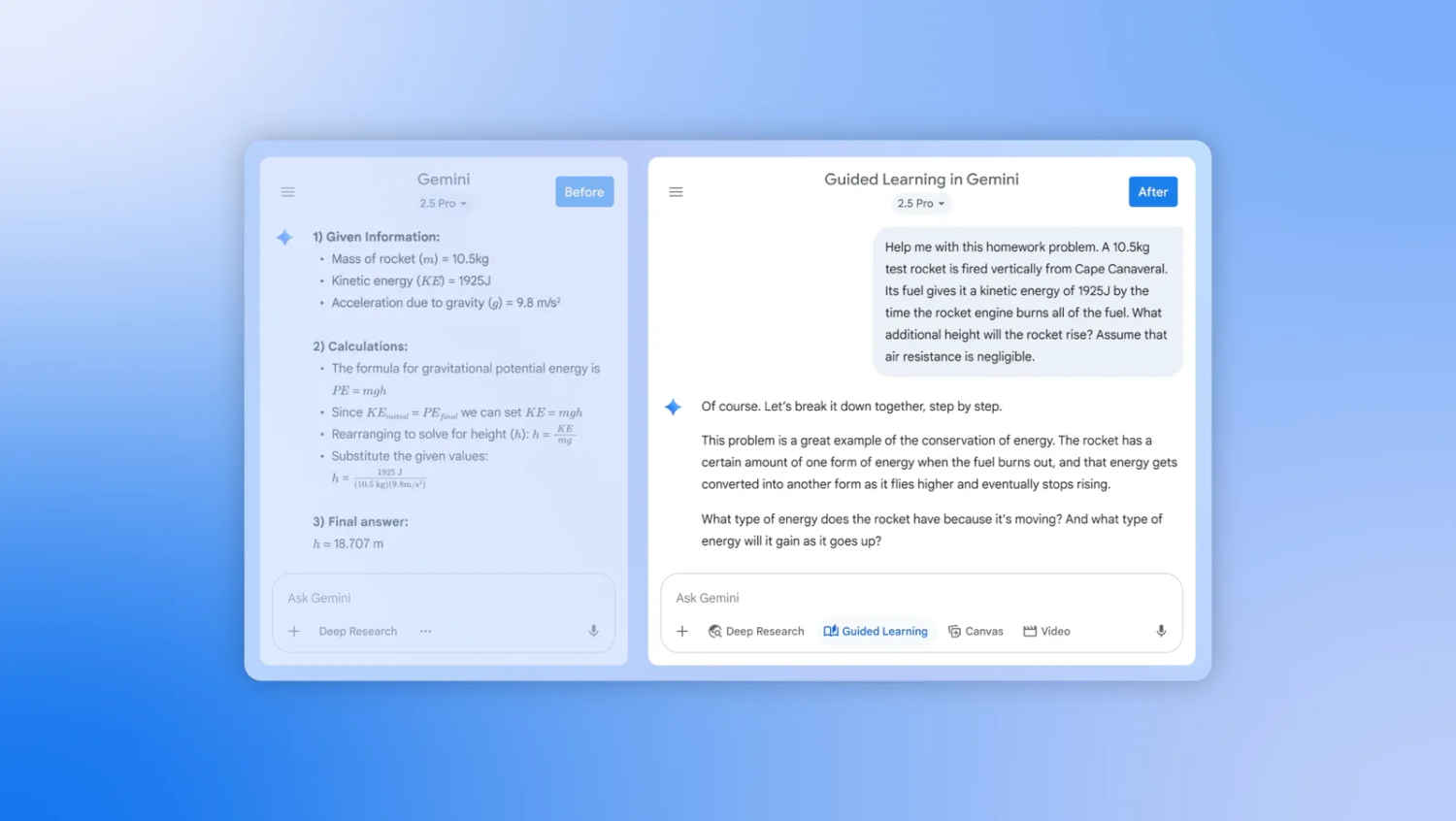
Google’s Guided Learning flips the approach. Instead of an open conversation, it delivers content in clearly structured modules: definitions, visual diagrams, real-world examples, and checkpoint quizzes, all in a single, scrollable view.
It feels more like an interactive digital textbook or a slide-based lesson, complete with embedded YouTube explainers and progress tracking. Want to learn about Newton’s laws? Gemini shows you step-by-step motion diagrams, animates examples, and ends with a short quiz to test what you absorbed.
Also read: Anthropic explains how AI learns what it wasn’t taught
It’s less chatty than ChatGPT, but far more organized. This is ideal for visual learners or those who prefer bite-sized lessons with clear goals. It also helps reduce the temptation to “shortcut” learning, since the system nudges you through an entire concept rather than just giving you the answer.
And the bigger play is clear: Google is integrating this into its broader education push, with free Gemini Pro access for students and a $1 billion investment in AI-powered learning tools.
Head-to-head: Key differences
| Feature | ChatGPT Study Mode | Gemini Guided Learning |
| Learning Style | Conversational and adaptive | Structured and visual |
| User Experience | Freeform back-and-forth chat | Scrollable, lesson-based content |
| Visual Aids | Limited (text + GPT-4o) | Rich visuals, YouTube embeds |
| Quiz Support | Flashcards, dynamic questions | Built-in quizzes and summaries |
| Flexibility | Highly open-ended | Guided, topic-by-topic format |
| Best For | Curious self-learners | Visual and structured learners |
Both tools represent serious attempts at rethinking AI’s role in education. And both succeed, but in different ways. If you like asking questions, jumping between ideas, and getting real-time feedback, ChatGPT’s Study Mode is the better fit. It’s like a Socratic tutor: always listening, always responding. If you want a clear path through complex material, with visual explanations and built-in progress tracking, Gemini’s Guided Learning feels more like an online course or an upgraded Khan Academy module.
You don’t need to pick just one. Many students may use ChatGPT to explore, then Gemini to reinforce what they’ve learned or vice versa. One gives you freedom, the other gives you structure. This isn’t just a battle of two tools. It’s a sign of where education itself is heading. The next generation of learners won’t just use AI to finish homework faster, they’ll use it to understand the why behind the answers.
Google and OpenAI aren’t replacing teachers. But they are reshaping what self-paced, personalized education looks like. Whether you lean toward Gemini’s visuals or ChatGPT’s flexibility, one thing’s clear: the classroom of the future will have an AI sitting right beside you.
Also read: Persona Vectors: Anthropic’s solution to AI behaviour control, here’s how
 Follow Us
Vyom Ramani
A journalist with a soft spot for tech, games, and things that go beep. While waiting for a delayed metro or rebooting his brain, you’ll find him solving Rubik’s Cubes, bingeing F1, or hunting for the next great snack. View Full Profile


