
Amazon Echo Show 11 review: Amazon’s most complete smart display yet
 Follow Us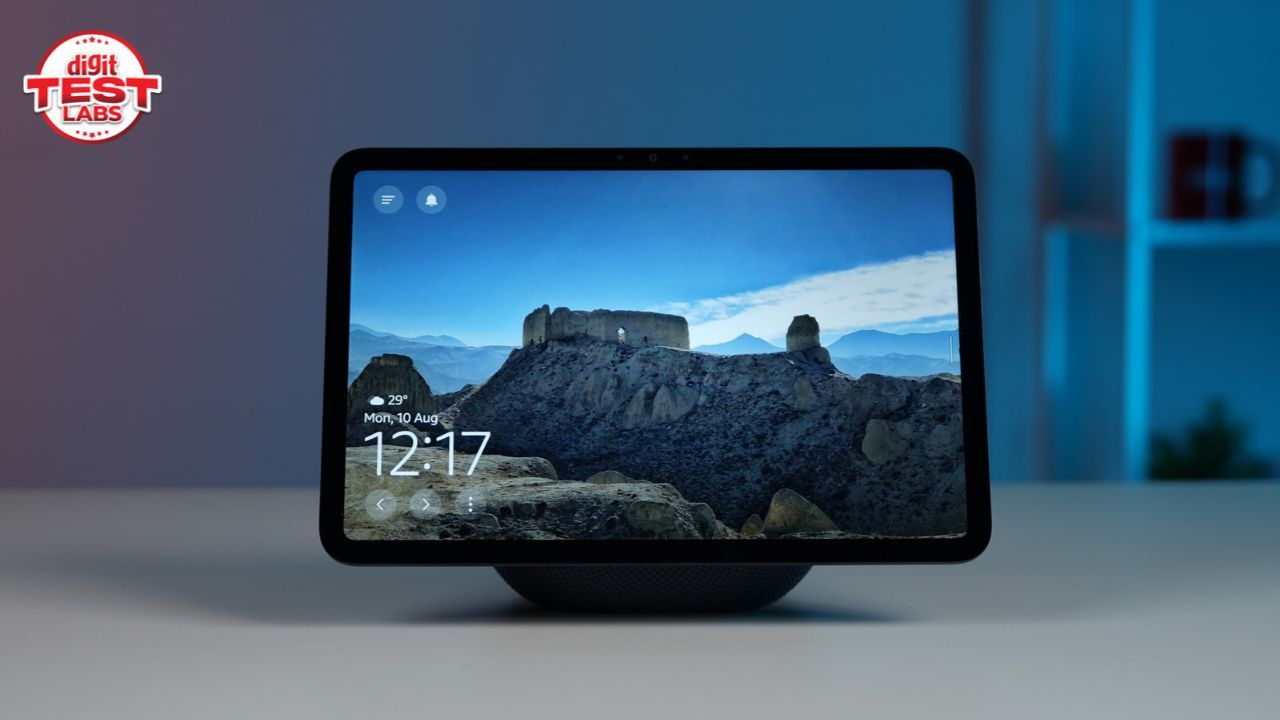

Smart displays have always occupied an odd position in India: a category whose utility is obvious to anyone who has used one, yet one that has never quite crossed into mainstream adoption. The reasons are familiar enough: too few devices worth buying, too little awareness of what they actually do and a default assumption that a phone already handles everything they can. The Amazon Echo Show range is largely responsible for whatever foothold the category has here and the Echo Show 11 is Amazon’s most serious attempt yet to make the argument for a dedicated smart display in an Indian home. At Rs 26,999, it is not an impulse purchase. It brings a 10.95-inch Full HD panel, the new AZ3 Pro silicon, a redesigned audio architecture and the Omnisense ambient AI sensor platform, the last of which is the most meaningful new addition to the Echo Show formula in years. After putting it through its paces across smart home control, entertainment, daily organisation and casual use, the picture that emerges is of a device that has taken a clear step forward. Whether it has taken a large enough one depends on how much you are already invested in the Alexa ecosystem.
- Full HD display is the sharpest and most capable
- Audio over-delivers for the size; spatial audio is genuinely room-filling at moderate volumes
- Omnisense enables presence and temperature-based automation that competing smart displays cannot match
- AZ3 Pro keeps the interface fast and responsive across multitasking
- Compatible with thousands of smart home devices out of the box
- Build quality and 3D knit fabric finish suit a living room or work desk
- Wi-Fi 6E ensures stable, fast connectivity
- No physical privacy shutter for the 13 MP camera
- No dedicated YouTube app; accessible only via the Silk browser
- No swivel base; display angle is fixed
- Omnisense routine setup is more complex than it needs to be for new users
- Alexa’s contextual understanding is inconsistent with chained or regional language commands
- Generative AI-powered Alexa not yet available in India
- Home screen suggestions and promotional cards add unwanted clutter
Amazon Echo Show 11 key specifications
| Display | 10.95-inch Full HD touchscreen, 1920 x 1200 px |
| Processor | AZ3 Pro with AI Accelerator |
| Storage | 8 GB eMMC |
| Camera | 13 MP with auto-framing |
| Audio | 1x 2.8-inch woofer, 2x full-range drivers, spatial audio |
| Wi-Fi | Wi-Fi 6E (802.11ax), tri-band |
| Bluetooth | BT 5.3 |
| Smart home hub | Zigbee, Matter over Wi-Fi, Matter over Thread |
| Sensors | Omnisense platform: ultrasound, Wi-Fi radar, accelerometer, ambient light, ambient temperature, 13 MP camera |
| Dimensions | 260 x 180 x 130 mm |
| Weight | 1.3 kg |
| OS | Vega |
Design and build: Built for the living room
The Echo Show 11 carries the kind of finish that earns it a place on a shelf or kitchen counter rather than hiding it away. The edge-to-edge glass display with thin bezels sits against a 3D knit fabric body blends easily into the living room and home offices without demanding attention while also looking polished enough to attract it. At 1.3 kg and 260 x 180 x 130 mm, it is a confident presence without being imposing and the build quality throughout communicates that this is a premium product rather than a functional appliance.
The display dominates the front panel, as it should and the minimal bezel treatment makes the Echo Show 11 look significantly more contemporary than its predecessors.
One thing it does not have is a swivel base. Older Echo Show models could rotate to track you as you moved around a room. That capability is absent here, which means the device’s viewing angle is fixed at whatever position you place it. For a stationary desk or kitchen counter setup, this is rarely a problem but in a larger open-plan living space, it can be.
Display: Full HD makes a difference
The step up to a Full HD 1920 x 1200 pixel panel is immediately noticeable. Text is sharper, video content looks more detailed and the overall experience of using the display for extended periods, whether reading, streaming or browsing smart home controls, is more comfortable than on the HD panel of the Echo Show 8. Colour rendering is accurate for the category, brightness handles most indoor environments well and touch response is reliable and natural. For a display that handles a meaningful share of interactions via touch, that last point matters more than it might seem.
Setup and performance: Mostly smooth sailing
Getting the Echo Show 11 running takes under ten minutes. Plug in the device, connect to Wi-Fi through the Alexa app or directly on screen, sign in to your Amazon account and the device manages the rest, including automatic software updates. Wi-Fi 6E ensures the initial setup and ongoing connectivity are stable and fast.
The AZ3 Pro chip keeps the interface responsive throughout. App navigation is fluid, Alexa voice responses are quick and multitasking, such as running automated routines while streaming music, produces no noticeable lag. Alexa’s voice recognition is reliable for standard English commands and for most routine tasks, setting reminders, controlling compatible smart devices, checking the weather, the experience is smooth.
For Hindi and regional language music requests, performance can be inconsistent. This is a known limitation of Alexa broadly rather than anything specific to the Echo Show 11’s hardware, but it is worth flagging for buyers who use regional language content regularly. One interface note: the home screen can feel more cluttered than it should, with suggestion cards and promotional content competing with the information you actually want. On a device intended to simplify daily life, this is an apparent friction until you get used to it.
Audio: The best Echo Show speaker yet
The front-firing stereo speaker arrangement paired with the custom 2.8-inch woofer delivers sound that consistently over-performs for the device’s size and price. Spatial audio support gives music and podcast content genuine room-filling quality and spoken-word audio in particular sounds full and warm. For casual listening while cooking, working or moving around a room, the Echo Show 11 holds up well.
The caveat is at higher volume levels, where bass can occasionally overpower vocals. This becomes noticeable during dialogue-heavy content such as news programmes, podcasts and video calls. At moderate volumes, the balance is much better and for everyday use most listeners will not push the device hard enough to encounter the problem regularly.
Omnisense: The right idea but a steeper learning curve
Omnisense is the Echo Show 11’s most distinctive feature and the most significant addition to the Echo Show platform in recent memory. The sensor platform fuses ultrasound and Wi-Fi radar to detect presence and fine motion, pairs this with a built-in thermistor for room temperature sensing and uses these inputs to trigger automated Alexa routines without any manual interaction.
In practice, this means the device can detect whether someone is in a room, whether they are actively moving or sitting still and whether the temperature has crossed a set threshold, then act accordingly. Presence-based routines that adjust lighting, play sleep sounds after a certain hour, or activate smart fans based on room temperature work reliably once configured. The ambient intelligence concept here is greatly useful and meaningfully more capable than what competing smart displays offer.
The configuration process, however, is more complex than it needs to be. Setting up Omnisense routines through the Alexa app requires navigating several layers of settings and the experience can be frustrating for users new to smart home automation. The technology rewards patience, but first-time users should expect a setup period before it delivers on its potential. The temperature-based routines in particular are only as useful as the compatible smart home devices already in place; without an Alexa-compatible AC or fan, that feature has nothing to act on.
Entertainment: capable, with one notable gap
The Echo Show 11 supports Prime Video, Netflix and YouTube and video playback on the Full HD panel is solid. Calling up content via voice commands works reliably for Amazon’s own services and the screen handles streaming video well enough for casual viewing in a bedroom or kitchen.
YouTube, however, is available only through Amazon’s Silk browser rather than a dedicated native app. The experience is functional but noticeably less fluid: navigation is slower, playback feels less integrated and the overall experience falls short of what a native app would deliver. For buyers who use YouTube frequently, this is a practical daily limitation rather than a minor omission. It is the most significant gap in the Echo Show 11’s entertainment credentials.
Privacy: Mostly covered with one gap
Physical controls for the microphone and camera are present and voice recording management is accessible through the Alexa Privacy Hub. The controls are adequate and reasonably easy to access.
What the Echo Show 11 lacks is a physical privacy shutter for its 13 MP camera. On a device with always-on ambient sensing capabilities and a front-facing camera designed for home monitoring and video calls, the absence of a physical cover is a meaningful omission. Software controls and voice commands can disable the camera, but a physical shutter provides a level of reassurance that software cannot replicate. For privacy-conscious buyers, this is a factor worth weighing carefully before purchase.
It is also worth noting that the next generation of Alexa, powered by generative AI, has not yet launched in India. Amazon has confirmed the Echo Show 11 is designed to support it when it does arrive, which means the platform’s ceiling is higher than what the current software delivers. Whether that future upgrade arrives quickly enough to matter is an open question.
Verdict: Amazon’s best Echo Show, for the right buyer
The Echo Show 11 is the most complete smart display Amazon has made. The Full HD panel is a great upgrade over its predecessor, the audio system over-delivers for its size and price and Omnisense’s ambient intelligence opens up a tier of smart home automation that competing devices in this category cannot currently match. At Rs 26,999, the hardware makes a strong case.
But the limitations are also very real. No physical camera shutter on a device with this level of sensing capability is a notable gap. YouTube via the Silk browser is a step down from native app access. The swivel base is gone and Omnisense’s setup complexity undersells what the technology can actually do and Alexa’s contextual understanding remains inconsistent in places.
For users already invested in the Alexa ecosystem who want a single, capable smart home hub, the Echo Show 11 is the clear choice in this category. For buyers building a connected home from scratch and willing to invest time in Omnisense configuration, it is the most capable starting point available. For casual buyers who want a smart display primarily for entertainment and information, the limitations are worth thinking through before committing.


