
 E-Magazine
Temple wearable: Doctors question its brain-tracking claims and warn against blindly trusting its scores
Doctors say Temple may detect scalp blood flow but cannot directly measure cerebral blood flow inside the brain.
Experts warn that its Entropy scores cannot reliably identify emotions or cognitive states and may create false reassurance or unnecessary anxiety.
At Rs 85,000, Temple faces questions over its scientific credibility, with experts calling for independent research.
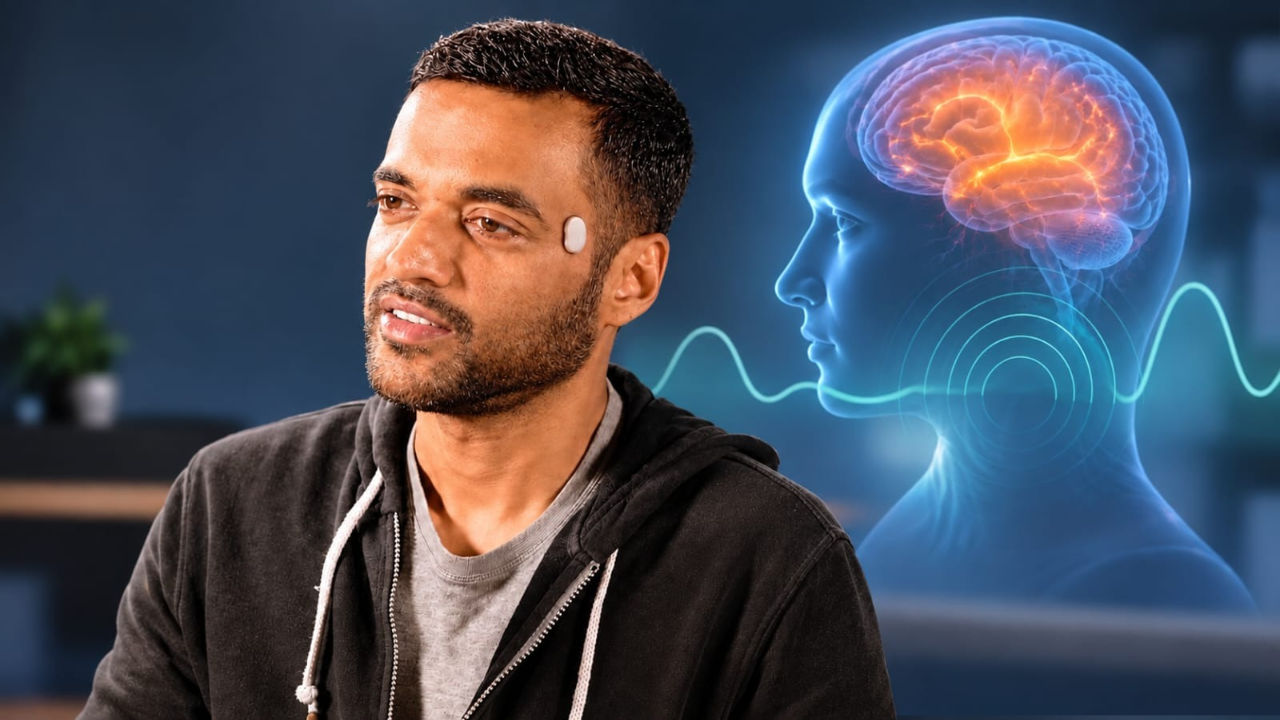
Temple has been in the headlines for a few weeks for its unconventional health tracking claims and ambitions. The wearable, backed by Zomato and Eternal founder Deepinder Goyal, wants to take things further by monitoring physiological signals associated with the brain. However, its claims around cerebral blood flow, cognitive performance and stress have attracted considerable scrutiny from the medical community.
We spoke to mental and medical health experts: Anshika Jain, Counselling Psychologist, Thetherapyside and Dr Shwetank Bansal, BLK-Max Hospital & Better Me Healthcare, to understand what Temple can realistically measure, whether its scores deserve consumers' trust and how such devices could influence our relationship with health tracking.
Can Temple actually measure blood flow inside the brain?
One of Temple's biggest selling points is BrainFlow, which the company describes as a way to monitor changes associated with cerebral blood flow. While optical sensors can detect changes in blood flow, the important question is whether a sensor placed against the temple can actually measure circulation inside the brain or is simply picking up signals closer to the skin.
Dear Concerned Indian Doctors, I see your rage against Temple on X. I have a few points to make: 1. First and foremost, a business lesson: if Temple were a scam, and any of what we said weren't true, people would know it in just a few days of using Temple. We have 14-day, no-questions-asked returns (which even Apple doesn't offer in India). If the product doesn't work, it fails out of the gate and the company dies before recovering a tenth of its R&D. 2. We have already spent $30m building Temple, $20m out of which is my own money. Selling a few thousand devices recovers a small fraction of this investment. A scam that pays nothing is not a scam anyone would run. 3. I left the Eternal CEO role to chase purpose with Temple. This is not about money. I have enough of it to last for generations. My incentives are fully aligned with getting the science right. I am not staking a reputation earned over 20 years on making a quick buck. 4. Our employees bought into our round a few months ago. The round we're raising now is mostly our customers. Scams don't build that cap table. 5. Most wearable companies start with internal studies. Whoop shipped its band in 2015, and the first published validation followed a few years later. We hold ourselves to a higher standard; pre-prints are a step prior to peer reviewed publications, and they are coming up. 6. At some point you have to stick your neck out and say: we believe in our science, and the product is now valuable enough for people to pay for and use. We believe we are there. More validation continues in public. 7. We are confident that we are building something that the world is going to be positively astonished with. We stand by our science and our methods. Each of our claims is easily verifiable by individuals and institutions alike, and you will see a lot of independent studies come up on their own when the device becomes available to use. Last but not the least, the most ground breaking features in Temple are not even public yet. And some of them, thankfully, have nothing to do with doctors 🤭 Hope this addresses some or all of your concerns. If not, keep raging 😘🤗
— Deepinder Goyal (@deepigoyal) November 5, 2026
Dr Shwetank Bansal believes the distinction is crucial. He explained that the device can detect blood flow in the scalp, particularly around the superficial temporal artery, but cannot directly measure blood flow inside the brain.
"Technically, it can pick up blood flow, but from the scalp, the skin between the device and the bone. It cannot pick up blood flow from the brain," he said.
He compared the technology with the optical sensors used in smartwatches, which detect changes in blood volume to estimate pulse rate. However, several anatomical layers separate the scalp from the brain, including the temporalis muscle and the temporal bone.
"It is not plausible that this device can pick up cerebral blood flow. It picks up scalp blood flow from the superficial temporal artery. You can extrapolate from that to cerebral blood flow, but it cannot directly measure it," Bansal explained.
He also questioned the interpretation of Temple's study involving 23 healthy adults, pointing out that the research itself refers to extracranial blood flow, meaning blood flow outside the skull.
"Their argument is that when cerebral blood flow increases, scalp blood flow increases, and when cerebral blood flow decreases, scalp blood flow decreases. They say the two move in the same direction, so a reasonable estimate can be made. But that is like saying that when someone exercises, blood flow increases all over the body. You can extrapolate in any case, but that does not make it a measurement," he added.
Can Temple really read your emotional and cognitive states?
Temple also talks about Entropy, a proprietary score ranging from 1 to 250 that is intended to represent physiological strain. The company has associated it with factors such as exercise, stress, sleep, digestion and caffeine consumption. However, identifying changes in bodily activity is not the same as understanding someone's emotional or cognitive state.
Bansal believes the claims around emotional monitoring are a considerable overstatement, particularly because the device cannot differentiate between specific regions of the brain.
"In principle, blood supply to certain parts of the brain does increase in an emotional state. In fear, for instance, there is increased blood flow to certain areas such as the amygdala. But this device cannot differentiate between regions of the brain. All it can do is measure scalp blood flow and correlate it with overall brain blood flow. It cannot distinguish one region from another. So the claim is a gross overstatement," he said.
Hello everyone. Happy Diwali! Thank you for your criticism, your support and your time over the last two days. Gives me much needed clarity on what we need to explain better: 1. Temple is not made for India. It’s made for the world. Please check pricing. We don’t expect any more than 1% of Temples being sold in India. 2. If you are upset that the pricing is too high, I am sorry. There’s a lot of work that went into Temple, and we priced it at what we think it’s worth. If you think its overpriced, you can wait for user reviews to decide if its worth your money. 3. Please do not support us because we are an Indian startup. We want to compete globally. We don’t need/want nationalist support. Support us if you want to support early innovation, which could help you live a better life, and will continue to add more proof to its science over the years. 4. There are different audiences which buy products at various levels of proof. Proof goes from whitepaper -> pre-print -> peer reviewed. You are free to sit on the fence until peer reviewed proof arrives. You are free to not believe it even then. Nobody is forcing you to buy. Making announcements is our right; and if we overclaim anywhere, we will inevitably fall into regulatory trouble everywhere in the world. 5. We didn’t make any medical claim. Doctors primarily see things from a medical lens, so they see every claim as a medical claim. I repeat – Temple is strictly a fitness + AI device, and we've made no medical claims. Temple is not proven to diagnose or prevent any disease. It doesn't do anything which replaces the need for you to see a doctor. 6. The main point of Temple is NOT Brain Flow. That’s what we just started Temple for, and studies on Brain Flow are the first ones getting out. 7. The main point of Temple is Entropy (I shared the HomeScreen of Temple three months ago with Entropy as the main thing). Our emails to our waitlisted users only talk about Entropy. We haven’t published anything on Entropy yet. We will. If you want to buy Temple before that, please do. If you don’t want to, don’t. 8. Roomdeaf AI is an expansion of the device’s capabilities, and our vision for Temple. It is not a pivot. 9. Social media is not the regulator for Temple. Wherever we need regulatory clearances, we will have them before we make any claim needing them. 10. I will post a detailed note on how we calculate Brain Flow, its uses, and most importantly, its limitations in a bit (tomorrow).
— Deepinder Goyal (@deepigoyal) November 8, 2026
Anshika Jain also questioned whether physiological signals can reliably identify emotions. A change in heart rate, for instance, can be caused by anxiety, excitement, anger, caffeine or physical exertion.
"Your heart is racing. Is it fear? Excitement? Anger? Too much coffee? Or did you just climb three floors? The sensor can't tell the difference. It can say 'something is up', but it can't say whether you are anxious, thrilled or simply out of breath. Emotions don't come with a label attached," she explained.
According to Jain, mood is influenced by personal experiences, surroundings and how individuals interpret situations. Two people can have similar physiological readings but feel completely different things. A wearable might offer a rough indication of how the body is responding, but its interpretation should not be treated as a definitive reading of someone's emotional state.
Can a good score give users a false sense of security?
Someone experiencing headaches or dizziness might feel reassured by a good reading and assume that everything is fine. However, a wellness score cannot replace medical evaluation. Bansal believes Temple should be trusted only to the extent that consumers trust conventional wearables for basic measurements such as pulse rate.
"We can trust it for what we can trust a smartwatch for. A smartwatch can tell us our pulse rate, and we can trust it to that extent. But a smartwatch cannot record an ECG unless you touch the crown with a finger of the other hand, because you need two electrodes to complete the circuit. A device placed on the temple will do something very similar to what a smartwatch does, and no more," he said.
Jain talked about the risk of false reassurance, where users begin trusting a machine's reading more than their actual symptoms.
"If someone sees a good score, they may feel reassured and ignore real symptoms like headache or stomach ache. They think, 'my score is fine, so I must be fine'. That is false reassurance," she said.
She also pointed to automation bias, where people tend to trust information provided by a machine over their own judgement. This can become problematic when a device's reading takes priority over what the body is actually communicating.
Can a daily brain score affect your mental health?
A wearable that gives users a daily score can influence how they perceive their health and wellbeing. While such measurements can encourage better habits, they can also make people unnecessarily anxious about fluctuations in their readings.
Jain said there can be two sides of this health tracking. Some people use data to understand how sleep, meals and daily routines affect them. Others gradually begin allowing the numbers to dictate how they feel.
"Someone wakes up feeling perfectly fine. But when it shows low numbers, within minutes, they feel tired and worried. In psychology, this can be understood through the nocebo effect and expectancy mechanism," she explained.
She believes people are conditioned from childhood to associate numbers with performance and self-worth through marks, ranks and percentages. This makes a daily score particularly influential, even when users do not fully understand how it is calculated.
"Over many years, we learn to think of numbers in terms of approval, safety and self-worth. On top of that, our minds are always trying to understand what is going on and what will happen next. Psychologists call this difficulty with not knowing 'intolerance of uncertainty'. So when a device gives us one clear number, it feels like a relief," Jain said.
Does the Rs 85,000 price and celebrity promotion make Temple more trustworthy?
Temple's premium pricing has also attracted attention. At Rs 85,000, it costs considerably more than mainstream smartwatches and fitness trackers. Its visibility has also increased through public figures such as Shubman Gill and PV Sindhu.
However, celebrity endorsements do not establish the scientific credibility of a product. Bansal believes consumers should separate marketing from evidence when evaluating Temple's claims.
"Only true cricket fans might know this. Hey @grok , can you identify this device and explain its purpose." https://t.co/u2DbgEOi91
— Cricket Virus (@Cricketvirus18) November 6, 2026
"That is what marketing is. We have had celebrities promote Pepsi and cigarettes, and that does not mean those products are harmless. I would not go so far as to say this device is harmful, but it is certainly not useful. There are much better uses for Rs 85,000," he said.
Jain believes the appeal of an expensive health wearable can come from a combination of hope, fear of aging, status and fear of missing out. A device promising insights into the brain can make people feel that they have greater control over their health. Celebrity endorsements add social proof, while the high price can create an impression of better quality.
She also warned that spending a considerable amount can make buyers more invested in believing that a product works.
"Spending a large amount creates cognitive dissonance, the discomfort of thinking, 'I spent so much and this might not work'. The easiest way out is to believe in the product more. So the price can make us trust the number more. But a number is only as good as what is measured, whether it costs Rs 85,000 or Rs 850," she explained.
What scientific evidence should Temple provide?
Temple has shared research conducted by its own team, including studies comparing its readings with established measurement techniques. However, manufacturer-led research is not the same as independent scientific validation.
Bansal acknowledged that making research public is a positive step, but pointed out that there is a difference between what Temple's scientific documents describe and what its marketing communicates.
"To their credit, they have published those studies and made them public, which does increase trust a little. But when I read them, I see that they themselves say the measurement is extracranial. What they claim in their marketing does not match what is written in the science section of their own document. That lack of concordance immediately raises suspicion," he said.
He believes independent researchers should test the device without funding or influence from the manufacturer.
"What I would look for as a doctor is peer-reviewed research. For example, independent investigators at an institution such as AIIMS could pick up this device and run a six-month study with no funding from the company, using their own research methods, and reach the same results the company claims. That would certainly build trust. Independent peer review is required," Bansal added.
He also stressed that researchers must first identify the specific outcome they want to measure. Establishing whether a device can measure a physiological parameter is different from studying whether it can help people with a particular disorder. The research design and participants must reflect the intended claim.
Does Temple need stricter regulation?
Temple is positioned as a wellness and fitness product rather than a medical device. This distinction matters because the expectations and regulatory requirements surrounding medical claims are different.
Bansal believes the company needs to be careful about how it communicates the device's capabilities. "The moment they say it is a medical device, they come under regulatory purview. They have been careful not to say that. They call it a wellness device, and wellness is an industry with very little regulation," he said.
Jain, meanwhile, believes companies should also consider the psychological impact of presenting users with continuous health data. She does not dismiss the benefits of wearable technology, pointing out that tracking can help people recognise patterns and improve their routines.
"The first benefit is awareness. Many of us don't notice how late nights, skipped meals or long stressful days affect us. Seeing a pattern can be an eye-opener," she said.
However, she believes daily scores should not become a source of pressure. Companies should focus on weekly trends instead of alarming daily readings, avoid guilt-inducing streaks and excessive notifications, and clearly communicate what their devices can and cannot measure.
"The number should help us, not scare us. A responsible company should have honest claims about what the device can and cannot measure, backed by scientific proof that is shared openly," Jain added.
Should you buy a Temple right now?
Temple is an interesting attempt to move consumer wearables beyond conventional fitness tracking. However, its ambitious positioning also means that the company needs to provide more clarity about what its sensors measure and how reliably its software interprets those signals.
The questions around the difference between scalp and cerebral blood flow bring some important questions about BrainFlow. The daily scores without any independent and detailed study can definitely impact users' mental wellbeing. It will not be wrong to say that both perspectives point towards the need for transparent claims and evidence that can withstand independent scrutiny.
At Rs 85,000, consumers are being asked to invest in a relatively new category of wearable technology. There is nothing wrong with being curious about what Temple might eventually achieve, but curiosity should not be confused with confidence in its scientific claims.

Ashish Singh is the Chief Copy Editor at Digit. He's been wrangling tech jargon since 2020 (Times Internet, Jagran English '22). When not policing commas, he's likely fueling his gadget habit with coffee, strategising his next virtual race, or plotting a road trip to test the latest in-car tech. He speaks fluent Geek.
View full profile