
Best TVs for sports in 2026: Picture, AI features, sound and more
 Follow Us

If you mainly watch cricket, football or Formula 1, a good sports TV needs more than a high refresh rate. Motion handling, picture processing, colour, brightness, viewing angles, sound and screen size can all affect how easily you follow the action. Samsung’s Micro RGB R85H brings several of these elements together. It combines a 4K Micro RGB display with AI picture processing, 4K AI Upscaling, AI Football Mode and Motion Xcelerator 144Hz. It is also available in multiple large-screen sizes, giving buyers more flexibility when choosing a TV for a living room or dedicated viewing space.
 Survey
The important question is therefore not simply which TV has the highest refresh rate. It is how the display, AI features, sound, processing and screen technology work together for the way you watch sports.
What makes a TV good for sports?
A good sports TV should present fast motion clearly, remain visible in bright rooms, upscale lower-resolution broadcasts effectively and maintain consistent picture quality when several people are watching from different positions.
Refresh rate is one part of that equation. A 120Hz or 144Hz display gives a TV more refresh headroom, but motion processing and response time also affect how sharp moving objects appear.
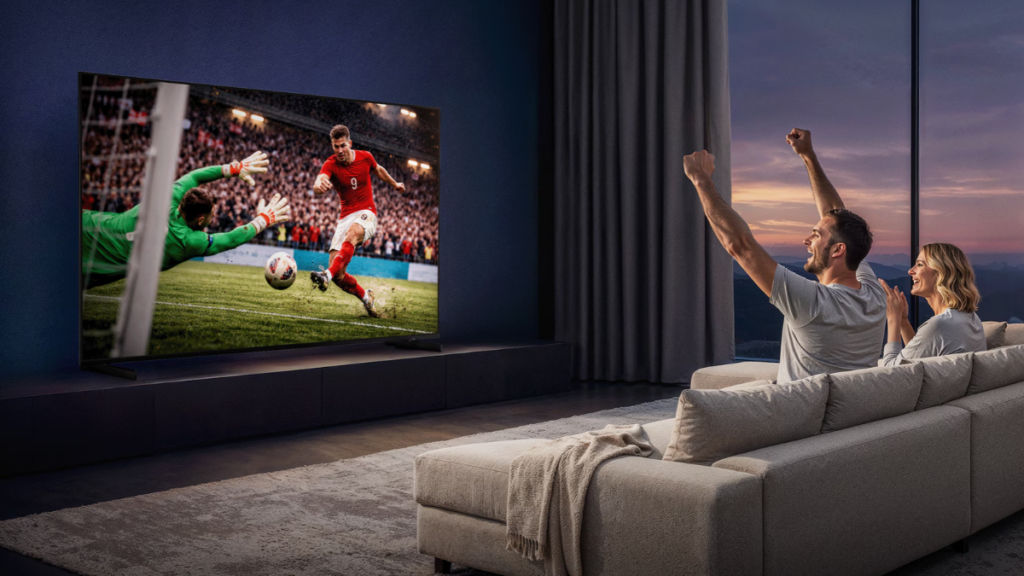
Brightness is important if you watch afternoon matches in a room with plenty of daylight. Reflection control is a separate consideration because even a bright TV can show distracting reflections from windows and lights.
For group viewing, viewing angles and screen size become more important. A larger TV can make the action easier to follow from a distance, while good off-axis performance helps maintain picture quality for people sitting away from the centre.
How do Samsung AI picture features improve TV viewing?
AI picture features can help a TV adjust and process the image according to the content being displayed.
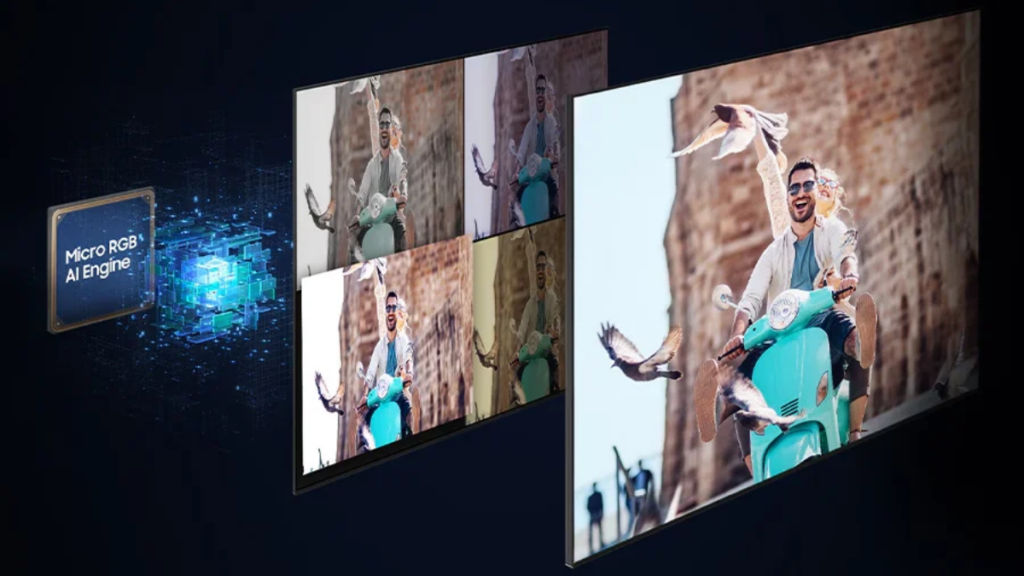
Samsung’s R85H combines AI Picture Mode, AI Customization Mode and AI Color Booster Mode with 4K AI Upscaling and the Micro RGB AI Engine.
For sports, these features are relevant because broadcasts contain large areas of strong colours and rapidly changing scenes. Football pitches, team kits, cricket grounds and F1 liveries can all occupy a significant part of the screen.
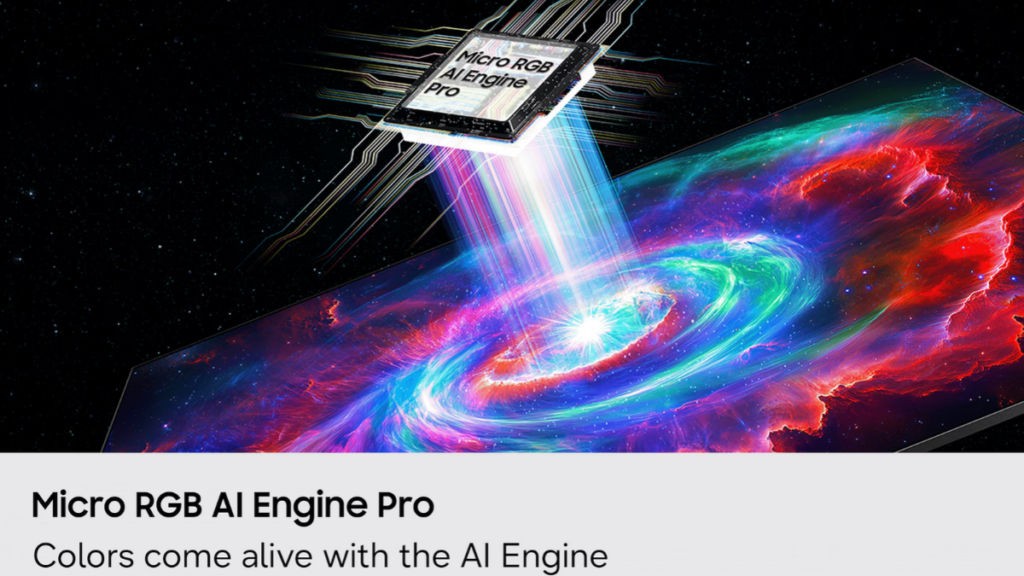
The R85H’s Micro RGB technology also focuses on colour reproduction. It uses individually controlled red, green and blue micro LEDs in its backlight. Samsung says its Micro RGB Precision Color 100 technology covers 100% of the BT.2020 colour gamut and is VDE certified.
The combination means buyers are not looking only at panel resolution or refresh rate. Picture processing and colour are also part of the viewing experience.
Does AI upscaling matter for sports broadcasts?
Yes, because sports broadcasts are not always delivered in native 4K.
A 4K TV has a high-resolution panel, but the incoming broadcast may have a lower resolution. The TV then has to process that signal and scale it to fit the display.
Samsung’s R85H uses 4K AI Upscaling, which is designed to enhance lower-resolution content. Its Micro RGB AI Engine also forms part of the TV’s picture-processing system.
This can matter when switching between different sports channels, feeds or older broadcasts.
What is Samsung AI Football Mode and how does it help?
AI Football Mode is Samsung’s dedicated sports feature for football viewing.
On the R85H, Samsung says AI Football Mode can recognise football content and automatically optimise picture and sound. The feature is designed to enhance colour and contrast, while making commentary and the crowd and stadium atmosphere more prominent.
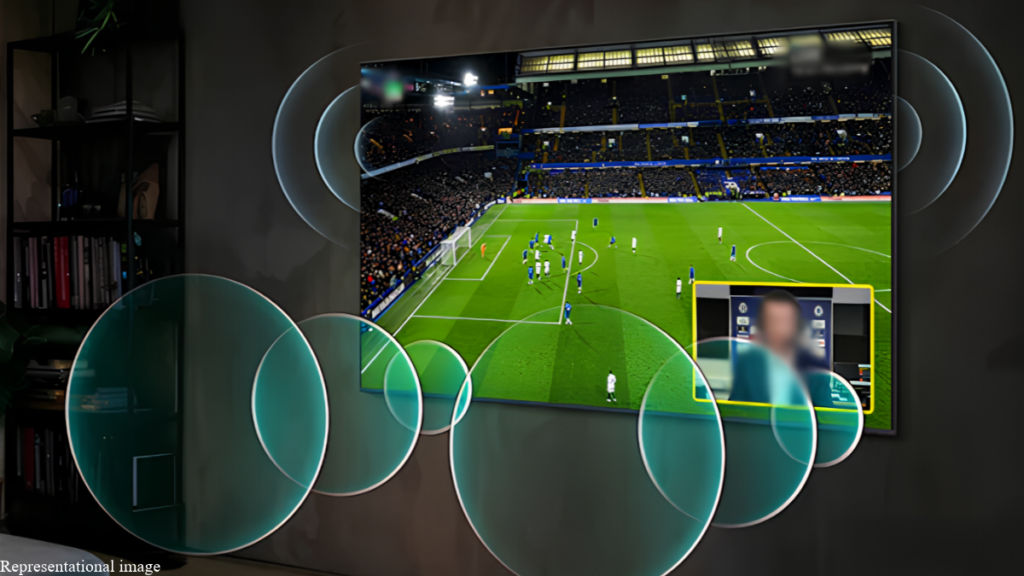
This is different from simply increasing the TV’s brightness or colour saturation. The idea is to apply picture and sound adjustments specifically for football.
For viewers who regularly watch football, AI Football Mode gives the R85H a sports-specific feature beyond its display and motion specifications.
Does 144Hz make a difference for sports?
Yes, but the benefit depends on the type of content you are watching.
The R85H features Motion Xcelerator 144Hz. However, the full 144Hz VRR capability is relevant specifically to high-end PC gaming with compatible hardware and games.
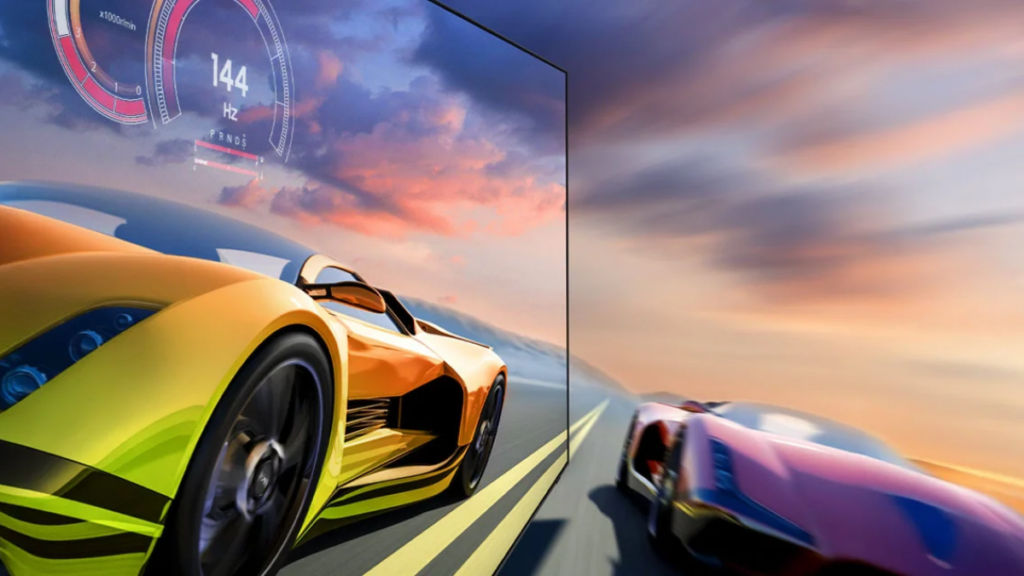
For OTT content, DTH, Samsung TV Plus, cable TV and console gaming, the TV can utilise its native 120Hz capability. Therefore, buyers should not assume that sports broadcasts or console games will run at 144Hz simply because the TV supports 144Hz VRR.
A higher refresh rate also does not automatically make a sports broadcast 144 frames per second. The source determines the frame rate, while the TV’s processing determines how that content is presented.
The R85H also includes AI Motion Enhancer, so refresh rate should be considered alongside the TV’s motion-processing capabilities.
Why is motion processing important for cricket, football and F1?
Sports contain constant movement across large parts of the screen. A cricket ball can travel rapidly across the frame, a footballer can sprint from one side of the pitch to another, and an F1 car can move quickly against a detailed background.
A TV therefore needs to process motion without making moving objects look excessively blurred or unnatural.
Broadcast quality also matters. Not every sports feed is delivered in 4K, which makes processing and upscaling important alongside motion handling. The R85H combines AI Motion Enhancer with 4K AI Upscaling for these different aspects of the viewing experience.
How does Samsung AI improve TV sound?
Sports viewing involves more than commentary. Crowd noise, stadium announcements and the general atmosphere contribute to the experience, while commentary needs to remain intelligible over those sounds.
The R85H has a 30W two-channel audio system with Dolby Atmos, Object Tracking Sound Lite, Adaptive Sound Pro, Active Voice Amplifier Pro and AI Sound Controller.
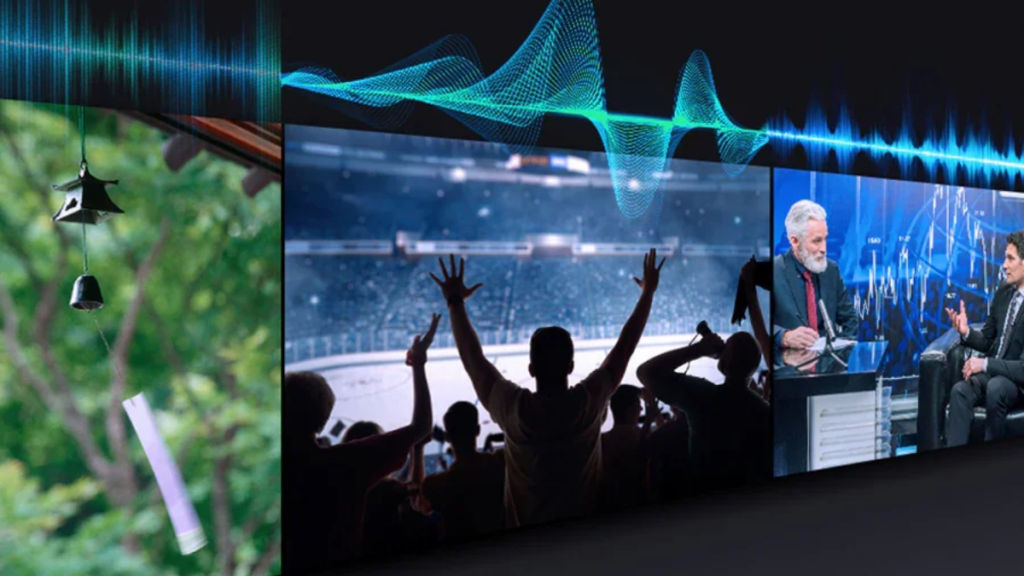
Samsung also lists AI Sound Mode, including AI Optimization and AVA Pro, among its TV experiences. These features broaden the role of AI beyond picture processing and into the TV’s audio experience.
For sports viewers, the key consideration is how well the TV handles the different elements of a broadcast, particularly commentary, crowd noise and stadium atmosphere.
A soundbar can still make sense for a large room or if you want stronger bass and a wider soundstage. But buyers who rely on the TV’s built-in speakers get a broader set of audio-processing features with the R85H.
What gaming features does the Samsung R85H offer?
The R85H is designed to work as an entertainment display beyond live television.
Its Motion Xcelerator 144Hz capability and VRR support are relevant to compatible high-end PC gaming setups. For console gaming, the TV can utilise its native 120Hz capability. Samsung also lists AI Gaming Optimizer as one of its TV experiences.
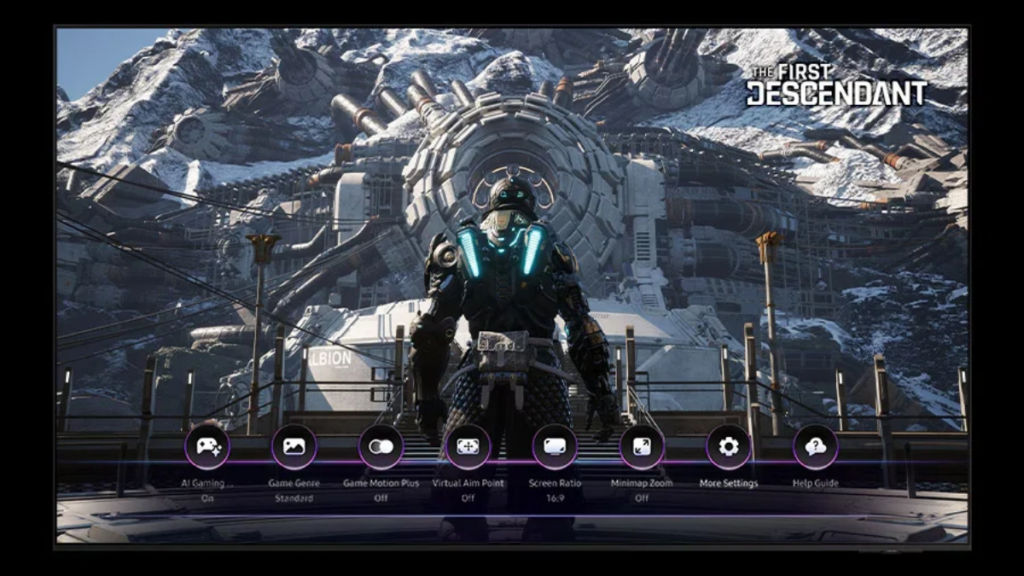
This gives the R85H another use case for buyers who want one large-screen TV for sports and gaming.
For sports, motion processing and picture optimisation are important. For gaming, buyers also need to consider refresh-rate support, VRR and the type of gaming device being connected.
What can SmartThings do on a Samsung TV?
SmartThings extends the TV beyond entertainment and connects it to Samsung’s broader smart-home ecosystem.
Samsung lists features including Gesture Control and Built-in Hub under its SmartThings experience. It also highlights functions such as Pet Care, Family Care, Karaoke session and AI Energy Saving.
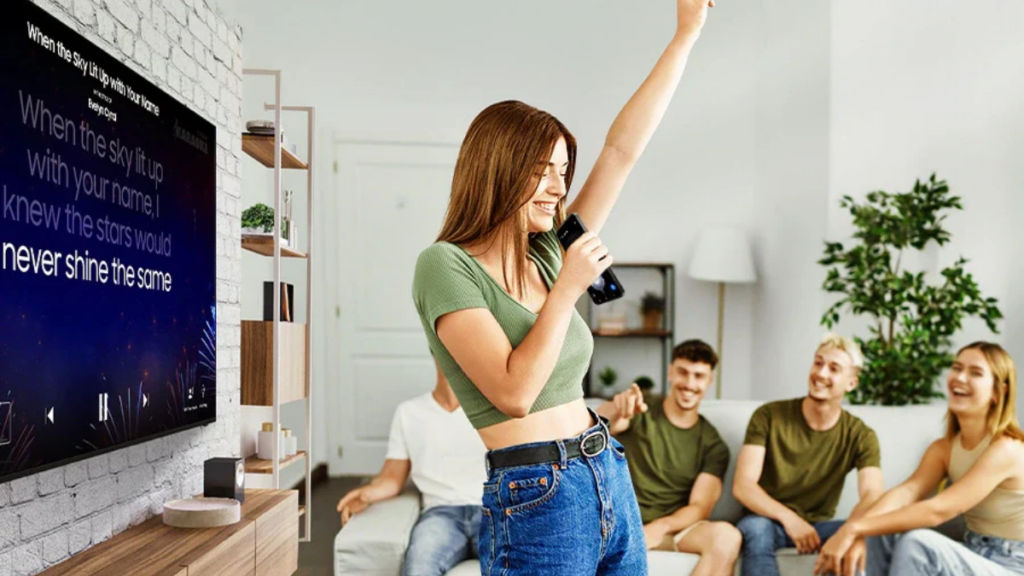
For a household already using compatible smart-home devices, this means the TV can form part of a wider connected setup rather than functioning only as a screen.
The benefit here is less about sports specifically and more about what the TV can do when it is not being used to watch a match.
Which matters most for sports: Motion, brightness or viewing angles?
There is no single answer because each feature solves a different problem.
Motion handling matters when the action moves quickly. Brightness matters when you watch during the day or in a room with strong ambient light. Viewing angles matter when several people are watching from different positions.
A viewer sitting directly in front of a TV in a dark room may place more importance on motion and contrast. A family watching an afternoon cricket match from a wide sofa may care more about brightness, reflection control and viewing angles.
This is why a sports TV should be chosen around the room and viewing habits rather than specifications alone.
What type of TV is better for sports, OLED, Mini LED or Micro RGB?
OLED, Mini LED and Micro RGB take different approaches, so the choice depends largely on the viewing environment and the type of picture you prefer.
OLED TVs use self-emissive pixels and can produce deep blacks and strong contrast. Mini LED TVs use a large number of smaller LEDs with local dimming and can be well suited to bright rooms and large screens.
Samsung’s Micro RGB technology takes a different approach. The R85H uses individually controlled red, green and blue micro LEDs in its backlight. Samsung says its Micro RGB Precision Color 100 technology covers 100% of the BT.2020 colour gamut and is VDE certified.
For sports, the benefit is particularly relevant to colour separation. Football kits, green pitches, cricket grounds and F1 liveries contain large areas of strong colour, so accurate colour reproduction can make these elements easier to distinguish.
Which TV is better for a bright living room?
For a bright room, look at both brightness and reflection handling.
A brighter screen can help maintain visibility when daylight enters the room. But brightness does not eliminate reflections. If a window or light is directly opposite the TV, the reflection can still sit over the picture.
Samsung’s S95H OLED addresses this with Glare Free technology alongside its OLED display.
The R85H takes a different approach. Its Micro RGB technology gives the TV greater control over colour and brightness, while its wide viewing angle helps maintain the picture when you are watching from different positions. It also uses Micro Dimming to optimise contrast across the screen.
The practical takeaway is simple: if your TV faces a window, check reflection handling of the TV as carefully as its brightness.
Does screen size matter when watching sports?
Yes. Screen size can make a significant difference, particularly if you sit several metres away from the TV.
A larger display makes players, the ball and other on-screen details easier to follow from a distance. However, bigger is not automatically better. The TV should match the viewing distance and available space.
The Samsung Micro RGB R85H is offered in multiple sizes, including 55, 65, 75 and 85 inches. This gives buyers more flexibility when choosing a display for their room.
Are viewing angles important for group sports viewing?
They are particularly important when the TV is being watched by a group.
If everyone sits directly in front of the display, viewing angles are less of a concern. But a wide sofa can put some viewers considerably off-axis.
The R85H specifies a wide viewing angle, which is useful for living-room setups where viewers may not always sit directly opposite the screen.
Which Samsung TV should you consider for sports by budget?
If sports is the priority and you are looking at Samsung’s premium range, the Micro RGB R85H is the main model to consider. Its combination of Micro RGB, AI picture features, AI Football Mode, AI sound features, large screen sizes and gaming capabilities makes it the more complete option for this use case.
Under Rs 60,000
At this price, buyers will generally be looking at smaller screens or less advanced display technologies. If sports is the priority, look for good motion processing, sufficient brightness and a screen size that suits your viewing distance.
If you want a Samsung TV specifically for sports without moving into the premium segment, the 55-inch U8300H is worth considering. It is currently priced at around Rs 53,990 and includes Football Mode, making it a more relevant option for sports viewing than a basic 4K TV.
If you want Mini LED at this budget, Samsung’s 55-inch M2EH is another option, currently priced at around Rs 53,900.
Rs 60,000 to Rs 1 lakh
This is where larger-screen Samsung TVs become more relevant.
If you want to stay within this budget, look at models based on the features and screen size that suit your room. Samsung’s M80H is worth considering if 120Hz-class motion is important to you. This can be useful for watching fast-moving sports, while also making the TV more suitable for gaming.
Rs 1 lakh to Rs 2 lakh
This segment brings Micro RGB, OLED, and Mini LED into consideration.
The Samsung Micro RGB R85H, starting with its 55-inch model and other larger sizes, is an excellent choice in this segment, as it combines Micro RGB, 144Hz motion, AI picture processing, 4K AI Upscaling and AI Soccer Mode.
The Samsung S90H is an OLED option for buyers who prioritise OLED contrast and colour, while the Sony Bravia 5 provides a Mini LED alternative.
Above Rs 2 lakh
At this level, screen size, display technology, and room conditions become more important than simply adding another specification to the list.
The Samsung Micro RGB R85H, starting with its 55-inch model and other larger sizes, is an excellent choice in this segment, as it combines Micro RGB, 144Hz motion, AI picture processing, 4K AI Upscaling and AI Soccer Mode.
The Samsung S95H is an OLED option for buyers who prioritise OLED contrast and colour, while the Sony Bravia 7II provides a Mini LED alternative.
At this price, buyers should first decide the screen size and display technology that suit their room, then compare motion, brightness, reflection handling and processing.
Which TV has the best combination of brightness and anti-reflection?
There are two separate questions here: how bright the screen gets and how effectively it deals with reflections.
Samsung’s S90H combines OLED with Glare Free technology, making it relevant for viewers who want OLED contrast while paying particular attention to reflections.
The R85H approaches the picture differently, using Micro RGB technology for precise colour and brightness control. Samsung specifies 100% BT.2020 coverage for Micro RGB Precision Color 100.
For buyers considering LG’s OLED range alongside Samsung’s Micro RGB technology, the LG OLED C6 is the more appropriate comparison to the R85H.
For a bright living room, consider brightness and reflection handling together rather than looking for one peak-brightness number.
How does the Samsung Micro RGB R85H compare with other RGB TVs?
RGB-based TV technology is becoming more prominent in the premium segment, but manufacturers use it in different ways.
Samsung’s R85H uses individually controlled red, green and blue micro LEDs as its backlight. Samsung says this enables precise control over colour and brightness and supports 100% BT.2020 coverage.
The important distinction for buyers is not simply the presence of ‘RGB’ in the specification. Look at the entire display system, including backlight control, processing, brightness, motion handling and screen size.
For sports, the practical question is whether the TV can maintain clear motion, strong colour separation and sufficient brightness in your viewing environment.
Is the Samsung Micro RGB R85H a good TV for sports?
The R85H is built around several features that are directly relevant to sports viewing rather than relying on one specification.
Micro RGB focuses on colour and brightness control, while AI picture processing and 4K AI Upscaling address picture quality and lower-resolution content. AI Football Mode provides dedicated picture and sound optimisation for football.
Motion Xcelerator 144Hz adds higher-refresh capability, although the full 144Hz VRR experience is relevant to compatible high-end PC gaming. For OTT, DTH, Samsung TV Plus, cable TV and console gaming, the native 120Hz capability is the relevant limit.
The TV also combines AI sound features, a 30W audio system, AI Gaming Optimizer and SmartThings features, making it useful beyond sports.
For someone building a dedicated sports-focused living-room setup, the R85H’s combination of Micro RGB, AI picture and sound features, football-specific optimisation, gaming capabilities, SmartThings and multiple screen sizes makes it a TV designed around more than just the specification sheet.
The Samsung Micro RGB TVs is currently available with festive-season offers, including a free soundbar worth up to Rs. 1,10,990, 0% down payment and up to 20% cashback, subject to applicable terms and conditions.
Sports TV questions answered
Is 120Hz enough for sports?
Yes. A 120Hz TV is more than sufficient for watching sports. Sports broadcasts, OTT platforms, DTH, Samsung TV Plus and cable TV can make use of the TV’s native 120Hz capability, which is enough to keep fast-moving action looking smooth.
Meanwhile, the R85H’s 144Hz capability is mainly useful for compatible high-end PC gaming.
Does a 144Hz TV make sports broadcasts 144Hz?
No. The source determines the frame rate. The R85H can utilise its native 120Hz capability for regular TV and supported console content, while 144Hz VRR is relevant to compatible high-end PC gaming.
Is OLED or Micro RGB better for sports?
Both approaches have different strengths. OLED can be attractive for its contrast, while Samsung’s Micro RGB technology focuses on colour and brightness control. The choice depends on the room, viewing habits and budget.
Is brightness more important than refresh rate for sports?
It depends on the room. Motion handling matters when following fast action, while brightness and reflection handling become more important when watching in a bright room.
Does a bigger TV make sports easier to watch?
A larger screen can make the action easier to follow from a greater viewing distance. However, the screen size should match the room and seating distance.
What should I look for in a sports TV?
Look at picture quality, AI processing, motion handling, brightness, reflection control, viewing angles, upscaling, screen size and sound. If you watch football regularly, dedicated features such as AI Football Mode can also be useful.
What makes the Samsung Micro RGB R85H different?
The R85H combines Samsung’s Micro RGB backlight with AI picture processing, 4K AI Upscaling, AI Football Mode, AI sound features, gaming capabilities and SmartThings. It is also offered in multiple screen sizes, allowing buyers to choose a display based on their room and viewing distance.


