
Pixel 11 vs iPhone 17: Google’s AI ambitions meet Apple’s raw power
 Follow Us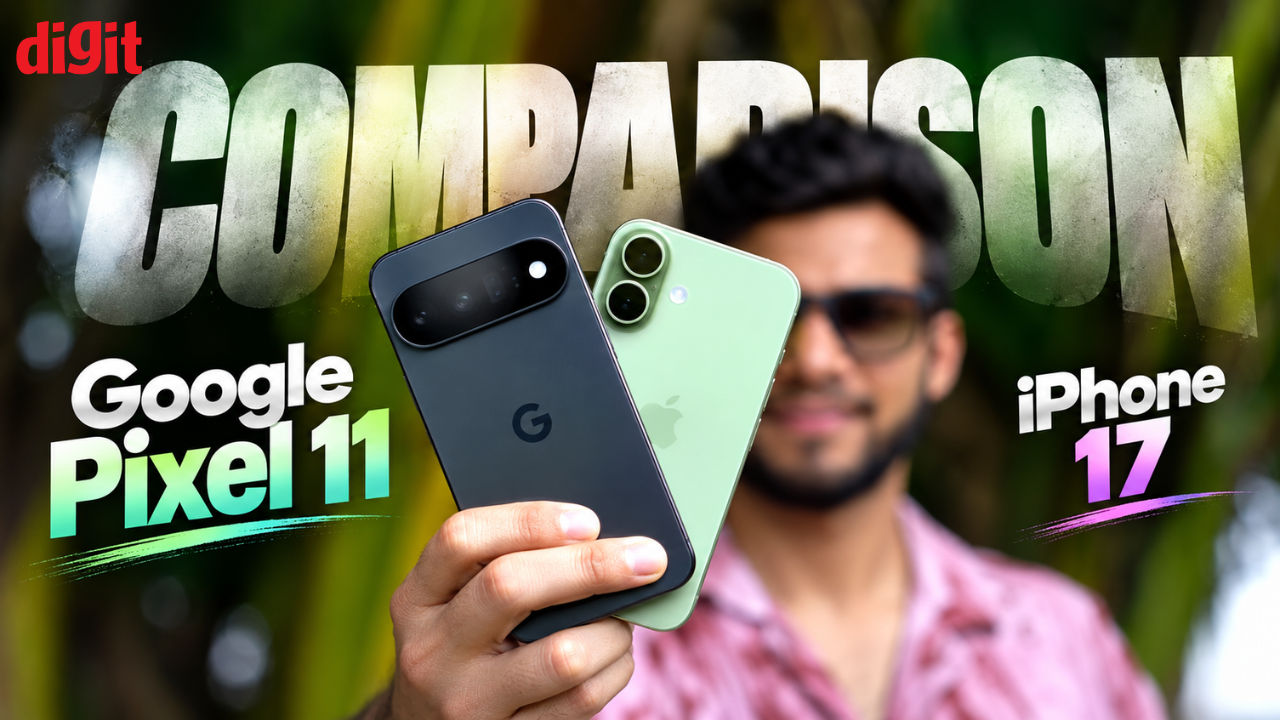

Every year, Apple and Google launch new flagships, and every year people pick sides before they have even used them. The iPhone is known for the ecosystem. The Pixel is known for its computational photography. I have heard both lines enough times to recite them in my sleep, and after spending real time with the iPhone 17 and the Pixel 11, I can tell you neither sentence says much on its own. The iPhone 17 starts at Rs 99,900 and the Pixel 11 at Rs 89,999, so they’re — sort of — close enough in price that a slogan cannot settle the choice. I tested both at Digit Test Labs and used them as my main phones, looking at design, display, performance, software, cameras and battery. Some of the cliches held up. A few did not. Here is what I found.
 Survey
Google Pixel 11 vs iPhone 17: Design
Both are compact flagship phones, but they feel completely different in the hand. The iPhone 17 sticks with its familiar design. It is small, comfortable, and premium. The curved edges make it easier to grip, the matte glass feels clean and resists fingerprints, and the weight is well distributed, so it never feels uncomfortable even after hours of use.
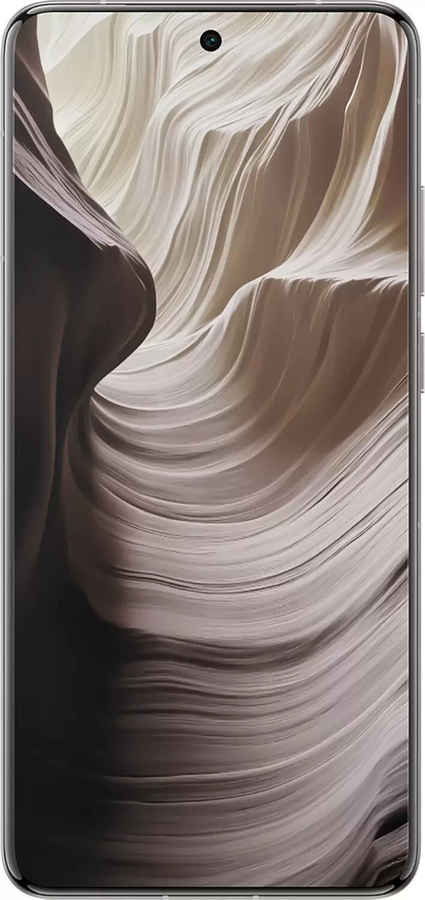
The Pixel 11 goes in different ways. Flatter sides and Google’s camera bar island make it stand out, and I still think the Pixel has one of the most recongisable designs on the market. You can easily spot it from across the room.
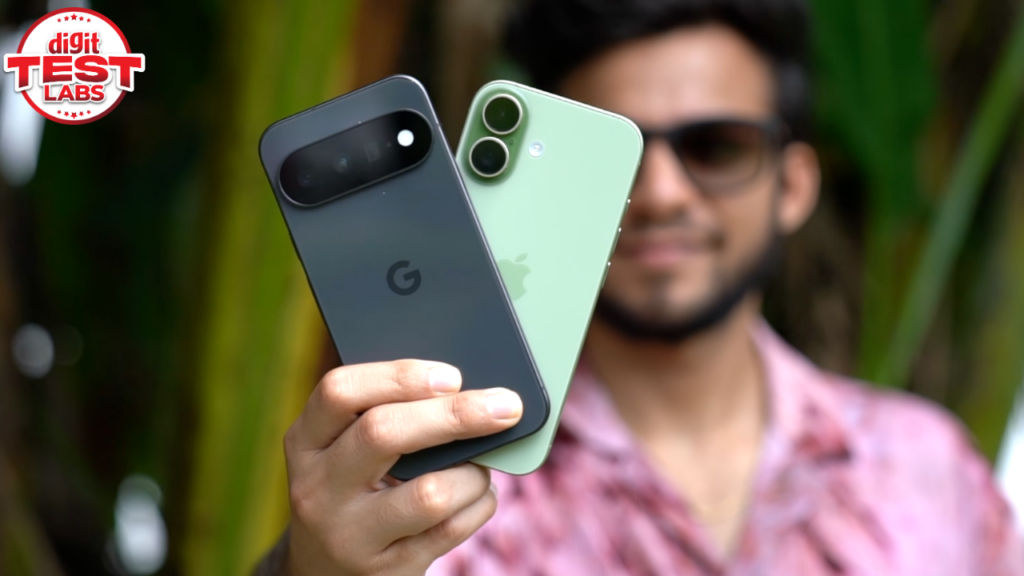
Build quality is strong on both. The iPhone 17 gets an aluminium frame, Ceramic Shield protection, and an IP68 rating. The Pixel 11 also has an aluminum frame, Gorilla Glass Victus 2 protection, and an IP68 rating for water and dust resistance. However, the Pixel’s glass back, because of its glossy finish, attracts fingerprints, so we recommend buying a case.
A couple of practical differences show up side by side. The iPhone feels slightly more compact because of its rounded edges, while the Pixel’s thicker bezels make the front look less modern. It is not a deal breaker, but you will notice it.
Google Pixel 11 vs iPhone 17: Display
The iPhone 17 now has a 6.3-inch LTPO OLED display with a 120Hz refresh rate, and it also gets the Always-On Display that used to be reserved for the Pro models. Finally.
The Pixel 11 also has an OLED panel with a 120Hz refresh rate, and it is one of my favourite displays this year. On brightness, our testing put the iPhone 17 at around 2,160 nits in High Brightness Mode, whereas the Pixel 11 reached a whopping 3,220 nits. That is a big gap on paper, and in real life the Pixel is brighter outdoors. Under direct sunlight, it stays more visible with less effort. But I never struggled with the iPhone outdoors either. The Pixel simply has more headroom.
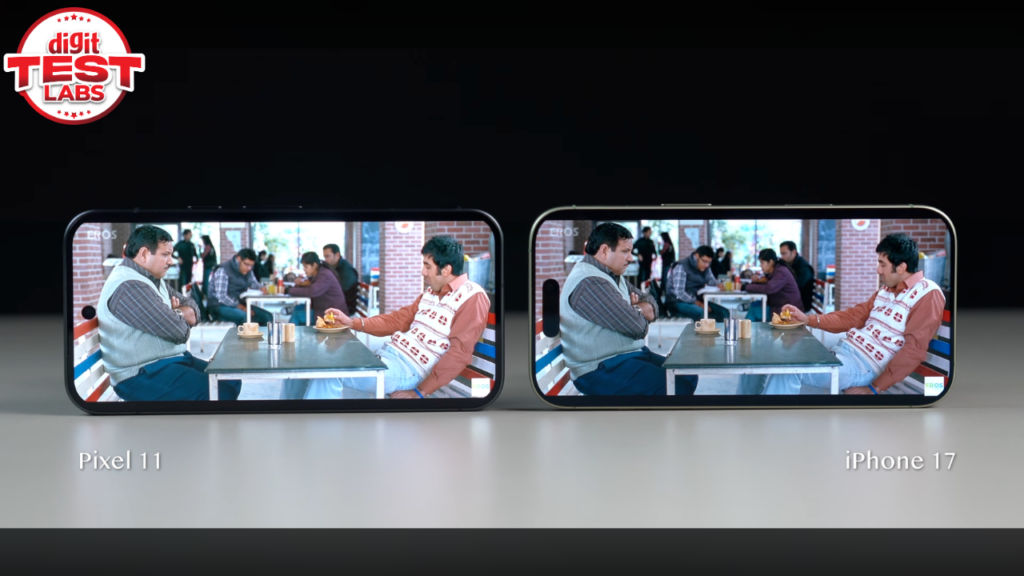
Colour is another difference. The iPhone 17 sticks to natural colours, while the Pixel 11 makes them pop a little more. Movies look slightly more vibrant on the Pixel, and I ended up preferring its display for entertainment.
Again, the one compromise on the Pixel 11 is those relatively thicker bezels. Overall, Apple has caught up with a 120Hz refresh rate display, but the Pixel’s brighter panel and more vibrant colour tuning give it a slight edge.
Google Pixel 11 vs iPhone 17: Performance
The iPhone 17 runs on Apple’s A19 chip, while the Google Pixel 11 uses Google’s Tensor G6 chipset. I am not going to sugarcoat it. Apple wins.
First, let’s look into Google’s Tensor G6 chipset. It has seven cores instead of eight. One Arm C1-Ultra core runs at up to 4.11GHz, four C1-Pro cores run at 3.38GHz, and the last two C1-Pro cores run at 2.65GHz. Google built this chip for AI, not for speed. Most of the new work went into the TPU, the part that runs Gemini and the other AI features, and Google says it is about 50 per cent faster than last year. The CPU and GPU got less attention, and the scores show it.
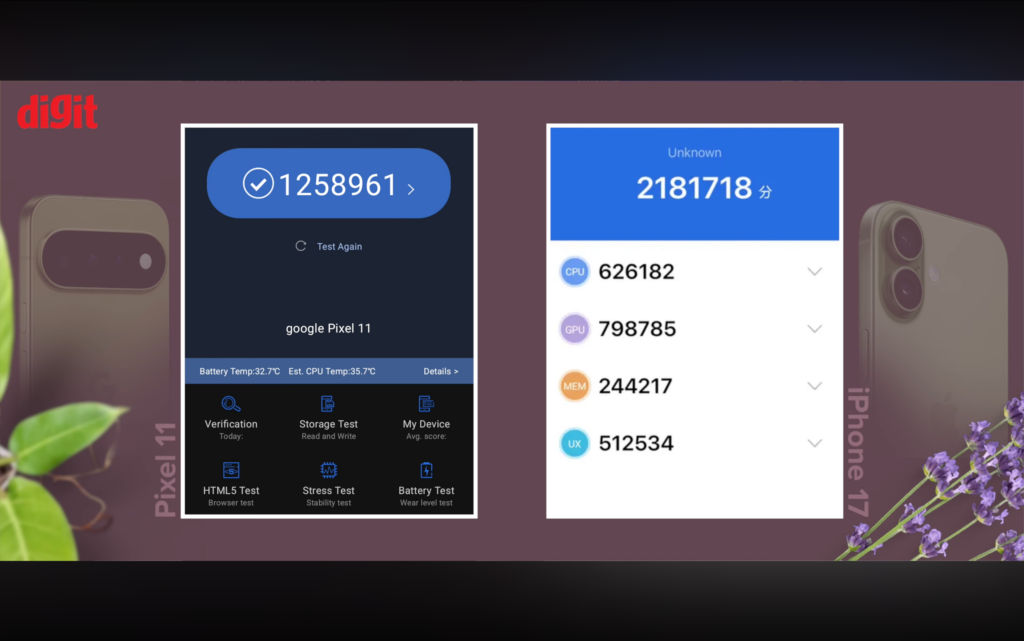
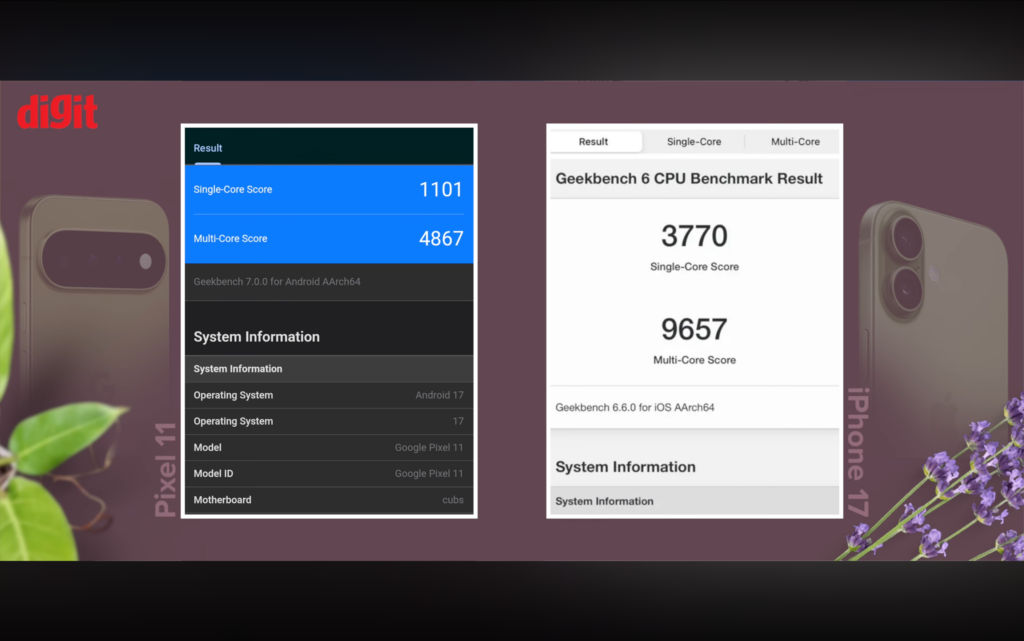
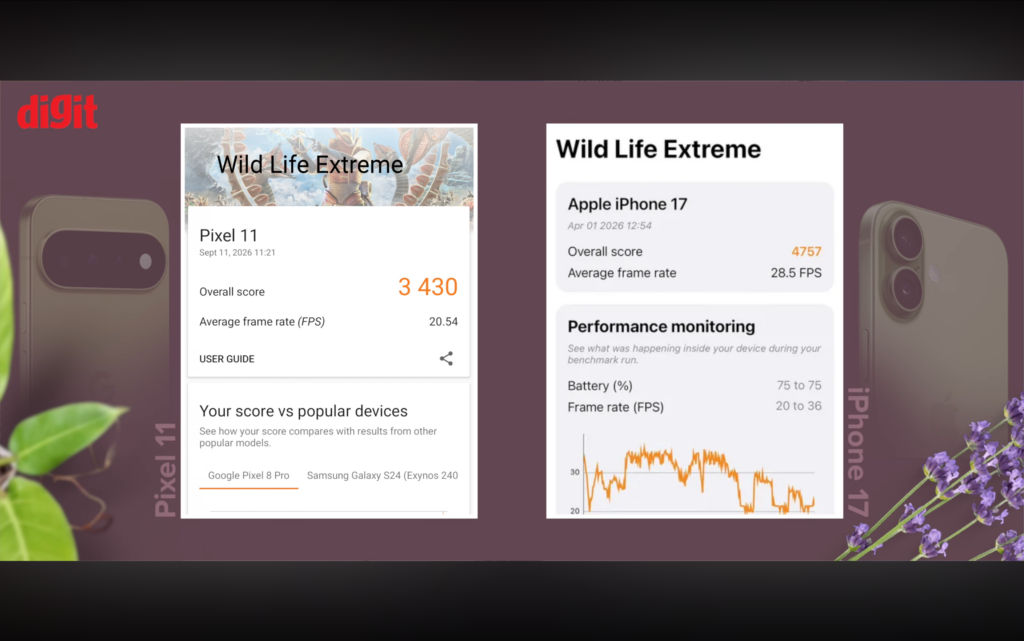
Start with the benchmarks. In AnTuTu, the iPhone 17 scored around 2.1 million, and the Pixel 11 scored 1.25 million. In Geekbench 7, the iPhone 17 scored 3,770 in single-core and 9,657 in multi-core, while the Pixel 11 scored 1,101 and 4,867. The GPU test shows the same pattern. In 3DMark Wild Life Extreme, the iPhone 17 scored 4,757 while the Pixel scored 3,430.
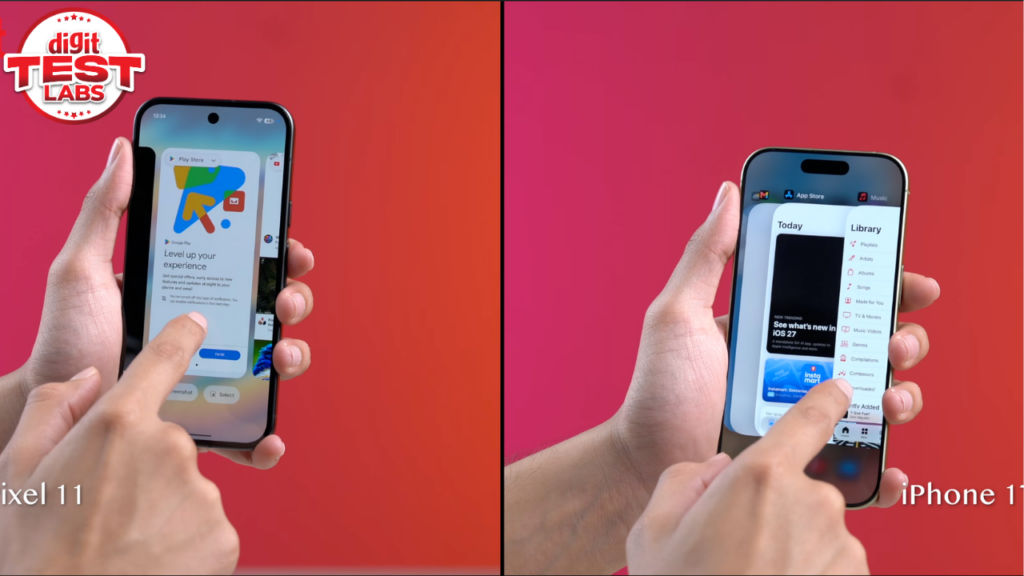
Benchmarks are one thing and real life is another. Both phones feel smooth when opening apps, scrolling, and running animations. However, when it comes to multitasking, the iPhone 17 keeps more apps alive in the background, so you can jump back in without reloading, and everything feels more effortless.
For gaming, the iPhone 17 supports up to 120 FPS in BGMI, while the Pixel 11 is limited to 60 FPS. In Call of Duty Mobile, the Pixel can hit up to 90 FPS, but the iPhone still delivers 120 FPS and a more stable overall experience. During longer sessions, the Pixel starts dropping frames more noticeably, and the phone gets warm in your hand.
Sustained performance is the weak spot. In our CPU Throttling Test, the Pixel 11 dropped almost immediately; the graph stayed mostly orange and settled at just 60 per cent of its peak performance. Long gaming sessions or back-to-back heavy tasks will slow the phone down.
So the Pixel 11 is fine for everyday use and for Google’s AI features. If you want top speed, better multitasking, or long gaming sessions, the iPhone 17 is the better pick.
Google Pixel 11 vs iPhone 17: Software and AI
This is probably the most subjective section, because it comes down to iOS against stock Android. The iPhone 17 runs iOS 27 with the new Liquid Glass interface, and it looks gorgeous. Animations are polished, the interface feels fluid, and if you already live inside Apple’s ecosystem, everything works together without friction.
The Pixel runs Android 17, and Google’s stock Android is so good. I am personally more of an iOS person, but every time I use a Pixel, I am reminded why people love this experience. It is clean, fast, and easy to use.
The real highlight is Gemini. Unlike Apple Intelligence, Gemini feels deeply integrated into the system. It can recognise a location in one app and suggest opening Maps. It can detect an event and help save it to Calendar. It can open Photos when you are trying to share an image. Most of these actions work well across Google’s own apps. Third-party support still has room to improve, but Google’s AI feels more proactive than Apple’s current implementation.
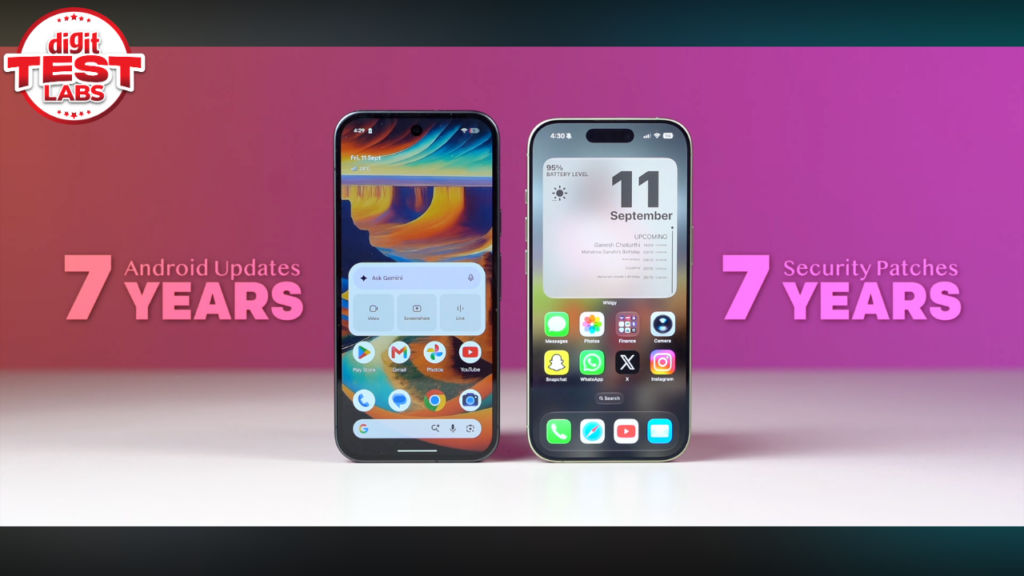
Both companies promise seven years of software and security updates, so longevity is not a concern with either phone.
If you are invested in Apple’s ecosystem, iOS 27 on the iPhone 17 still feels unmatched. If you want a cleaner Android with smarter AI features, the Pixel 11 is the better pick.
Google Pixel 11 vs iPhone 17: Cameras
This is the biggest reason people buy Pixel phones, so I expected a lopsided result. The iPhone 17 comes with a 48MP main camera and a new 48MP ultrawide. The Pixel 11 continues Google’s reputation for computational photography. The result turned out much closer than I expected.
On the main camera, the iPhone 17 captures slightly more detail. It is not a big difference, more of a 19-20 situation. Apple’s colours stay natural, while the Pixel goes for a more contrast-heavy look.
HDR is where Google reminds everyone why it is famous for photography. The Pixel 11 controls highlights and shadows better, especially in difficult lighting.





Portraits are where the Pixel 11 gets a big advantage. You can shoot portraits all the way up to 5x, and they look fantastic. The iPhone does not have a telephoto lens, so I compared both at 2x. At that distance, Apple’s edge detection is actually better, and you can see individual hair strands being separated more accurately.




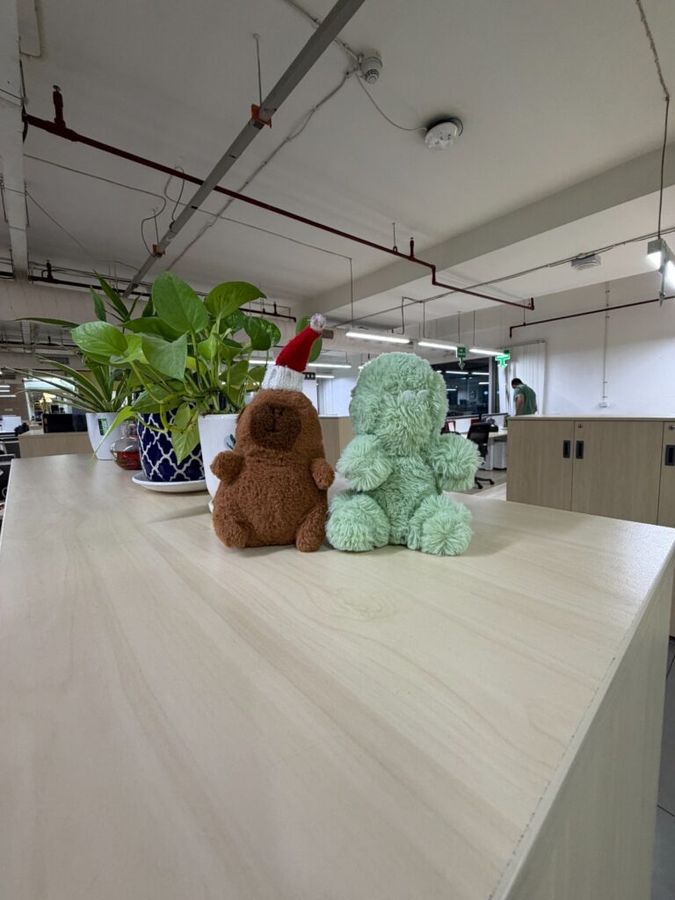
The ultrawide flips things around. The iPhone 17’s new 48MP ultrawide captures more detail, sharper corners, and better-looking photos overall than the Pixel 11’s.

For selfies, I still prefer the iPhone 17, which captures more detail and better skin tones. Selfie portraits are very close.






The Pixel 11 also offers Google’s AI camera features, including Magic Editor, Best Take, Add Me, and Reimagine, which give you far more creative editing options after you have taken the photo.
Google Pixel 11 vs iPhone 17: Battery
The iPhone 17 has a 3,692mAh battery, and the Pixel 11 packs a larger one at 4,985mAh. In our testing, the iPhone 17 delivered around 22 hours in a video loop test, and in daily use, it comfortably gave me around 6 to 7 hours of screen-on time.
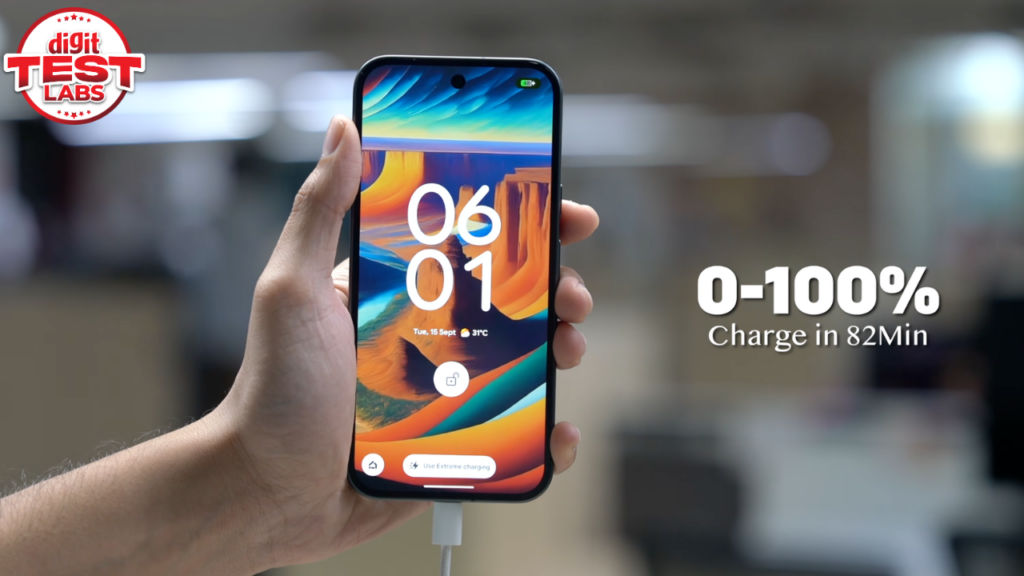
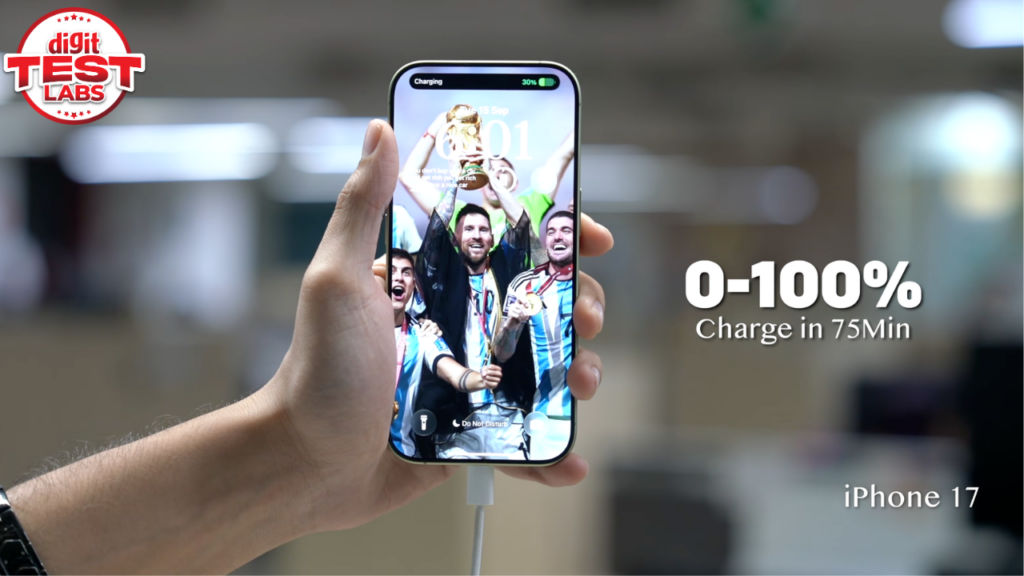
The Pixel 11 also lasts a full day comfortably, but charging is a bit slower. The phone supports 30W of wired charging, and we charged it from 0 to 100 per cent; it took around 82 minutes on the Pixel 11, while the iPhone 17 finished slightly quicker at roughly 75 minutes. But at the same time, you see the Pixel 11 has almost a 1,300mAh bigger battery on it.
When it comes to wireless charging, both phones are equally matched on paper. The Google Pixel 11 supports Qi 2.2 wireless charging at up to 25W, while the iPhone 17 offers up to 25W charging through both MagSafe and Qi2-compatible chargers. So, neither phone has a clear advantage in terms of maximum wireless charging speed, and your choice will come down to which charging ecosystem you prefer.
At the end, battery life is solid on both, but the iPhone 17 — despite its smaller battery — still feels more efficient overall.
Google Pixel 11 vs iPhone 17: Verdict
The iPhone 17 feels like the more complete flagship. It wins on performance and on multitasking; it has the more consistent camera system, and it still delivers excellent battery life. The Pixel 11 fights back with a brighter display, smarter AI integration, stronger HDR processing, and those fantastic 5x portrait shots.
If you look at the pricing, after the recent hike, the iPhone 17 starts at Rs 99,900 and the Pixel 11 at Rs 89,999, making the Pixel cost about Rs 10,000 less for the same 256 GB storage. And despite the lower cost, you still get a brighter display, smarter software and an extra telephoto sensor on the Pixel 11.
So the choice is simple. If you want raw performance, better multitasking, and the safer all-round flagship, go with iPhone 17. If you want Google’s clean Android experience, useful AI features that are not gimmicks, and a telephoto lens for beautiful portraits, the Pixel 11 is a fantastic alternative at a relatively lower price.


