
Rewriting the rules of workplace learning: Inside Workday’s bet on the future of L&D
 Follow Us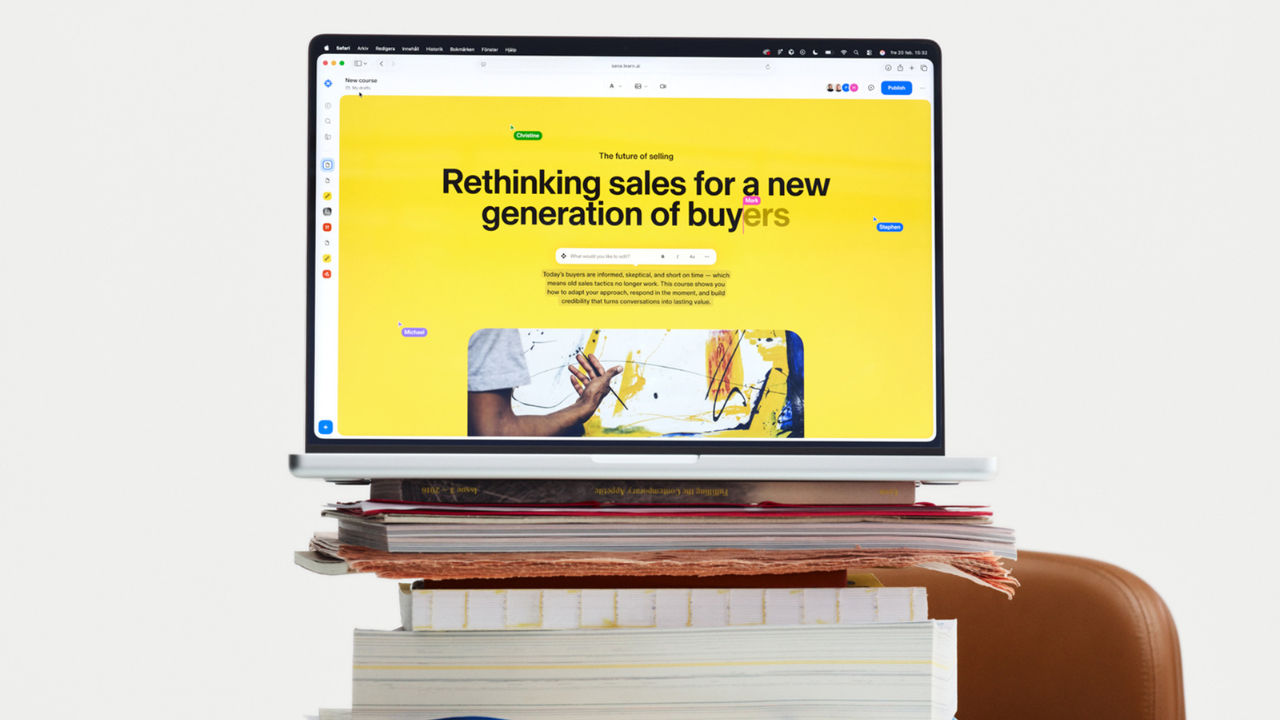

Somewhere in your organisation, right now, an employee is halfway through a mandatory compliance module, a second browser tab already open, and by lunchtime they will have retained almost none of it. This isn’t a personal failing, and it isn’t a symptom of an overworked workforce. It’s corporate training working exactly as designed, for completion, not comprehension.
 Survey
Workday, the organisation that runs HR and finance for more than 65 percent of the Fortune 500, has staked a significant bet that this is fixable. It acquired Sana, a Stockholm-based AI company that spent nearly a decade building an AI-native learning platform from the ground up. The platform is built around personal AI tutors, instant content generation, and search that actually understands what you’re asking, rather than a decade of features bolted onto legacy learning management systems.
The wager is straightforward: you cannot prepare a workforce for an AI-driven future using PowerPoint-era training technology. It’s a bold claim. Here’s what’s behind it, and what enterprises, particularly in India, should weigh before buying in.
“India is one of the most consequential talent markets in the world right now, and also one of the most exposed to the skills gap AI is creating,” said Sunil Jose, President – India, Workday. “Enterprises here don’t have the luxury of retraining people over several years. They need learning that keeps pace with how fast roles are changing today.”
The trust deficit in L&D
Most corporate learning platforms are about as engaging as a terms-and-conditions page, and the data backs up the frustration. Fifty-nine percent of CHROs say employee development is the people challenge their organisation struggles with most, according to Gallup’s 2025 CHRO survey, while LinkedIn’s 2025 Workplace Learning Report found that 64 percent of organisations have limited or no mature career development programmes in place. Put simply, most L&D functions are failing quietly, and the C-suite has stopped pretending otherwise.
The reason isn’t hard to find. Most enterprises operate a graveyard of disconnected tools: an LMS for compliance, a separate academy platform for leadership, a content marketplace nobody personalised, and increasingly, a bolted-on AI authoring tool added because the board asked why L&D “wasn’t doing AI” yet. Learner data, skills data, and workforce data all sit in different systems that don’t talk to each other.
The result is a function that can report completions but not engagement. L&D knows someone clicked “mark as complete.” It rarely knows whether the course was actually relevant, or something an employee wanted to spend time on. Add content that’s still produced like it’s 2011, scheduled by the calendar, not the moment of need, and it’s no surprise completion rates sit in the low double digits at many organisations. When training doesn’t fit into the shape of someone’s actual day, or doesn’t feel worth their time, people route around it.
Sana Learn: AI-native, not AI-retrofitted
This is the gap Sana Learn was built to close. Unlike legacy stacks stitched together from an LMS, a separate authoring tool, and a virtual classroom bolted on as an afterthought, Sana Learn was designed from day one as a single AI-native platform, combining all three, plus smart search and analytics, into one experience.
Its most visible feature is a personal AI tutor available to every learner, one that actually answers a question in context, instead of redirecting someone to page 14 of a document. Course creation, historically the single biggest bottleneck in L&D, is dramatically compressed: existing documents and presentations can be converted into interactive courses in minutes using AI-powered authoring, rather than the multi-week production cycles most teams are used to. Administrative work, including enrolments, assignments, and reminders, runs largely on autopilot, freeing L&D from manual admin.
Importantly, Sana Learn is sold and used as a fully independent platform. Any enterprise, regardless of whether it runs Workday HCM, can adopt it standalone.
The proof is in the data, not the pitch deck
The most credible evidence here comes from Workday’s own L&D team, which has used Sana Learn for three years to train 20,000 employees across 35 countries.
The numbers are specific: a 25 percent lift in completion rates across required and elective courses, with some programmes hitting all-time highs, and an 86 percent completion rate on a companywide course on responsible-AI, well above benchmarks for comparable enterprise training. Course creation became 50 percent faster than with previous tools and 60 percent faster when migrating existing content, with a 70 percent reduction in the time needed for annual content updates.
Other customers report similar patterns. Global events and association management company mci group had learning platform engagement below 25 percent before adopting Sana. Using it to run a companywide AI-readiness programme, they hit roughly 90 percent completion in six weeks, while cutting average course-creation time from about 10 hours to 2.5 hours.
The Josh Bersin Company, HR research and advisory firm, migrated more than 700 courses and 30 certificate programs onto Sana Learn in just five months. That same Sana foundation now makes Galileo possible: an AI-native experience that transforms Bersin’s decades of proprietary HR expertise into trusted answers, tailored learning, and configurable agents for the enterprise. Galileo is the expert mind; Sana is the architecture that lets organisations interact with that expertise, apply it to their own context, and scale it safely.
Different industries, different starting points, but similar order-of-magnitude gains. For buyers, the signal is not any single result in isolation, but the consistency of impact across very different learning and knowledge environments.
Workday Learning, powered by Sana
For organisations that already run Workday HCM, this same AI-native learning experience is also available as Workday Learning, powered by Sana. It’s a distinct offering built for Workday’s customer base, bringing its trusted people and skills data directly into the learning experience itself.
In practice, this means course recommendations, compliance assignments, and learning paths update automatically as employees change roles, move regions, or take on new responsibilities, because they’re grounded in the same workforce data those organisations already use to run HR. Compliance and completion reporting sit alongside the rest of Workday’s HCM reporting rather than in a separate system, and outcomes can be tracked against workforce metrics like internal mobility, retention, and time to proficiency, not just completion rates.
“For our HCM customers, this means learning isn’t a bolt-on system anymore. It’s connected to the same data they already use to run the rest of HR,” said Jose. “That’s a meaningfully different starting point for a learning programme.”
The real shift
Every hour of content production handed to AI is an hour redirected toward work that actually required a human: anticipating skill gaps, partnering with the business, deciding what “good” looks like. Every learning outcome tied to a real business metric, rather than a completion percentage, is credibility L&D didn’t have five years ago.
Whether an enterprise adopts Sana Learn on its own or as part of Workday Learning, powered by Sana, the underlying bet is the same: that the compliance module employees dread today doesn’t have to look anything like that tomorrow. Given the scale of the problem CHROs are already flagging, that bet looks less like marketing and more like overdue correction.
The future of enterprise growth in India depends on building capability at the speed of change. Explore how Sana Learn and Workday Learning, powered by Sana, can transform learning across your organisation. Book an intro or request a demo.


