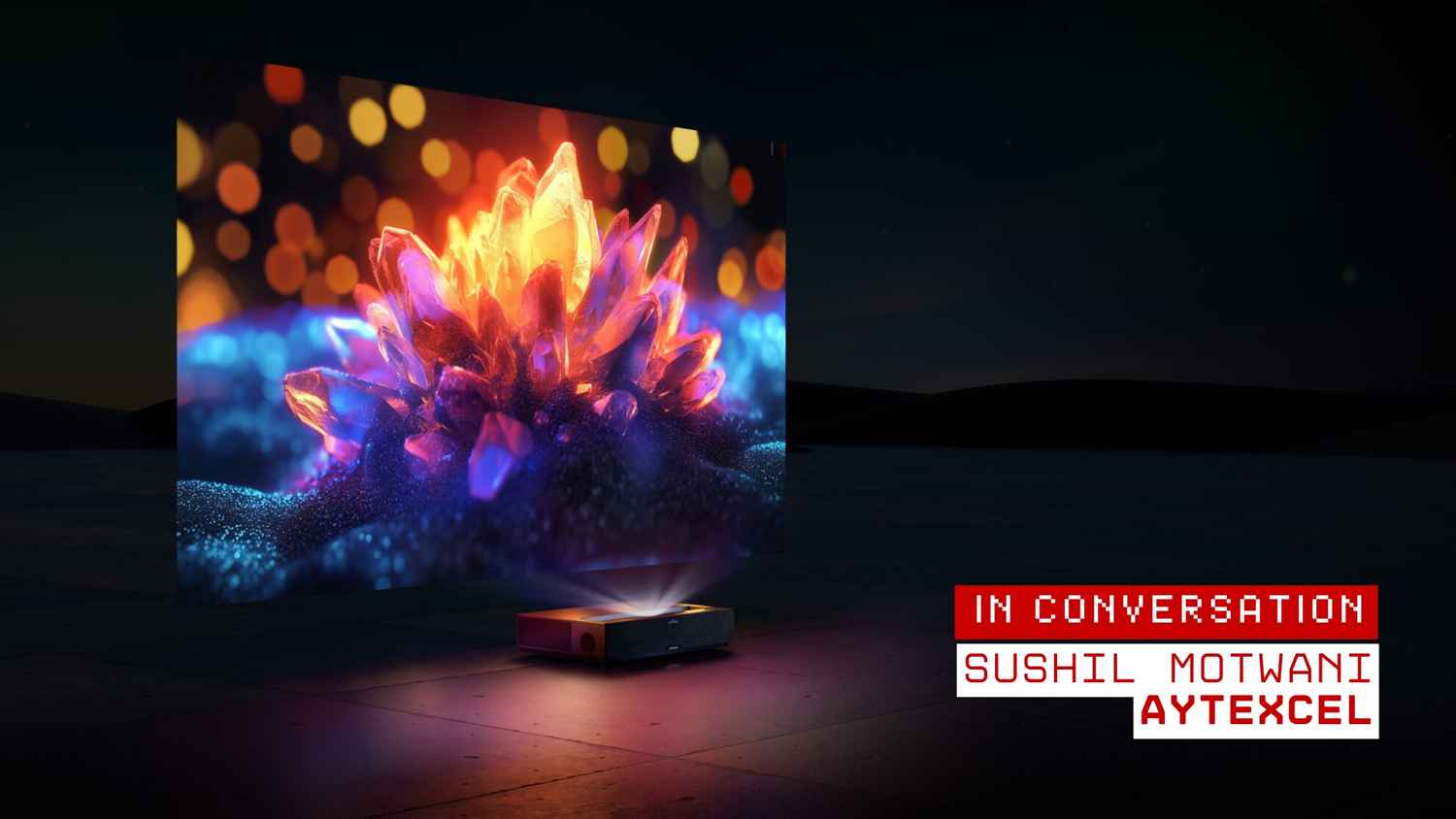
If you’ve ever walked into a living room and spotted a mammoth 75-inch TV hogging an entire wall, you probably thought, “Wow, that’s the dream.” Sushil Motwani would nod politely, and then ask if you’ve ever seen a 120-inch screen light up a bedroom ceiling, casting crisp cinema-grade visuals in broad daylight. You probably haven’t.
 Survey
But that’s exactly the kind of experience Sushil is betting India will crave next. And if the last few years are anything to go by, he might be right.


When he entered the projection business in 2020, it wasn’t some calculated tech pivot. It was a lockdown discovery. He stumbled upon an XGIMI projector, used it during the pandemic, and instantly knew this product had potential. Today, he heads Aytexcel, the force behind premium lifestyle projectors like Formovie, JMGO, Dangbei and Valerion in India. And if you’ve seen any short-throw projector buzz on Instagram lately, there’s a high chance it traces back to him.
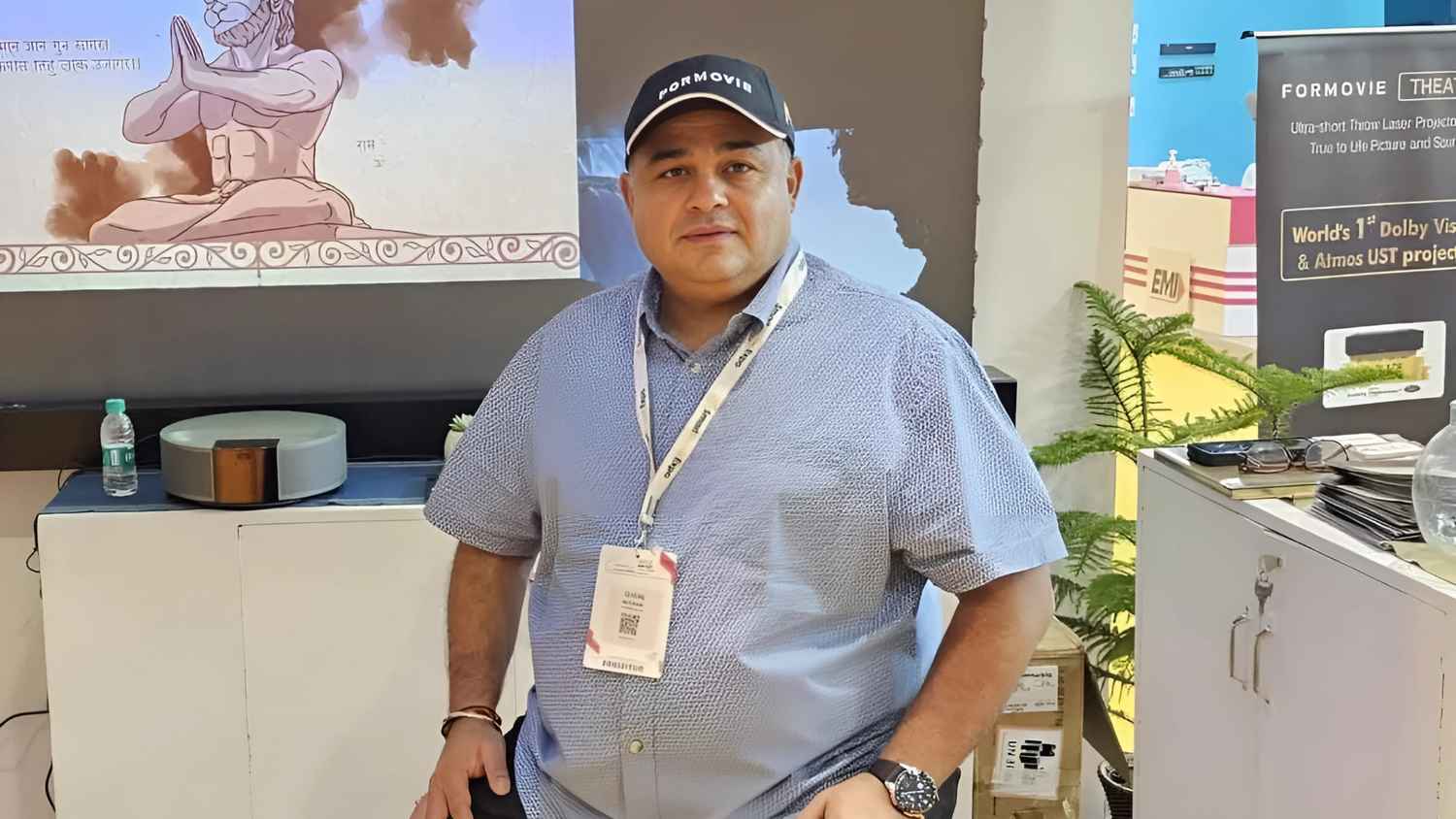
But this isn’t your typical startup story. Sushil isn’t trying to “disrupt” TVs. He believes that if you show Indians what’s possible, really show them, they’ll come around. And surprisingly, they already are.
India’s home entertainment market is evolving fast
Back in 2020, India’s projector market was barely scratching the surface, clocking in at around 2.75 lakh units annually, most of them low-cost, entry-level models used in classrooms or offices from brands such as BenQ and Epson. Fast forward to 2025, and that number has grown to over 4 lakh units a year, driven not by boardrooms but by living rooms.
So what’s changed? A wave of awareness, better tech, and brands like Formovie and XGIMI bringing cinematic experiences into homes have transformed the landscape. And while lifestyle projectors still account for a niche slice of the pie, they’re now commanding attention in Tier-2 cities and beyond, where consumers are skipping the TV upgrade entirely and jumping straight to projectors. Motwani, who’s seen this shift firsthand, believes we’re at the tip of the iceberg.
Not for the rich kids in Mumbai anymore
What shocked me wasn’t the tech (though, trust me, ALPD laser tech in Formovie UST projectors is wild). It was the geography. These weren’t gadgets for HNIs in Delhi or architects in Bandra. Sushil says some of his most loyal buyers come from towns he hadn’t even heard of before.
“It’s not restricted to the metros anymore. People are doing their research. They know exactly what they want, even more than some AV integrators do.”
That last bit hit hard. Because in India, we’ve long assumed that tech trickles down from the top. But what if the demand is bubbling up from Tier-2 cities instead? What if someone in Chhindwara or Ranchi is more excited about a 150-inch portable projector than a PS5?
“A customer from Pune once travelled in a taxi all the way to Mumbai to compare two models in person. We opened the lounge on a Sunday for him. He tested both, watched Dolby Vision content on each, and chose one on the spot,” Motwani tells me. This isn’t impulse buying. It’s informed desire.
But what about my giant Sony Bravia?
That’s the question everyone asks. And Sushil’s answer is brutally simple: TVs are limited. Projectors evolve.
“Your 75-inch TV will always be 75 inches. One wall. One sofa. That’s it.”
But a short-throw projector? You can move them between rooms, throw them onto ceilings, take them to a friend’s house, or set them up under the stars. And with screens like Fresnel panels that cut through sunlight, even daytime viewing isn’t the dealbreaker it used to be.
Still, it’s not all smooth projection. There’s a 28% GST slapped on “lifestyle” projectors, plus hefty import duties. Add that to names like “Formovie” or “Dangbei”, which sound more like K-pop bands than premium tech brands, and you’ve got a trust gap the size of a wall mount. But Sushil isn’t fazed.
“People who buy from us, they’re not replacing their TVs. They’re upgrading their mindset.”
The lounge, the legacy, the long game
Look, TVs still rule the Indian home. No argument there. But they’re no longer untouchable. And the reasons are obvious once you start looking.
A 75-inch TV is static. A projector is scalable. A projector can give you cinema vibes in your bedroom without building a home theatre. Most of these new-age projectors have Android TV built in, Dolby Vision support, ALPD laser tech (used in theaters, by the way), and can hit screen sizes your TV can only dream of.
“We don’t need to sell these. We need to showcase them.”
Aytexcel’s Mumbai experience centre isn’t some sterile showroom. It’s a place where people walk in curious and walk out converted. Different rooms, different lighting, different setups: bedrooms, living rooms, you name it. It’s the only lounge of its kind in the country, and probably the only place where you can compare five laser projection technologies before lunch. One wall uses a Fresnel screen, another uses plain light grey paint. It’s education more than a sales pitch.
He wants to open more. Delhi, Bengaluru, Hyderabad. Maybe even become the “Croma of ultra short-throw projectors.” And you get the sense he isn’t chasing scale for scale’s sake. He believes in the product, and that people, when shown right, will believe too.
Isn’t that the story of every breakthrough? You don’t need to convince people with data and features. You need to show them what they didn’t know was possible.
So, what’s next?
Sushil mentions fifth-generation ALPD technology that’s coming soon, an upgrade to the current ALPD 4.0. As the screen tech is getting smarter and AI-powered projectors are starting to pop up, prices are slowly coming down. And people are starting to prefer cinematic flexibility over flat-panel rigidity.
Not because projectors are “better” than TVs. But because they unlock something we forgot we wanted: movement and scale. The idea that your entertainment setup isn’t locked into a bracket on the wall.
I know not everyone can drop ₹3 lakh on a lifestyle UST projector right now. But I also know this: the trend is growing. Quietly, stubbornly, projector by projector, India’s living spaces are changing.
In five years, when your friend’s housewarming party includes a 150-inch ultra-short throw setup and no one blinks twice, that’s probably when you’ll realise Sushil was right all along.
 Follow Us
Siddharth Chauhan
Siddharth reports on gadgets, technology and you will occasionally find him testing the latest smartphones at Digit. However, his love affair with tech and futurism extends way beyond, at the intersection of technology and culture. View Full Profile


