
Project Suncatcher: Google’s plan to setup an AI data centre in space explained
 Follow Us

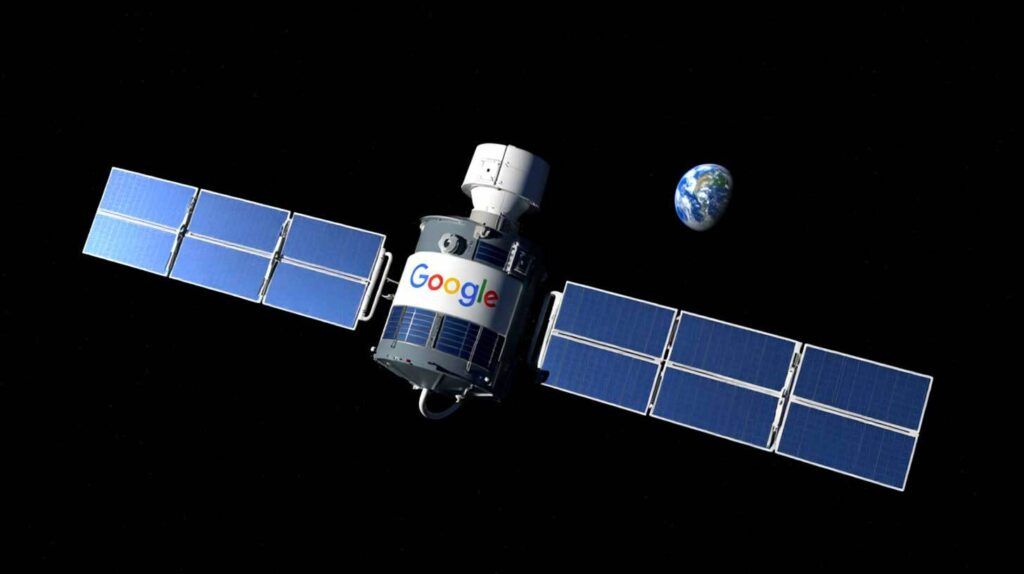
The data centres are power hungry. The arrival of AI has exacerbated the issue further, and all the hyperscalers on Earth are frantically searching for power, which is scarce now more than ever before. Google’s solution to the problem? Forget Earth. Last week, Google launched a prototype satellite with its Trillium TPUs into the Low Earth Orbit on SpaceX’s Transporter-18 rideshare flight. It’s called the Project Suncatcher, and the idea itself seems to be quite an innocent one: launch AI chips into space and harness solar energy.
 Survey
Also read: Snapdragon Sound Elite Gen 2: Qualcomm is building an OS for your ears
Why space, though?
There is one number which makes this project viable: satellites in low Earth orbits are continuously exposed to the sun, thus producing up to eight times more energy from the same panels compared to their usage on Earth. There are no clouds, nights, and congestion of the power grid. In case of feeding power-hungry workloads of AI, this is not about a slight improvement in terms of efficiency. This is a completely different level.
What about the solutions that the competitors of Google use to address the same issue? Microsoft has been entering into contracts for small nuclear reactors while Amazon is investing in nuclear-related power purchase agreements. The same issue concerns everyone: AI requires much more electricity than the power grid can easily provide, and somebody should look for alternative sources of energy.
The catch is everything else
The cosmos does not give anything for free. Instead, it gives you three brutally difficult engineering challenges, and Suncatcher has been designed specifically to solve one problem first – will the equipment make it up there?
Also read: Sennheiser Momentum 5 Wireless in Digit Test Labs: Familiar, yet more repairable flagship headphones
During launch, a satellite experiences around 10g of sustained acceleration, and chips within the satellite experience up to 50-100g during the ten-minute trip to orbit. To simulate this brutality, Google’s team physically shook their satellite across all three planes. It survived, and this is no small thing, as this test succeeds more rarely than it fails.
Radiation comes next. Cosmic rays, along with solar storms, can cause bit flips in electronics – those sneaky little mistakes in the AI load that you might not even be aware of. When Google put their Trillium TPUs through a proton beam at UC Davis’s Crocker Nuclear Laboratory, they found that they had the capability to withstand a radiation dose larger than the dose they would receive over five years in orbit. That’s promising, but lab testing is nothing like real life, hence the need for a real chip in space.
Finally, there’s the problem of cooling, which sounds easy enough to solve until you remember that there’s no air to do that in the void. On Earth, you cool a chip by airflow. But since in orbit there’s no way out but radiators, Google is creating a new cooling solution, using heat pipes and radiators that were tested in thermal vacuum conditions. It’s basically a new architecture made specially for the task.
What comes after this
This one satellite does not mean that Google has proven its capability to run AI data centers in space. It means that the equipment won’t get damaged during the launch into the orbit, which is only the first step of a long staircase. The challenge will come in 2027 when the corporation will be launching two satellites and connecting them through laser communication at high bandwidth and short distances, which, according to the company, is equivalent to hitting a coin from miles away.
This is what really needs to be done. It is all about forming satellite clusters that will include dozens of TPUs communicating in a computational grid in orbit. This is far from happening now. But considering how pricey and long terrestrial options have become, it will not surprise you if space will stop being a sci-fi story.
Also read: Claude Opus 5.5: How it will be pacing the frontier


