
When Midjourney first emerged, it did more than just contribute to the wave of AI-generated imagery, it helped define it. With its distinct aesthetic and intuitive Discord interface, Midjourney found a fiercely loyal creative community, and it became synonymous with high-quality, stylized visuals. But now, the company is stepping into an entirely new arena: AI video generation. On June 18, 2025, Midjourney unveiled its first video model, simply titled V1, marking the beginning of a new chapter in its creative evolution. And as the AI video space heats up with players like Google Veo 3, many are asking: can Midjourney’s V1 compete?
 Survey
Also read: From OpenAI’s Sora to Google’s Veo: 5 AI tools for video generation


Moving from static images to cinematic video
Midjourney V1 isn’t aiming to be a clone of Google Veo, OpenAI’s Sora or Runway. It doesn’t generate video from scratch using text prompts. Instead, it takes something Midjourney already excels at, gorgeous still imagery, and animates it. The result is a video model that doesn’t attempt to reinvent the wheel but rather makes it spin with elegance.
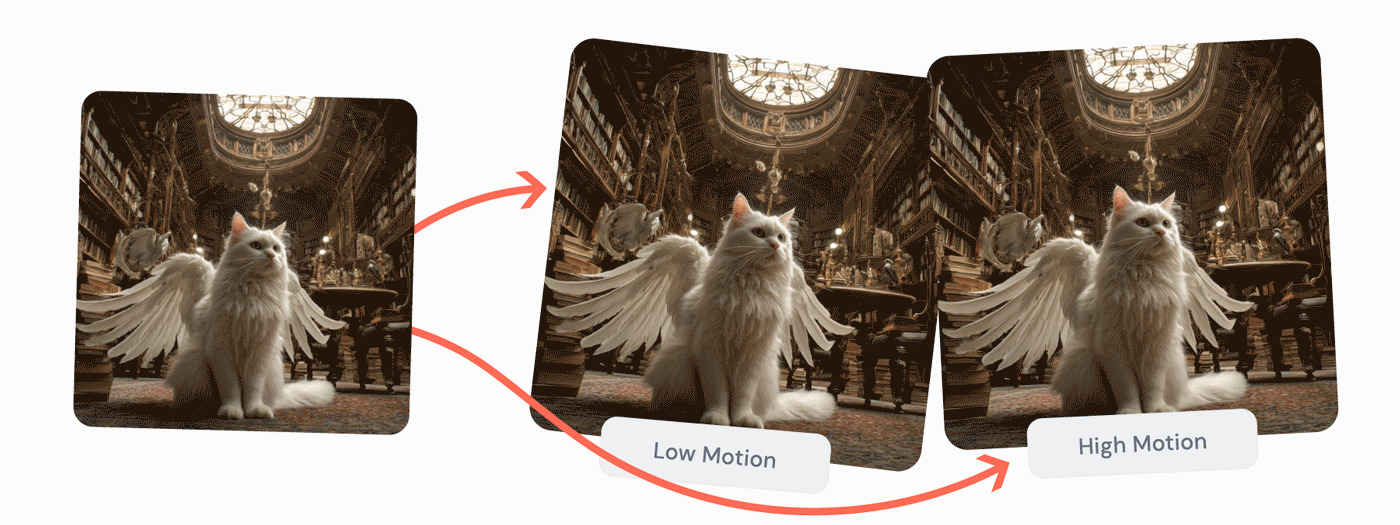
Here’s how it works: users generate an image with the traditional /imagine prompt, then click the new “Animate” button within Discord. This triggers Midjourney V1, which renders a 5-second clip based on the still image, with the option to extend it in 5-second intervals up to 20 seconds.
There are two motion presets: low motion, which offers gentle shifts, like subtle camera pans or ambient movement, and high motion, which introduces more dynamic action, perhaps a figure turning, a swirl of fabric, or the camera sweeping dramatically through the scene. Users can also guide the animation using additional prompts to influence how the movement unfolds, giving some creative agency to the process.
Midjourney V1: The art of motion
Where Midjourney V1 shines is in style. Unlike other video models that often aim for photorealism or cinematic accuracy, V1 leans into its roots, surrealism, dream logic, and painterly beauty. The videos it produces feel like animated versions of a visual poem. They’re not meant to mimic real life but to evoke a mood, a feeling, an idea. This artistic integrity extends to its consistency. Scenes stay coherent; characters maintain shape and form; visual motifs remain intact throughout a sequence. The output is crisp enough to impress casual users and creative professionals alike. It’s not perfect, some flickering and unnatural transitions can occur, especially with high motion, but overall, the visual quality is striking.
Also read: The Era of Effortless Vision: Google Veo and the Death of Boundaries
What makes it even more appealing is the effortless user experience. There’s no need to learn a complex interface or script a storyboard. If you’ve used Midjourney to generate images, you already know how to create video. That low barrier to entry makes V1 especially inviting to digital artists, motion designers, and anyone curious about animation without a background in it.
Midjourney V1 vs Google Veo 3: Different tools, different dreams
MidjourneyV1 and Veo 3 are very different tools, for different purposes, and cater to different imaginations. While Midjourney V1 is creating waves in expression, Google Veo 3 represents a different kind of revolution in realism. It excels at turning imagination into motion, abstract, emotional, and visually rich. It doesn’t try to simulate the world; it tries to reinterpret it. For artists, illustrators, and anyone enchanted by the surreal, V1 is less of a tool and more of a muse.
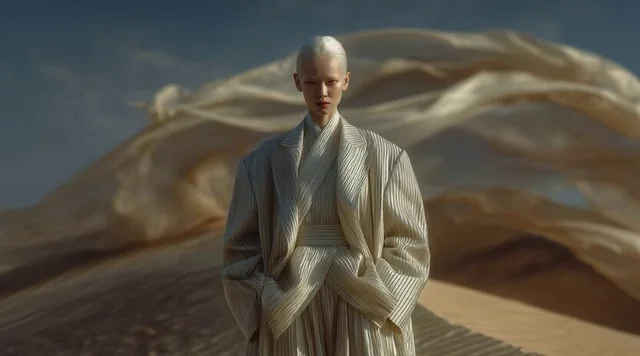
Veo 3, by contrast, is for precision storytelling. It’s made for brands, filmmakers, and tech-savvy creatives who want cinematic control and visual fidelity. In terms of technical range and realism, it’s the clear winner. But it’s also more complex, more closed, and less community-oriented.
Midjourney has hinted that V1 is just the beginning. The company is exploring 3D modeling, real-time simulation, and even interactive worlds, ambitious goals that could eventually lead to full-scale text-to-video generation or immersive virtual environments. If future versions of V1 begin to integrate character persistence, voice, and narrative logic, Midjourney could become a serious contender not just in creative tools, but in entertainment itself. Imagine a world where a few prompts generate a stylized short film, one with movement, mood, music, and meaning.
In its current form, Midjourney V1 is not a direct rival to Veo 3, but it doesn’t have to be. It is accessible, affordable, and above all, inspiring. It empowers creators to animate their imaginations with a few clicks, offering a kind of visual poetry in motion that few platforms can match. So, will it be better than Veo 3? Not by Veo’s rules. But if the measure is creativity, community, and charm, Midjourney V1 might already be playing an entirely more interesting game.
Also read: Canva’s new AI feature lets you create short videos in seconds without any editing tools, here’s how
 Follow Us
Vyom Ramani
A journalist with a soft spot for tech, games, and things that go beep. While waiting for a delayed metro or rebooting his brain, you’ll find him solving Rubik’s Cubes, bingeing F1, or hunting for the next great snack. View Full Profile


