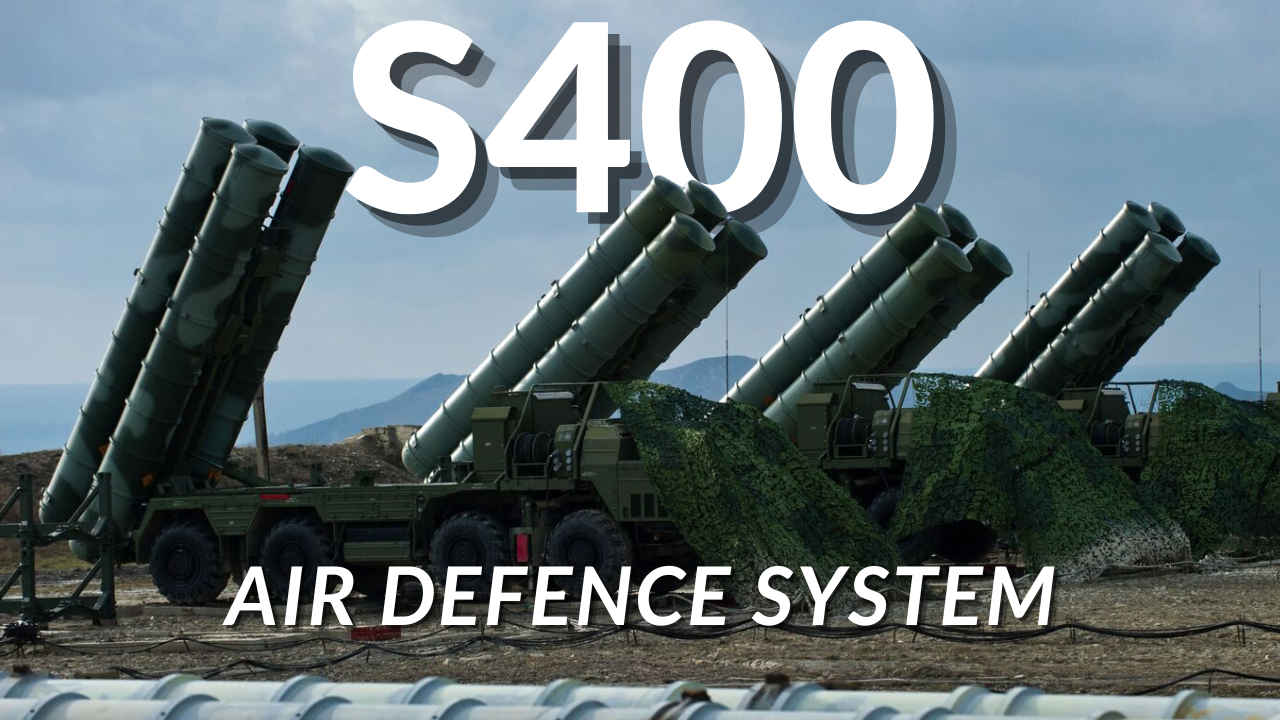
As you saw across various eye-witness videos on social media, the S-400 “Sudarshan Chakra” air defence system, a cornerstone of India’s strategic deterrence, played a pivotal role in countering Pakistan’s aerial assault during the May 2025 border escalation.
 Survey
Here’s a breakdown of its history, tech capabilities, and operational impact from Indian military defence’s perspective…


What is the S-400 air defence system
Developed by Russia’s Almaz-Antey, the S-400 Triumf is one of the world’s most advanced long-range surface-to-air missile systems, according to leading military journals.
India acquired five squadrons under a ₹35,000 crore ($5.4 billion) deal in 2018, dubbing it Sudarshan Chakra after Lord Vishnu’s divine weapon. Three squadrons are operational as of 2025, with two more slated for delivery by 2026.
Key features of S-400 air defence system
The S-400 isn’t a one-trick pony, but a potent mixture of cutting-edge, state-of-the-art in military technology that can thwart a whole range of attacks and can also exert nuanced control. Here we outline some key features of the S-400 air defence system as is currently being used by the Indian Air Force and military installations along the India-Pakistan border.
Also read: India-Pak conflict: India’s anti-drone UAS grid and air defence system explained
Multi-layered missile threat: The S-400 uses four different types of missiles to create a layered defence: short-range (up to 40 km), medium-range (up to 120 km), long-range (up to 250 km), and very long-range (up to 400 km) missiles. This enables it to engage a wide spectrum of threats at varying distances and altitudes.
Cutting edge radar: The S-400 air defence system is equipped with a network of multi-band phased array radars, such as the 91N6E panoramic radar and the 96L6E, providing 360-degree surveillance. These radars can detect and track stealth and low-observable targets, including drones and cruise missiles, up to 600 km away.
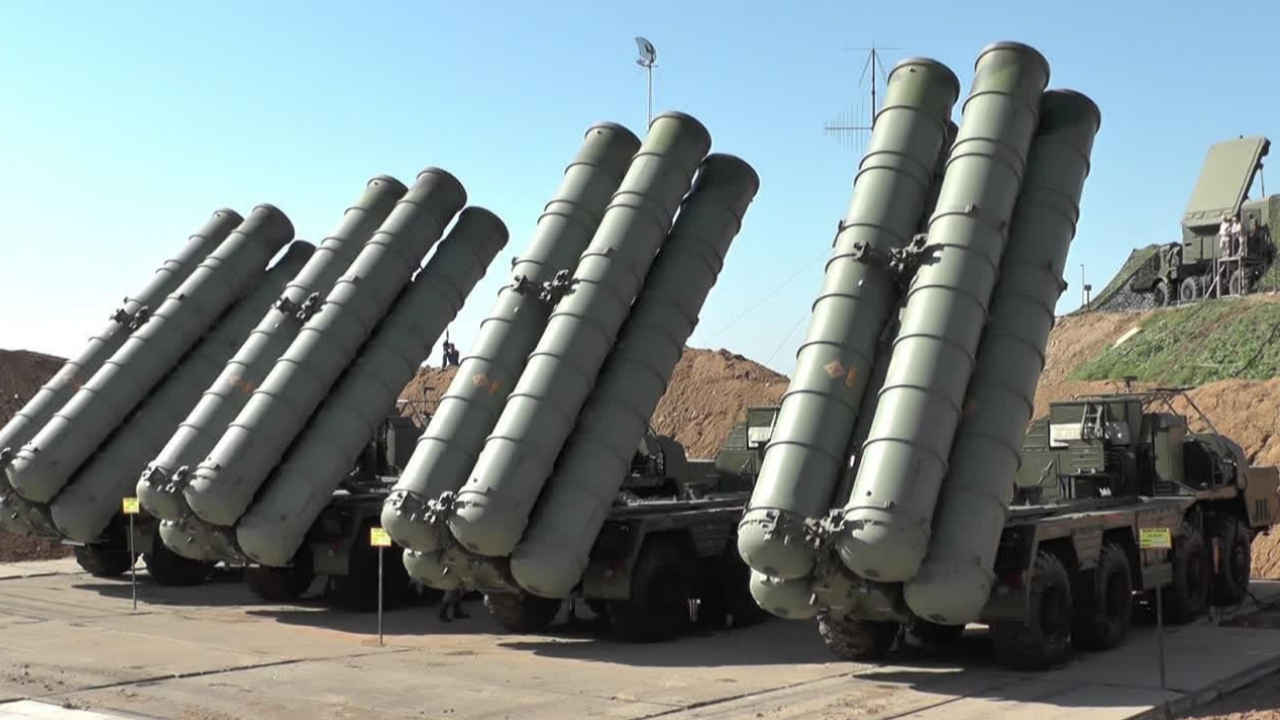
Multi-target engagement: Believe it or not, but the S-400 can track up to 300 targets and engage as many as 36 targets simultaneously, guiding up to 72 missiles at once to neutralise them. Some sources even mention the ability to guide up to 160 missiles depending on the system configuration.
Electronic warfare proof: The system’s radars are designed to function effectively in dense electronic warfare (EW) environments, using electronic protection measures and both active and passive guidance to resist jamming and deception.
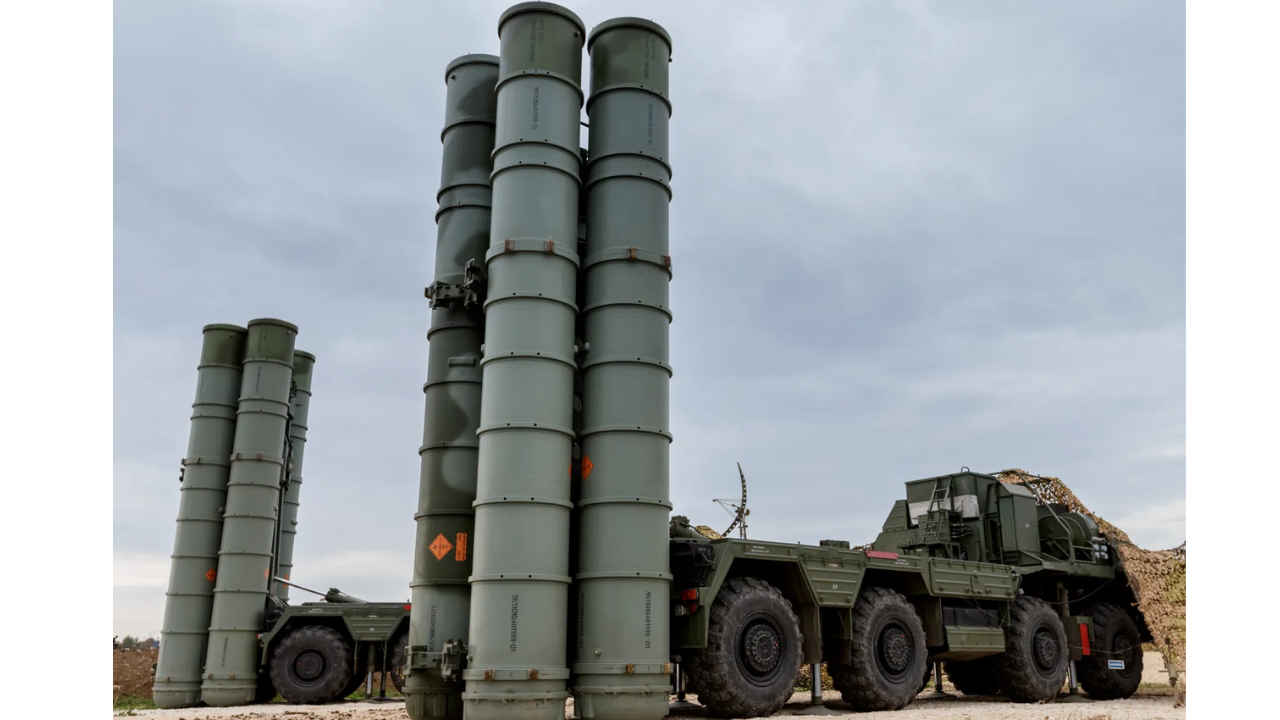
Highly mobile: The S-400 can be made operational within 5–15 minutes after arriving at a site, with some configurations ready in as little as 35 seconds from standby. According to reports, the S-400 system is road-mobile, capable of moving at 60 km/h on roads and 25 km/h off-road.
Also read: India-Pakistan conflict: AI, satellites, and cyber tools used to track terror targets
Ballistic missile defence: The S-400 has limited anti-ballistic missile (ABM) capabilities, able to intercept tactical ballistic missiles with ranges up to 60 km and at speeds up to Mach 14 (17,000 km/hr), according to reports.
Fully integrated: Each squadron of S-400 includes a command-and-control center, surveillance radar, and engagement radar, with the ability to network and exchange data with other air defence systems like the S-300 and SA-23.
Accuracy of missile guidance: The system employs active radar homing for its longest-range missiles (like the 40N6), and its 9M96 series can directly impact fast, maneuvering targets with high accuracy.
Design: A typical S-400 squadron consists of two batteries, each with six launchers, supporting up to 128 missiles per battery, and is organized around the 30K6E administration system for coordination.
Also read: India-Pak conflict: 5 examples of rise in cyber warfare threats
Service life: The S-400 is designed for a service life of at least 20 years, with major overhauls required every 10,000 hours of operation. Each battery costs ~$200 million, but its multi-role capabilities justify the investment.
S-400’s role in India-Pakistan conflict of May 2025
On the night of 7th and 8th May 2025, Pakistan launched a coordinated attack targeting 15 Indian cities, including military installations in Jammu & Kashmir, Punjab, and Gujarat.
In response, the S-400 systems intercepted drones, missiles, and projectiles using kinetic and non-kinetic measures. It did so by detecting incoming threats via phased-array radars and deployed missiles with pinpoint accuracy, averting casualties or infrastructure damage.
India’s subsequent strikes on Pakistani air defence systems in Lahore were supported by HARPY drones, showcasing the S-400’s role in creating a secure environment for offensive operations. This marked the first combat use of India’s S-400 systems, validating their effectiveness in high-intensity scenarios.
Also read: Operation Sindoor: India’s military tech and precision strike capability explained
 Follow Us
Team Digit
Team Digit is made up of some of the most experienced and geekiest technology editors in India! View Full Profile


