
How Lumio is rethinking the big screen for Indian homes
 Follow Us

When Raghu Reddy, CEO and co-founder of Lumio, talks about reaching a million dollars in sales, there’s no chest-thumping bravado. “It’s a small number,” he says with a shrug. “But for any startup, that first milestone matters. So that’s something that we’ve crossed, and very happy that we’ve managed to reach that number pretty quickly.”
 Survey
It’s been less than two months since Lumio launched its Vision series TVs, and the team is already charting its next act: not a bigger TV, but a bolder idea. Enter projectors.
And not the kind that belongs in boardrooms or dusty classrooms. Lumio’s Arc 5 and Arc 7 are plug-and-play Google TV projectors designed for everyday homes, built in India, and aimed at making projection aspirational, accessible and just as seamless as switching on a smart TV. It’s not the obvious next move. But then again, Raghu and co-founder Kailash S are not building an obvious company.
From TV upstarts to projector pioneers
Lumio’s story started, as many good startup stories do, with a gap. “We noticed something post-OnePlus TV’s exit. Nobody was going after the mid-premium customer with intent,” Raghu recalls. “Most brands were just undercutting each other on price, chasing spec sheets. We asked, what would it take to build a brand people aspire to own?”
The bet paid off. Lumio’s Vision 9, a Mini LED smart TV priced around Rs 60,000, became the best-selling Mini LED on Amazon in May.
According to Raghu, it was about the product but understanding the audience: “70% of our customers are Amazon Prime members and 40% of our website visitors are iOS customers.” To him, that signals they’ve found resonance with the kind of consumer that cares about quality, convenience, and aspiration.
Armed with that data, the team didn’t just double down on TV efforts. They looked sideways, at the projectors.
A market that looks a lot like 2018
“Projectors today are where smart TVs were in 2018,” says Kailash. “There are a lot of cheap offerings under 10K, 15K sort of price points. But there are a lot of issues with respect to reliability and just low trust.” Kailash adds, “When you go higher up, you have really good tech, but it also comes at top dollar, the high-end ultra-short throws of the world priced over Rs 75K.”
So that sweet spot in the middle is empty, and that’s what Lumio wants to put a dent in.
India buys 14 million TVs a year. It buys just 120,000 home projectors. In the US or China, the projector-to-TV ratio is 15%. In India, it’s less than 1%. “That’s not a gap. That’s a huge opportunity,” Raghu adds. “We thought that if we solve a lot of the pain points and bring in that at the right price point, [it] will basically help in catalyzing this particular category.”
Kailash is direct: “We think that this can actually become 10X over the next four to five years.”
So Lumio did what most hardware startups avoid: it decided to go local, from the ground up.
Designed and Built for India
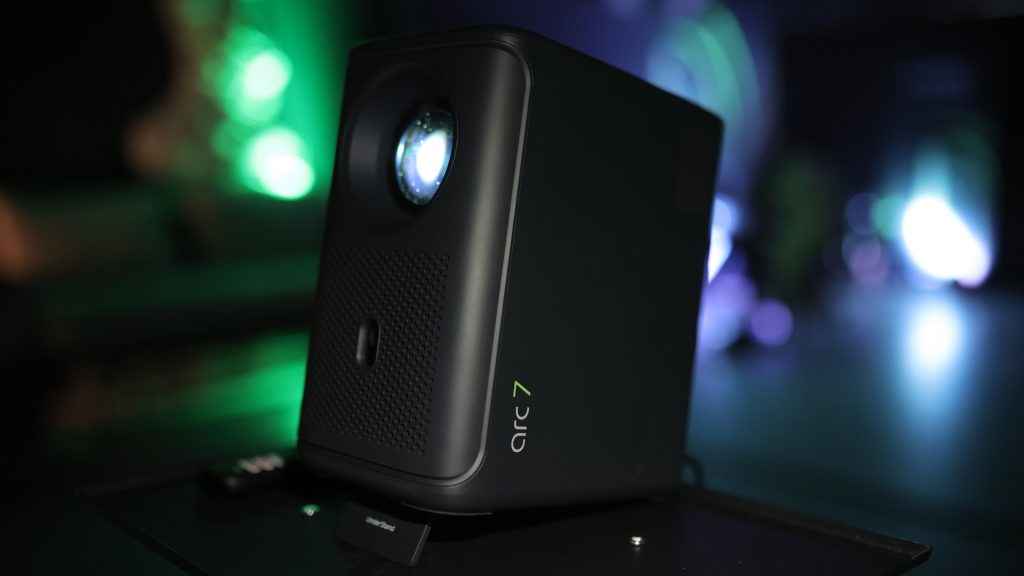
Unlike their TVs, building the Arc projectors meant building something else from scratch: the supply chain.
In fact, when Lumio began this journey alongside their TVs, there were no projector manufacturing setups in the country. “We started this project pretty much at the same time as TV,” Raghu says. “But then we realized that… there are no factories that are manufacturing projectors in India.” That delayed the launch, but it also gave them time to reimagine what a projector designed for Indian conditions would look like.
“India is going to be a dusty country, whether we like it or not,” he notes. “And we realized that if you don’t have what is a completely sealed optical light engine, this product will struggle.”
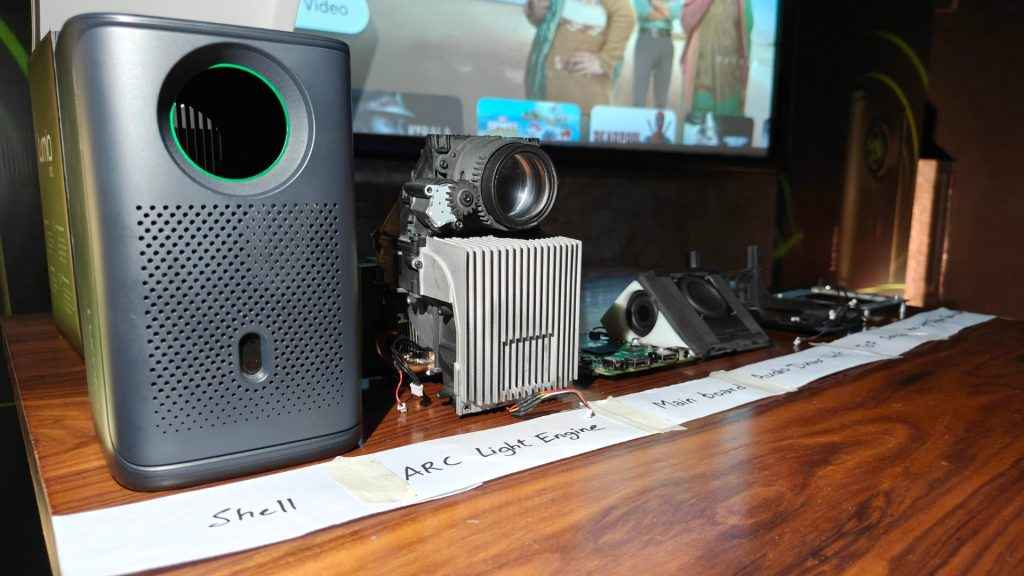
The Arc 5 and Arc 7, launched under Lumio’s Arc Light engine architecture, reflect that thinking.
Raghu rattles off the top reasons Indians hesitate to buy projectors. “One, they think that it requires a big space… Reason number two, people think that setting up that entire thing is very complex… The third thing was that… people felt that it is expensive.”
Kailash adds: “Even if it’s plug and play, you keep it on a certain place, it doesn’t give you the required elevation sometimes.”
The Under-Stand, essentially a built-in kickstand, solves a common elevation problem without requiring any ceiling mounts or external props.
The design itself avoids the clunky, industrial look typical of AV gear. “We didn’t want serrated plastic boxes. These are meant to be touched, carried, kept on a nightstand or coffee table.”
Raghu says these changes came not just from in-house design, but from meeting with potential users. “We’ve done a fairly… big survey. We’ve got about 5000 plus responses… We double-clicked on that entire thing.”
The result is a clean, minimalist design. Rounded edges. Built-in Netflix. Seamless Google TV. And most critically, STR8 auto-keystone correction. “This thing works,” Raghu says, recounting a customer who came to one of their meetups and stress-tested the Arc 7. “That guy actually put the entire device through its paces.”
“We wanted to ensure that the experience is right, not just now, but over a few years.”
Arc 5 and Arc 7: A tale of two screens
Both projectors are certified Google TV devices. Both support Netflix out of the box. Both aim to deliver cinema-sized screens in under five minutes of setup. But their personalities differ.
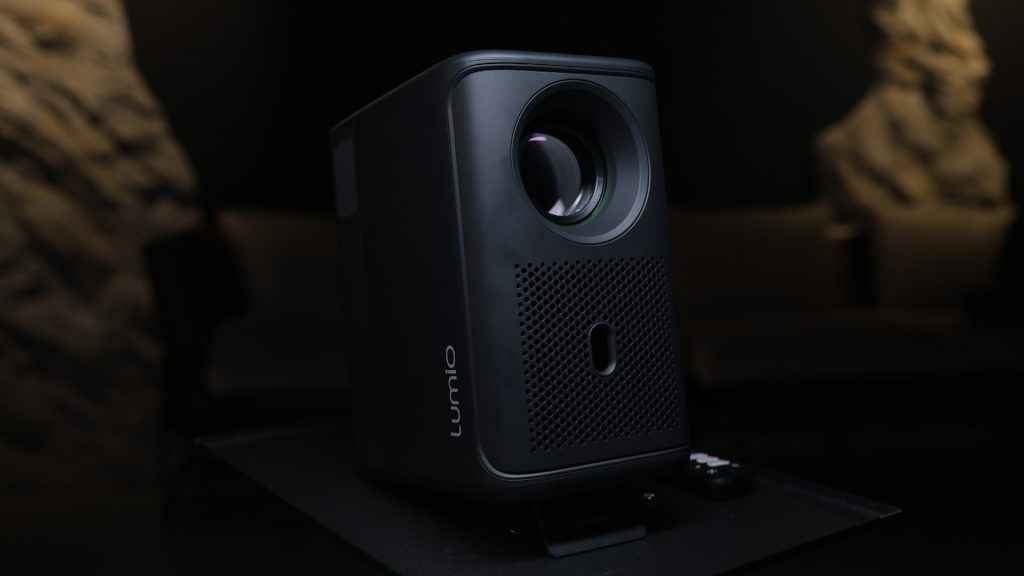
The Arc 5 is light and portable at 1.3 kg with 200 ANSI lumens, designed for bedrooms, hostels, or travel. It’s a Netflix-and-chill machine that fits in a backpack.
The Arc 7 doubles the brightness, packs larger 8W stereo speakers, and is meant for living rooms and shared spaces.
Crucially, both feature STR8 (Smooth Trapezoidal Recalibration), which auto-adjusts keystone angles and focus in real time using TOF sensors. No fiddling. No measuring. Just aim, play, and Netflix will autoplay where your wall begins.
The invisible moat: TLDR and community
Behind all of this is Lumio’s digital layer, TLDR: a dashboard for sports scores, music discovery, and device management that quietly lives inside the projector and TV UI.
“To us, that’s the real big area of focus and investment,” Raghu says. “You can’t bring in new products every two, three months but a lot of nifty little features that will add value to customers’ lives. Those are things that we’re looking to build on the TLDR side.”
“We’ve built a use case around music and sports,” he says, listing out features like warranty tracking and live match integration. “We want to do [movies], man. Trust me, we spent six months building out something for movies.”
Kailash is thinking bigger. “We’re trying to figure out how we can bring all that social discovery onto TLDR in one place to sort of find cool things to watch.”
Part of Lumio’s confidence also stems from the playbook they used to build community trust around their TVs, and are now replicating for projection.
“We’re also doing a bunch of these community meetups,” Raghu says, befittingly calling them Luminati: a mix of customer meetups and live demos. “We actually showcased and gave everyone a live demo, I think they got a lot of confidence.” One such meetup was held across four cities. “People just spent a lot of time, testing it out, you know, hearing the sound. They’re happy with it.”
It’s an ecosystem they’re doubling down on. “The best ideas don’t necessarily come from a meeting room,” Sudeep Sahu, Head of Product, interjects. “It comes from people who are actually passionate about the space.”
Making projectors more than just tech
To further bridge the trust gap, Lumio partnered with Urban Ladder to create what is perhaps India’s first furniture store demo for smart TVs. “You sit on a sofa, and there is furniture around you; you’re actually in a home environment,” Raghu says. “If you think hard, there are more creative solutions to do some of these things, instead of showroom walls full of TVs.”
He adds, “We are actually live in Delhi. It’s live in Chennai, Bangalore, Hyderabad. And Bombay everywhere.” Walk into any Urban Ladder in these cities and you’ll likely find a Vision 9 turned on. “People want to experience the TV in the truest sense.”
Raghu sums it up simply: “Most people don’t want a projector. They want an easier way to watch a match on a big wall, or binge a series without fighting for the TV. If we get that right, this category will explode.”
The road ahead: risks, returns, and resolve
When asked what Lumio really wants to build, Raghu doesn’t talk about product specs. “We didn’t want to come in and build a brand that’s just selling B2C kind of products,” he says. “We want to build something that’s differentiated, that genuinely adds joy to a customer’s life.”
It’s not about projection. It’s about perspective.
“When we started the brand,” says Raghu, “we wanted to be a voice in home entertainment. So we knew that TV was the first category, but we always knew that we are going to have a larger play.”
And if Lumio’s Arc 5 and Arc 7 succeed in making big screens less intimidating and more intimate, this could be the moment the category finally shifts, from wall-mounted status symbols to living-room essentials.
Read More: Lumio Arc 5 and Arc 7 Projectors launched with Google TV, HDR10, and Netflix


