One evening in Delhi, a young college student received what seemed like a dream deal, a lightly used smartphone at half the retail price. The seller was polite, the phone worked perfectly, and she thought she had saved herself months of savings. But within a week, strange SMS notifications started appearing. By the time she checked her bank account, tens of thousands had vanished. Hidden deep inside the phone’s system was spyware that logged her keystrokes and sent her banking details to a remote server.
 Survey
This wasn’t a one-off horror story. Across India, from tier-1 cities to small towns, a new wave of cybercrime is targeting the very devices we can’t live without. Smartphones have become the primary wallet, ID, work tool, and communication hub for millions, and cybercriminals are adapting faster than most users can keep up.


Phishing links disguised as urgent bank messages. Fake QR codes on shop counters. Malicious apps that pose as simple games or tools. The tactics are varied, but the outcome is often the same: emptied accounts, stolen identities, and long, frustrating battles to recover losses.
Also read: India’s Draft Cybersecurity Rules for Telecom 2025 explained: How they impact us all
The “digital kavach” approach
Enter 63 SATS, a homegrown cybersecurity company, launched CYBX, a smartphone security app designed not just to prevent attacks, but to soften the blow if an attack does get through.
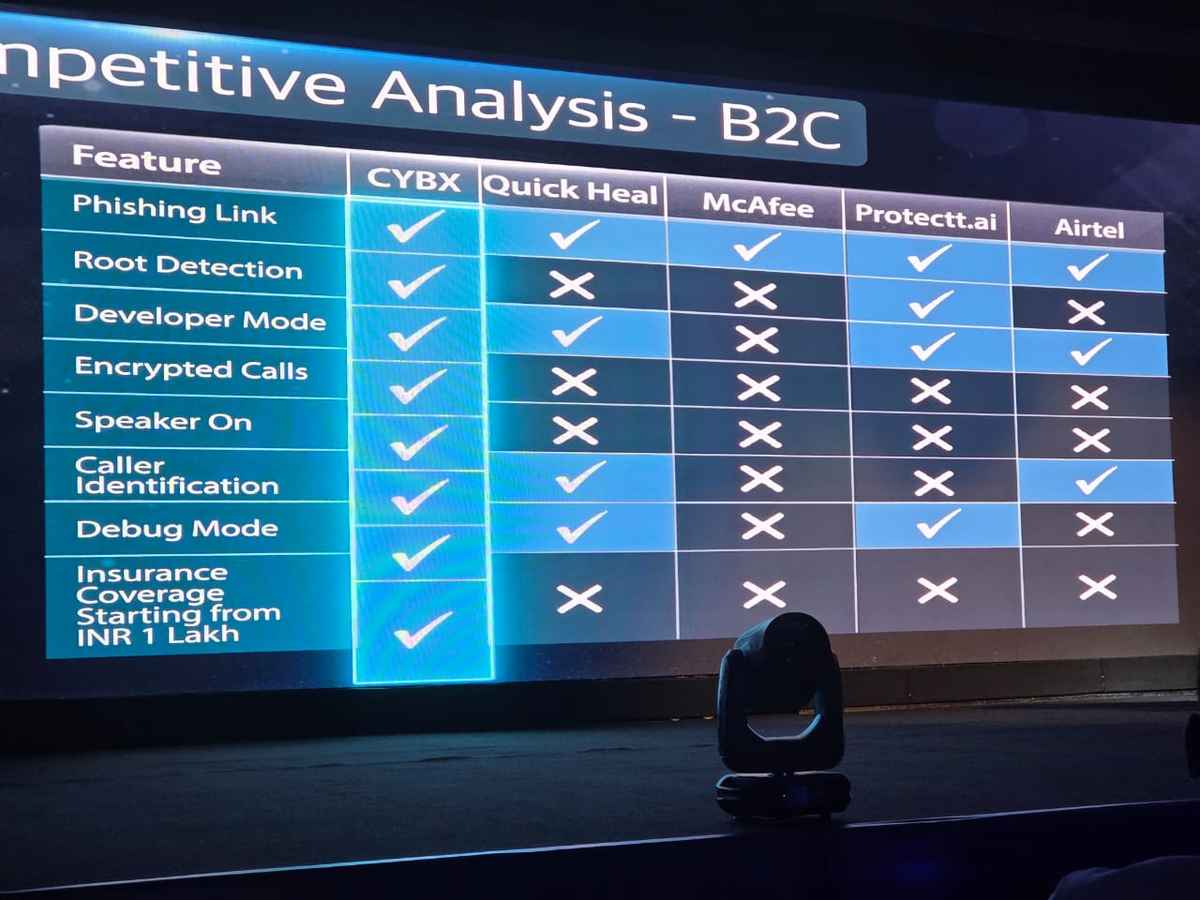
At its core, CYBX functions as a mobile threat defence platform, continuously scanning for malware, checking app behaviour in real-time, blocking phishing attempts, and even verifying QR codes before you scan them. But what really makes it stand out is the addition of built-in cyber insurance, covering losses from scams, identity theft, and other cybercrimes.
“We don’t want to be just the tank sitting on your phone. Our job is like a sniper, we sit there, lay low, when the threat comes, we shoot,” says Neehar Pathare, CEO of 63 SATS.
What the app does differently
While most security apps focus purely on detection, CYBX takes a multi-layered approach. It has real-time malware scanning wherein it Identifies malicious apps and suspicious code behaviour before it causes harm, QR code verification that blocks fake or tampered QR codes, which have become a major vector for payment scams in India, and anti-phishing protection that filters out malicious links sent over SMS, email, or chat app. They also give you encrypted calling that allows app-to-app encrypted voice calls, ensuring private conversations stay private but with all ways of recording the phone call blocked out and if someone tries to record the call using an external device, the app also alerts you when you are being put on speaker phone. The verified call screening uses an updated database that tells you if the person calling you is also protected under CYBX which is a stepping stone to a potential ecosystem.
All these features are delivered through an uncluttered and easy to navigate interface that deliberately avoids overwhelming users with pop-ups, technical jargon, or constant permission requests.
Also read: Deepfake AI to quantum ransomware: Top cybersecurity threats of 2025
“A lot of security tools lose users at the interface. People want to feel safe, not feel like they’re taking an exam on cybersecurity,” Pathare explains.
Why insurance matters in cybersecurity
Perhaps the boldest move in CYBX’s offering is its integrated insurance. Every subscription includes coverage for a range of digital harms from direct financial fraud to identity theft and cyberbullying.
Pathare says this came from a simple realization: no matter how good the prevention, there is no 100% guarantee in security. “Attackers are constantly innovating. Sometimes it’s not even the tech failing, it’s human error. A moment of distraction, a tap on the wrong link, and the damage is done,” he says.
CYBX’s insurance gives you automatic coverage with your subscription. It covers a wide range of incidents including losses from UPI frauds, phishing-based account takeovers, malicious app transactions, and even reputational damage from cyberbullying or online harassment. The claims process is also very simple, if you’re hit by a scam, you initiate a claim directly from the app. CYBX’s backend team collects relevant digital forensics (logs, screenshots, malware traces) to help validate your case and speed up settlement. Once verified, the insurer reimburses the stolen amount or covers the cost of recovery up to the policy limit. The point, Pathare stresses, isn’t to encourage careless behaviour but to give users a psychological safety net. “You can’t just tell someone ‘be careful’ and leave them on their own. We wanted to stand with users even if the worst happens,” he explains.
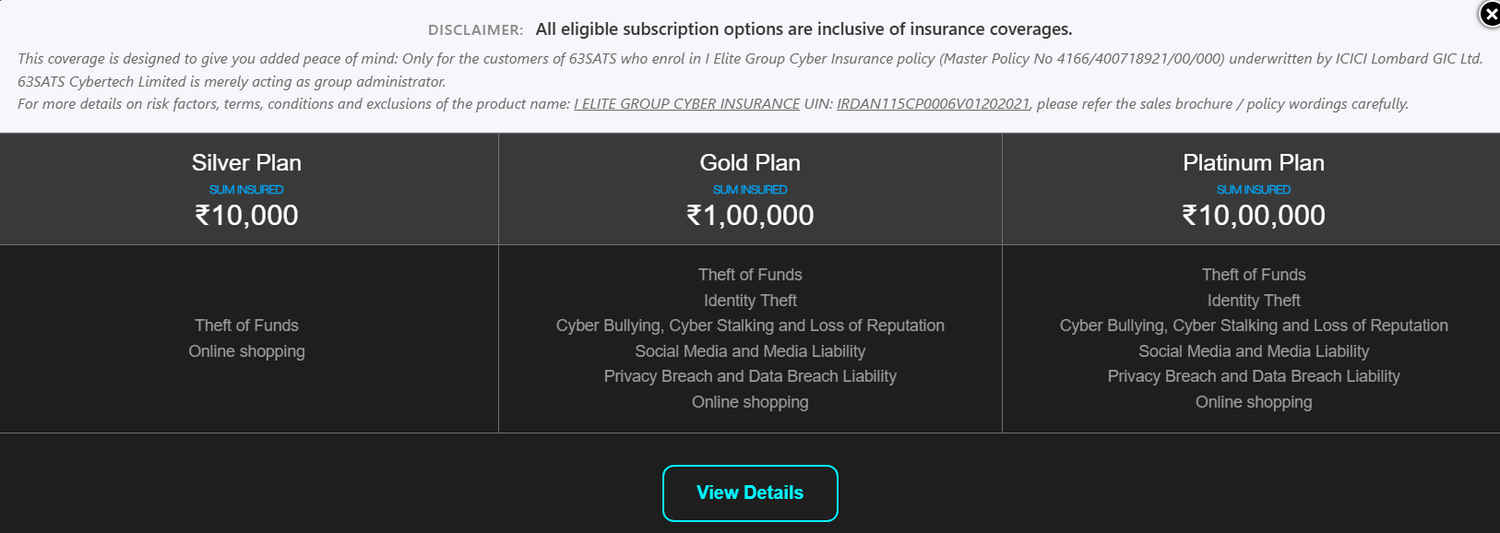
Backed by ICICI Lombard, their insurance cover is in 3 tiers bundled with subscriptions. The ₹10,000 plan offers coverage for online thefts and online shopping frauds. The gold plan with a coverage of ₹1,00,000 adds protection against identity theft, cyberbullying, loss of reputation, social media and data breach. At the very top, you get a ₹10,00,000 cover with the same protections as in gold, giving users the highest possible financial cushion against cyber risks.
The bigger picture
Another standout aspect of CYBX is its focus on accessibility. The app is designed for everyone from seasoned professionals to first-time smartphone owners. This means minimal technical language, clear instructions, and alerts written in plain, localised terms.
Also read: Microsoft servers attacked: The zero-day exploit explained
In India, where smartphone adoption has outpaced digital literacy, this matters. The same phone can be a gateway to opportunity for a farmer selling produce online or a gateway for fraudsters to wipe out his savings. CYBX’s designers wanted to make sure the protection didn’t depend on the user’s tech fluency.
Currently available on Android and iOS, CYBX is already in active use, with new features in development. One upcoming focus is AI-driven behavioural analysis, spotting suspicious patterns in app activity or user interaction that might indicate brand-new, never-before-seen malware. Pathare sees this as essential in staying ahead of cybercriminals: “Static databases can only protect you from what’s already known. The threats of tomorrow won’t be in any database yet. That’s where AI can give us an edge.”
The Indian cybersecurity market is heating up. As more people use UPI payments, store personal documents on their phones, and work remotely, the incentive for criminals grows. According to various industry estimates, India is now one of the top countries in terms of mobile-based fraud attempts.
In that environment, CYBX’s blend of prevention, privacy, and protection-after-the-fact may resonate with a wide audience especially those who’ve already been burned once by a scam.
For such users, that combination could mean the difference between a near miss and a financial disaster. For Pathare and his team, it’s about changing how people think about cybersecurity altogether: not as an optional app, but as a necessary shield for modern life. “You insure your car, you insure your health. Why wouldn’t you insure your digital life?” Pathare asks. In a country hurtling towards a fully digital economy, that might be the most relevant question of all.
 Follow Us
Vyom Ramani
A journalist with a soft spot for tech, games, and things that go beep. While waiting for a delayed metro or rebooting his brain, you’ll find him solving Rubik’s Cubes, bingeing F1, or hunting for the next great snack. View Full Profile


